Miami: Everglades National Park Airboat Tour & Wildlife Show
5.0(7961)
From$35
Miami: Everglades National Park Airboat Tour & Wildlife Show
5.0 (7,961)
From$35per person


Imagine leaving the historic waterfront of Boston behind, feeling the boat accelerate across the Atlantic, and watching the skyline slowly disappear as the open ocean comes into view. Then, after traveling into the whale-rich waters of Massachusetts, you suddenly hear the excited voice of a naturalist pointing toward the horizon. A dark back rises from the water. A powerful tail disappears beneath the waves. Moments later, another whale surfaces nearby.
This is the magic of the Boston whale watching experience.
The New England Aquarium Whale Watching Cruise takes travelers beyond Boston Harbor and into the Gerry E. Studds/Stellwagen Bank National Marine Sanctuary, one of the most important marine habitats off the Massachusetts coast. The sanctuary is a productive feeding ground for humpback whales, fin whales, minke whales, dolphins, seabirds, and other marine wildlife. The experience combines the excitement of an ocean adventure with the knowledge and interpretation of professional naturalists from the New England Aquarium.
Departing from One Long Wharf, just steps from the New England Aquarium and other major Boston waterfront attractions, this approximately 3.5-hour cruise gives visitors an opportunity to experience marine life in its natural environment rather than behind glass or inside an aquarium exhibit.
Whether you are visiting Boston for the first time, traveling with family, planning a memorable experience as a couple, or simply looking for one of the city's most exciting outdoor activities, this whale watching cruise offers a completely different perspective on New England.
The ocean becomes your viewing platform. The whales become your guides. And every trip creates a new story.
Boston is famous for its history, architecture, museums, sports culture, food scene, and revolutionary past. But just beyond the city's historic waterfront lies another world—one filled with some of the largest animals on Earth.
The waters off Massachusetts are home to several whale species and other marine animals. The destination for this cruise is Stellwagen Bank, a rich feeding area where marine life gathers because of the region's unique oceanographic conditions. The New England Aquarium describes the sanctuary as a feeding ground for whales, dolphins, seabirds, and other marine creatures.
That means a Boston whale watching cruise isn't simply a sightseeing boat ride.
It is an opportunity to enter an active marine ecosystem.
Instead of knowing whales only from documentaries, photographs, or aquarium exhibits, you can watch them surface, breathe, dive, travel, feed, and interact with their environment in the wild.
And because wildlife never follows a script, no two cruises are exactly alike.
One trip might bring a spectacular humpback sighting. Another might offer views of several whales traveling together. You may encounter dolphins, seabirds, or other unexpected marine life. Sometimes a whale may appear only briefly before disappearing beneath the surface. Other times, the encounter can last much longer.
That uncertainty is part of what makes whale watching so exciting.
You are not watching a performance.
You are observing nature.
Your adventure begins at One Long Wharf, conveniently located between the Long Wharf Marriott and the New England Aquarium. This central waterfront location makes the cruise easy to combine with a day of sightseeing in downtown Boston.
After arriving at the boarding area, travelers present their voucher for scanning before boarding the cruise.
Once onboard, the atmosphere changes immediately.
The sounds of the city begin to fade as the boat moves away from the dock. Boston Harbor opens around you, offering a scenic introduction to the journey before the cruise heads farther offshore.
Along the route, you may pass Boston Harbor landmarks and islands before reaching the waters around Stellwagen Bank. The listed itinerary includes passing Castle Island and Boston Harbor Islands National and State Park, followed by approximately 1.5 hours of whale watching in the Stellwagen Bank National Marine Sanctuary before returning to Long Wharf. Actual wildlife locations and sailing routes can vary depending on sea conditions and where whales are found that day.
This transition—from busy city waterfront to open Atlantic—is part of the experience.
You don't simply arrive at a whale-watching location.
You travel into the whales' world.
The destination is one of the most important reasons this cruise is so special.
Gerry E. Studds/Stellwagen Bank National Marine Sanctuary is a nationally protected marine area located off the Massachusetts coast. Its waters provide feeding habitat for a remarkable range of marine wildlife.
The New England Aquarium identifies humpback whales, fin whales, minke whales, dolphins, seabirds, and other marine creatures among the wildlife associated with the area.
For travelers, that means the journey itself becomes part of the anticipation.
As the boat moves offshore, keep your eyes on the water.
Look toward the horizon.
Watch for birds gathering over the surface.
Look for unusual movement in the water.
And listen carefully when the naturalists begin identifying signs of wildlife activity.
The first whale may not appear exactly where you expect it.
It might surface far ahead of the boat.
It might appear off the side of the vessel.
Or it might emerge unexpectedly close enough to make everyone onboard pause for a moment.
That is the beauty of wildlife watching.
There is no guaranteed sequence of events.
Every sighting is earned by patience, observation, and a little bit of luck.
One of the major highlights of this Boston whale watching cruise is the possibility of seeing several species of whales in their natural environment.
The experience specifically highlights humpback whales, fin whales, and minke whales, while white-sided dolphins and other wildlife may also be encountered.
For many travelers, seeing a humpback whale is the moment they have been waiting for.
Humpbacks are instantly recognizable by their large bodies, distinctive body shape, long pectoral fins, and powerful movements.
Their scientific name, Megaptera novaeangliae, refers to their unusually large pectoral fins and their association with New England waters.
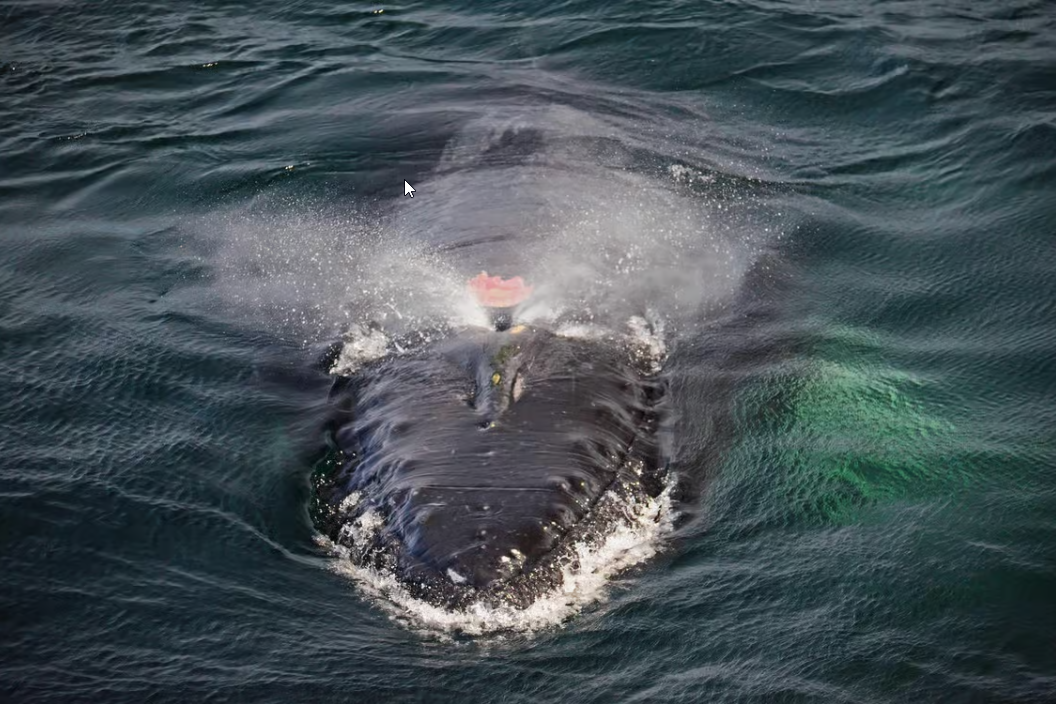
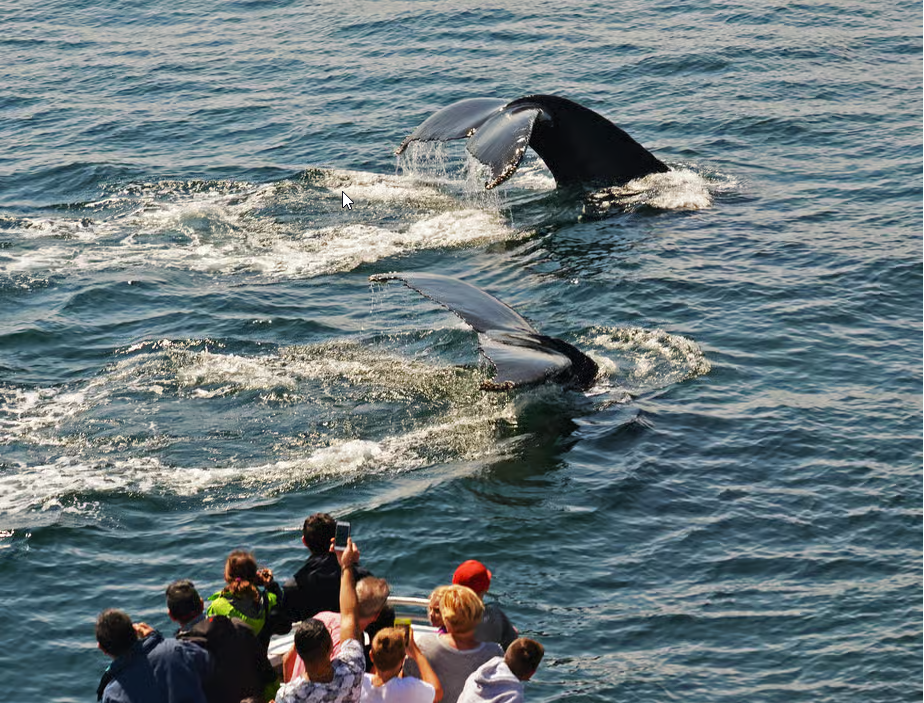
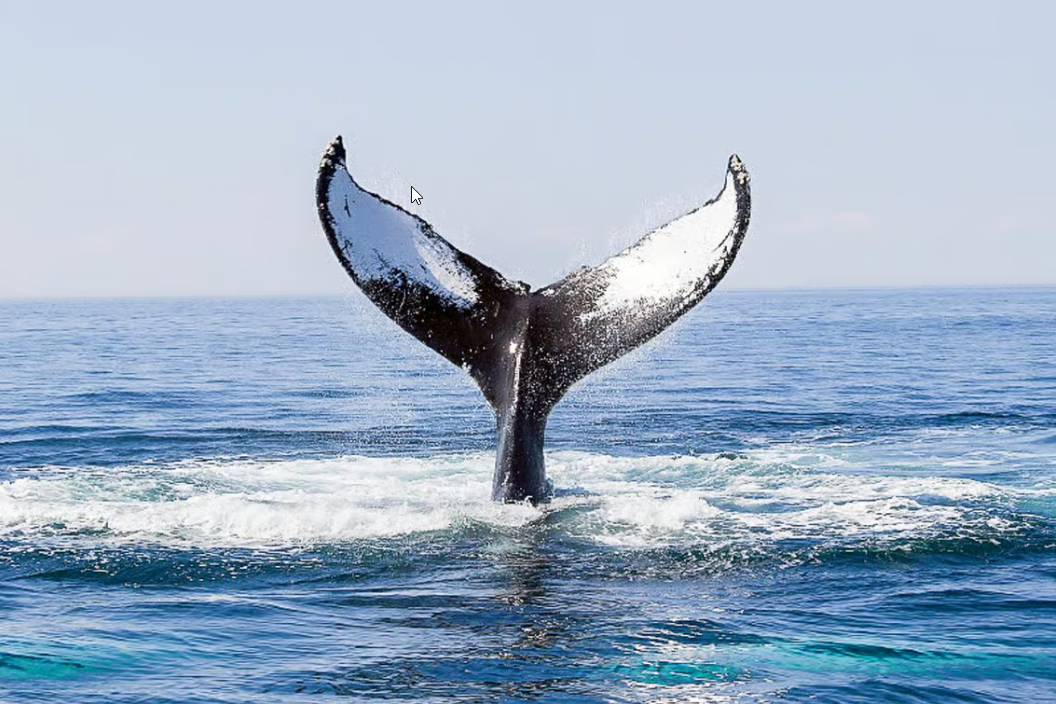
When a humpback prepares for a deep dive, its back arches above the surface before the whale disappears beneath the water. A powerful tail may then rise into view, creating one of the most recognizable scenes in whale watching.
A sighting can be surprisingly emotional.
You may spend several minutes scanning an apparently empty ocean. Then suddenly, a blow appears.
Everyone turns.
Cameras come out.
Children point toward the water.
The naturalist begins explaining what you are seeing.
And for a few seconds, an enormous wild animal becomes the center of attention for everyone onboard.
That is a memory many travelers carry long after returning to shore.
Fin whales are another impressive possibility.
Often called the second-largest animal on Earth after the blue whale, adult fin whales can reach extraordinary sizes. Their streamlined bodies allow them to move efficiently through the ocean despite their enormous scale.
Seeing a fin whale can provide a completely different experience from watching a humpback.
Instead of dramatic tail displays, you may notice the whale's powerful body moving steadily through the water.
The sheer scale can be difficult to appreciate until you see one in the ocean.
The boat suddenly feels very small.
The horizon suddenly feels much bigger.
And the ocean seems to reveal just how much life exists beneath its surface.
Minke whales are smaller than humpbacks and fin whales but can be fascinating to observe because of their speed and streamlined shape.
They can appear quickly and disappear just as fast, rewarding passengers who remain attentive.
For wildlife enthusiasts, spotting a minke whale adds another layer to the experience. Instead of simply looking for “a whale,” you begin learning to recognize differences in size, movement, surfacing behavior, and body shape.
That is where the onboard naturalists make a major difference.
Whales are the stars of the cruise, but they are not necessarily the only wildlife you may see.
The tour description highlights white-sided dolphins, a North Atlantic species known for its energetic behavior.
Depending on the conditions, travelers may also encounter seabirds and other marine animals.
The New England Aquarium notes that whale watch trips can provide opportunities to observe a diverse collection of marine life around Stellwagen Bank.
This means you should avoid focusing exclusively on the horizon waiting for a whale.
Look everywhere.
The water may reveal something unexpected.
A group of dolphins may suddenly appear beside the boat. Birds may gather above a feeding area. A whale may surface in a direction you weren't watching a moment earlier.
The more attentive you are, the richer your experience becomes.
A major advantage of this experience is that you aren't simply taken offshore and left to search for whales yourself.
New England Aquarium naturalists are onboard to provide expert commentary and help passengers understand the animals and the marine environment.
This educational element transforms the cruise from a simple boat excursion into an immersive wildlife experience.
As you watch the ocean, naturalists can help explain what you are seeing, identify species, discuss whale behavior, and provide context about the marine ecosystem.
You may learn why whales gather in particular areas.
You may discover how researchers identify individual whales.
You may hear explanations about feeding behavior, migration, diving, communication, or conservation.
And you can appreciate the animals not only as spectacular sights but as important parts of a much larger ecosystem.
The New England Aquarium explains that whale watch trips also contribute to scientific observation. Naturalists record species, behaviors, and weather information for the Center for Coastal Studies, meaning passengers can become part of a broader citizen-science effort simply by taking part in the experience.
That adds a meaningful dimension to the adventure.
You aren't merely taking photographs.
You are observing wildlife.
You are learning.
And your presence can help support continued understanding of marine ecosystems.
The vessel is designed to make the journey to the whale-rich waters both efficient and comfortable.
The cruise uses high-speed catamarans with outdoor viewing areas and climate-controlled indoor spaces. The boats also feature cushioned seating, tables, large windows, sound and video systems, and onboard food and beverage service available for purchase.
This combination is particularly valuable on an Atlantic whale watching trip because conditions can change.
On a sunny afternoon, you may want to spend most of your time outside, enjoying the breeze and unobstructed views.
If the wind becomes stronger or the temperature drops, you can move inside while continuing to observe the ocean through large windows.
Even during warmer months, offshore conditions can feel noticeably cooler than on land. The operator recommends bringing a sweatshirt or light jacket and dressing appropriately for the weather.
The result is an experience that balances adventure with comfort.
One of the most exciting aspects of the cruise is the opportunity to watch the ocean from outdoor viewing decks.
There is something different about standing outside with the Atlantic stretching in every direction.
You can feel the movement of the vessel.
You can hear the water.
You can scan the horizon without the distractions of a city.
And when a whale appears, you can experience the sight together with other passengers who are equally excited.
Outdoor viewing also gives photographers opportunities to capture the surrounding scenery and wildlife.
Bring your camera.
Bring binoculars if you have them.
And keep your equipment ready.
Whales do not wait for you to unlock your phone, change your camera settings, or find the perfect angle.
The best photograph may come unexpectedly.
While outdoor decks are ideal for wildlife viewing, the indoor cabin provides a comfortable alternative.
The climate-controlled interior includes cushioned seating and large windows, allowing passengers to relax while remaining connected to the experience.
This is particularly useful for families, older travelers, or anyone who wants occasional protection from wind and changing weather.
You can move between indoor and outdoor areas throughout the cruise according to your comfort level and the conditions.
The goal is not to stay in one place.
It is to find the viewing position that works best for you.
Whale watching can be an especially memorable activity for families traveling with children.
Instead of simply visiting another attraction, children have the opportunity to see enormous wild animals in their natural environment.
A whale surfacing in front of a boat can turn an ordinary vacation day into a story children remember for years.
The educational component also makes the experience meaningful beyond entertainment.
Children can learn about marine mammals, ocean ecosystems, animal behavior, and conservation while experiencing those subjects in real time.
They can ask questions.
They can watch the naturalists work.
They can search the horizon.
And they can experience the anticipation of waiting for the next sighting.
For parents, the cruise offers a combination of education, sightseeing, adventure, and memorable family time.
Infants require tickets to board according to the current activity information.
For couples visiting Boston, a whale watching cruise offers a refreshing alternative to traditional city sightseeing.
Instead of spending the entire day walking through busy streets, you can escape onto the water and share an experience that feels adventurous and spontaneous.
There is something inherently romantic about watching the ocean together.
You may stand side by side on the viewing deck.
You may photograph each other against the Boston waterfront.
You may share the excitement of spotting your first whale.
And you may find yourselves talking about the experience long after returning to shore.
It is especially appealing for travelers who want their Boston vacation to include something beyond museums, restaurants, and historical attractions.
One of the strongest reasons to choose this experience is that it connects two very different sides of Boston.
The first is the historic city.
The second is the wild Atlantic environment just offshore.
Your day begins at one of Boston's most recognizable waterfront areas. Then the city gradually gives way to harbor scenery, open water, and eventually a protected marine sanctuary.
That contrast creates a powerful travel experience.
You can spend the morning exploring Boston's historic streets and waterfront attractions, then board a whale watching cruise and experience the region's natural side in the afternoon.
The cruise departs from a location close to the New England Aquarium, the North End, Faneuil Hall, and other popular Boston landmarks, making it convenient to incorporate into a broader Boston itinerary.
Many travelers assume that seeing whales requires traveling to a remote coastal destination.
Boston offers a different possibility.
You can begin your whale watching adventure right from the downtown waterfront.
The cruise travels offshore to reach the marine sanctuary, but there is no need to arrange a separate long-distance land excursion.
That makes the experience particularly attractive for visitors with limited time in the city.
If you have only a few days in Boston, a whale watching cruise can add a completely different type of experience to your itinerary.
You get city sightseeing.
You get harbor views.
You get an ocean adventure.
And you get the possibility of encountering some of the largest animals on the planet.
One of the most important things to understand about whale watching is that wildlife is unpredictable.
Even experienced naturalists cannot control exactly where an animal will surface.
That uncertainty is not a weakness.
It is what makes the experience authentic.
The New England Aquarium's whale watch naturalist team emphasizes approaching each trip with an open mind because every outing represents a unique moment that cannot be repeated exactly the same way.
One cruise may produce several memorable sightings.
Another may offer a particularly close encounter with a single humpback.
Another might surprise passengers with dolphins or unusual marine activity.
Weather, sea conditions, wildlife movement, and seasonal patterns all influence what happens offshore.
So don't think of the cruise as watching a predetermined show.
Think of it as joining a live expedition.
You don't know exactly what the ocean will reveal.
And that is precisely why you keep watching.
There is a special moment on every whale watching trip when anticipation suddenly becomes reality.
You have been watching the ocean.
You have been listening to the naturalist.
You have been looking for signs.
Then someone spots something.
“Whale!”
Everyone turns.
The atmosphere changes instantly.
People point.
Cameras rise.
The naturalist begins directing attention toward the animal.
For a few seconds, everyone onboard shares the same experience.
Then the whale dives.
Silence.
Waiting.
Scanning.
And then another blow appears.
That cycle of anticipation, discovery, and excitement is at the heart of whale watching.
It is why travelers return to the ocean again and again.
If you love wildlife, photography, marine conservation, or outdoor adventures, this cruise offers an opportunity to connect with nature in a direct and memorable way.
The experience is not restricted to serious wildlife enthusiasts.
You don't need previous whale watching experience.
You don't need specialist equipment.
You don't need to know the difference between every whale species before you arrive.
The naturalists help you understand what you are seeing.
All you need is curiosity and patience.
Bring your camera, sunglasses, sunscreen, comfortable shoes, weather-appropriate clothing, and binoculars if available. The activity specifically recommends these items for the experience.
Several elements combine to make this Boston whale watching experience particularly appealing.
You are looking for whales in their natural environment rather than observing trained animals or captive displays.
New England Aquarium naturalists provide interpretation and educational commentary throughout the experience.
The cruise travels to a productive marine habitat known for whales and other wildlife.
The vessels are designed to travel efficiently to offshore whale habitat while providing comfortable passenger facilities.
Passengers can enjoy outdoor viewing decks or climate-controlled indoor spaces with large windows.
The cruise departs from One Long Wharf near the New England Aquarium and other major downtown attractions.
The cruise adds an outdoor marine adventure to a city vacation filled with history and culture.
The New England Aquarium whale watch generally operates from mid-May through November, giving travelers a long seasonal window for experiencing marine wildlife offshore. The 2026 season launched on May 18, with cruises operating throughout the season.
Different parts of the season can offer different conditions and wildlife experiences.
Spring brings the excitement of the beginning of whale watching season.
Summer offers long days and popular travel conditions.
Early fall can bring pleasant sightseeing conditions while Boston begins transitioning toward autumn.
Late-season trips can provide a different atmosphere, with changing weather and fewer summer crowds.
Rather than assuming there is one universally “best” date, consider what kind of Boston trip you want.
The most important thing is to allow enough time for the cruise and remain open to whatever wildlife conditions the ocean provides.
A whale watching cruise takes you into an environment that is very different from downtown Boston.
Even when the weather feels warm on land, the open water can be cooler and windier.
That is why practical preparation matters.
Wear comfortable clothing.
Bring a light jacket or sweatshirt.
Choose comfortable shoes.
Protect yourself from the sun.
Bring sunglasses.
And consider binoculars if you have them.
The operator specifically recommends comfortable shoes, sunglasses, a sun hat, camera, sunscreen, jacket, weather-appropriate clothing, and binoculars.
The right preparation allows you to concentrate on the experience rather than worrying about the weather.
The activity is listed as approximately 3.5 hours, while the operator notes that the average trip is around 3.5 to 4 hours. The location of the whales can require additional travel time, so travelers should leave some flexibility in their schedule.
This is especially important if you have another timed activity immediately afterward.
Give yourself breathing room.
Don't schedule a major attraction for the exact moment the boat is expected to return.
Ocean travel is naturally affected by wildlife location, sea conditions, and other operational factors.
A flexible schedule will make the day much more enjoyable.
During your whale watching adventure, you can expect a combination of sightseeing, wildlife observation, education, and relaxation.
The cruise includes:
Food and drinks are available for purchase onboard, but they are not included as part of the basic cruise experience.
This makes the cruise easy to enjoy without having to leave the boat during the journey.
Seeing whales in the wild comes with a responsibility to respect the animals and their environment.
The goal is not simply to get the closest possible photograph.
The goal is to observe.
Learn.
Appreciate.
And understand why these animals and their habitats matter.
The partnership between the New England Aquarium and Boston Harbor City Cruises places education and conservation at the heart of the whale watching experience. Naturalists help passengers understand marine wildlife while supporting broader efforts to learn about the ocean.
This approach helps turn a sightseeing activity into a meaningful encounter with nature.
Boston has no shortage of things to see and do.
You can walk the Freedom Trail.
Explore historic neighborhoods.
Visit museums.
Taste New England seafood.
Watch a baseball game.
Explore the waterfront.
And then, when you are ready for something completely different, head to Long Wharf and set sail.
A whale watching cruise can become the unexpected highlight of your Boston itinerary.
Instead of spending every hour surrounded by buildings and crowds, you get several hours of open sky, ocean air, wildlife, and adventure.
It is a chance to slow down and pay attention.
To watch the horizon.
To listen.
To wonder.
And to remember that one of the most extraordinary experiences in Boston may begin just a few steps from the city's historic waterfront.
A sightseeing cruise shows you a destination.
A whale watching cruise invites you into an ecosystem.
That distinction matters.
On this experience, the ocean is not simply scenery.
It is the destination.
The wildlife is not decoration.
It is the reason for the journey.
And the naturalists are not simply guides.
They help you understand the living environment around you.
That combination creates a deeper experience for travelers who want more than photographs.
You can photograph a historic building.
You can revisit a museum.
You can buy a souvenir.
But you cannot recreate the exact moment when a wild humpback whale surfaces beside your boat.
You cannot schedule the precise angle of the sunlight.
You cannot predict the direction of the next blow.
You cannot know whether dolphins will appear.
Those moments happen once.
And once they are gone, they become memories.
That is why whale watching remains such a powerful travel experience.
It combines anticipation with genuine discovery.
Every passenger boards hoping to see whales.
But what they remember afterward is often the feeling of being there when nature unexpectedly revealed itself.
From the historic waterfront of Boston to the open waters of Stellwagen Bank, the New England Aquarium Whale Watching Cruise offers a remarkable opportunity to experience Massachusetts from an entirely different perspective.
Set sail from One Long Wharf.
Leave the city behind.
Travel across Boston Harbor and into the Atlantic.
Listen to knowledgeable naturalists.
Watch the horizon.
Search for the unmistakable blow of a whale.
Look for humpbacks, fin whales, minke whales, dolphins, seabirds, and other marine life.
Step outside onto the viewing deck.
Return to the comfortable indoor cabin when you need a break.
And allow the ocean to decide what happens next.
The cruise operates as a seasonal whale watching experience from mid-May through November, with trips generally lasting around three to four hours.
Whether your dream is to see your first humpback whale, introduce your children to marine wildlife, capture unforgettable photographs, learn from professional naturalists, or simply experience an extraordinary day on the water, this Boston whale watching adventure offers a memorable way to connect with New England's ocean environment.
Your next great Boston memory may be waiting just beyond the harbor.
Set sail, keep your eyes on the horizon, and discover the wild side of Boston with an unforgettable New England Aquarium Whale Watching Cruise.
Your Boston whale watching adventure begins at the city's historic waterfront, where the urban landscape meets the sea. From the departure point near the New England Aquarium, you will board a high-speed whale watching catamaran and begin a journey that takes you away from the busy downtown streets and toward the open waters of Massachusetts.
The cruise is designed to combine scenic sightseeing, marine education, wildlife observation, and the excitement of searching for whales in their natural habitat. The New England Aquarium and Boston Harbor City Cruises operate the experience together, with Aquarium naturalists accompanying the trips and providing live information about the animals, their behavior, and the surrounding marine ecosystem. The current season operates from mid-May through November, with cruises generally lasting around three to four hours.
What makes the experience particularly memorable is that the journey is not simply transportation to a whale watching location. The voyage itself becomes part of the adventure.
As the vessel leaves Boston Harbor, you can watch the city gradually change behind you. Historic waterfront buildings, harbor islands, boats, and the Boston skyline provide a scenic backdrop before the surroundings become increasingly dominated by open water.
Then the search begins.
The naturalists and crew watch the horizon for signs of wildlife while passengers scan the water from the spacious viewing areas. A distant blow, a sudden splash, a flock of seabirds, or the movement of another vessel may all provide clues about where marine life is active.
Eventually, the boat reaches the waters around Stellwagen Bank National Marine Sanctuary.
This is where the experience truly comes alive.
Plan to arrive at the departure location with enough time to check in and board comfortably. The whale watch operates from Boston's Central Wharf area, immediately beside the New England Aquarium and within the downtown waterfront district.
This central location makes the cruise easy to include in a larger Boston sightseeing itinerary.
You can explore the waterfront before departure, enjoy nearby attractions, or simply arrive early and take in the harbor atmosphere.
Because the cruise involves ocean travel and wildlife observation, arriving without rushing is strongly recommended.
Have your booking confirmation ready.
Dress for the weather.
Bring your camera.
And prepare yourself for several hours on the water.
Once boarding begins, make your way onto the catamaran and find a comfortable place to begin the journey.
The whale watching experience takes place aboard a high-speed catamaran designed for offshore travel.
The vessels feature expansive outdoor viewing decks as well as climate-controlled indoor areas with large windows. Comfortable seating and onboard amenities make it possible to enjoy the cruise even when you need a break from the wind or sun.
For many passengers, the moment of boarding already creates a feeling of anticipation.
You know that somewhere beyond the harbor is an environment where humpback whales, fin whales, minke whales, dolphins, seabirds, and other marine animals may be feeding.
You don't know exactly what you will see.
And that uncertainty is part of the attraction.
Find a viewing position that feels comfortable, listen to the naturalist introduction, and keep your eyes open as the boat begins moving away from the dock.
The first part of the journey offers a different perspective of Boston.
From the water, familiar landmarks look different.
The city's architecture becomes part of a larger harbor panorama, while boats and waterfront activity provide a constantly changing foreground.
This is an excellent opportunity to take photographs before heading farther offshore.
It is also a good time to settle into the rhythm of the cruise.
The noise of downtown gradually becomes less important.
The horizon begins to dominate your view.
And the possibility of seeing a whale somewhere ahead starts to feel increasingly real.
The New England Aquarium describes the whale watch as an opportunity to combine harbor sightseeing with access to the marine environment of Stellwagen Bank.
The destination of the whale watching excursion is Stellwagen Bank National Marine Sanctuary, a protected marine area and productive feeding ground located in the Gulf of Maine.
The sanctuary is particularly important because of the concentration and diversity of marine life found there.
Cold, nutrient-rich waters contribute to a productive food web, helping create conditions that attract whales and other marine species. New England Aquarium naturalists explain that the area supports humpback whales, fin whales, minke whales, dolphins, seabirds, and other wildlife.
As you approach the sanctuary, your attention naturally shifts away from Boston and toward the sea.
This is the moment to start actively watching.
Look for unusual movement.
Watch for birds.
Scan the horizon.
Listen to the naturalists.
And pay attention whenever the crew changes direction or points toward an area of interest.
Whale watching is different from visiting an attraction where an event happens at a predetermined time.
There is no guaranteed schedule.
There is no stage.
There is no artificial display.
The whales are wild animals, and the naturalists must find them.
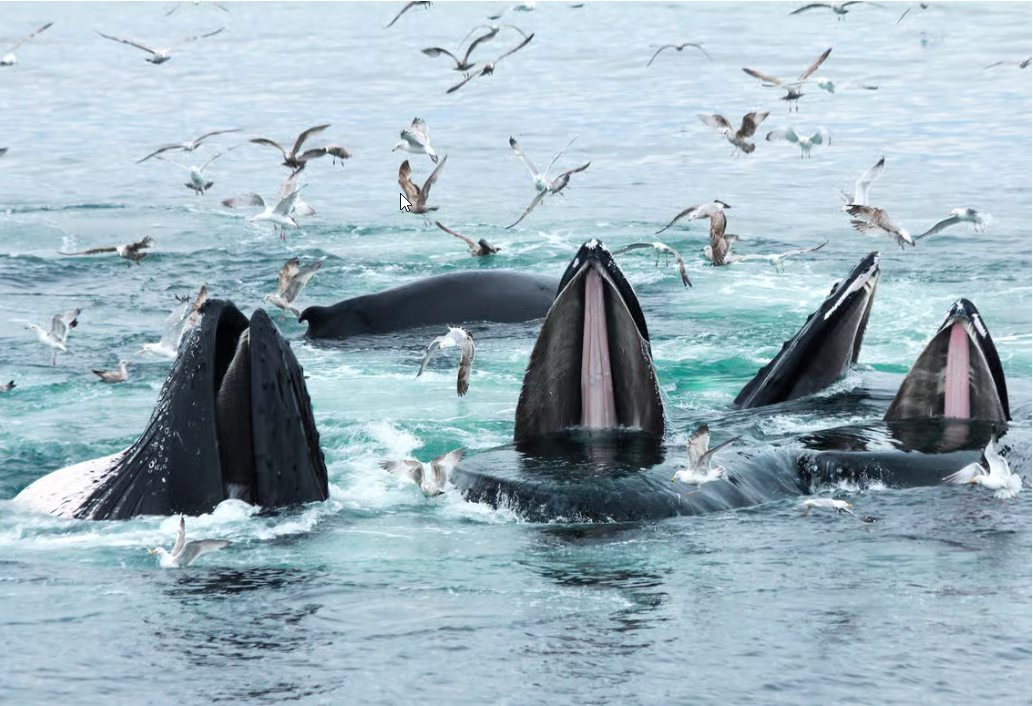
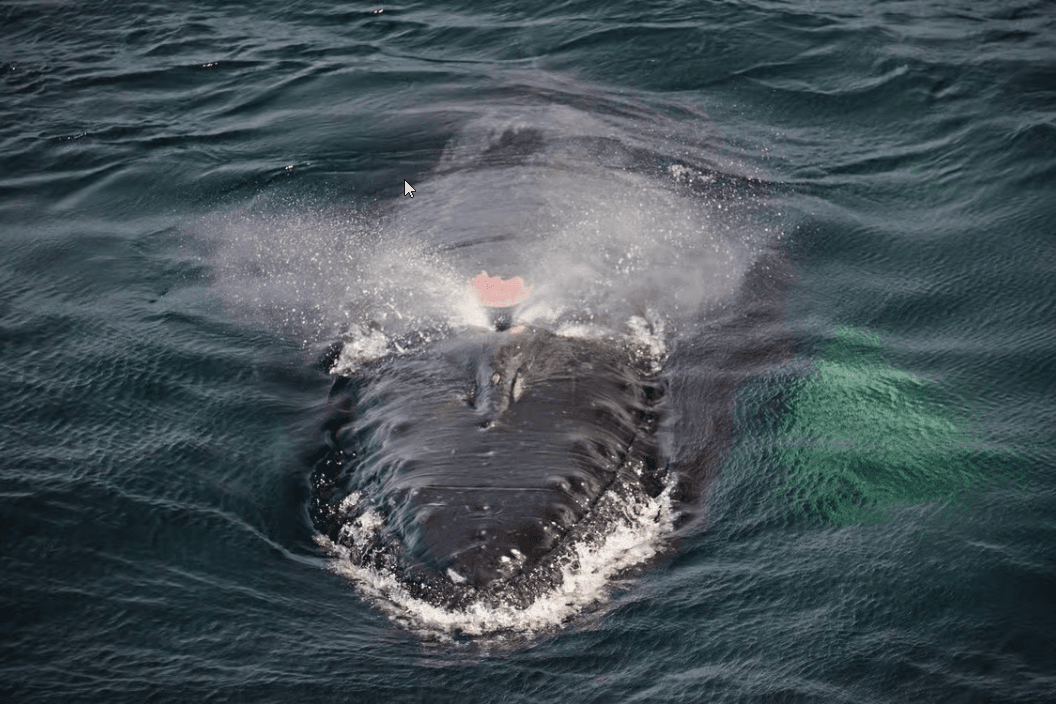
New England Aquarium naturalists describe using what they call the “four Bs” when looking for whales: body parts breaking the surface, birds gathering around feeding activity, boats that may indicate other wildlife watchers have found whales, and the characteristic blow produced when whales breathe at the surface.
This makes the search itself part of the education.
You begin to understand how experienced wildlife observers read the ocean.
Instead of simply waiting for someone to shout “whale,” you begin looking for clues yourself.
A small disturbance in the water suddenly becomes interesting.
A cluster of birds may indicate feeding activity.
A distant mist-like column may be the first sign of a large whale.
And then the excitement begins.
Humpback whales are among the most frequently observed whales on these trips, according to New England Aquarium naturalists.
A humpback encounter can take many forms.
You might see the whale surface and breathe before disappearing again.
You might see its back arch as it prepares for a deeper dive.
A tail or fluke may rise above the water.
You may witness feeding behavior.
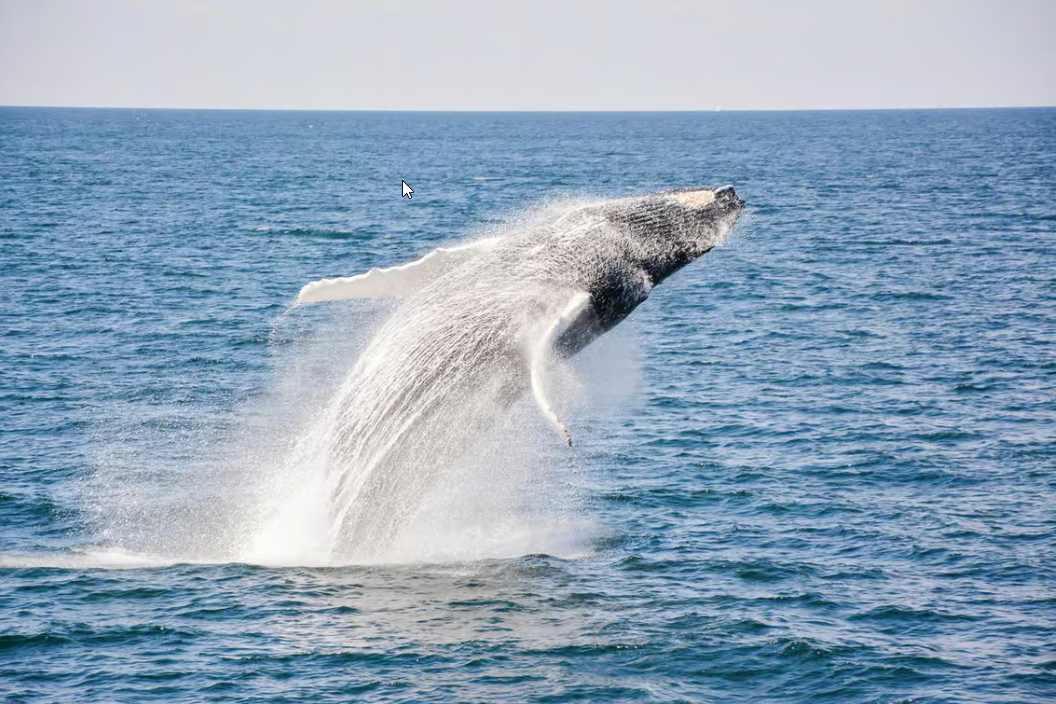
Or, if you are particularly fortunate, you may see a dramatic surface behavior such as breaching or flipper and tail slapping.
New England Aquarium notes that humpbacks can display a wide variety of behaviors from the surface, including breaching, bubble-net feeding, spouting, flipper slapping, and tail slapping.
The important thing is to remain ready.
A whale can appear for only a short period before diving again.
That means the best whale watching strategy is simple:
Watch.
Listen.
Be patient.
And keep your camera ready.
Fin whales are another spectacular possibility.
They are enormous animals and are recognized as the second-largest animals on Earth after blue whales. New England Aquarium naturalists note that fin whales can reach roughly 75 to 85 feet in length and are extremely fast for their size.
Their speed and streamlined bodies can make them more challenging to follow than some other whale species.
That challenge makes a sighting especially rewarding.
Imagine seeing a creature longer than many city buses moving through the water with surprising speed.
From the deck of a boat, the scale can be difficult to comprehend.
The animal may surface, travel, and disappear again before passengers fully process what they have seen.
It is a reminder that you are observing wildlife on its own terms.
Minke whales are another species regularly associated with Stellwagen Bank.
They are smaller than humpback and fin whales, but they can still create memorable sightings.
Their behavior can be quick and less predictable, so passengers should continue scanning the water rather than concentrating on one fixed location.
This is another reason the naturalist commentary adds so much value.
Learning what different species look like helps you become a better observer.
Instead of seeing every distant shape as simply “a whale,” you begin to recognize differences in size, surfacing style, movement, and body shape.
The experience becomes increasingly interactive.
You are not just watching.
You are learning how to watch.
Whales may be the primary reason for the cruise, but the marine environment around Stellwagen Bank is much more diverse.
Atlantic white-sided dolphins, common dolphins, harbor porpoises, seals, turtles, seabirds, and other animals may also be encountered. New England Aquarium specifically highlights the diversity of marine wildlife that can appear during whale watching excursions.
This means every moment on deck can potentially reveal something unexpected.
A group of dolphins moving through the water can create an entirely different kind of excitement from a whale sighting.
Seabirds can provide clues about feeding activity.
A seal may appear unexpectedly.
And occasionally, an unusual species can become the surprise highlight of the day.
That unpredictability is one of the strongest reasons to approach the cruise with an open mind.
Throughout the cruise, New England Aquarium naturalists help passengers understand the wildlife and environment they are seeing.
Their role goes far beyond simply naming species.
They can explain animal behavior, identify marine mammals, answer questions, and provide insight into the ecological importance of Stellwagen Bank.
This makes the experience particularly valuable for travelers who want an educational component alongside entertainment.
Children can learn about marine biology in a real-world environment.
Adults can better understand the science behind whale behavior.
Photography enthusiasts can learn what behaviors to watch for.
And first-time whale watchers can learn how experienced naturalists locate animals.
The more you understand, the more fascinating the ocean becomes.
When the boat reaches the whale-rich waters of Stellwagen Bank, take time to appreciate the environment itself.
It is easy to become focused entirely on finding a whale.
But look around.
Notice how different the open ocean feels from Boston Harbor.
Observe the changing color and texture of the water.
Watch the birds.
Feel the movement of the vessel.
Look at the horizon.
And remember that the animals you are searching for depend on this ecosystem for food and survival.
Stellwagen Bank is not simply a convenient whale watching location.
It is an important marine habitat.
That ecological context makes the experience more meaningful.
The cruise allows substantial time to search for marine wildlife once the boat reaches the offshore viewing area.
Because the exact location of whales changes, the vessel may move within the sanctuary in search of active wildlife.
This is why flexibility is important.
You may spend time traveling between sightings.
You may pause in an area where whales are active.
You may follow wildlife movement.
The naturalists and crew use their experience and observations to make the most of the available conditions.
Passengers should embrace this process rather than expecting a fixed sequence.
The ocean does not operate according to a tour timetable.
The itinerary provides the framework.
Nature provides the story.
A whale watching trip naturally creates a desire to photograph everything.
Bring your camera.
Use your phone.
Capture the Boston skyline.
Photograph the boat and the open ocean.
Take pictures of the horizon.
And, of course, try to capture the whales.
But remember that wildlife photography is unpredictable.
If you spend the entire trip looking through a screen, you may miss the best moment.
A good approach is to watch first and photograph second.
When a whale surfaces, take a few photographs and then look up.
Experience the encounter directly.
Some moments are better remembered than photographed.
Not every minute of the cruise will involve a whale on the surface.
That is normal.
Use the quieter periods to relax.
The catamarans offer outdoor viewing decks as well as climate-controlled indoor areas with large windows, allowing passengers to choose where they are most comfortable.
You can spend time outside scanning the horizon and then move indoors when you want shelter from wind or sun.
Food and beverages are available for purchase onboard, providing another convenient way to make the several-hour journey comfortable.
These pauses are also part of the wildlife experience.
They give you time to talk with fellow travelers, ask questions, review photographs, and simply enjoy being offshore.
After spending time searching for whales and marine wildlife, the vessel begins its return toward Boston.
The return journey provides an opportunity to relax and reflect on the experience.
If the weather is clear, watch the skyline gradually become more visible.
The familiar shape of Boston begins to replace the endless horizon.
The contrast can be striking.
Several hours earlier, you were surrounded by city buildings and harbor traffic.
Now you are returning from a marine sanctuary where you spent the day watching wild animals.
As Boston approaches, take one final look across the water.
The adventure is coming to an end, but the memories are just beginning.
The cruise concludes back at Boston's Central Wharf.
This convenient location means you can easily continue exploring the city after the whale watching adventure.
Depending on your schedule, you can continue sightseeing around the downtown waterfront, explore nearby attractions, enjoy a meal, or return to your accommodation.
Because the cruise is located in the heart of Boston's waterfront district, it works well as either a major activity in your day or one component of a larger sightseeing itinerary. The New England Aquarium itself is also located directly on Central Wharf.
Give yourself enough time to reach the departure location, locate the boarding area, and complete check-in without rushing.
A relaxed beginning creates a better experience.
Boston's downtown waterfront can be busy, particularly during popular travel periods, so build some flexibility into your schedule.
Conditions offshore can be considerably cooler than conditions on land.
Even on a pleasant summer day in Boston, wind on the open water can make the temperature feel noticeably lower.
New England Aquarium naturalists specifically recommend packing layers and preparing for cooler offshore conditions.
A light jacket, sweatshirt, or additional layer can make a major difference.
You will spend several hours aboard a moving vessel, and you may move between indoor and outdoor areas.
Comfortable footwear is therefore preferable to formal or restrictive shoes.
Sunlight reflected from the surface of the ocean can be intense.
Polarized sunglasses are particularly useful for reducing glare and making it easier to observe the water. New England Aquarium naturalists recommend polarized sunglasses for whale watching passengers.
Even if the temperature feels comfortable, you can spend significant time exposed to sunlight.
Apply sunscreen before boarding and consider bringing it with you for the journey.
A whale surfacing offshore is one of those moments you will want to remember.
Bring a camera or smartphone and keep it accessible.
But don't forget to put the camera down occasionally.
The real experience is happening in front of you.
Binoculars can be useful for scanning the horizon and observing distant wildlife.
They are not required, but they can enhance the experience for nature enthusiasts and bird watchers.
Several hours on the water can be surprisingly tiring, particularly on warm or sunny days.
Drink water throughout the experience and take breaks when necessary.
Yes, whale watching can be an excellent family activity.
Children get to experience marine biology outside a classroom and see animals they may previously have encountered only in books, documentaries, or aquarium exhibits.
The presence of professional naturalists adds educational value and gives children an opportunity to ask questions about whales, dolphins, ocean ecosystems, and animal behavior.
Parents should nevertheless prepare children for the fact that wildlife sightings are unpredictable.
The best mindset is not:
“We will see a whale at exactly 2:15.”
Instead, think:
“We are going into the ocean to discover what wildlife we can find.”
That mindset makes the experience more enjoyable for everyone.
The cruise offers indoor climate-controlled areas with large windows as well as outdoor viewing decks, giving passengers flexibility during the journey.
Travelers should consider their individual comfort with boat travel, ocean conditions, and several hours aboard a vessel.
For anyone who may be sensitive to motion, preparation is particularly important.
Choose a comfortable position, stay hydrated, and follow the crew's guidance.
If you have specific accessibility requirements or mobility concerns, confirm current arrangements with the operator before booking.
Ocean conditions can differ from conditions in downtown Boston.
Weather and sea conditions may affect the feel of the journey, even when conditions on land appear pleasant.
That is another reason to dress in layers and bring appropriate protection.
The vessels provide indoor climate-controlled spaces, giving passengers a more sheltered option during the cruise.
Operational decisions regarding sailing and safety are made by the cruise operator.
Travelers should always follow crew instructions.
This is one of the most important questions to understand before booking any wildlife experience.
Whales are wild animals.
No responsible operator can guarantee that a specific animal will appear at a specific time or location.
New England Aquarium naturalists emphasize that every whale watch is a unique snapshot in time and encourage passengers to approach the experience with an open mind.
That uncertainty should not be viewed as a flaw.
It is what makes wildlife encounters authentic.
The goal is not to watch a rehearsed performance.
It is to experience the ocean as a living ecosystem.
And even when the whales behave differently than expected, the journey can still provide memorable harbor scenery, seabirds, dolphins, marine education, and the experience of being offshore.
The New England Aquarium is one of Boston's most recognizable marine institutions, and its partnership with Boston Harbor City Cruises brings Aquarium naturalists directly onto the whale watching experience.
That connection adds credibility and educational depth.
Rather than simply traveling offshore, you have knowledgeable naturalists helping you understand the marine life around you.
This is particularly useful for first-time whale watchers.
The cruise travels to one of the region's most productive marine habitats, where whales and other wildlife gather.
High-speed catamarans combine efficient travel with outdoor viewing areas and climate-controlled indoor spaces.
Central Wharf is easy to combine with a broader Boston itinerary.
You don't need to travel to a remote coastal town to begin the adventure.
The cruise appeals to both travelers seeking adventure and those interested in learning more about marine biology and conservation.
Families, couples, solo travelers, photographers, nature lovers, and first-time Boston visitors can all find something meaningful in the experience.
Many Boston visitors spend their entire trip exploring the city's history.
That is understandable.
Boston is deeply connected to American history.
But the region's identity is also connected to the ocean.
Fishing.
Shipping.
Harbors.
Islands.
Marine ecosystems.
Coastal communities.
And wildlife.
A whale watching cruise provides a way to experience this maritime side of New England directly.
You don't just look at Boston Harbor.
You travel through it.
You don't just learn about marine ecosystems.
You enter one.
You don't just read about whales.
You wait for one to surface in front of you.
That difference can turn an ordinary city vacation into something much more memorable.
One of the strongest reasons to book this experience is the opportunity to learn while traveling.
Travel becomes more rewarding when you understand what you are seeing.
When a naturalist explains why whales gather around Stellwagen Bank, the landscape becomes more meaningful.
When you learn how naturalists identify individual whales, every sighting becomes more interesting.
When you understand how birds can indicate feeding activity, you begin looking at the ocean differently.
When you learn about conservation challenges, a whale encounter becomes more than a photograph.
It becomes a reminder that these animals depend on healthy oceans.
The New England Aquarium's partnership with Boston Harbor City Cruises also contributes to ongoing marine observation. Naturalists record species, behaviors, and weather information for the Center for Coastal Studies, meaning whale watch passengers contribute indirectly to scientific knowledge through their participation.
That gives the experience an additional sense of purpose.
Responsible tourism is increasingly important to modern travelers.
A whale watching experience can provide more than entertainment when it helps people develop a stronger connection to the ocean.
Seeing a humpback whale rise from the water is different from seeing a photograph.
Watching dolphins move through the ocean is different from reading about them.
Experiencing the scale of a fin whale can change how you think about marine wildlife.
These encounters can create a personal connection with conservation.
The New England Aquarium's mission includes ocean conservation, education, and science-based approaches to protecting marine ecosystems.
That educational philosophy is reflected in the whale watching experience.
A whale watching cruise can easily become part of a full day around Boston's waterfront.
Arrive in the Central Wharf area and explore the surrounding waterfront.
Take photographs.
Enjoy breakfast or coffee.
Visit nearby attractions if your schedule allows.
Then make your way to the departure area with plenty of time for boarding.
Focus on the experience.
Listen to the naturalists.
Watch the water.
Take photographs.
Move between indoor and outdoor viewing areas.
Stay patient.
Return to Central Wharf and continue exploring Boston.
Enjoy a meal.
Walk along the waterfront.
Visit another attraction.
Or simply relax and talk about the wildlife you saw.
This flexibility makes the whale watch a useful addition to both short weekend trips and longer Boston vacations.
Whale photography can be challenging because animals surface unpredictably.
Keep your camera ready.
Use a fast shutter speed when possible.
Watch the direction the naturalists are indicating.
Take multiple photographs during a sighting rather than waiting for a perfect single frame.
But don't spend the entire encounter looking through the viewfinder.
The best photograph is not always the most important part of the experience.
Sometimes the most valuable memory is the moment you looked away from the screen and watched a humpback disappear beneath the Atlantic.
If this is your first whale watching cruise, don't worry about knowing anything about whales beforehand.
The naturalists will help.
Start by watching the water rather than constantly looking for a full whale body.
Learn to recognize blows.
Watch for birds.
Look for unusual splashes.
Pay attention when the naturalists become excited.
And remember that whales do not always behave dramatically.
A calm surfacing can be just as fascinating as a breach.
The more patient you become, the more rewarding the experience tends to be.
If your Boston itinerary is short, a whale watching cruise is an efficient way to experience something that cannot be replicated on a typical city walking tour.
The central departure location means you can incorporate the experience into a downtown sightseeing day.
However, because the cruise itself takes approximately three to four hours, schedule it as a substantial part of your day rather than treating it as a quick attraction.
Leave additional time around the scheduled cruise.
This protects your itinerary from becoming stressful if the return takes longer than expected.
For the best possible experience, consider bringing:
The official naturalist guidance particularly recommends polarized sunglasses, hydration, layers, and sunscreen because offshore conditions can be different from conditions on land.
A responsible whale watching experience should never promise that a specific species will breach directly beside the boat.
Wildlife is unpredictable.
You may see a whale surface calmly.
You may witness dramatic behavior.
You may see dolphins.
You may observe seabirds.
You may spend time searching before the next sighting.
All of these are legitimate wildlife experiences.
The best travelers approach whale watching with curiosity rather than rigid expectations.
If nature gives you a spectacular breach, it becomes an unforgettable bonus.
If a humpback simply surfaces and dives, that is still an extraordinary encounter with one of the world's largest animals.
The value of this experience comes from the combination of several elements rather than a single attraction.
You are receiving a scenic Boston harbor journey, transportation to a major marine wildlife habitat, access to professional naturalist interpretation, opportunities for wildlife observation, indoor and outdoor passenger areas, and several hours immersed in the New England marine environment.
It is therefore more than a standard harbor cruise.
And it is more than a wildlife excursion.
It combines both.
For travelers who want to maximize their time in Boston, that combination can make the experience particularly appealing.
Travel is often remembered through stories.
Years later, people may not remember every restaurant they visited.
They may forget which street they walked down.
But they often remember extraordinary moments.
“The day we saw our first whale.”
“The dolphins that suddenly appeared beside the boat.”
“The moment everyone on deck started pointing toward the same spot.”
“The naturalist explaining what was happening.”
“The Boston skyline disappearing behind us.”
Those are the stories that become part of a travel experience.
A whale watching cruise creates opportunities for exactly those kinds of memories.
Choose a departure time that allows enough flexibility before and after the cruise.
Avoid scheduling another important activity immediately after the expected return.
Whale watching is seasonal, and schedules can vary.
The New England Aquarium currently identifies the whale watch season as running from mid-May through November.
Always confirm your selected date and departure details at the time of booking.
Look at the forecast before leaving your accommodation.
Even when the forecast looks pleasant, prepare for cooler conditions offshore.
Boston may feel warm.
The ocean may not.
Layers are one of the simplest ways to stay comfortable.
Wildlife experiences can require patience.
Allow extra time before and after the listed cruise duration.
The crew operates in an environment where safety and wildlife awareness are essential.
Listen to instructions.
Remain in designated passenger areas.
Follow guidance about approaching or observing wildlife.
And allow the naturalists to direct your attention when animals are spotted.
Their experience helps make the most of the conditions available on the day.
The best way to approach this cruise is with curiosity.
Don't ask only:
“How many whales will I see?rdquo;
Ask:
“What will the ocean show me today?rdquo;
That change in mindset can completely transform the experience.
You might see a humpback.
You might see a fin whale.
You might encounter dolphins.
You might watch seabirds feeding.
You might learn something fascinating from the naturalists.
You might photograph the Boston skyline from the water.
You might simply spend several hours breathing fresh ocean air away from the city.
All of these become part of the adventure.
Boston is a city of stories.
Some stories are about revolution.
Some are about ships.
Some are about immigration, sports, art, food, and culture.
But beyond the waterfront lies another story.
It is the story of the Gulf of Maine.
The story of whales returning to productive feeding grounds.
The story of marine ecosystems.
The story of conservation.
And the story of travelers who venture offshore to witness it.
The New England Aquarium Whale Watching Cruise gives visitors a chance to become part of that story for several unforgettable hours.
If you are looking for a Boston activity that is:
then a whale watching cruise is an excellent addition to your trip.
The combination of open ocean, marine wildlife, expert interpretation, and Boston Harbor scenery creates an experience that is difficult to duplicate anywhere else in the city.
Eventually, the boat returns to Central Wharf.
The city comes back into view.
The sounds of the waterfront become familiar again.
The cruise is over.
But the experience stays with you.
Maybe you saw a humpback whale.
Maybe a fin whale crossed your path.
Maybe dolphins raced alongside the vessel.
Maybe the most memorable part was learning something new from the naturalists.
Maybe it was simply standing on the deck with the Atlantic stretching toward the horizon.
Whatever the day brings, you have experienced Boston from a perspective most city visitors never get to see.
You have left the city behind and entered a living marine environment.
That is what makes this experience so special.
A Boston vacation should be more than a checklist of attractions.
It should contain moments that surprise you.
Moments that make you stop.
Moments that make you look toward the horizon.
And moments that become stories you tell long after you return home.
The New England Aquarium Whale Watching Cruise offers exactly that kind of opportunity.
Start at Central Wharf.
Board the high-speed catamaran.
Cruise away from Boston Harbor.
Follow the coastline and open ocean toward Stellwagen Bank National Marine Sanctuary.
Learn from experienced naturalists.
Search for humpback, fin, and minke whales.
Keep an eye out for dolphins, seabirds, seals, turtles, and other marine wildlife.
Enjoy the open-air viewing decks.
Move indoors when you want comfort.
Take photographs.
Ask questions.
Stay patient.
And let the ocean surprise you.
The New England Aquarium and Boston Harbor City Cruises have operated this experience as a partnership designed to connect visitors with marine wildlife while increasing awareness of the ocean and conservation. Current official information describes the whale watch as a three-to-four-hour experience aboard high-speed catamarans, operating from mid-May through November.
Most importantly, remember that every whale watch is different.
The animals are wild.
The ocean changes.
The weather changes.
The location of wildlife changes.
And the exact moment when you see your first whale can never be recreated.
That is the magic.
You are not watching a show.
You are witnessing nature.
If you have already explored Boston's historic streets, visited its famous landmarks, walked along the waterfront, or simply want to add something extraordinary to your itinerary, make time for the ocean.
Leave the traffic behind.
Leave the buildings behind.
Follow the horizon.
And discover the marine world just beyond Boston.
The next splash could be a dolphin.
The next distant mist could be a whale's blow.
The next dark shape beneath the surface could belong to one of the largest animals on Earth.
You won't know until you look.
And that is why the journey is worth taking.
Set sail from Boston, venture into the waters of Stellwagen Bank National Marine Sanctuary, and experience New England's magnificent marine wildlife where it belongs—in the wild.
From the moment the catamaran leaves Central Wharf to the moment Boston's skyline returns on the horizon, this experience offers a rare combination of adventure, education, nature, and discovery.
Whether you are traveling with children, enjoying a romantic Boston getaway, exploring the city alone, visiting with friends, or simply searching for an unforgettable New England experience, a whale watching cruise gives you a reason to step outside the usual tourist itinerary.
Come prepared for the wind.
Come ready with your camera.
Come curious.
Come patient.
And most importantly, come ready to be surprised.
Because somewhere beyond Boston Harbor, the ocean is alive—and your next unforgettable travel story may be waiting just beneath the surface.
The Boston Whale Watching Cruise typically lasts approximately 3 to 4 hours, depending on ocean conditions and the time required to locate marine wildlife. During the trip, passengers travel from Boston Harbor toward productive whale-watching waters, where experienced naturalists help identify whales and explain their behaviors. Allow additional time before and after the cruise when planning your Boston itinerary.
The cruise departs from Boston's waterfront near the New England Aquarium, around Central Wharf and Long Wharf. This convenient location makes it easy to combine your whale-watching adventure with other Boston attractions, waterfront walks, restaurants, and sightseeing activities. Check your booking confirmation for the exact boarding location and arrival instructions.
Passengers may encounter several whale species, including humpback whales, fin whales, and minke whales. The waters off Massachusetts provide important feeding areas for marine mammals during the whale-watching season. Experienced naturalists help identify the animals and explain their behaviors, feeding patterns, and migration. However, whale sightings and the species encountered cannot be guaranteed because the animals live in their natural environment.
No, whale sightings cannot be guaranteed on every departure. Whales are wild animals, and their locations change according to feeding activity, migration, weather, and other natural conditions. The crew and onboard naturalists use their experience to search for promising whale-watching areas. Even when wildlife behaves unpredictably, passengers can enjoy the Boston Harbor scenery, ocean views, seabirds, and educational commentary.
Yes, the cruise can be an exciting family activity. Children can experience the ocean, observe marine wildlife, and learn about whales from knowledgeable naturalists. Seeing a whale surface, blow, or raise its tail can create a memorable experience for young travelers. Parents should supervise children throughout the trip, especially on outdoor viewing decks, and review current ticket requirements before booking.
Infants and toddlers may be permitted to participate, subject to the operator's current booking rules and ticket requirements. Families should confirm the applicable age policy, whether every child needs a ticket, and any requirements for accompanying adults before making a reservation. Because the trip involves time on the water, parents should also consider their child's comfort with boat travel, changing weather, and potentially choppy conditions.
Food and beverages are generally not included in the standard cruise ticket unless your selected booking option specifically states otherwise. Onboard refreshments may be available for purchase, depending on the vessel and current service arrangements. Review your booking details before departure and consider eating beforehand if you prefer a full meal. Bringing any permitted personal snacks or drinks should be checked against the operator's current rules.
The cruise can be an enjoyable sightseeing experience for many older travelers who are comfortable spending several hours aboard a boat. Indoor seating provides an alternative to standing outside for extended periods, while outdoor decks offer opportunities to observe wildlife. However, sea conditions, boarding arrangements, and individual mobility needs can affect comfort. Travelers requiring wheelchair access or other assistance should confirm accessibility arrangements directly with the operator before booking.
Dress in comfortable layers and bring a light jacket, sweatshirt, or wind-resistant outer layer. Conditions offshore can feel cooler and windier than they do along Boston's waterfront, even when the weather is pleasant on land. Comfortable shoes with good grip are recommended. Sunglasses, sunscreen, and a hat can also be useful on sunny days, particularly when spending time on outdoor viewing decks.
Consider bringing the following items for a comfortable experience:
Pack light enough to move around the vessel comfortably, and keep electronic equipment protected from wind, spray, and accidental drops.
Cruise operations depend on weather, sea conditions, and the operator's safety assessment. Some conditions may allow the trip to proceed, while severe weather or unsafe conditions may lead to changes or cancellation. Indoor areas can provide shelter from wind and cooler temperatures when the vessel is operating, but they do not guarantee that every weather condition will be comfortable. Check the operator's current cancellation, rescheduling, and refund policies before booking.
Yes, dolphins are among the marine animals that passengers may encounter. Possible sightings include Atlantic white-sided dolphins and common dolphins, although encounters depend on natural conditions and the animals' movements. Seals, seabirds, and other marine wildlife may also appear during the trip. The naturalists help passengers understand the differences between species and explain why the surrounding waters support diverse marine life.
Stellwagen Bank National Marine Sanctuary is a protected marine area off the coast of Massachusetts. Its productive waters support marine food webs that attract whales and other wildlife. The sanctuary is an important destination for whale-watching trips departing from the Boston area because feeding opportunities can bring large marine mammals into the region. Visiting these waters also offers an opportunity to learn about ocean ecosystems and marine conservation.
The whale-watching vessels used for this experience offer indoor areas as well as outdoor viewing opportunities, although specific amenities can vary by vessel. Indoor spaces can be useful when temperatures drop or the wind becomes uncomfortable. Outdoor decks provide a more open view of the surrounding ocean and can make it easier to observe wildlife from different angles. Follow crew instructions when moving between indoor and outdoor areas.
Yes, photography is a popular part of the experience. You can use a smartphone or camera to capture the ocean, Boston Harbor, seabirds, and any whales or dolphins you encounter. A zoom lens can be useful, but patience is often more important than equipment because marine animals surface unpredictably. Keep your camera secure, protect it from water spray, and follow crew instructions while taking photographs.
For many first-time visitors, the cruise offers a distinctive way to experience Boston beyond its historic neighborhoods and city landmarks. It combines a departure from the waterfront with time in the open ocean, opportunities to observe marine wildlife, and educational commentary from naturalists. The experience can appeal to couples, families, photographers, wildlife enthusiasts, and travelers seeking a memorable outdoor activity during their Boston visit.
Boston's whale-watching season generally runs from spring into autumn, with trips commonly offered from around mid-May through November. Wildlife activity varies throughout the season, and sightings depend on the movement and feeding behavior of whales. Summer can be convenient for travelers planning a wider Boston sightseeing itinerary, while other parts of the season may offer different conditions and experiences. Check the current operating calendar before selecting your travel dates.
Booking ahead is a sensible choice, particularly if you plan to travel on a weekend, during summer, or on a specific date. Advance reservations can help you organize your Boston itinerary and reduce the uncertainty of arranging an activity at the last minute. Availability, prices, departure times, and ticket conditions can change, so review the live booking information before confirming your reservation.
Yes. The waterfront departure area is conveniently located for exploring other parts of central Boston. Depending on your schedule, you may be able to visit the New England Aquarium, walk along the harbor, explore historic neighborhoods, or enjoy a meal before or after the cruise. Because the whale-watching trip takes several hours and sea conditions can affect the experience, leave a comfortable time buffer before booking other activities.
The experience combines whale watching with educational interpretation from knowledgeable naturalists associated with the New England Aquarium's whale-watching program. Instead of simply looking for animals, passengers can learn about whale species, feeding behavior, marine habitats, and conservation. The journey from Boston Harbor toward productive offshore waters adds a scenic element, while indoor and outdoor viewing areas give passengers different ways to enjoy the trip.
Yes. Couples can enjoy the cruise as a shared outdoor adventure, whether they are visiting Boston for a weekend, celebrating a special occasion, or looking for something different from a traditional city tour. Watching whales in the open ocean can create a memorable shared experience, while the harbor departure offers attractive waterfront scenery. Consider booking a departure that fits comfortably with your other plans.
Yes, solo travelers can enjoy the experience without needing to organize a group. The cruise provides opportunities to observe wildlife, learn from naturalists, take photographs, and meet other travelers who share an interest in marine life. Review the available ticket options, departure times, and booking conditions to find a suitable trip for your schedule.
Arrive according to the time stated in your booking confirmation and allow enough time to find the departure point. Keep your ticket or confirmation readily available, dress for potentially cooler offshore conditions, and listen carefully to the crew's boarding instructions. Once aboard, follow safety guidance and respect any restrictions around railings, restricted areas, and wildlife observation. Confirm current baggage, food, and accessibility policies before departure.
The experience includes educational commentary from onboard naturalists who help passengers identify marine wildlife and understand animal behavior. Depending on the sightings and conditions, explanations may cover whale feeding, movement, habitat, and the role of productive marine ecosystems. Responsible wildlife watching also provides an opportunity to understand why animals must be observed with care and why sightings should never be treated as guaranteed performances.
To book, select your preferred travel date and review the available departure times, ticket options, total price, meeting point, and cancellation terms. Confirm the details for your chosen experience before completing payment. Keep your reservation confirmation and check for any operator messages before the trip. If you have specific questions about accessibility, age requirements, onboard amenities, or weather-related changes, confirm them with the operator before purchasing your ticket.
After completing your reservation, our team will contact you one day before your tour to confirm your exact hotel / Airbnb pickup time or meeting point.
If you selected a meeting point during your booking, please note that your reservation is fully confirmed — simply arrive at the chosen location at the scheduled time.
Please ensure the WhatsApp number, phone number, or email you entered during booking is correct so we can reach you smoothly.
For any changes to your reservation, weather questions, or special requests, feel free to contact us:
We look forward to welcoming you! 🌴✨