Seattle: Space Needle & Chihuly Garden and Glass Ticket
5.0(2584)
From$62
Seattle: Space Needle & Chihuly Garden and Glass Ticket
5.0 (2,584)
From$62per person

NYC: Museum of Modern Art (MoMA) Entry Ticket
Step into one of New York City’s most celebrated cultural destinations with a pre-booked Museum of Modern Art (MoMA) entry ticket and discover an extraordinary world where painting, sculpture, photography, film, architecture, design, and contemporary creativity come together under one roof.
Located in Midtown Manhattan at 11 West 53rd Street, MoMA offers an inspiring journey through some of the most influential artistic movements and ideas of the modern era. From instantly recognizable masterpieces to thought-provoking contemporary works, every gallery offers a new perspective on how artists have interpreted the world around them.
For travelers visiting New York City, a visit to MoMA is more than simply walking through an art museum. It is an opportunity to slow down amid the energy of Manhattan, encounter works that have shaped popular culture and art history, and see famous creations in person rather than through a screen or textbook.
With your pre-booked admission, you can head directly to the museum entrance, present your barcoded voucher to museum staff, and begin exploring without needing to stop at the ticket desk. The experience is designed to give you more time for what really matters: discovering art.
Whether you are an experienced art lover, a first-time museum visitor, a family traveling with children, a couple looking for a cultural experience, or simply a curious traveler wanting to experience one of New York’s iconic attractions, the MoMA entry ticket provides a flexible way to explore the museum at your own pace.
New York is famous for its skyscrapers, Broadway shows, historic neighborhoods, restaurants, and world-class attractions. Yet beneath the city’s fast-moving rhythm is a remarkable cultural landscape, and MoMA occupies an important place within it.
The Museum of Modern Art has long been associated with modern and contemporary artistic innovation. Its collection spans multiple forms of creative expression, allowing visitors to move beyond the traditional idea of what a museum can be.
One room may introduce you to a groundbreaking painting. Another may explore photography or architecture. A different gallery may shift your attention toward sculpture, design, digital creativity, or experimental forms of artistic expression.
That variety makes a visit to MoMA especially rewarding for travelers who want more than a conventional sightseeing stop.
Instead of simply viewing a collection of paintings in chronological order, you can experience different artistic ideas, materials, movements, and perspectives as you move through the galleries.
The museum’s collection includes renowned works associated with artists such as Claude Monet, Henri Matisse, Salvador Dalí, Andy Warhol, Frida Kahlo, Pablo Picasso, and many others. The exact works and exhibitions available during your visit can change, making each trip to MoMA potentially different.
For visitors planning a New York itinerary, MoMA can also fit naturally into a day exploring Midtown Manhattan. Its central location places you within easy reach of many other famous New York attractions, making it convenient to combine an art-filled morning or afternoon with additional sightseeing.
One of the most exciting aspects of visiting MoMA is the variety of artistic experiences available inside the museum.
Modern art challenged many traditional assumptions about what art should look like. Artists experimented with color, shape, perspective, materials, subject matter, and technique. Later generations continued that experimentation through photography, film, design, digital media, performance, and other creative formats.
At MoMA, visitors can experience that evolution through works spanning different periods and artistic disciplines.
You might begin your visit with a painting that looks familiar from books or online images. Seeing it in person, however, can reveal details that reproduction cannot fully communicate—the scale of the canvas, the texture of the surface, the relationship between colors, and the way the artwork occupies physical space.
That difference between seeing art digitally and standing in front of the original is one of the great pleasures of visiting a major museum.
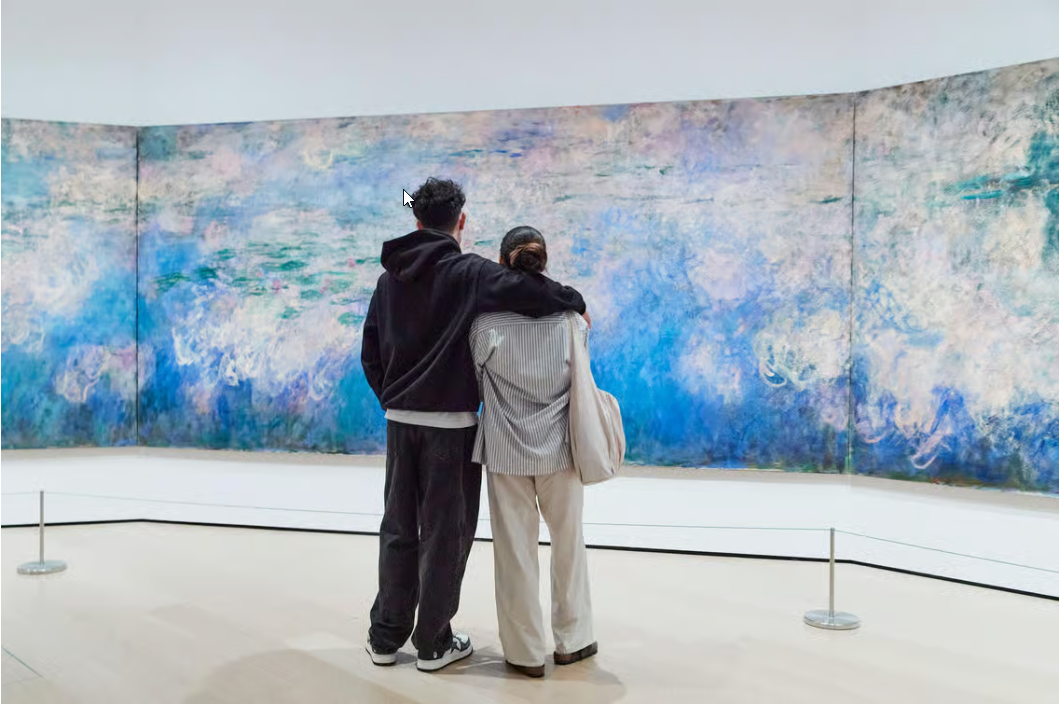
Claude Monet’s Water Lilies is one of the works associated with MoMA’s collection and a memorable example of how an apparently simple subject can become an exploration of light, color, atmosphere, and perception.
Monet repeatedly returned to water lilies and changing views of his garden, studying how the appearance of a scene could shift with light, weather, and time.
Standing before a large painting such as this encourages you to look differently. Instead of searching for a single obvious subject, you can notice reflections, brushwork, subtle changes in tone, and the relationship between the water and the flowers.
It is an experience that rewards patience.
Rather than rushing from one famous artwork to another, give yourself a few moments to look closely. Notice what catches your attention first, then look again and see what you missed.
That is part of the magic of museum travel: the experience can become personal even when millions of people have seen the same artwork before.
Few works demonstrate the relationship between art and everyday consumer culture as memorably as Andy Warhol’s Campbell’s Soup Cans.
The work consists of 32 canvases, each representing a different variety of Campbell’s soup. Warhol presented the cans in a way that referenced the repetition and visual language of supermarket products and advertising.
For visitors, the work creates an immediate connection between ordinary life and contemporary art.
You do not need an advanced knowledge of art history to appreciate the idea. Instead, you can ask yourself simple questions.
Why does an everyday product become the subject of a major artwork?
What happens when repetition changes the way we look at something familiar?
Can advertising, packaging, and consumer products become part of artistic expression?
These questions are exactly the kind of conversations that make modern art engaging for both experienced art enthusiasts and first-time museum visitors.
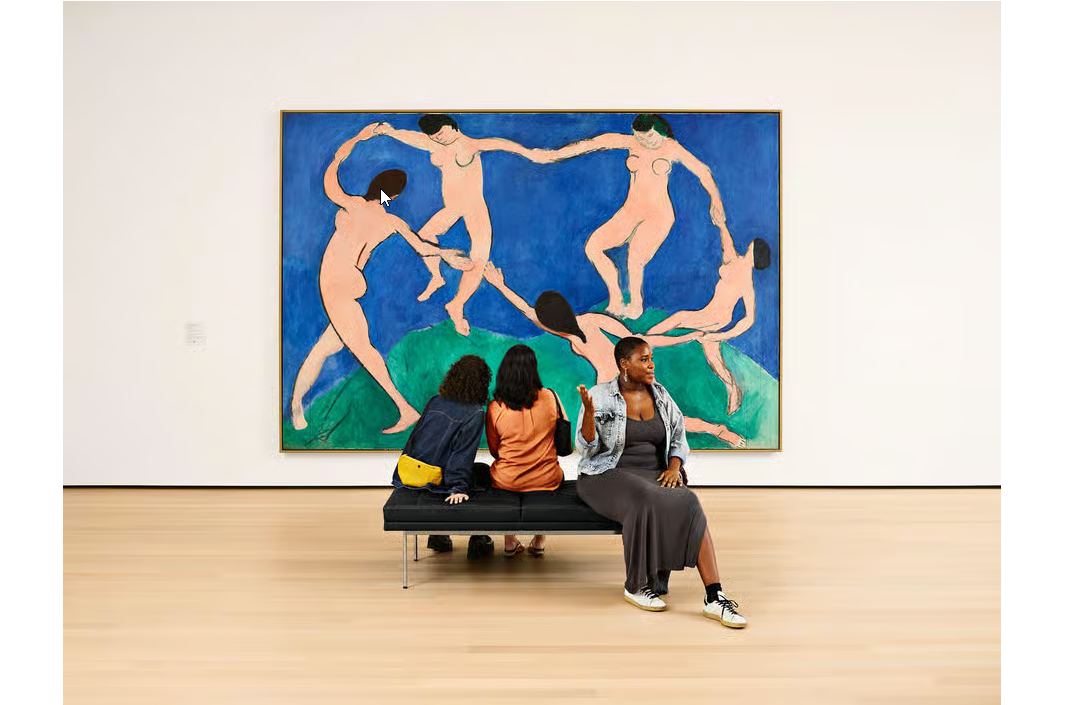
Henri Matisse’s Dance (I) offers another unforgettable encounter.
The large composition presents five figures joined together in movement. Its simplified forms, strong visual structure, and sense of rhythm demonstrate how an artist can communicate emotion and movement without relying on photographic realism.
Rather than trying to reproduce every detail of the human body, Matisse reduced the composition to essential elements of line, color, shape, and movement.
The result is energetic and immediately recognizable.
For travelers, this is an excellent reminder that modern art often asks us to look beyond realistic representation. A painting does not have to reproduce the world exactly as our eyes see it in order to communicate something powerful.
Take a moment to observe the figures and the circular movement they create. Then step back and look at the composition as a whole.
The experience changes with distance.
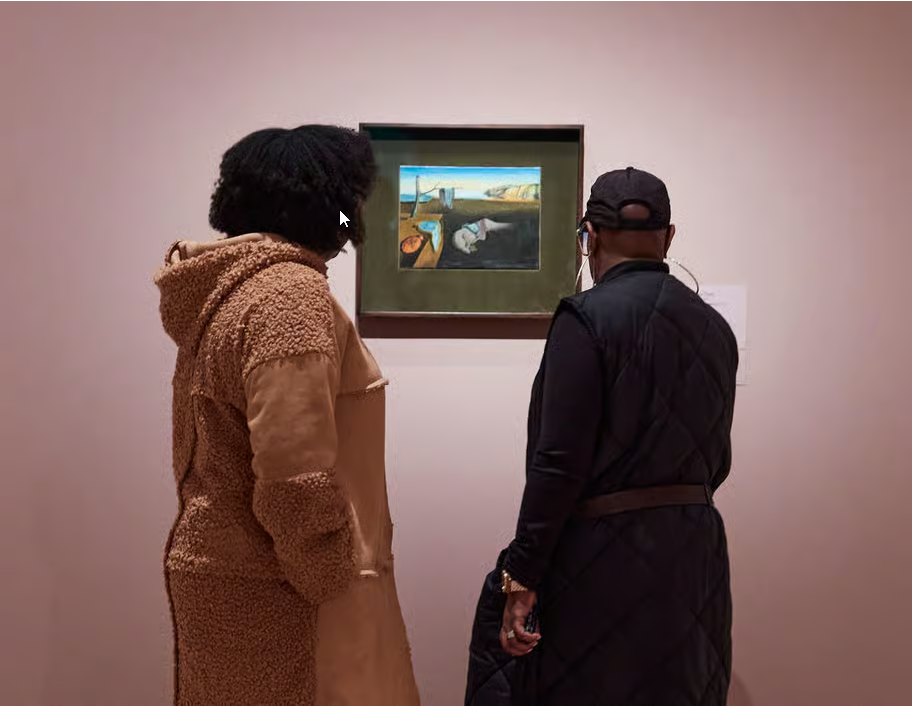
Salvador Dalí’s The Persistence of Memory is another iconic work associated with MoMA and one of the most recognizable paintings in modern art.
The famous melting watches immediately capture attention, but the painting becomes more intriguing when you look beyond its most recognizable feature.
Dalí created a dreamlike landscape in which familiar objects appear distorted and impossible. Time, solidity, and ordinary logic seem to behave differently.
For visitors, this is one of those artworks that can produce an immediate reaction even before you know anything about Surrealism.
You may smile at its strangeness, wonder what the melting clocks represent, or simply enjoy the unusual visual experience.
That accessibility is part of what makes MoMA such an appealing attraction for a wide range of travelers. You can appreciate the visual impact of an artwork first and explore its deeper history afterward.
Although famous paintings may be among the biggest reasons travelers visit MoMA, the museum’s artistic experience extends far beyond painting.
The museum’s departments encompass areas including Architecture and Design, Drawings and Prints, Film, Media and Performance, Painting and Sculpture, and Photography.
This broad approach means your visit can move between very different forms of creativity.
A photograph may tell a story in a fraction of a second.
A sculpture can transform the way you understand physical space.
A piece of industrial design can make you reconsider an object you use every day.
A film can demonstrate how moving images became an essential part of modern culture.
An architectural work can change the way you think about buildings and cities.
This diversity is especially appropriate in New York City, a place where architecture, fashion, advertising, photography, cinema, music, technology, and visual culture constantly overlap.
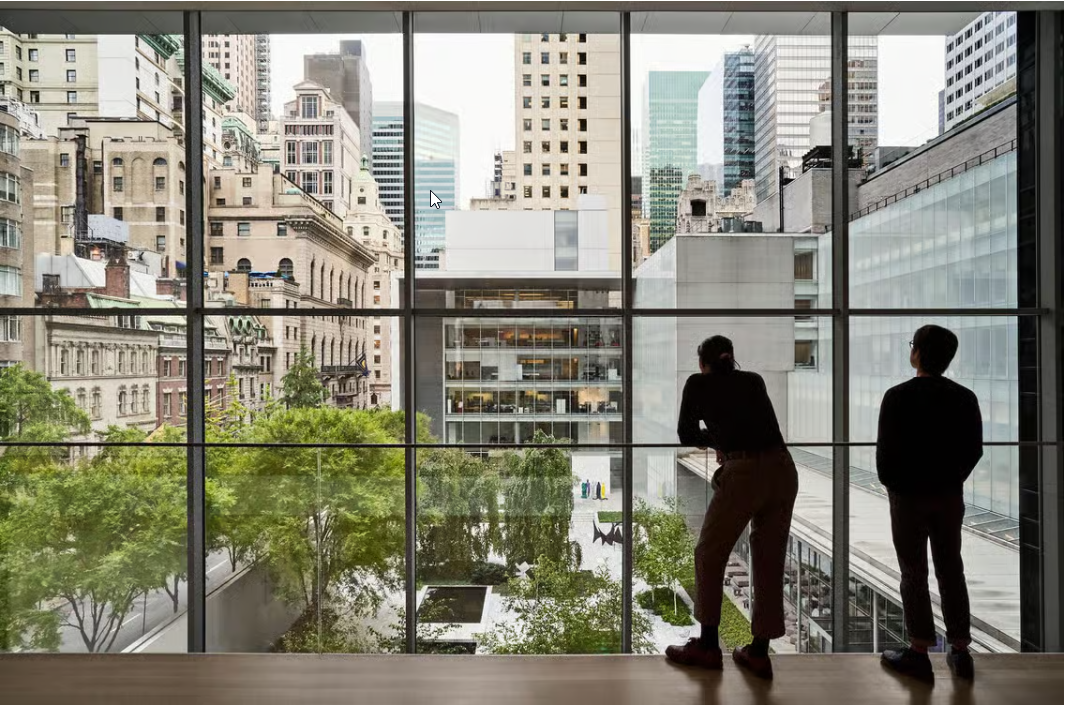
MoMA is located in Midtown Manhattan, placing the museum directly within one of the busiest and most recognizable areas of New York City.
The museum’s address is 11 West 53rd Street, close to Fifth and Sixth Avenues.
This central location makes MoMA an easy addition to a Manhattan sightseeing itinerary. Visitors can plan a museum visit around other activities in Midtown, whether that means exploring Rockefeller Center, walking through Central Park, visiting nearby shopping areas, seeing a Broadway show, or simply wandering through the streets of Manhattan.
Yet once you enter MoMA, the atmosphere changes.
Outside, New York moves quickly. Taxis, pedestrians, buses, construction, storefronts, and skyscrapers create the familiar rhythm of Manhattan.
Inside, your attention shifts toward artworks, galleries, ideas, and visual details.
That contrast can make the museum feel like a welcome pause during a busy day of sightseeing.
You do not have to be an art expert to enjoy MoMA.
In fact, one of the best ways to experience the museum is to arrive without feeling that you need to understand everything.
Modern and contemporary art can sometimes seem intimidating because visitors worry about finding the “correct” interpretation. But museums can also be places for curiosity.
Ask yourself what you notice.
What emotion does a work create?
Which colors attract your attention?
Does the artwork remind you of something?
Do you like it, dislike it, or feel uncertain about it?
Why might an artist have chosen to create it this way?
There is no requirement to have a degree in art history before entering a museum.
You can simply look.
And when a particular artwork captures your attention, you can then learn more about the artist, period, technique, and historical context.
This makes MoMA suitable for both dedicated art travelers and visitors who are simply looking for something memorable to do in New York.
MoMA can also be an engaging destination for families traveling in New York City.
Children often respond naturally to modern art because it can be colorful, unusual, playful, surprising, or visually dramatic.
Instead of asking children to memorize dates and names, encourage them to interact with what they see.
Ask them:
“What do you think is happening in this picture?rdquo;
“What colors can you find?rdquo;
“Does this sculpture look like anything you know?rdquo;
“If you could make your own version, what would you change?rdquo;
Questions like these can turn a museum visit into an exploration rather than a lesson.
The current ticket information states that children aged 16 and under receive free admission, while the museum also offers family-oriented creative opportunities. This can make MoMA an appealing cultural stop for families who want to combine sightseeing with an educational experience.
A New York vacation can easily become a checklist of famous landmarks.
You take a photograph in Times Square.
You look across Manhattan from an observation deck.
You walk through Central Park.
You visit Rockefeller Center.
You watch the city from a rooftop.
These experiences are memorable, but a museum visit can add a different dimension to your trip.
At MoMA, you are not simply looking at New York—you are exploring ideas that influenced how people around the world understand images, design, culture, and modern life.
You can spend time with a single artwork or explore dozens of galleries.
You can move quickly if your itinerary is busy or stay longer when something captures your imagination.
That flexibility makes a MoMA museum ticket in New York City particularly useful for travelers who want to create their own experience rather than follow a rigid tour schedule.
Photographs on a phone screen can show you what an artwork looks like, but they cannot always communicate its physical presence.
Scale matters.
Texture matters.
Distance matters.
Lighting matters.
The relationship between one artwork and another matters.
When you stand in front of an original painting, you experience all of those elements simultaneously.
A large canvas can feel completely different from its digital image.
A sculpture can reveal details that disappear in photographs.
A painting’s surface may become more interesting the longer you look at it.
Even an artwork you have seen hundreds of times online can feel new when you encounter it in person.
That is one of the strongest reasons to include MoMA in a New York City itinerary.
MoMA is not limited to a permanent collection.
The museum regularly presents special exhibitions and changing displays, allowing visitors to encounter new themes, artists, historical periods, and creative practices.
Because exhibitions change over time, travelers returning to New York can find something different on a future visit.
Current and upcoming programming can include subjects ranging from painting and sculpture to photography, architecture, design, animation, and experimental contemporary art.
This changing program adds an element of discovery to your visit.
You may arrive intending to see a famous masterpiece and leave talking about an artist or exhibition you had never encountered before.
That unexpected discovery is often one of the most rewarding parts of cultural travel.
Modern culture cannot be understood through painting alone.
Photography changed how people recorded and remembered events.
Film transformed storytelling.
Graphic design changed advertising and communication.
Architecture reshaped cities.
Industrial design influenced everyday objects.
Digital technology created entirely new forms of artistic expression.
MoMA’s multidisciplinary approach allows visitors to explore these connections.
For travelers who are interested in photography, the museum can provide a fascinating look at how photographers have documented people, places, identity, politics, technology, and everyday life.
Design enthusiasts can explore objects and ideas that demonstrate how functionality and visual expression can intersect.
Architecture lovers can consider how buildings influence the way people experience cities.
Film enthusiasts can also find programming that extends the museum experience beyond static artworks.
This variety makes MoMA a particularly useful addition to a New York trip when you want an attraction that appeals to different interests within the same group.
One of the biggest advantages of an entry-ticket experience is flexibility.
There is no need to follow a guide through every room or remain with a group from beginning to end.
Instead, you can decide how to spend your time.
If you are fascinated by painting, spend longer in the painting galleries.
If photography is your interest, explore the photography displays.
If contemporary art catches your attention, allow yourself time to investigate it.
If you are traveling with children, let them focus on works that immediately capture their imagination.
If you are visiting before another New York attraction, you can enjoy the museum at a pace that works with your schedule.
The supplied activity includes admission to the museum’s permanent collections and special exhibitions, along with access to a downloadable multilingual audio guide. A charged smartphone and headphones are recommended so you can make use of the digital guide during your visit.
A good museum visit does not have to mean seeing every single gallery.
In fact, trying to see everything can sometimes make the experience less enjoyable.
Instead, choose a pace that feels comfortable.
Start by exploring the galleries and identifying the works that immediately interest you. Then return to the pieces you want to understand better.
Give yourself permission to stop.
Look closely.
Read the information beside the artwork.
Take a mental note of something you want to research later.
Talk with your travel companions.
The goal is not to finish a checklist.
The goal is to experience art.
For travelers with limited time in New York, even a shorter visit can provide an introduction to major works and artistic movements. For visitors with more time, MoMA can easily become a substantial part of a full day of cultural exploration.
Planning a major city vacation often means managing reservations, schedules, tickets, transportation, and multiple attractions.
A pre-booked MoMA admission ticket helps simplify the arrival process.
According to the supplied activity listing, visitors can enter through the museum at 11 West 53rd Street and present their barcoded voucher to museum staff at the gallery entry points. The listing states that there is no need to check in at the ticket desk.
That means you can spend less time dealing with ticket logistics and more time experiencing the museum.
For travelers who have carefully planned their New York itinerary, this can be particularly useful.
Your MoMA experience begins as you approach the museum in Midtown Manhattan.
Enter through the main entrance on West 53rd Street, follow the museum’s visitor procedures, and begin your exploration.
Once inside, you can move through the galleries and discover an extraordinary range of creative work.
You may encounter familiar names.
You may discover artists you have never heard of.
You may find an artwork that becomes the unexpected highlight of your New York vacation.
You can use the downloadable audio guide to add context to your experience, or simply explore visually and allow your own curiosity to guide you.
The supplied activity information also notes that free Wi-Fi is available throughout the museum, and daily film screenings and art-making opportunities are included with admission.
A museum visit can become surprisingly immersive, particularly when you are exploring multiple floors and artistic disciplines.
MoMA also offers dining options where visitors can take a break.
Café 2 provides seasonal Italian-inspired food and beverages, while Terrace Café offers seasonal American small plates and shareable options in a setting that includes outdoor terrace seating.
For travelers looking for a more elevated dining experience, The Modern is located within the museum and offers contemporary American cuisine.
You can therefore structure your visit around more than just the galleries.
Explore art.
Pause for coffee or food.
Return to the exhibitions.
Visit the museum shop.
Then continue your New York adventure.
For many travelers, the memory of a museum continues after leaving the galleries.
The MoMA Museum Store offers an opportunity to take a piece of that experience home.
The store features publications, design objects, gifts, and other products connected to art and design.
For art enthusiasts, a museum publication can provide a deeper opportunity to explore an artist or exhibition after returning home.
For casual visitors, a small design object or gift can serve as a reminder of your New York trip.
The museum’s design-focused retail experience also reflects one of MoMA’s broader interests: the relationship between creativity, functionality, and everyday life.
New York City is full of experiences that stay with travelers long after they return home.
Sometimes it is a view from a skyscraper.
Sometimes it is a Broadway performance.
Sometimes it is the atmosphere of a neighborhood.
And sometimes it is a single artwork.
Perhaps you will stand in front of a painting you have known since childhood.
Perhaps you will discover a photograph that changes the way you think about a familiar historical moment.
Perhaps an unusual sculpture will make you laugh.
Perhaps a piece of contemporary art will leave you confused but curious.
Perhaps you will find yourself unexpectedly moved by a work created decades ago.
That unpredictability is part of the appeal.
A visit to MoMA does not require you to arrive with a particular reaction. It gives you space to encounter art and decide what it means to you.
Part of the pleasure of visiting a world-famous museum is the anticipation.
You may already have a mental list of artists you want to see.
You may have saved photographs of famous artworks.
You may be traveling with someone who loves modern art.
Or perhaps you are simply looking for an indoor New York attraction that offers something different from the city’s usual sightseeing experiences.
Whatever brings you to MoMA, the visit can become a memorable chapter in your New York journey.
Walking through Midtown, approaching West 53rd Street, entering the museum, and beginning your exploration creates a transition from the fast-paced city outside to a world centered on observation and creativity.
And because art is personal, two people can walk through exactly the same galleries and remember completely different experiences.
A trip to New York is an opportunity to experience the city from many perspectives.
See its skyline.
Walk its streets.
Taste its food.
Explore its neighborhoods.
And make time for its art.
The Museum of Modern Art entry ticket gives you the opportunity to explore one of Manhattan’s most important cultural institutions while enjoying the freedom to discover its galleries at your own pace.
From Monet’s atmospheric paintings and Matisse’s expressive forms to Warhol’s iconic Pop Art and Dalí’s surreal imagery, MoMA offers encounters with artworks that have become part of global visual culture.
But the experience does not stop with famous names.
Look beyond the masterpieces.
Explore photography.
Discover design.
Spend time with sculpture.
Investigate architecture.
See what contemporary artists are doing today.
Let yourself be surprised.
Whether you spend a few focused hours or make the museum a major part of your day, your visit can become much more than another attraction checked off your New York itinerary.
It can become a moment of discovery.
A moment when you step away from the noise of Manhattan and allow an artwork to hold your attention.
A moment when a painting you have seen online suddenly feels completely different because you are standing in front of the original.
A moment when you discover an artist whose work stays in your thoughts long after you leave the museum.
That is the enduring appeal of MoMA.
If modern art, creative expression, design, photography, film, architecture, or simply unforgettable New York experiences are part of your travel plans, make time for the Museum of Modern Art.
Pre-book your MoMA admission ticket in New York City, arrive at the museum’s Midtown entrance, and prepare to explore a collection and exhibition program filled with influential ideas and remarkable works.
Come for the famous masterpieces.
Stay for the unexpected discoveries.
Take your time.
Look closer.
Ask questions.
Find the artwork that speaks to you.
And leave with a richer impression of New York—not only as a city of buildings and attractions, but as a city deeply connected to creativity, experimentation, culture, and the people who continue to redefine what art can be.
A visit to the Museum of Modern Art is easiest when you give yourself enough time to explore without feeling rushed. MoMA is located at 11 West 53rd Street in Midtown Manhattan, between Fifth and Sixth Avenues, making it convenient to include in a broader New York City sightseeing itinerary. The museum’s main entrance is on 53rd Street, close to Sixth Avenue.
For travelers arriving by subway, the 5th Avenue–53rd Street E and M station is directly across the street from the museum entrance. Other nearby subway stations include 7th Avenue, Rockefeller Center, and Lexington Avenue–53rd Street. Several bus routes also operate nearby.
Because MoMA sits in the middle of Manhattan, you can easily combine your museum visit with other experiences in the surrounding area. Depending on your plans, you might visit MoMA before exploring Fifth Avenue, continue toward Rockefeller Center, walk toward Central Park, shop in Midtown, or enjoy a Broadway performance later in the day.
The museum can therefore become either the main cultural experience of your day or one memorable stop within a larger New York adventure.
Make your way to 11 West 53rd Street and look for the museum’s main entrance on 53rd Street.
If you have pre-booked your admission, keep your ticket or voucher readily accessible on your phone. Having your booking information prepared can make arrival easier, particularly when you are traveling with family or a group.
MoMA recommends advance online ticket purchases to guarantee entry. Online ticket holders can skip the ticket line once inside and proceed toward the galleries, while a limited number of tickets may also be available at the museum’s ticketing desk on a first-come, first-served basis.
Like many major museums, MoMA has security procedures at the entrance.
Visitors should expect a security checkpoint and possible bag inspection. The museum states that all bags are subject to inspection and that certain items may be prohibited.
For a smoother arrival, travel light when possible.
Avoid bringing unnecessary large items, and keep your ticket information easy to access. If you are carrying medical equipment or require special assistance, MoMA recommends informing security staff so they can help make the entry process more efficient.
Once you are inside, the real experience begins.
Instead of following a rigid guided-tour schedule, take the opportunity to explore the museum according to your interests.
You might begin with the most famous works you came specifically to see. Alternatively, start by following a gallery that catches your attention and allow your route to develop naturally.
This flexibility is particularly useful for independent travelers.
You can spend several minutes with one artwork or move through a room more quickly. You can stop to read the labels, use a digital guide, take a quiet break, and continue exploring when you are ready.
Although your admission allows you to explore the museum independently, having a simple structure can make your visit more rewarding.
Begin by familiarizing yourself with the museum layout and deciding what you most want to see.
If you have already researched MoMA before your trip, make a mental note of the artists or works that are most important to you.
If this is your first visit, avoid trying to plan every minute.
Modern art is often best experienced with some freedom.
Allow yourself to discover something unexpected.
Use the first major portion of your visit to explore the collection and identify works that immediately capture your attention.
This is a good time to see some of the museum’s famous modern art holdings while you are still fresh and energetic.
Rather than simply photographing each artwork, spend a little time looking.
Notice the size of the work.
Look at the surface.
Observe how the colors interact.
Consider what your eye notices first.
Then step back and look again.
This small change in behavior can transform a quick sightseeing stop into a much more meaningful museum experience.
After exploring well-known works, move toward the galleries that match your interests.
Photography lovers can look for photographic works and exhibitions.
Design enthusiasts can explore objects and ideas connected to modern design.
Architecture fans can investigate how artists and designers have imagined buildings and urban environments.
Film enthusiasts can check the museum’s current cinema programming.
Contemporary art enthusiasts can explore temporary exhibitions and newer creative practices.
MoMA has six curatorial departments covering Architecture & Design, Drawings & Prints, Film, Media & Performance, Painting & Sculpture, and Photography, demonstrating how broad the museum’s artistic scope is.
After spending significant time in the galleries, pause.
A museum visit should not feel like a race.
Depending on your schedule, take a break at one of the museum’s cafés or dining venues, or simply find an appropriate place to rest.
A short pause can help you return to the galleries with fresh attention.
Before leaving, think about which works you enjoyed most.
If possible, return to them.
The second viewing can feel surprisingly different.
After exploring other artists and movements, you may notice details that were invisible during your first encounter.
This final return can also help you leave with a clearer memory of your visit rather than remembering only a long series of photographs.
A modern museum experience does not have to rely entirely on printed labels.
MoMA provides the Bloomberg Connects digital guide, which offers audio content, self-guided tours, highlights, an interactive museum map, and other visitor resources. The museum states that the guide is available in 40 languages.
This can be especially useful for international travelers.
Instead of trying to understand every artwork immediately, you can choose the works you want to learn more about and use the digital guide to add historical or artistic context.
For visitors who prefer independent exploration, this creates a useful balance.
You are still free to move through the museum at your own pace, while additional information is available when you want it.
A museum visit does not have to be an adults-only cultural experience.
MoMA has dedicated family resources, and children 16 and under receive free admission. The museum also provides kids’ audio content, activity guides, child-focused labels, and hands-on spaces designed to make modern art more approachable for younger visitors.
For families, consider turning the visit into a creative challenge.
Ask children to find:
You can even encourage children to invent their own interpretation of a work before reading the museum description.
This transforms the experience from passive viewing into active discovery.
MoMA’s family activity resources include searching, drawing, posing, and imagining activities, while its kids’ labels encourage children to look closely and respond creatively.
For families who enjoy cultural attractions, MoMA can be incorporated into a New York itinerary without requiring children to spend the entire day in traditional art galleries.
You can decide how long to stay.
You can focus on visually engaging works.
You can use family resources.
You can take breaks.
And because children 16 and under have free admission, families can plan around the museum without paying adult admission for younger visitors. A ticket is still required for children in some booking circumstances, so check the current ticket instructions when making your reservation.
Parents should also note that children age 12 and under must be accompanied by an adult at all times.
MoMA is designed to welcome visitors with different accessibility needs.
The museum states that it is wheelchair accessible and offers wheelchair borrowing. Wheelchair-accessible restrooms and baby-changing stations are available on every floor. Strollers are welcome, although they are not permitted on escalators.
Accessible transportation options are available near the museum, although some of the closest subway stations are not wheelchair accessible. MoMA identifies several accessible subway stations within approximately half a mile, along with accessible MTA bus services.
Visitors who want to prepare in advance can also use MoMA’s accessibility resources and social guides.
These resources can be particularly helpful for first-time visitors who prefer to know what the environment will be like before arriving.
Travelers visiting New York with parents, grandparents, or older companions may appreciate the ability to explore MoMA at an individual pace.
You do not need to walk continuously.
Take breaks when needed.
Spend longer in fewer galleries rather than trying to see everything.
Use elevators and seating areas as appropriate.
Plan your transportation before arriving so that you do not have to navigate unnecessary walking after a long museum visit.
The museum also provides accessible facilities and services designed to support visitors with different mobility needs.
The result can be a cultural experience that fits comfortably into a multigenerational New York itinerary.
There is no special dress code for exploring the museum galleries, so choose clothing appropriate for a day of sightseeing in New York City.
Comfortable shoes are particularly useful.
Even though you can move at your own pace, a museum visit often involves more standing and walking than travelers expect.
New York weather can also change significantly between seasons, so dress appropriately for the outdoor portion of your journey while keeping indoor comfort in mind.
If you are visiting in winter, for example, you may need a warm coat outside but will want to manage layers comfortably once inside.
If you are visiting during summer, lightweight clothing can make the transition between Manhattan streets and indoor galleries more comfortable.
Travelers should remember that MoMA has visitor and security policies designed to protect artworks and other visitors.
Outside food and drinks are not permitted inside the museum. Backpacks should be worn on the front of the chest or carried by hand at the side to help protect the artwork. The museum also has coat checkrooms for appropriate items, subject to its policies.
Before your visit, check the museum’s current visitor guidelines if you are carrying unusual equipment, large bags, professional photography equipment, or other items that could require special arrangements.
A little preparation can prevent unnecessary delays at the entrance.
Many travelers naturally want photographs to remember their visit.
However, photography should never become the entire purpose of your museum experience.
Take a photograph when permitted, then put your phone away for a moment.
Look directly at the artwork.
The difference can be remarkable.
A camera captures an image.
Your eyes experience the object in its physical environment.
You can notice scale, texture, distance, surrounding works, lighting, and the reactions of other visitors.
That direct encounter is one of the reasons people continue to visit museums even in an age when millions of artworks can be viewed online.
New York weather can change quickly, and rain can disrupt outdoor sightseeing plans.
MoMA provides an excellent opportunity to adjust your itinerary when the weather is less cooperative.
Instead of spending several hours outdoors, you can devote that time to galleries, exhibitions, photography, design, film, and other cultural experiences.
The museum notes that lines may occur in the morning and on rainy days, so advance planning can be useful.
If rain is forecast during your trip, consider booking your museum visit as part of your indoor sightseeing plan rather than waiting until the weather changes.
MoMA is open daily from 10:30 a.m. to 5:30 p.m., with extended hours until 8:30 p.m. on Fridays, according to the museum’s current visitor information.
Because hours and admission policies can change, travelers should always verify the current schedule when planning their exact visit.
If you want to spend several hours exploring, arriving earlier can give you more time.
If you have a packed sightseeing itinerary, an afternoon visit may work better.
Friday evening hours can also provide another scheduling option.
The key is to select a time that fits naturally into the rest of your New York plans.
One of the practical advantages of visiting MoMA is its location.
After your museum visit, you can continue exploring Midtown Manhattan without spending a large part of your day traveling across the city.
Depending on your interests, your itinerary could include:
MoMA + Fifth Avenue:
Combine art with shopping and sightseeing along one of Manhattan’s best-known avenues.
MoMA + Rockefeller Center:
Explore the museum before continuing toward Rockefeller Center and the surrounding Midtown attractions.
MoMA + Central Park:
Spend time indoors at the museum before heading north toward Central Park.
MoMA + Broadway:
Enjoy an afternoon museum visit and then continue toward the Theater District for an evening performance.
MoMA + Midtown Dining:
Make the museum part of a broader cultural and culinary day in Manhattan.
This flexibility makes MoMA easy to integrate into different types of New York vacations.
For a major New York attraction, advance planning can make your travel day more predictable.
MoMA states that advance online purchase is required to guarantee museum entry, while limited same-day tickets may be available on a first-come, first-served basis. Online ticket holders can skip the ticket line and proceed to the galleries after entering the museum.
For travelers coming from abroad or visiting New York for only a few days, that predictability can be valuable.
You may already have hotel reservations, restaurant bookings, airport transfers, Broadway tickets, and sightseeing plans.
Adding your museum admission ahead of time gives another part of the itinerary a defined place.
The supplied activity is designed around pre-booked admission and contactless entry, allowing travelers to organize the museum portion of their trip before arriving in Manhattan.
A good strategy is to think of your ticket as access to an experience rather than simply access to a building.
Explore the permanent collection.
See current special exhibitions.
Check what events or film programming may be taking place during your visit.
Use the museum’s digital guide.
Explore the family resources if you are traveling with children.
Take a break.
Visit the museum shop.
And leave yourself enough time to revisit the works that made the strongest impression.
MoMA’s general admission currently includes access to all galleries and special exhibitions.
That means travelers can structure their visit around the museum’s broader programming rather than limiting themselves to a small selection of famous paintings.
MoMA’s cultural experience extends beyond visual art on the walls.
The museum also presents film programming, with screenings ranging from international cinema and contemporary releases to restored classics and special programs.
For travelers who love cinema, this creates another possible dimension to a museum visit.
Film admission policies can vary, and screenings may require a separate screening ticket even when general museum admission is included. MoMA’s current information states that film admission is free with general admission, but visitors must obtain a screening ticket at the ticketing desk.
If film is an important part of your plans, check the current film calendar and screening requirements before your visit.
Perhaps the most important tip for visiting MoMA is simple:
Do not plan everything.
You may arrive because you want to see a particular famous painting.
Then you notice something else.
A photograph.
A sculpture.
A graphic design object.
A contemporary installation.
A strange painting you cannot immediately understand.
That unexpected artwork may become the thing you remember most.
Museums are full of these moments.
The famous works create anticipation, but discovery creates memories.
So while it is useful to prepare a list of must-see pieces, leave room for curiosity.
Walk into a gallery simply because the doorway looks interesting.
Read a label because the title catches your eye.
Stop because another visitor is looking closely at something.
Follow your instincts.
That is how an ordinary museum visit can become a personal travel experience.
Advance purchase can help guarantee entry and reduce ticketing friction. MoMA specifically recommends booking online for the best availability.
Opening hours, special exhibitions, programs, and policies can change. Confirm the current information shortly before your visit.
You may spend several hours standing and walking.
If you plan to use a digital guide or your electronic ticket, a charged phone is useful.
If your booking includes or you plan to use audio content, headphones can make the experience more comfortable.
Avoid unnecessary bags and items that could complicate security.
If you are traveling with children, seniors, or anyone who needs regular breaks, build rest periods into your schedule.
Choose highlights and explore at a comfortable pace.
Special exhibitions can add a completely different dimension to your visit.
Unexpected discoveries are part of the experience. A little extra time means you do not have to rush away from an artwork that interests you.
MoMA can provide a slower-paced experience within a busy New York vacation.
Instead of rushing from landmark to landmark, couples can explore galleries together, discuss favorite works, take a break at the museum cafés, and continue their day through Midtown.
Solo visitors have complete freedom to choose their own route.
Spend ten minutes with one painting.
Move quickly through another gallery.
Use an audio guide.
Sit quietly.
Return to a favorite artwork.
There is no need to compromise with another traveler's interests.
Family programs, kids’ guides, and free admission for children 16 and under can make the museum easier to incorporate into a family itinerary.
MoMA provides opportunities to observe influential works directly and study different approaches to color, composition, materials, photography, design, sculpture, and visual communication.
MoMA offers a cultural counterpoint to the city’s most famous landmarks.
It can add depth to an itinerary that otherwise focuses heavily on observation decks, shopping streets, parks, entertainment, and architecture.
Because museum exhibitions and programming change, returning visitors can discover different experiences on subsequent trips.
A New York attraction does not need to be loud, enormous, or outdoors to be memorable.
MoMA offers a different kind of travel experience.
It encourages you to look.
To think.
To compare.
To question.
To remember.
And sometimes simply to pause.
The museum connects art with the history of modern life, allowing visitors to encounter ideas that have influenced painting, photography, design, architecture, film, and popular culture.
You can come for one famous artwork and discover an entire world of creative expression.
Imagine arriving in Midtown on a clear New York morning.
The streets are already busy.
People move quickly between offices, shops, restaurants, subway stations, and attractions.
You turn onto West 53rd Street and approach the museum.
Inside, the rhythm changes.
You leave the traffic behind and begin moving through galleries filled with color, form, images, objects, and ideas.
You encounter a painting you recognize immediately.
You stop.
For a moment, the photograph you have seen countless times online becomes a physical object in front of you.
You notice details you never noticed on your phone.
Then you continue.
Another gallery catches your attention.
Another artist.
Another idea.
Another unexpected discovery.
Hours later, you step back onto the streets of Manhattan.
The city is still moving at full speed.
But now you carry something different with you: the memory of an experience that cannot be reduced to a photograph.
That is what makes a museum visit valuable during travel.
A New York City vacation can become overwhelming because there are so many attractions competing for your attention.
The solution is not necessarily to see more.
Sometimes it is to experience something more deeply.
MoMA gives you an opportunity to spend meaningful time with art while remaining close to the heart of Manhattan.
Its central location makes transportation practical.
Its broad collection offers something for different interests.
Its family resources make it accessible to younger travelers.
Its accessibility services support visitors with different needs.
Its changing exhibitions create opportunities for discovery.
And its admission structure gives visitors access to the museum’s galleries and special exhibitions.
For travelers looking for an experience that combines culture, history, creativity, and independent exploration, MoMA can become an important part of a New York trip.
The best travel memories are rarely just lists of attractions.
They are stories.
“I saw the painting I had studied in school.”
“We discovered an artist we had never heard of.”
“My child became fascinated by a strange sculpture.”
“We spent an hour discussing one painting.”
“We went to MoMA because it was raining, and it ended up becoming one of our favorite afternoons.”
These are the moments that transform sightseeing into travel.
Your MoMA visit can become one of those stories.
You do not need to know every artist.
You do not need to understand every movement.
You do not need to visit every gallery.
You simply need curiosity.
If the Museum of Modern Art is part of your New York City plans, booking your admission in advance allows you to organize this cultural experience before arriving in Manhattan.
Prepare your ticket.
Plan your route to 11 West 53rd Street.
Check the museum’s current opening hours and exhibitions.
Charge your phone.
Bring comfortable shoes.
And then give yourself permission to explore.
Whether your goal is to see iconic modern masterpieces, introduce your family to contemporary creativity, discover photography and design, experience a special exhibition, or simply spend a few memorable hours away from the intensity of Midtown, MoMA offers an opportunity to experience New York through art.
Your visit can be carefully planned—or wonderfully spontaneous.
You can arrive with a list of masterpieces or no list at all.
You can spend hours exploring or focus on a smaller selection of galleries.
The choice is yours.
A museum ticket may look simple when you book it online.
But the experience behind that ticket can be anything but ordinary.
It can be your first encounter with a masterpiece you have known for years.
It can be the photograph that makes you stop and think.
It can be the sculpture your children cannot stop talking about.
It can be the unexpected contemporary work that challenges your expectations.
It can be the quiet afternoon you needed between busy New York adventures.
It can be the cultural highlight you did not know you were looking for.
With pre-booked access to the Museum of Modern Art in New York City, you can step into one of Manhattan’s most important artistic spaces and explore at your own pace.
From iconic modern art to changing exhibitions, photography, design, film, and contemporary creativity, MoMA invites you to look beyond the ordinary and discover how artists have transformed the way people see the world.
Plan your visit, reserve your admission, and make room in your New York itinerary for an experience that can be remembered long after your trip is over.
Come to Midtown Manhattan.
Enter through 53rd Street.
Leave the busy streets behind.
Stand in front of art that has shaped modern culture.
Explore something new.
Take your time.
Look closer.
And discover your own favorite moment inside the Museum of Modern Art.
Your New York journey is not only about seeing the city.
It is about experiencing it.
And at MoMA, you can experience New York through the imagination, experimentation, and creativity of artists from around the world.
The Museum of Modern Art, commonly known as MoMA, is a world-renowned art museum located in Midtown Manhattan, New York City. Its collection covers modern and contemporary art across painting, sculpture, photography, film, architecture, design, drawings, prints, and other creative disciplines.
MoMA is located at 11 West 53rd Street, New York, NY 10019, between Fifth and Sixth Avenues in Midtown Manhattan. Its central location makes it convenient to combine with other New York City attractions.
A typical visit can take several hours, depending on how much of the collection and exhibitions you want to explore. Travelers with limited time can focus on selected highlights, while art enthusiasts may want to dedicate a larger portion of their day to the museum.
General admission provides access to the museum's galleries and special exhibitions. The specific inclusions can depend on the ticket or activity option selected, so travelers should review the booking details before purchasing.
Yes. MoMA welcomes families and provides resources designed to help younger visitors engage with modern and contemporary art. Children aged 16 and under receive free museum admission, although applicable ticketing requirements should be checked when booking.
Yes. Families can use MoMA's children's guides, family activities, and kid-friendly resources to make the museum visit more interactive. Parents can also choose a shorter visit and focus on artworks that visually interest their children.
Yes. MoMA provides wheelchair-accessible facilities and services. The museum states that its galleries and entrances are wheelchair accessible, and wheelchairs are available for visitors to borrow subject to availability.
MoMA provides digital visitor resources through Bloomberg Connects, including audio content, self-guided tours, highlights, and an interactive museum map. The activity information may also include access to a downloadable multilingual audio guide, depending on the selected booking option.
Photography policies can vary by exhibition and artwork. Visitors should follow museum signage and staff instructions. Flash photography and other restricted photography practices may not be permitted in certain areas.
Backpacks and bags are subject to the museum's visitor and security policies. MoMA asks visitors to wear backpacks on the front of the chest or carry them at the side to help protect artworks. Large or restricted items may need to be checked or may not be permitted.
Outside food and drinks are generally not permitted inside the galleries. MoMA has cafés and dining options where visitors can take a break during their visit.
Yes. MoMA offers several dining options, including Café 2 and Terrace Café. The museum also houses The Modern, a restaurant offering a more extensive dining experience. Availability and opening hours may vary.
MoMA's collection includes internationally recognized works associated with artists such as Vincent van Gogh, Claude Monet, Pablo Picasso, Henri Matisse, Salvador Dalí, Andy Warhol, and Frida Kahlo. Specific works on display can change because galleries and exhibitions are periodically reorganized.
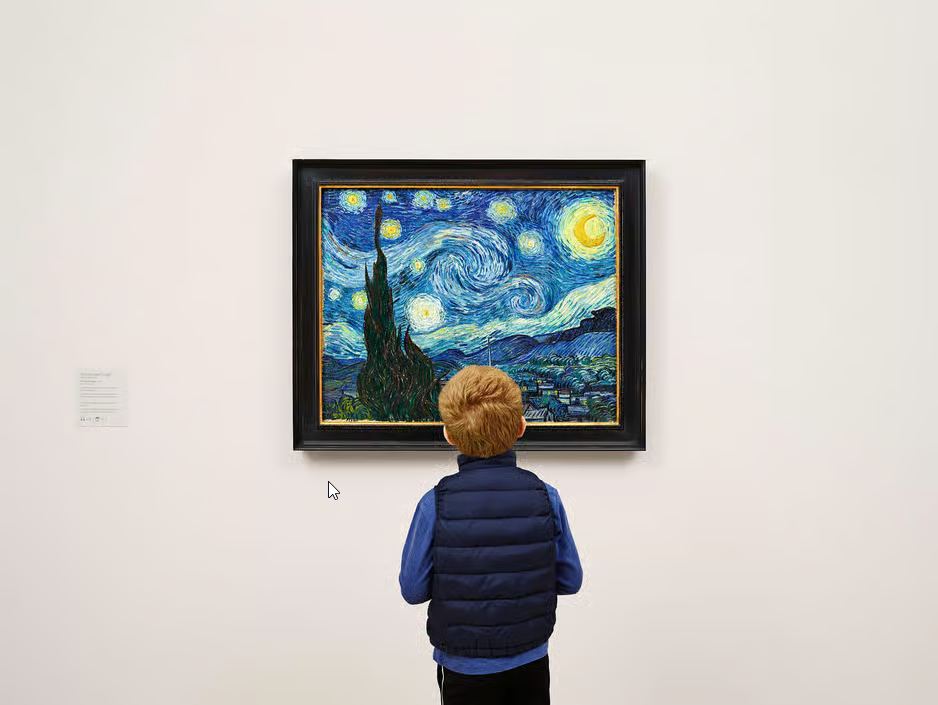
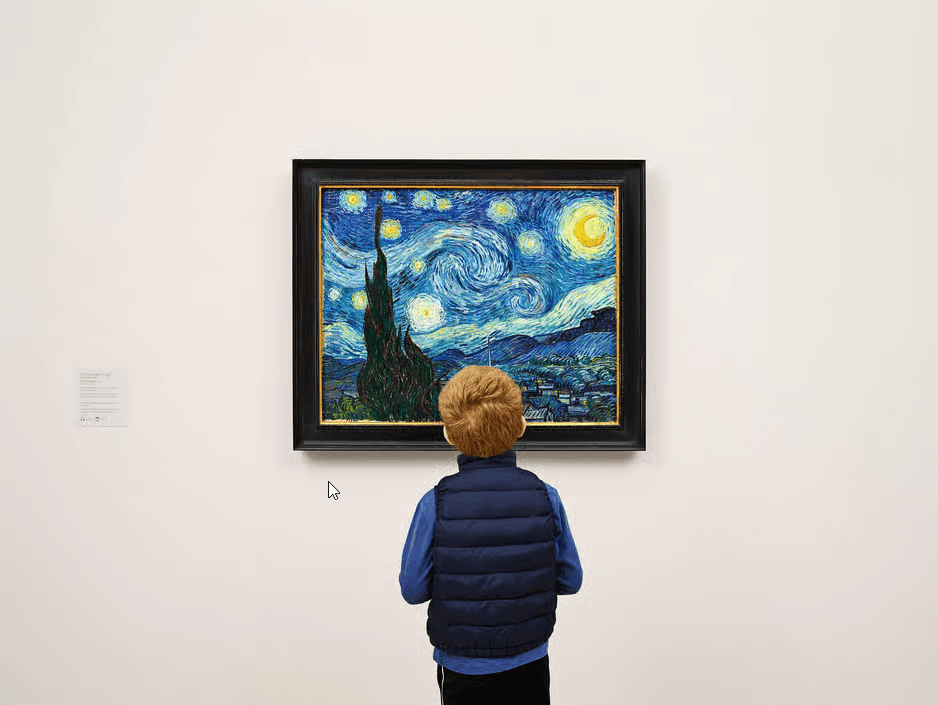
Yes. Vincent van Gogh's The Starry Night is one of MoMA's best-known collection highlights. It is one of the artworks many first-time visitors specifically hope to see.
Yes. Salvador Dalí's The Persistence of Memory, famous for its melting watches, is part of MoMA's collection and is one of the museum's iconic Surrealist works.
Yes. Andy Warhol's Campbell's Soup Cans is part of MoMA's collection and is one of the best-known examples of American Pop Art.
MoMA's collection includes Claude Monet's Water Lilies. The museum has several works by Monet, although the exact presentation and location of individual works can change.
There is no need for formal clothing for a museum visit. Comfortable clothing and walking shoes are recommended, particularly if you plan to spend several hours exploring the galleries and walking around Midtown Manhattan before or after your visit.
MoMA is an excellent indoor activity for a rainy day in New York City. Rain can also mean more visitors, so planning ahead and allowing additional arrival time can be helpful.
MoMA offers a major collection of modern and contemporary art along with photography, design, architecture, film, and changing exhibitions. It can be particularly useful for travelers who want to add a cultural and indoor experience to a sightseeing itinerary.
After completing your reservation, our team will contact you one day before your tour to confirm your exact hotel / Airbnb pickup time or meeting point.
If you selected a meeting point during your booking, please note that your reservation is fully confirmed — simply arrive at the chosen location at the scheduled time.
Please ensure the WhatsApp number, phone number, or email you entered during booking is correct so we can reach you smoothly.
For any changes to your reservation, weather questions, or special requests, feel free to contact us:
We look forward to welcoming you! 🌴✨