Havana Colón Cemetery Free Tour


Explore Havana's Casablanca neighborhood on a free walking tour with a local guide. Cross Havana Bay, see Christ of Havana and historic fortresses.
Casablanca Neighborhood Free Tour: Havana Bay, Christ of Havana & Historic Fortresses
Discover the Other Side of Havana on the Casablanca Neighborhood Free Tour
Havana is a city of contrasts. On one side of the bay, the streets of Old Havana unfold with colorful facades, grand plazas, historic churches, and lively Caribbean energy. Across the water lies another Havana—quieter, elevated, strongly connected to the city's military history, revolutionary past, religious landmarks, and sweeping coastal landscapes.
The Casablanca Neighborhood Free Tour invites you to cross Havana Bay and discover this fascinating side of the Cuban capital with a knowledgeable local guide. Instead of following the usual Havana sightseeing route, you'll travel by local ferry, climb into the historic Casablanca area, admire the monumental Christ of Havana, explore places connected with the Cuban Revolution, and walk through some of the most impressive fortifications built to defend Havana.
The experience combines Havana history, panoramic viewpoints, colonial fortresses, revolutionary heritage, local transportation, and spectacular evening scenery into one memorable walking adventure.
Best of all, this is a tip-based free walking tour, meaning there is no fixed tour price. You simply contribute what you feel the experience and your guide were worth at the end.
With approximately 2 hours and 30 minutes of exploration, the Casablanca Neighborhood Free Tour is an excellent option for travelers who want to experience Havana from a different perspective without committing an entire day to sightseeing.
One of the most memorable aspects of Havana is the way the city changes depending on where you stand.
From the historic center, the bay opens toward the eastern side of the capital, where fortifications rise above the water and the Christ of Havana watches over the city. Crossing the bay gives you an opportunity to see Havana from a completely different angle.
Your Casablanca adventure begins at Aracelio Iglesias Park, next to the ferry terminal. From here, you'll board a local ferry and travel across the waters of Havana Bay toward the Casablanca pier.
The ferry ride isn't simply transportation between two points. It becomes part of the experience itself.
As the boat moves across the bay, Havana's skyline gradually changes behind you. Historic buildings, waterfront structures, and the city's distinctive architecture create a fascinating panorama. The movement of the boat provides a natural transition from the busy heart of Havana into the quieter landscape of Casablanca.
For travelers who enjoy discovering destinations through everyday local experiences, this ferry crossing can be one of the most enjoyable parts of the tour.
Rather than sitting inside a sightseeing vehicle and watching Havana pass by through a window, you're actually moving across the city's historic harbor and approaching one of its most strategically important areas.
After arriving at the Casablanca pier, the atmosphere changes.
The neighborhood sits on elevated terrain overlooking Havana Bay, giving it a distinctive relationship with the city and the sea. Its location also explains why this part of Havana became so important for military defense.
For centuries, controlling the entrance to Havana's harbor was essential. The harbor was a vital center for shipping, commerce, and Spanish colonial power, making the surrounding coastline one of the most heavily defended areas in the Caribbean.
As you explore Casablanca with your guide, you'll begin to understand why Havana's eastern shoreline became home to enormous defensive structures.
But the neighborhood is more than military history.
It is also home to religious monuments, revolutionary landmarks, viewpoints, and cultural sites that reveal different chapters of Cuba's story.
This is what makes the Casablanca Neighborhood Free Tour so interesting: several periods of Havana's history exist side by side.
You can move from a monumental twentieth-century religious sculpture to a revolutionary command post, then continue toward centuries-old colonial fortifications—all within the same evening experience.
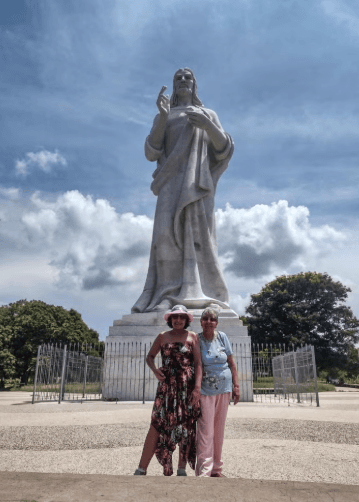
One of the first major highlights of the tour is the Christ of Havana, an imposing white marble sculpture positioned high above the city.
Standing approximately 20 meters tall, the monument has become one of Havana's most recognizable landmarks.
Its elevated position is particularly significant.
From this viewpoint, the Cuban capital stretches out below you, with Havana Bay separating the Casablanca hills from the historic center. The perspective allows you to appreciate the geography of the city in a way that can be difficult to understand from street level.
Take a moment to look across the water.
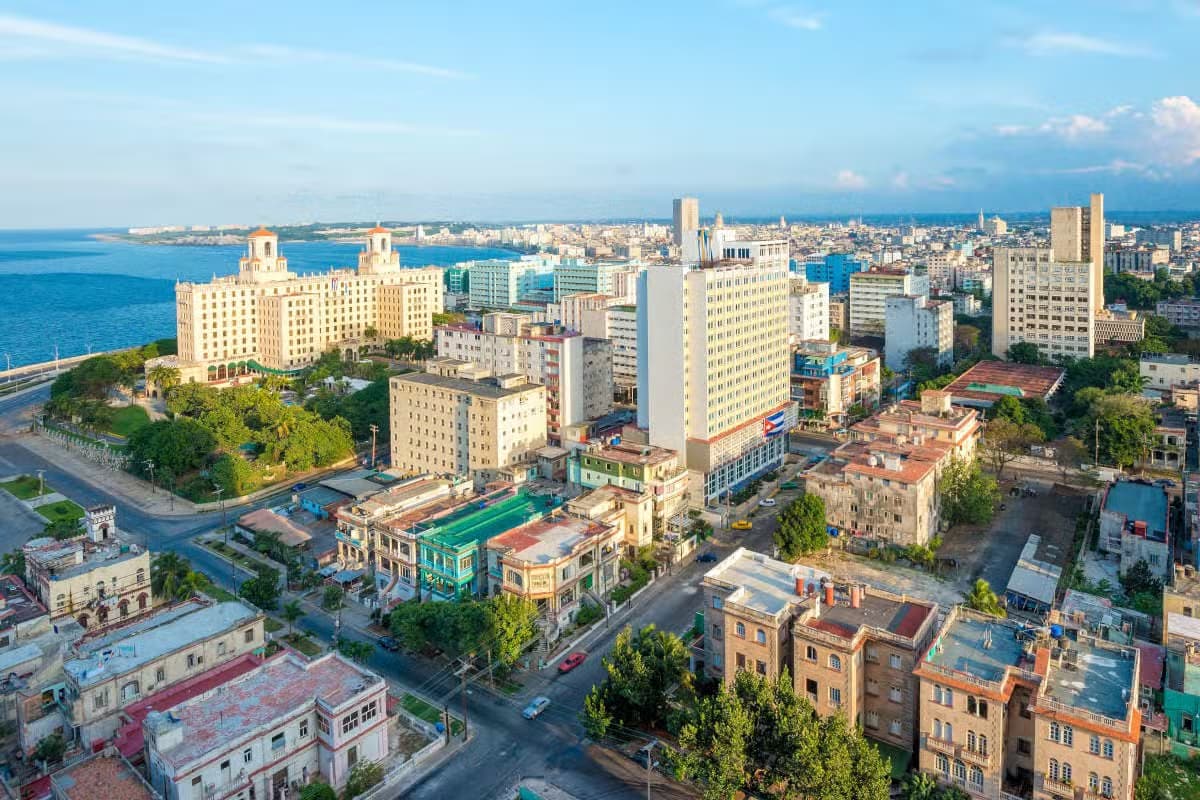
The buildings of Havana appear beyond the bay, while boats move through the harbor and the city's historic skyline extends toward the horizon. Depending on the light and weather, the scene can change dramatically as the afternoon progresses toward evening.
For photographers, this is one of the tour's most rewarding locations.
The combination of:
Havana's skyline
Havana Bay
Historic architecture
Elevated viewpoints
Maritime scenery
The monumental Christ statue
creates an exceptional setting for photographs.
But the viewpoint is more than a photo stop.
Your guide can help place the scenery into historical context, explaining how Havana developed around its harbor and why this particular side of the bay became strategically important.
Seeing Havana from across the bay provides a useful perspective for understanding the city's layout.
From Casablanca, you can look back toward the historic heart of the capital and appreciate the relationship between the waterfront and the old city.
The panorama gives travelers a chance to pause and absorb the scale of Havana.
Instead of focusing on one building or one street, you can see the city as a whole.
The bay becomes the natural dividing line between two parts of Havana, while the skyline connects them visually.
This is one reason travelers often describe the experience as discovering "many Havanas in one."
The familiar image of Havana changes when viewed from Casablanca.
The city you've been exploring from its streets becomes a broad coastal panorama. Historic architecture becomes part of a larger landscape, and the harbor's strategic importance becomes much easier to understand.
The Casablanca Neighborhood Free Tour isn't limited to colonial history.
The route also explores sites connected with the Cuban Revolution, offering insight into one of the most significant periods in Cuba's modern history.
One of the notable locations is the former command post associated with Ernesto "Che" Guevara in 1959, shortly after the revolution.
Standing at a place connected with such an important historical figure adds another layer to the Casablanca experience.
Instead of learning about revolutionary history only through books or museums, travelers can visit locations where events actually unfolded.
Your local guide provides context about the site's role and its place in the broader history of revolutionary Cuba.
This makes the experience especially interesting for travelers who enjoy:
Political history
Military history
Modern Cuban history
Historical landmarks
Local storytelling
Cultural heritage
The goal isn't simply to list dates and names.
A good walking tour helps connect individual places to the larger story of a country and its people.
As you move through Casablanca, you'll see how the neighborhood's military importance continued into the twentieth century, long after the original colonial fortifications had been constructed.
The tour continues toward the Military History Museum, another important stop for understanding Havana's strategic past.
The museum and surrounding military sites help illustrate how the city was defended across different historical periods.
One particularly significant part of the collection relates to the 1962 Cuban Missile Crisis, a moment that brought Cuba to the center of a major Cold War confrontation.
Artifacts and wreckage associated with this period help visitors understand that Havana's military history didn't end with the colonial era.
The city's fortifications continued to have relevance in modern times.
For travelers interested in twentieth-century history, this provides an important connection between Cuba's colonial past and its revolutionary and Cold War history.
The experience becomes a journey through several eras:
Colonial Havana → Revolutionary Havana → Cold War Havana
Few short city tours can bring together such a wide range of historical themes.
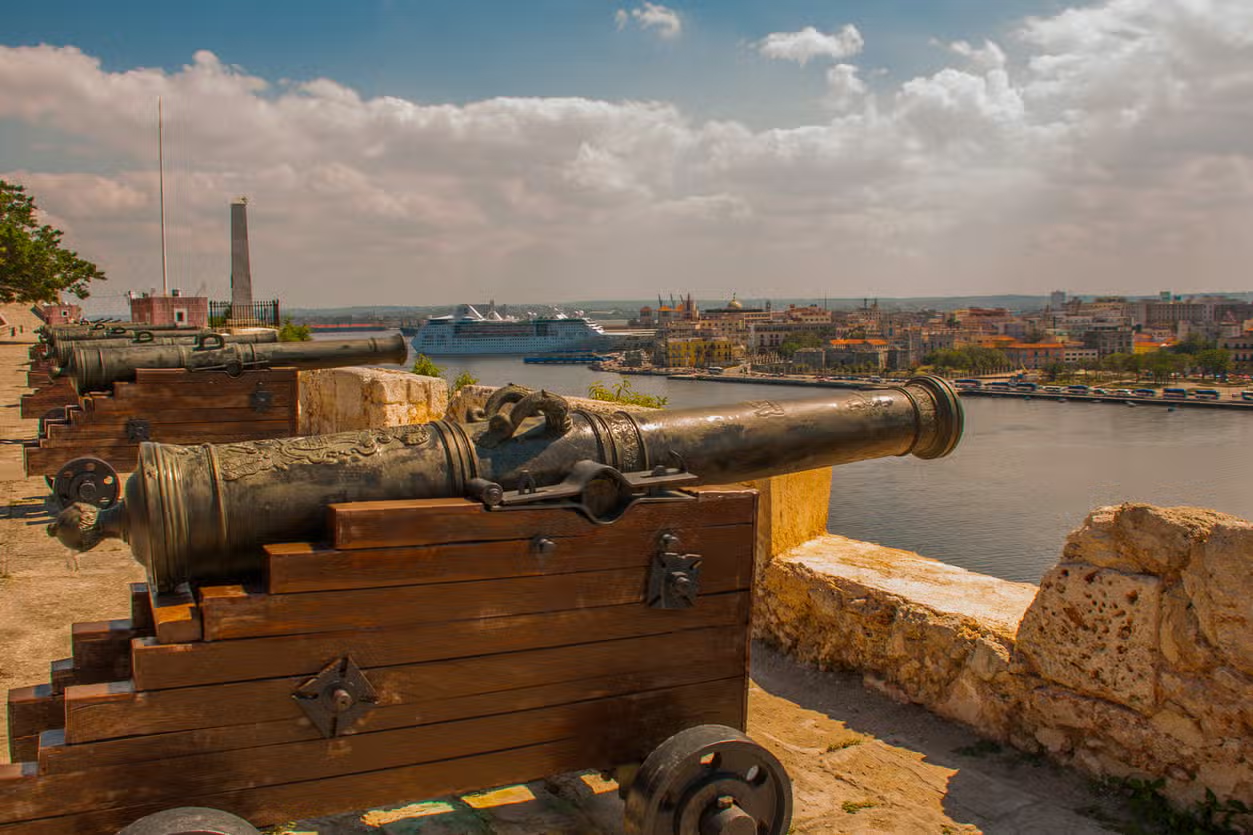
As the tour continues along the ridges overlooking Havana Bay, you'll reach one of the most impressive military structures in the area: San Carlos de la Cabaña fortress.
Often referred to simply as La Cabaña, this enormous eighteenth-century fortification was constructed to strengthen Havana's defenses.
Its scale immediately communicates the importance of Havana during the colonial period.
The fortress occupies a strategic position overlooking the entrance to the harbor. From here, defenders could monitor ships approaching the city and help protect one of the Caribbean's most valuable ports.
Walking through this historic environment allows you to appreciate how military engineering, geography, and colonial power were connected.
The fortress is not simply a collection of old walls.
Its location tells part of the story.
Its size tells another.
And the surrounding landscape explains why this particular position was considered so valuable.
For centuries, Havana's harbor was an essential destination for Spanish ships traveling between Europe and the Americas.
The wealth passing through the port made Havana a target for pirates, privateers, and enemy forces.
Defending the harbor therefore became a major priority.
The construction and expansion of fortifications around Havana created a formidable defensive network.
As you explore the area, you'll gain a better understanding of how these structures worked together.
The massive walls, elevated positions, observation points, and strategic placement were all designed around one central objective: protecting the entrance to Havana.
This historical context transforms the sightseeing experience.
Instead of simply seeing an old fortress, you're seeing the physical remains of a defensive system that helped shape Havana's development.
Another spectacular highlight is the Castle of the Three Kings of Morro, commonly known as Morro Castle.
Positioned at the entrance to Havana Bay, the fortress is one of the city's most recognizable historic landmarks.
Its strategic location is immediately obvious.
Standing near the harbor entrance, Morro Castle historically helped control access to Havana's port. Its position allowed defenders to monitor ships approaching the city and contributed to the larger defensive system protecting Havana.
The castle's architecture, stone walls, elevated position, and relationship with the sea make it a fascinating place to explore.
As you walk through the area, you'll be surrounded by evidence of Havana's colonial military past.
But there is also something peaceful about the location.
The sea stretches beyond the fortifications, the city skyline appears across the bay, and the changing evening light creates a beautiful contrast between the old stone structures and the Caribbean landscape.
The Casablanca area offers an unusual combination of historical architecture and natural scenery.
Ancient stone walls stand beside the sea.
Military structures rise above the harbor.
The Havana skyline appears across the water.
And as evening approaches, the colors of the landscape gradually change.
This combination makes the tour appealing not only to history enthusiasts but also to travelers who simply enjoy beautiful places.
You don't have to be a military-history expert to appreciate Morro Castle or La Cabaña.
The atmosphere itself is memorable.
The sound of the water, the open horizon, the old fortifications, and the distant skyline create a setting that feels completely different from the narrow streets of central Havana.
The tour gradually makes its way toward one of the most recognizable symbols of Havana's harbor: the Morro Lighthouse.
Standing near the fortress complex, the lighthouse has guided ships approaching Havana for generations and has become an enduring part of the city's visual identity.
The tour finishes at the foot of the lighthouse at approximately 8:00 PM.
This timing is particularly special.
Rather than ending in the middle of the afternoon, the Casablanca Neighborhood Free Tour brings you to the lighthouse during the evening, when the atmosphere around the harbor can become especially beautiful.
The combination of historic stone fortifications, open sea, Havana's distant skyline, and the changing evening light creates a fitting conclusion to the experience.
For many travelers, this final viewpoint becomes one of the strongest memories of the tour.
Although the guided tour ends around 8:00 PM, there is an excellent reason to consider staying in the area a little longer.
Every evening at approximately 9:00 PM, Havana's traditional Cannon Shooting Ceremony, known as El Cañonazo, takes place.
This historic ritual has roots in the colonial era and is associated with the former closing of the city gates.
The ceremony is one of Havana's most distinctive traditions and provides an opportunity to extend your evening beyond the walking tour.
Your tour guide can point you toward the appropriate area and explain the tradition so you understand what you're witnessing.
Staying after the tour means your Casablanca experience doesn't necessarily have to end at 8:00 PM.
You can take your time around the historic fortress area, enjoy the evening atmosphere, capture additional photographs, and then witness this famous Havana tradition.
For travelers interested in experiencing local history rather than simply photographing monuments, this optional extension can make the evening particularly memorable.
One of the greatest strengths of the Casablanca Neighborhood Free Tour is the diversity of history contained within a relatively short experience.
During approximately two and a half hours, you'll encounter several important chapters of Havana's past.
The fortresses and harbor defenses reveal the importance of Havana during the Spanish colonial period.
The ferry crossing and views of Havana Bay highlight the city's longstanding relationship with the sea.
The Christ of Havana provides a striking modern religious landmark overlooking the capital.
The Che Guevara command post connects Casablanca with the events of 1959 and revolutionary Cuba.
The military museum and artifacts associated with the Cuban Missile Crisis introduce another important chapter of modern history.
The evening cannon ceremony offers a living connection to a colonial-era tradition.
This diversity is what gives the tour its unusual character.
It isn't simply a fortress tour.
It isn't simply a Havana walking tour.
It isn't simply a historical sightseeing experience.
It is a journey across different layers of the Cuban capital.
Many visitors experience Havana primarily through the streets of Old Havana.
Those historic streets deserve their reputation, but crossing the bay reveals a side of the capital that many travelers might otherwise overlook.
The Casablanca Neighborhood Free Tour provides a chance to leave the most familiar sightseeing routes behind and explore an area where Havana's military, religious, revolutionary, and maritime histories intersect.
The ferry crossing alone changes the rhythm of the experience.
You begin in the urban center, board a local boat, cross the harbor, and arrive in a neighborhood surrounded by hills, fortifications, sea views, and historical landmarks.
The experience feels like a small adventure within the larger city.
For travelers who want a more authentic experience, the local ferry crossing is an important part of the appeal.
Public transportation can reveal a destination in a way that private sightseeing vehicles cannot.
Boarding a local ferry allows you to experience Havana from the water while also participating in an everyday form of transportation.
The short journey creates opportunities to:
Look back toward Havana's historic skyline
Photograph the harbor
Watch boats moving across the bay
Feel the breeze from the water
Observe the coastline from a new perspective
Transition naturally from central Havana to Casablanca
It is a simple journey, but it contributes significantly to the character of the tour.
If you're fascinated by history, this experience offers an unusually concentrated introduction to Havana's past.
You can explore colonial military architecture, learn about revolutionary events, examine Cold War-era history, and hear stories about the city's strategic importance.
The knowledgeable local guide helps connect these places together.
Instead of encountering isolated landmarks, you'll understand how they relate to one another.
Why was Havana so heavily fortified?
Why was the harbor so important?
Why was Casablanca strategically valuable?
How did the area remain significant during the twentieth century?
Why does the cannon ceremony continue?
These questions turn sightseeing into a more meaningful experience.
Bring your camera.
Casablanca offers some of the best opportunities to photograph Havana from elevated viewpoints.
The Christ of Havana area provides broad views across the bay.
The fortresses offer dramatic architectural subjects.
Morro Lighthouse creates an instantly recognizable Havana image.
And the evening light can transform the entire landscape.
Instead of photographing Havana only from street level, you'll have opportunities to capture:
Havana Bay
Old Havana's skyline
Historic fortifications
Colonial stone architecture
The Christ of Havana
Morro Lighthouse
Ships and boats
Coastal landscapes
Evening skies
The changing light toward the end of the tour can be especially rewarding.
There is something special about exploring Havana toward evening.
The heat of the day begins to soften.
The bay catches the changing light.
The skyline becomes increasingly atmospheric.
The stone walls of the fortresses take on warmer tones.
And the lighthouse becomes an increasingly prominent part of the landscape.
Because the Casablanca Neighborhood Free Tour ends around 8:00 PM, travelers can experience this transition rather than rushing through the area during the brightest part of the day.
The timing helps transform the experience from a conventional historical tour into an evening exploration of Havana.
Casablanca offers something that many travelers don't expect from Havana.
It combines proximity to the city with a sense of distance.
You are still looking directly toward Havana, yet the bay creates a physical separation.
You can see the capital without being surrounded by its busiest streets.
The result is a viewpoint that encourages travelers to slow down and appreciate the city.
The neighborhood's elevated terrain, historic fortifications, maritime setting, and important landmarks create an environment where history feels tangible.
Every direction offers something different.
Look toward the sea and you see the harbor.
Look toward the city and you see Havana's skyline.
Look around you and you encounter fortifications built centuries ago.
Look ahead and you see the lighthouse.
It is a destination where geography and history work together.
Another major advantage of this experience is its free-tour format.
There is no traditional fixed tour price.
Instead, the Casablanca Neighborhood Free Tour operates on a tip-based model, allowing travelers to decide what they would like to contribute at the end of the experience.
This makes it particularly appealing to visitors who want a professionally guided experience while keeping their sightseeing budget flexible.
The concept is straightforward:
Meet your local guide.
Join the guided Casablanca experience.
Explore the landmarks and historical sites.
Learn through local storytelling.
Complete the tour at the Morro Lighthouse.
Decide what you feel the experience was worth and tip your guide accordingly.
The model also encourages a personal relationship between travelers and guides because the guide's storytelling, knowledge, and service become central to the experience.
Exploring historic Havana independently can be rewarding, but having a knowledgeable local guide adds context that you might otherwise miss.
The tour includes a professional English-speaking local guide who leads the walking experience and explains the historical significance of the locations along the route.
A guide can help transform:
A fortress into a story
A viewpoint into a geographical lesson
A monument into a cultural landmark
A museum into a connection to modern history
A cannon ceremony into a centuries-old tradition
This storytelling approach makes the experience accessible even if you have little prior knowledge of Cuban history.
You don't need to arrive as a historian.
Simply come with curiosity.
At approximately 2 hours and 30 minutes, the tour provides enough time to explore the major Casablanca highlights without requiring an entire day.
This makes it easy to incorporate into a Havana itinerary.
You could enjoy the experience as:
An evening activity
A second-day Havana experience
A history-focused excursion
A photography outing
A cultural activity
An alternative to another conventional city tour
The duration is also useful for travelers who want to see multiple attractions during their stay in Havana.
You can spend the earlier part of your day exploring another part of the city, then make your way to Aracelio Iglesias Park for the Casablanca adventure.
Because the tour includes historic fortresses and elevated areas, travelers should expect walking over uneven terrain.
Comfortable walking shoes are strongly recommended.
Good footwear will make it easier to navigate historic paths, stone surfaces, slopes, and fortress surroundings while allowing you to focus on the scenery rather than your feet.
You should also consider the weather.
The bay area can become breezy during the evening, so carrying a light jacket is recommended.
A small bag is useful for keeping your essentials together during the walk.
To enjoy the experience comfortably, consider bringing:
Historic fortress areas can have uneven surfaces. Comfortable footwear is one of the most important things to pack.
You'll encounter multiple panoramic viewpoints and historic landmarks worth photographing.
The elevated areas around Havana Bay can become breezy later in the day.
Bring small change for the local ferry and any optional entrance costs that may apply during your visit.
Because this is a free walking tour, travelers are encouraged to bring cash if they plan to tip their guide at the end.
The Casablanca Neighborhood Free Tour is ultimately about more than visiting individual attractions.
It is about connecting them.
The ferry crossing introduces the bay.
The Christ of Havana introduces the viewpoint.
The revolutionary command post introduces modern Cuban history.
The Military History Museum adds the Cold War dimension.
La Cabaña and Morro Castle reveal Havana's colonial military heritage.
The lighthouse creates the final visual landmark.
And the optional cannon ceremony provides a traditional conclusion to the evening.
Each element contributes something different.
Together, they create a well-rounded introduction to a side of Havana that many first-time visitors never experience.
Travelers often remember experiences that feel different from their expectations.
The Casablanca Neighborhood Free Tour has that quality.
You may begin the evening expecting a simple neighborhood walk.
Instead, you cross a historic bay by ferry.
You arrive beneath the Christ of Havana.
You look across the water toward the city.
You hear stories about revolutionary Cuba.
You explore massive colonial fortifications.
You walk toward an iconic lighthouse.
And if you choose to stay, you witness the traditional cannon ceremony.
It is a sequence of experiences that gives the evening a natural sense of progression.
The result is not just a list of sights.
It becomes a story.
Perhaps the greatest reason to choose this tour is simple: it lets you see Havana differently.
From the opposite side of the bay, the city becomes a landscape.
From the fortress walls, history becomes physical.
From the ferry, the harbor becomes part of your journey.
From the lighthouse, the evening becomes a memory.
And with a local guide, the places you see become connected through stories.
For travelers who want to move beyond the standard Havana itinerary, the Casablanca Neighborhood Free Tour provides an excellent opportunity to explore the capital's lesser-seen eastern side.
It is historical without feeling like a classroom.
It is scenic without being only a photography tour.
It is cultural without requiring a full-day commitment.
And because the tour operates on a tip-based basis, it remains an accessible option for travelers with different budgets.
From the moment you step onto the ferry at Aracelio Iglesias Park, the experience begins to feel different.
Havana's skyline slowly moves behind you.
The Casablanca shoreline approaches.
The Christ of Havana rises above the neighborhood.
Then the stories begin.
You walk through places shaped by religion, revolution, military strategy, colonial power, and Cold War history.
You stand among fortifications that once protected one of the Caribbean's most important harbors.
You follow the coastline toward Morro Lighthouse.
And as evening settles over Havana Bay, you have the chance to pause and appreciate just how many layers of history exist within this remarkable city.
If you're looking for an authentic Havana walking tour, a Casablanca neighborhood tour, or a unique way to discover Havana's historic fortresses and panoramic viewpoints, this experience offers an unforgettable alternative to conventional city sightseeing.
Come prepared to walk, listen, explore, photograph, and discover.
Cross the bay.
Explore Casablanca.
Meet the history of Havana from the other side.
And let one of the city's most fascinating neighborhoods reveal a perspective you may never forget.
The Casablanca Neighborhood Free Tour is designed as an immersive evening exploration of one of Havana's most historically significant areas. Rather than simply visiting a collection of attractions, the experience follows a natural route across Havana Bay and through the historic landscapes that once protected the city.
With a professional English-speaking local guide leading the way, travelers discover the connection between Havana's harbor, colonial military defenses, revolutionary history, and modern Cuban heritage.
The tour lasts approximately 2 hours and 30 minutes, with the experience ending near the Morro Lighthouse at around 8:00 PM.
Below is a detailed overview of how the experience unfolds.
Your Casablanca adventure begins at Aracelio Iglesias Park, located next to the ferry terminal.
This meeting point is convenient for starting the journey because the ferry crossing is an essential part of the experience. Your guide will meet you here and help introduce the evening's route before you make your way toward the ferry.
This is a good time to make sure you have everything you need for the walk.
Check that you have:
Comfortable walking shoes
Water
Your camera or smartphone
A light jacket
Some small cash
Money for your guide's tip
Any personal essentials you may need during the evening
Once the group is ready, you'll head toward the ferry terminal.
One of the most distinctive features of this Havana tour is the journey across Havana Bay by local ferry.
Instead of driving around the harbor, you'll experience the city from the water.
The ferry provides a constantly changing perspective of Havana. As you move away from the starting point, the city's waterfront opens up behind you and the historic skyline becomes part of the wider landscape.
The short crossing also gives travelers an opportunity to appreciate the geographical importance of Havana Bay.
For centuries, the bay was central to the city's development. Its protected waters made Havana an important maritime center, while the narrow entrance created a strategic point that had to be defended.
As you cross the water, you'll begin to understand why so many fortifications were built around this area.
The ferry ride also creates a natural transition between the busy urban center and the quieter Casablanca neighborhood.
After crossing the bay, you'll arrive at the Casablanca pier.
From here, the tour moves into the neighborhood and toward its elevated historic sites.
Casablanca feels different from central Havana.
The bay is close.
The terrain rises.
The historic fortifications become increasingly visible.
And the city skyline appears from a new perspective across the water.
Your guide will introduce you to the area and explain how its geography contributed to Havana's military and cultural history.
This is where the walking portion of the tour really begins.
One of the first major attractions you'll encounter is the Christ of Havana, a monumental white marble sculpture overlooking the city.
Standing approximately 20 meters tall, the statue is an impressive sight from close range.
Its elevated location also makes it one of the best places on the route to appreciate the panorama of Havana.
Take time to look across the bay.
From here, the city appears from a perspective that is completely different from what you experience while walking through Old Havana.
The skyline, waterfront, harbor, and surrounding landscape form a broad panoramic scene.
Your guide will provide information about the monument and its place in Havana's cultural landscape.
This is also an excellent opportunity for photographs.
Whether you're interested in travel photography or simply want a memorable picture from your Cuba trip, the viewpoint around the Christ of Havana provides plenty of possibilities.
The Casablanca area also contains important landmarks associated with Cuba's revolutionary history.
The tour visits the command post used by Ernesto "Che" Guevara in 1959.
This location provides an opportunity to explore a different period of Havana's history.
The colonial fortresses tell the story of Havana as a Spanish colonial stronghold.
The revolutionary sites tell the story of a much more recent transformation.
Your guide will explain the historical context surrounding the location and help place it within the broader events of the Cuban Revolution.
For visitors interested in Cuban history, this part of the tour adds considerable depth to the experience.
It demonstrates that Casablanca's importance didn't disappear after the colonial era.
The area continued to play a role in Havana's military and political history.
The next part of the route takes you toward the Military History Museum.
This stop provides additional insight into Cuba's military heritage and the strategic importance of Havana.
Among the historical material associated with the area are remains connected to the 1962 Cuban Missile Crisis.
The missile crisis was one of the most important moments of the Cold War, placing Cuba at the center of an international confrontation.
Seeing physical remnants associated with this period creates a powerful connection between historical events and the places where they unfolded.
The museum stop complements the colonial fortresses perfectly.
Together, they show how Havana's military importance changed over time.
The city wasn't simply defended during the colonial period.
Its strategic location continued to matter centuries later.
From the museum area, the tour continues along the elevated ridges overlooking Havana Bay.
This portion combines sightseeing with walking through a historically important landscape.
The higher ground provides excellent views over the surrounding area and makes it easier to appreciate why military engineers considered these positions so valuable.
As you walk, you'll have opportunities to stop, listen to your guide, take photographs, and enjoy the scenery.
The pace is designed around exploration rather than rushing from one attraction to another.
This is one of the advantages of a walking tour.
You can experience the atmosphere of the area rather than simply checking landmarks off a list.
One of the major highlights of the route is San Carlos de la Cabaña, one of Havana's most impressive colonial fortifications.
The fortress was constructed in the eighteenth century as part of Havana's defensive system.
Its size is immediately striking.
The extensive military complex demonstrates the enormous effort invested in protecting Havana and its valuable harbor.
During your visit, your guide will explain the historical importance of the fortress and its relationship with the other defensive structures around the bay.
The location also offers impressive views.
From the elevated fortification, you can appreciate the natural geography that made Havana such an important port.
The bay, harbor entrance, coastline, and city beyond all become part of the historical story.
The tour then continues toward the Castle of the Three Kings of Morro, better known as Morro Castle.
This fortress occupies a strategic position at the entrance to Havana Bay.
Its location is one of its most fascinating features.
From the castle, travelers can understand how Havana's defenders monitored the harbor entrance and protected ships and the city beyond.
The architecture reflects centuries of military planning.
Stone walls, elevated positions, defensive structures, and the surrounding coastline all contribute to the atmosphere.
As you explore the area, your guide will explain how Morro Castle formed part of Havana's wider defensive network.
The final major stop of the guided route is the iconic Morro Lighthouse.
The tour concludes here at approximately 8:00 PM.
After spending the evening exploring fortresses, museums, revolutionary sites, and viewpoints, reaching the lighthouse provides a natural conclusion.
The surrounding landscape is particularly attractive in the evening.
The sea stretches toward the horizon.
Havana's skyline can be seen across the bay.
The historic fortress structures create a dramatic foreground.
And the lighthouse stands as one of the most recognizable symbols of Havana's harbor.
Take some time to enjoy the atmosphere before leaving.
If you're carrying a camera, this is an ideal place for final photographs.
Although the guided tour ends at approximately 8:00 PM, the evening can continue.
The area is famous for the traditional 9:00 PM Cannon Shooting Ceremony, El Cañonazo.
Travelers who have the time are strongly encouraged to remain in the area for this historic ritual.
The ceremony is connected to Havana's colonial history and the former tradition of closing the city gates.
Watching this tradition after completing the walking tour allows you to end the evening with a living piece of Havana's heritage.
Your guide can provide additional context and information about the ceremony.
Because it takes place after the scheduled tour, travelers should plan accordingly if they want to stay.
Arriving a little before the scheduled meeting time at Aracelio Iglesias Park is recommended.
The tour begins near the ferry terminal, so allowing extra time to find the meeting point can make the start of the experience much more relaxed.
Havana's streets can be busy, and navigation may take longer than expected if you're unfamiliar with the area.
Arriving early gives you time to locate the guide and prepare for the ferry crossing without rushing.
This is an important tip.
The Casablanca tour includes walking through historic areas and fortress terrain.
Some surfaces may be uneven, and the route includes elevated areas.
Choose comfortable shoes that provide good support.
Avoid footwear that is difficult to walk in for several hours.
The better your footwear, the easier it will be to concentrate on the scenery, history, and stories instead of uncomfortable feet.
Walking around historic fortifications can be tiring, particularly in warm weather.
Carry enough water to stay comfortable throughout the experience.
Havana's climate can be warm, and the combination of walking and sightseeing can increase the need for hydration.
A reusable water bottle is a practical choice.
Although Havana can be warm, the area around Havana Bay can become breezy later in the day.
Because the tour continues into the evening, carrying a lightweight jacket or extra layer is recommended.
It takes very little space in your bag and can make the final part of the tour much more comfortable.
The tour itself is free, but travelers should still carry some cash.
You may need money for the local ferry ticket and any optional entrance costs associated with sites visited during the experience.
Most importantly, remember that this is a tip-based free walking tour.
The guide's service is supported by tips from travelers.
Bring enough cash so that you can contribute at the end according to your satisfaction with the experience.
The Casablanca route is particularly rewarding for photographers.
The Christ of Havana viewpoint, Havana Bay, colonial fortresses, Morro Castle, and the lighthouse all provide strong photographic subjects.
The changing evening light can also create different moods throughout the tour.
For the best results, don't limit yourself to posed photographs.
Capture the journey.
Photograph the ferry crossing.
Photograph the bay.
Photograph the skyline.
Photograph architectural details.
Photograph the old stone walls.
And remember to occasionally put the camera away and simply enjoy the view.
If you plan to watch the 9:00 PM cannon ceremony, don't schedule another activity immediately after the tour.
The guided portion finishes around 8:00 PM, giving you approximately an hour before the ceremony.
This provides time to explore the surrounding area, take photographs, find a suitable viewing position, and enjoy the atmosphere.
Planning your evening around this additional experience can make the Casablanca visit feel much more complete.
One of the strongest reasons to choose this tour is that it takes you away from the most familiar sightseeing routes.
Instead of spending the entire experience in central Havana, you'll cross the bay and explore Casablanca.
This provides a different understanding of the city.
Few short Havana experiences cover such a broad historical timeline.
The tour introduces:
Spanish colonial history
Maritime history
Military architecture
Religious heritage
Revolutionary history
Cold War history
Traditional Cuban culture
This variety makes the experience particularly valuable for travelers who enjoy learning about the destination rather than simply looking at landmarks.
The ferry isn't simply a means of transportation.
It is part of the adventure.
Crossing Havana Bay by local boat adds an authentic dimension to the experience and provides a different way to see the city.
The Casablanca hills provide excellent viewpoints toward Havana.
The Christ of Havana area and surrounding fortifications offer opportunities to see the city from across the water.
For first-time visitors, these perspectives can completely change the way Havana looks and feels.
La Cabaña and Morro Castle are among the most important historic defensive structures in Havana.
Seeing both during one experience provides a strong introduction to the city's colonial military heritage.
A knowledgeable English-speaking guide makes it easier to understand the significance of the places you're visiting.
Instead of wondering why a fortress was built or what happened at a particular site, you can hear the stories directly during the walk.
The tour's final location is visually impressive and historically significant.
Ending near the lighthouse around sunset or early evening provides a memorable conclusion.
The free-tour format provides flexibility for travelers.
There is no fixed tour price.
Instead, you decide what the experience was worth and tip your guide accordingly.
This can be particularly useful for travelers building a Havana itinerary around a variety of activities.
The Casablanca Neighborhood Free Tour can appeal to a wide range of visitors.
If you enjoy military history, colonial heritage, revolutions, or the Cold War, you'll find plenty of interesting material throughout the route.
If this is your first trip to Havana, the tour provides an alternative perspective that complements traditional Old Havana sightseeing.
Travelers who have already explored the main historic center can use this tour to discover a different side of the capital.
The combination of architecture, coastline, skyline, fortifications, and evening light creates excellent photography opportunities.
Because the tour is free and tip-based, it provides a flexible way to experience major landmarks without a traditional fixed tour price.
Even if you don't consider yourself a history enthusiast, the mixture of ferry travel, viewpoints, local stories, and historic sites provides plenty of variety.
The tip-based structure means you aren't required to pay a traditional fixed tour price.
You can decide your contribution based on the quality of the experience.
A local guide provides information and stories that can make the landmarks more meaningful.
The route brings together several major Casablanca attractions within approximately two and a half hours.
The later schedule makes it possible to combine the tour with daytime activities elsewhere in Havana.
The ending time allows travelers who wish to continue their evening to stay for El Cañonazo.
A well-planned Havana itinerary can combine the Casablanca tour with other experiences in the city.
Because the tour takes approximately 2 hours and 30 minutes, it can fit naturally into an afternoon or evening schedule.
For example, travelers might spend part of the day exploring Havana's historic center before making their way toward Aracelio Iglesias Park.
After the Casablanca tour, they can choose to stay for the cannon ceremony.
This creates a natural progression:
Central Havana → Havana Bay → Casablanca → Historic Fortresses → Morro Lighthouse → Cannon Ceremony
The route provides a satisfying transition from daytime sightseeing into an evening cultural experience.
A free walking tour does not mean there is no value involved.
Instead, it refers to the way the guide is compensated.
Rather than paying a traditional fixed guiding fee in advance, travelers participate in the experience and then decide how much they would like to tip their guide at the end.
This model places strong emphasis on the guide's knowledge, personality, storytelling, and ability to make the experience enjoyable.
If you find the tour informative and enjoyable, a generous tip is a meaningful way to show your appreciation.
The Casablanca area contains important cultural and historical sites.
Travelers should treat the fortifications, monuments, museum spaces, and surrounding areas respectfully.
Follow your guide's instructions.
Stay within areas accessible to visitors.
Avoid climbing structures unless explicitly permitted.
Do not touch or remove historical objects.
Photography should follow any site-specific rules.
Responsible tourism helps preserve Havana's heritage for future visitors.
Although the tour covers several important sites, the experience is designed as a walking tour rather than a race.
Take advantage of the stops.
Listen to your guide.
Ask questions.
Look at architectural details.
Enjoy the scenery.
Take photographs.
The most memorable travel experiences often come from moments that aren't listed in an itinerary.
A conversation with your guide.
A view across the bay.
The sound of the water during the ferry ride.
The changing light over the city.
These small details become part of the overall experience.
Your guide is one of the most valuable parts of the experience.
Don't hesitate to ask questions about:
Havana's history
Cuban culture
The fortresses
The Cuban Revolution
The Missile Crisis
Havana Bay
Local traditions
The cannon ceremony
Places to explore after the tour
A walking tour is an opportunity to gain local knowledge, not just see monuments.
If something catches your attention, ask about it.
You may discover a story that isn't obvious from the outside of a building or fortress.
Travelers should expect a combination of walking, sightseeing, historical storytelling, and local transportation.
The experience includes a ferry crossing and walking through historic areas.
It is not designed as a luxury sightseeing excursion.
Instead, the appeal lies in experiencing Havana from the ground, from the water, and from its historic elevated viewpoints.
The tour is particularly suited to travelers who enjoy exploration and authentic city experiences.
There is no standard fixed tour price. It is a tip-based experience.
Bring cash if you intend to thank your guide for the experience.
Travelers should carry small change for the local ferry ticket.
Depending on the specific sites and access arrangements during your visit, some fortress or museum entrances may require separate payment.
Comfortable shoes are strongly recommended.
Bring a light jacket for the evening.
The optional cannon ceremony takes place later at approximately 9:00 PM.
The timing is one of its most appealing features.
Many Havana sightseeing activities focus on daytime exploration.
This experience allows you to discover the city as the afternoon transitions into evening.
The changing atmosphere becomes part of the tour.
The bay looks different.
The light changes.
The fortresses become more atmospheric.
The city skyline begins to glow.
And the evening can continue with the cannon ceremony.
For travelers looking for something to do in Havana later in the day, this makes the Casablanca Neighborhood Free Tour a particularly appealing option.
Travel isn't only about collecting photographs of famous places.
It is about creating stories that you can remember long after returning home.
The Casablanca tour gives you several moments that naturally become part of that story.
You crossed Havana Bay on a local ferry.
You stood beneath the Christ of Havana.
You looked back toward the city from across the water.
You visited a place connected to Che Guevara.
You learned about the Cuban Missile Crisis.
You walked through enormous colonial fortifications.
You reached Morro Castle.
You watched the evening light around the lighthouse.
And perhaps you stayed to experience El Cañonazo.
Each moment contributes to a larger story about Havana.
Havana is often introduced through its architecture.
But the city is also defined by its geography.
The harbor influenced its economy.
The coastline influenced its defenses.
The fortresses influenced its history.
The bay influenced how neighborhoods developed.
And the elevated areas around Casablanca provided strategic advantages for centuries.
By crossing the water and exploring the opposite shore, travelers gain a better understanding of all these connections.
The Casablanca Neighborhood Free Tour therefore works particularly well as a companion experience to a traditional Old Havana tour.
Instead of seeing the same city from one perspective, you'll see it from several.
If you're ready to explore one of Havana's most fascinating historic areas, the Casablanca Neighborhood Free Tour offers an excellent way to spend an evening in the Cuban capital.
Meet your guide at Aracelio Iglesias Park.
Cross Havana Bay by local ferry.
Discover the Christ of Havana.
Explore revolutionary and military history.
Walk through the historic fortresses of La Cabaña and Morro.
Follow the route toward the iconic lighthouse.
Enjoy panoramic views across Havana Bay.
And, if you choose, remain in the area for the traditional 9:00 PM cannon ceremony.
With a professional English-speaking local guide, a fascinating mixture of historical periods, and a flexible tip-based format, this experience offers an engaging way to discover the Casablanca neighborhood in Havana.
Whether you're visiting Havana for the first time or returning to explore beyond the classic attractions, this tour provides a memorable opportunity to see the Cuban capital from a completely different perspective.
The Casablanca Neighborhood Free Tour is a guided walking experience exploring the historic Casablanca area across Havana Bay. The tour includes a local ferry crossing, the Christ of Havana, revolutionary and military history sites, San Carlos de la Cabaña fortress, Morro Castle, and the Morro Lighthouse.
The tour lasts approximately 2 hours and 30 minutes. The guided experience finishes near the Morro Lighthouse at around 8:00 PM.
The tour starts at Aracelio Iglesias Park, next to the ferry terminal. This is where participants meet their professional English-speaking local guide before crossing Havana Bay.
Yes. The experience follows a tip-based free walking tour model, meaning there is no fixed tour price. Travelers can decide what amount they would like to give their guide at the end based on their experience.
Travelers should still bring some cash because the local ferry and certain optional entrance fees may require separate payment.
The tour itinerary includes a local ferry crossing from Havana toward the Casablanca pier. Travelers should carry small change for the ferry ticket, as the ferry fare may be separate from the tip-based walking tour.
The route includes several important Casablanca and Havana landmarks, including:
Christ of Havana
Che Guevara's former command post
Military History Museum
San Carlos de la Cabaña fortress
Castle of the Three Kings of Morro
Morro Lighthouse
Havana Bay viewpoints
The tour also provides historical context about Havana's colonial, revolutionary, and military heritage.
Yes. Christ of Havana is one of the principal highlights of the Casablanca Neighborhood Free Tour. The approximately 20-meter-high white marble monument overlooks Havana and provides impressive panoramic views across Havana Bay.
Yes. San Carlos de la Cabaña is one of the major historical attractions included in the route. Travelers can explore the surrounding fortress area while learning about Havana's colonial military defenses.
Yes. The itinerary continues to the Castle of the Three Kings of Morro, commonly called Morro Castle. The fortress stands at the entrance to Havana Bay and played an important role in the city's historic defense system.
Yes. The guided tour finishes near the iconic Morro Lighthouse at approximately 8:00 PM. The location provides scenic views across Havana Bay and is an excellent place to take photographs.
Yes. Travelers who have enough time can remain in the area for the traditional 9:00 PM Cannon Shooting Ceremony, El Cañonazo.
The ceremony takes place after the scheduled tour, so it is considered an optional continuation rather than part of the approximately 2.5-hour guided tour.
Absolutely. The tour covers several different periods of Cuban history, including Spanish colonial military history, the Cuban Revolution, and Cold War history.
Visitors can learn about Havana's fortifications, Che Guevara's connection to the area, the 1962 Cuban Missile Crisis, and the strategic importance of Havana Bay.
Yes. The route offers numerous photography opportunities.
Highlights include the Christ of Havana viewpoint, Havana Bay, the city skyline, historic fortifications, Morro Castle, and the Morro Lighthouse.
The evening timing can also provide attractive changing light over the bay and Havana's historic skyline.
Wear comfortable walking shoes because the route includes walking through historic areas and uneven fortress terrain.
Light, comfortable clothing is generally appropriate for Havana's climate. A light jacket is also recommended because the elevated areas around Havana Bay can become breezy in the evening.
Bathroom availability can vary depending on the specific sites open during your visit. Because the route includes several historic outdoor areas, it is advisable to use restroom facilities when available before continuing to the more remote fortress sections.
Travelers should bring:
Comfortable walking shoes
Drinking water
Camera or smartphone
Light jacket
Small cash for the ferry
Cash for optional entrance fees
Cash for the guide's tip
A small day bag is useful for carrying these essentials comfortably.
The experience takes place partly outdoors, so weather can affect the tour. Conditions around Havana Bay can also be breezy.
Travelers should check local weather conditions before departure and bring suitable clothing. If severe weather affects transportation, site access, or safety, the tour arrangements may need to change.
Yes. The Casablanca Neighborhood Free Tour is particularly useful for first-time visitors who want to understand Havana from a different perspective.
It complements traditional Old Havana sightseeing by taking travelers across the bay to discover the city's fortifications, viewpoints, and historic eastern side.
The tour can be suitable for active seniors who are comfortable walking for approximately two and a half hours.
However, travelers should consider the uneven terrain, elevated areas, and fortress pathways. Anyone with mobility concerns should assess whether the walking conditions are appropriate before joining.
This tour combines several unique Havana experiences in one itinerary: a local ferry crossing, panoramic views, Christ of Havana, revolutionary history, military heritage, colonial fortresses, Morro Castle, and the iconic lighthouse.
Po dokončení rezervace vás náš tým kontaktuje den před výletem, aby potvrdil přesný čas vyzvednutí v hotelu / Airbnb nebo místo setkání.
Pokud jste si během rezervace vybrali místo setkání, vaše rezervace je plně potvrzena — stačí dorazit na zvolené místo v plánovaném čase.
Ujistěte se, že telefonní číslo pro WhatsApp nebo e-mail zadaný při rezervaci je správný, abychom vás mohli bez problémů kontaktovat.
V případě jakýchkoli změn rezervace, dotazů na počasí nebo speciálních přání nás neváhejte kontaktovat:
Těšíme se na vaši návštěvu! 🌴✨