Miami: Everglades Airboat, Wildlife Exhibit & Roundtrip Bus
5.0(10825)
From$52
Miami: Everglades Airboat, Wildlife Exhibit & Roundtrip Bus
5.0 (10,825)
From$52per person


Discover the American Museum of Natural History in New York City
Step into one of New York City’s most fascinating cultural attractions and explore the incredible story of life, nature, science, human cultures, dinosaurs, oceans, and the universe at the American Museum of Natural History. Located directly across from Central Park on Manhattan’s Upper West Side, this world-renowned museum offers an extraordinary day of discovery for travelers of all ages.
American Museum of Natural History
With admission to more than 40 permanent exhibition halls, visitors can move through millions of years of natural history and explore subjects ranging from prehistoric dinosaurs and enormous ocean creatures to biodiversity, human cultures, gemstones, space, and the origins of life. The museum is also home to the Rose Center for Earth and Space and the Richard Gilder Center for Science, Education, and Innovation, adding even more opportunities to discover the natural world.
The museum’s current official visitor information confirms that General Admission provides access to more than 40 permanent halls, while additional ticketed experiences can be selected depending on the admission option.
Whether you are visiting New York City with children, traveling with family and friends, exploring Manhattan on your own, or simply looking for an unforgettable indoor attraction, an American Museum of Natural History ticket gives you the opportunity to spend an entire day exploring at your own pace.
And for travelers looking to go beyond traditional museum displays, an optional upgrade can add Invisible Worlds, an immersive experience that takes you into hidden networks of life—from microscopic systems and DNA to rainforests, oceans, the human brain, and the interconnected systems that make life on Earth possible.
New York is famous for its skyscrapers, Broadway theaters, Central Park, museums, and historic landmarks. Yet among the city’s most memorable experiences is the opportunity to step indoors and explore an entire universe of natural history.
The American Museum of Natural History is designed to make discovery feel personal and immersive. Rather than simply walking through a collection of objects, visitors can move from one subject to another and see how different forms of life, geological forces, ecosystems, cultures, and cosmic events are connected.
From the moment you enter, the scale of the museum creates a sense of adventure. More than 40 permanent halls provide a huge range of subjects to explore, making it possible to create your own route through the museum according to your interests.
You might begin with prehistoric life and spend time admiring dinosaur fossils. Later, you could travel through the underwater world in the Milstein Hall of Ocean Life, explore biodiversity, discover cultural traditions from around the world, and then turn your attention toward Earth and the universe at the Rose Center for Earth and Space.
The museum currently describes itself as home to more than 30 million objects, giving visitors an extraordinary sense of the scale of its collections.
This is what makes an American Museum of Natural History visit different from a short sightseeing stop. There is no single story that you have to follow. Instead, you can explore the museum according to your curiosity.
One of the biggest highlights of this experience is access to more than 40 permanent exhibition halls.
For travelers searching for things to do in New York City, this provides an opportunity to combine education, entertainment, photography, family time, and sightseeing in one destination.
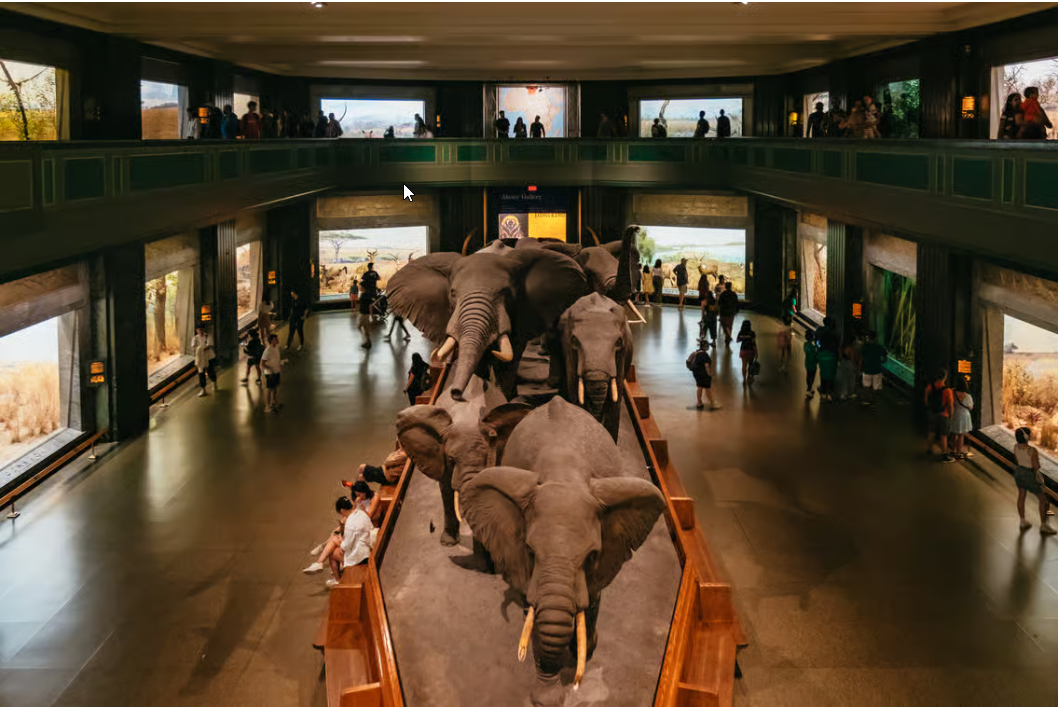
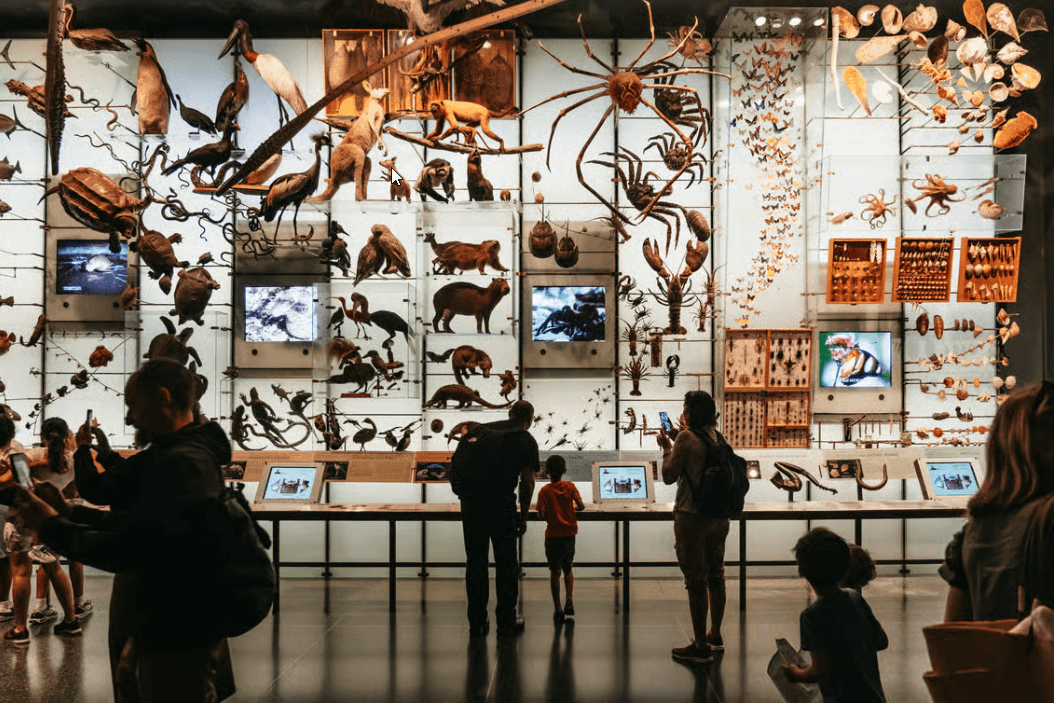
The museum’s permanent halls cover a remarkable variety of topics. You can encounter dinosaurs, mammals, ocean life, biodiversity, gemstones, human cultures, and the universe—all within the same museum visit.
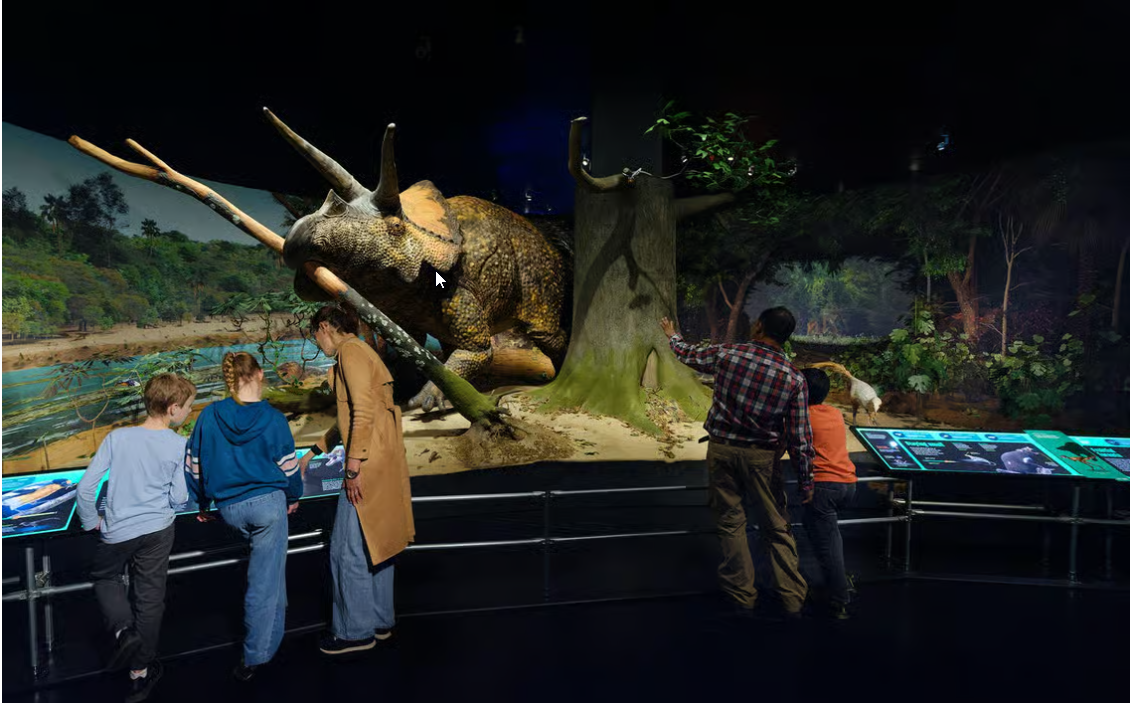
For many visitors, dinosaurs are one of the main reasons to visit the American Museum of Natural History.
Walking among prehistoric fossils brings the distant past to life. Instead of simply reading about creatures that disappeared millions of years ago, you can see their enormous skeletons and gain a better understanding of the scale and diversity of prehistoric life.
The museum’s dinosaur collections are particularly memorable for families and young travelers. Children can imagine what Earth might have looked like when enormous prehistoric animals dominated the planet, while adults can appreciate the scientific story behind the fossils and discoveries.
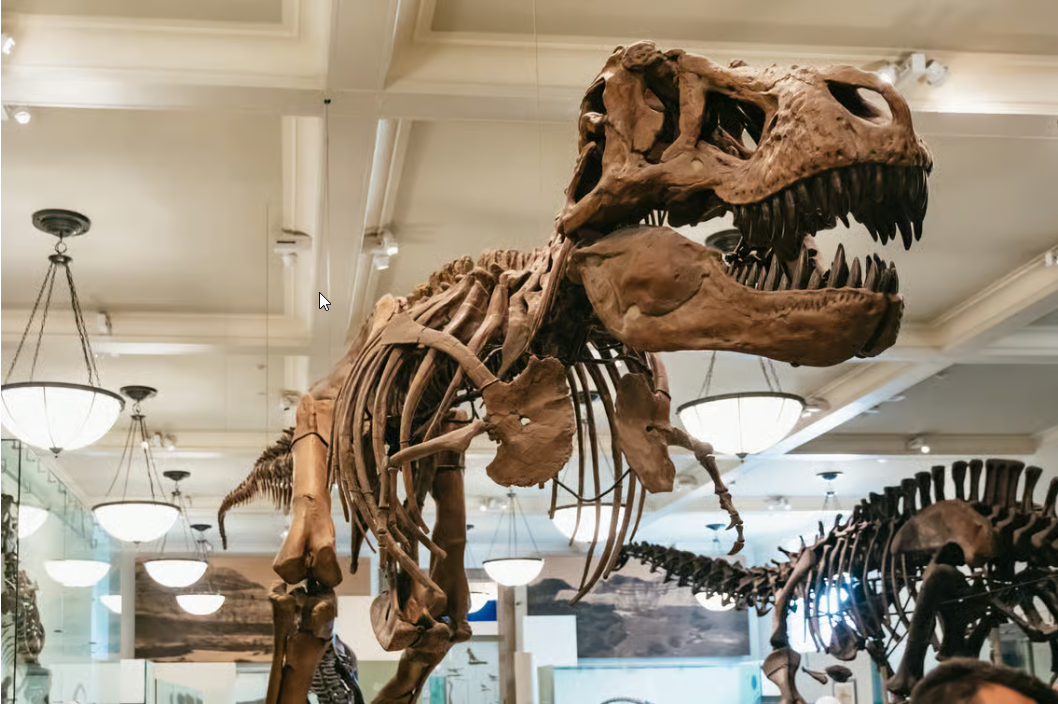
One of the recognizable highlights is the Tyrannosaurus rex skeleton. The museum also features an Easter Island head that helped inspire imagery associated with the movie Night at the Museum.
For travelers interested in paleontology, fossils, evolution, and prehistoric animals, the dinosaur halls can become one of the most memorable parts of the entire experience.
Natural history is not only about dinosaurs.
Throughout the museum, visitors can discover how life developed, adapted, interacted, and changed over enormous periods of time. Exhibitions encourage you to think about the relationships between species, environments, ecosystems, and the forces that have shaped the planet.
The experience can transform a simple museum visit into a journey through time.
Imagine moving from the fossilized remains of ancient creatures to modern animals and ecosystems. The deeper you explore, the more you begin to see that Earth’s natural world is a constantly changing network of relationships.
This makes the museum particularly appealing to travelers who enjoy science and discovery but also want an engaging sightseeing experience rather than a traditional lecture-style attraction.
The ocean is one of the most spectacular environments on Earth, and the American Museum of Natural History gives visitors an opportunity to explore its extraordinary diversity.
The Milstein Hall of Ocean Life brings visitors face-to-face with some of the world’s largest and most fascinating marine creatures. The experience helps create a sense of being transported beneath the surface of the ocean, where enormous animals share the environment with countless smaller forms of life.
One of the museum’s famous highlights is its giant blue whale model.
The scale of the whale creates an immediate visual impression and helps visitors understand just how enormous some ocean creatures can be. Around it, the exhibition provides a broader look at marine ecosystems and the incredible variety of life found beneath the world’s oceans.
For families, photographers, nature lovers, and travelers fascinated by marine animals, the Hall of Ocean Life can be one of the standout stops during a visit.
Your journey through natural history does not stop on Earth.
The museum also provides access to the Rose Center for Earth and Space, where visitors can explore questions about the universe, planets, stars, and the place of Earth within the wider cosmos.
After walking through halls dedicated to fossils, animals, ecosystems, and human cultures, entering the world of astronomy creates a dramatic change of perspective.
Suddenly, the focus moves from individual species and environments to planets, galaxies, cosmic movements, and the enormous scale of space.
The museum’s current admission information includes the Rose Center for Earth and Space with General Admission.
For travelers visiting New York with children, this can be an especially engaging part of the day because it connects familiar questions—What is a planet How does Earth fit into space What is beyond our world?—with a visually impressive museum environment.
One of the newer additions to the American Museum of Natural History is the Richard Gilder Center for Science, Education, and Innovation.
The Gilder Center adds another dimension to the museum experience, combining architecture, exhibitions, collections, and immersive scientific experiences.
The official museum describes the Gilder Center as a space designed to encourage curiosity and discovery, with new exhibition galleries and experiences that reveal hidden aspects of the natural world. It connects with the rest of the museum across four floors.
For visitors who have explored the traditional exhibition halls before, the Gilder Center provides an opportunity to experience the museum from a different perspective.
Its design itself becomes part of the visit, while the exhibitions encourage travelers to look more closely at organisms, collections, ecosystems, and scientific discoveries.
The center is included with museum admission, while certain experiences inside the museum require additional tickets.
For travelers who want an even more immersive experience, the ticket can be upgraded to include Invisible Worlds.
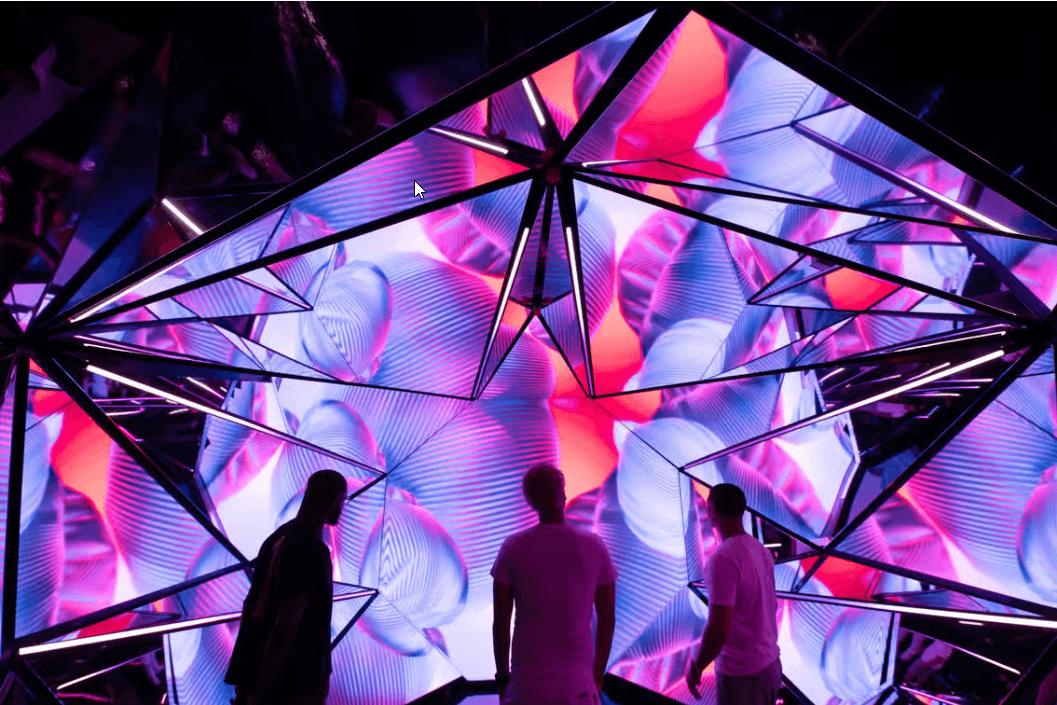
Invisible Worlds explores the hidden networks that connect life on Earth. Instead of simply displaying specimens or presenting information on traditional panels, the experience uses immersive projections to place visitors inside a visual journey through interconnected systems of life.
The official museum describes Invisible Worlds as an immersive experience exploring networks of life at different scales, including processes that can be too fast, too small, or too slow for the human eye to observe directly. Visitors can even affect aspects of the projections through their movements.
This makes the experience especially interesting for visitors who enjoy interactive attractions and modern technology.
Think about everything happening around you that cannot normally be seen.
Tiny organisms are interacting.
Cells are communicating.
Plants and animals depend on one another.
Ocean ecosystems are connected through complex food webs.
The human brain operates through vast networks of cells.
Satellites travel through networks around Earth.
Invisible Worlds turns these ideas into an immersive visual journey.
Rather than observing nature from a distance, visitors are encouraged to think about themselves as part of the same interconnected system.
Invisible Worlds takes visitors through a range of environments and scales.
One section transports visitors into the layers of a rainforest in Brazil. The journey explores how living things feed, shelter, and support one another—from underground root networks to the leafy canopy above.
The experience then shifts dramatically, taking visitors over New York City and into the networks of satellites orbiting Earth. From there, the journey explores connections between humans, nature, and the city’s environment.
The experience also moves into the human brain, offering a visual interpretation of the complex networks that allow cells to communicate.
Visitors can then descend into an ocean environment and follow the movement of jellyfish and microscopic plankton before encountering a majestic humpback whale.
The museum describes Invisible Worlds as a 12-minute looping immersive experience with ongoing showtimes, with limited capacity.
Because it is a looping experience, visitors can enter at different points in the story rather than needing to begin at a fixed opening moment.
One of the most powerful aspects of this New York museum experience is the way it changes the scale of your thinking.
A dinosaur fossil can make you think about millions of years of evolution.
A giant whale can demonstrate the scale of ocean life.
A rainforest can reveal the complexity of ecosystems.
A microscopic network can show how organisms depend on one another.
The universe can make the entire planet seem incredibly small.
Invisible Worlds brings many of these ideas together by showing that connections exist at almost every level of life.
For travelers who enjoy experiences that combine science with visual storytelling, the upgrade provides a modern complement to the museum’s traditional galleries.
The American Museum of Natural History is particularly well suited to families looking for things to do in New York City.
Instead of relying on one attraction or a short activity, the museum provides enough variety for different ages and interests.
Children may immediately gravitate toward dinosaurs, enormous animals, and interactive experiences. Older children and teenagers may enjoy astronomy, fossils, biodiversity, or immersive technology. Adults can explore the scientific collections, architecture, cultural exhibits, and historical significance of the institution.
The museum itself describes the experience as family-friendly, and its broad collection means that different members of a group can find something that captures their attention.
For parents, an indoor museum experience can also provide a useful alternative during a busy New York City itinerary. Instead of spending the entire day moving between outdoor attractions, you can slow down and spend meaningful time exploring one of Manhattan’s major cultural destinations.
There is no need to rush through every gallery.
With all-day entry, visitors have the flexibility to explore the museum at their own pace. The official activity listing describes the ticket as valid for one day and highlights all-day access to the museum.
That flexibility is important because the American Museum of Natural History is large.
Rather than treating the visit as a quick photo opportunity, consider it a full sightseeing experience.
Spend more time in the galleries that interest you most.
Pause to admire the large-scale displays.
Take photographs where permitted.
Use the museum’s digital resources to learn more about selected exhibits.
Move between natural history, culture, Earth science, and space according to your interests.
The goal is not to see everything as quickly as possible. The goal is to make the visit your own.
Technology can also make the museum easier to navigate.
The museum offers an Explorer App that can provide turn-by-turn navigation, behind-the-scenes stories, quizzes, and other information. The activity listing also notes that visitors can use the app for self-guided tours of popular collections.
For first-time visitors, this can be useful because the museum contains such a large number of halls and exhibits.
Instead of wondering where to go next, you can use digital guidance to help organize your exploration.
It can also add another layer to the experience by providing stories and information while you are standing in front of the exhibits.
Some New York attractions are primarily about taking a photograph.
The American Museum of Natural History offers something different.
It gives you stories to discover.
It gives you questions to think about.
It gives you enormous collections to explore.
It lets you move between prehistoric Earth and modern ecosystems, from microscopic systems to enormous whales, and from human cultures to the far reaches of space.
That variety makes the museum especially attractive for travelers who want more substance from their sightseeing experience.
A visit can be entertaining without losing its educational value, and educational without feeling like a conventional classroom.
As you move through the museum, a recurring idea becomes increasingly clear: nature is interconnected.
Animals depend on ecosystems.
Plants depend on complex environmental relationships.
Ocean creatures exist within food webs.
Human societies have developed within diverse environments.
Earth itself exists within a much larger cosmic system.
This broad perspective is one reason the American Museum of Natural History remains such a compelling destination for travelers.
The museum does not limit natural history to one category. Instead, it brings together many different fields of knowledge and invites visitors to consider how they fit together.
The Invisible Worlds experience takes this concept even further by transforming interconnectedness into an immersive visual journey.
The museum’s enormous collections are part of what makes the experience so distinctive.
Visitors can encounter fossils, animal specimens, cultural objects, minerals, scientific collections, and displays covering an extraordinary range of subjects.
You might enter expecting to spend most of your time looking at dinosaurs and leave fascinated by ocean ecosystems.
You might arrive interested in space and discover a new appreciation for biodiversity.
You might visit because your children love prehistoric animals and end up spending hours exploring the Gilder Center.
The variety makes every visit personal.
There is no single “correct” way to explore the American Museum of Natural History.
The museum’s location adds another advantage to a New York City sightseeing itinerary.
Situated at 200 Central Park West, the museum is directly across from Central Park.
This makes it easy to combine a museum visit with other Upper West Side and Central Park activities.
Travelers can spend part of their day outdoors exploring Central Park before heading inside to discover natural history, or plan a museum-focused day and continue exploring Manhattan afterward.
Because the museum is located in such a well-known part of New York City, it can naturally fit into a broader Manhattan itinerary.
For first-time visitors, this provides a practical way to combine one of the city’s major cultural institutions with one of its most famous urban parks.
New York weather can change quickly, and not every travel day is ideal for outdoor sightseeing.
The American Museum of Natural History provides a substantial indoor experience, making it a natural option when you want to escape rain, cold, or uncomfortable weather while still enjoying a meaningful New York attraction.
Instead of losing a day of sightseeing, you can spend hours exploring galleries, scientific collections, dinosaurs, ocean life, Earth and space, the Gilder Center, and optional immersive experiences.
This makes the museum particularly useful for travelers building a flexible New York City itinerary.
You do not need to be a scientist to enjoy the museum.
You do not need to know the names of dinosaurs.
You do not need a background in astronomy.
You do not need to understand complex biology.
Curiosity is enough.
The museum presents an enormous range of subjects in a way that can be explored visually and at your own pace.
For science enthusiasts, the visit can provide opportunities to go deeper.
For casual travelers, the scale and visual impact of the exhibits can make the experience enjoyable without requiring specialist knowledge.
For families, it can turn a sightseeing day into an opportunity for discovery.
New York City is filled with iconic landmarks, but the city’s cultural attractions reveal another side of the destination.
The American Museum of Natural History gives travelers a chance to explore science, nature, culture, and the universe while remaining in the heart of Manhattan.
It is an experience that can complement classic New York sightseeing.
After seeing skyscrapers rise above the city, you can explore geological forces that shaped the planet.
After walking through Central Park, you can discover ecosystems and animal life from around the world.
After experiencing the energy of Manhattan, you can step into an immersive journey through the hidden networks that connect life.
This contrast is part of what makes the museum such an appealing addition to a New York itinerary.
Explore an extensive collection of permanent galleries covering natural history, animals, fossils, biodiversity, cultures, Earth science, and more.
Discover exhibits focused on Earth and the universe and broaden your visit beyond natural history on our planet.
Explore the museum’s modern science and innovation center, featuring new galleries and immersive experiences.
Come face-to-face with prehistoric creatures and explore the museum’s celebrated dinosaur collections.
Encounter the scale and diversity of marine life, including the museum’s famous giant blue whale model.
Upgrade your admission and enter a 360-degree immersive experience exploring the hidden networks connecting life on Earth.
Use the museum’s Explorer App for navigation, exhibit stories, quizzes, and self-guided exploration.
The ticket provides one-day validity, allowing you to spend your museum day exploring at your own pace.
A great New York City attraction should give you something to remember after you leave.
The American Museum of Natural History does this by creating moments of scale and discovery.
A dinosaur skeleton can make prehistoric time feel real.
A giant whale can reveal the enormous scale of marine life.
A rainforest journey can show how thousands of organisms depend on one another.
An immersive visualization of the human brain can make invisible biological networks easier to imagine.
A journey into Earth and space can change the way you think about our planet’s place in the universe.
And the museum’s vast collection means that these experiences are only part of what you can discover during a visit.
The best museum visits are not necessarily the ones where you see the most exhibits.
They are the ones where you stop, look closely, ask questions, and allow yourself to become curious.
Give yourself time to admire the enormous displays.
Take a moment to look at details you might otherwise walk past.
Let children choose some galleries themselves.
Follow your interests instead of trying to complete the museum as quickly as possible.
If you choose the Invisible Worlds upgrade, allow yourself to become part of the immersive environment and watch how the visual experience responds to movement and reveals hidden connections.
The official museum recommends advance ticketing for faster entry and currently lists the museum as open daily from 10:00 AM to 5:30 PM, except Thanksgiving Day and Christmas Day.
The American Museum of Natural History offers an unusual combination of time scales.
You can begin with life that existed millions of years ago.
Then you can explore animals and ecosystems that exist today.
You can investigate human cultures and scientific discoveries.
You can enter modern immersive environments.
Finally, you can look beyond Earth toward the universe.
In a single New York City attraction, travelers can move from ancient fossils to modern technology and from microscopic life to cosmic questions.
That is the essence of the American Museum of Natural History experience.
Every exhibit has a story.
A fossil tells the story of life that existed long before humans.
An animal specimen reveals adaptation and survival.
A cultural object reflects human creativity, history, and traditions.
An ecosystem demonstrates relationships between countless organisms.
A space exhibit expands the story beyond Earth.
Invisible Worlds adds another layer by showing connections that are normally invisible to us.
Together, these experiences encourage visitors to look at the natural world differently—not simply as a collection of separate things, but as an enormous network of relationships.
One of the strongest features of this museum experience is its ability to bring different generations together.
Children can be fascinated by dinosaurs.
Parents can enjoy the educational and cultural aspects.
Grandparents can explore the museum’s extensive collections and scientific displays.
Teenagers can engage with immersive technology and space.
Travel companions with different interests can split their time between different sections and still enjoy the same destination.
That flexibility makes the American Museum of Natural History a practical choice for families and mixed-interest groups visiting New York City.
A visit to the American Museum of Natural History can become more than a few hours inside a museum.
Start your day around Central Park.
Explore the museum’s permanent halls.
Spend time in the dinosaur galleries.
Discover the animals and ecosystems of the natural world.
Visit the Rose Center for Earth and Space.
Explore the Gilder Center.
If selected as part of your admission, experience Invisible Worlds.
Use the Explorer App to find exhibits and learn more about the collections.
Then continue your New York adventure in the surrounding Upper West Side and Central Park area.
With so much to explore, the museum can comfortably serve as one of the central activities in a full day of Manhattan sightseeing.
New York City is a destination built around discovery.
Every neighborhood has a story.
Every street reveals another part of the city.
And inside the American Museum of Natural History, an even larger story unfolds—the story of our planet, its creatures, its ecosystems, human cultures, and the universe beyond Earth.
Walk among dinosaurs.
Stand beneath the scale of ocean life.
Explore biodiversity.
Discover Earth and space.
Enter the modern Gilder Center.
And, with the appropriate upgrade, step into Invisible Worlds to experience nature’s hidden networks in an immersive 360-degree environment.
Whether you are planning a family vacation, a first trip to New York City, a science-focused itinerary, or simply looking for an unforgettable indoor attraction in Manhattan, the American Museum of Natural History offers a day filled with curiosity, discovery, and visual wonder.
Your New York adventure can begin with the city outside—but inside this extraordinary museum, the journey extends across millions of years, from microscopic life to enormous creatures and from the history of Earth to the vastness of space.
Discover the American Museum of Natural History and experience New York City from a completely different perspective.
A visit to the American Museum of Natural History can easily become one of the most memorable cultural experiences of a New York City trip. With more than 40 permanent exhibition halls, an extensive collection covering natural history and human cultures, the Rose Center for Earth and Space, and the Richard Gilder Center, there is enough variety to build an experience around your own interests.
The museum is located at 200 Central Park West, New York, NY 10024, on Manhattan's Upper West Side, directly across from Central Park. The museum's current visitor information lists regular public hours as 10:00 AM to 5:30 PM, with the museum generally open daily except Thanksgiving Day and Christmas Day.
Because opening hours, admission policies, special exhibitions, and timed experiences can change, travelers should check the latest visitor information before their visit.
The product experience centers around admission to the American Museum of Natural History, with an option to upgrade the ticket to include Invisible Worlds.
This structure allows travelers to choose the experience that best matches their interests.
General Admission provides access to the museum's permanent exhibition halls and major areas included in the standard admission. The museum currently states that General Admission includes access to more than 40 permanent halls, the Gilder Center, and the Rose Center for Earth and Space.
This option is suitable for travelers who primarily want to explore the museum's extensive permanent collections.
Travelers can select an upgraded admission option that includes Invisible Worlds.
Invisible Worlds is a separate immersive experience exploring interconnected systems of life at different scales. The museum describes it as a 12-minute looping experience in a 360-degree environment, with limited capacity.
Because the experience uses immersive projections rather than conventional display cases, it provides a different style of museum experience and complements the permanent galleries.
The American Museum of Natural History is large enough that having a general plan can make the visit easier.
There is no single required route, but the following approach can help first-time visitors organize their day.
Begin your visit at the museum's Central Park West entrance and allow enough time for admission procedures.
If you have purchased your ticket in advance, have the relevant booking information ready. Entry requirements and procedures can vary, so following the instructions associated with your reservation is important.
Once inside, take a moment to orient yourself.
The museum contains many exhibition halls spread across multiple floors, so deciding which subjects interest you most can help you use your time efficiently.
Instead of attempting to see every gallery immediately, identify the exhibitions you most want to experience.
For many travelers, these may include:
This approach is particularly helpful for families because children can become tired after several hours of continuous sightseeing.
Choose a few must-see areas first, then explore additional galleries if time and energy allow.
For many first-time visitors, dinosaurs are an essential part of the American Museum of Natural History experience.
The fossil halls provide an opportunity to see the physical scale of prehistoric animals rather than simply reading about them.
Look closely at the skeletons and fossil specimens and consider the enormous amount of scientific work required to understand animals that lived millions of years ago.
Children can turn the visit into an informal prehistoric adventure, while adults can appreciate the scientific and historical significance of the collections.
After exploring prehistoric life, move into exhibitions focused on living animals and ecosystems.
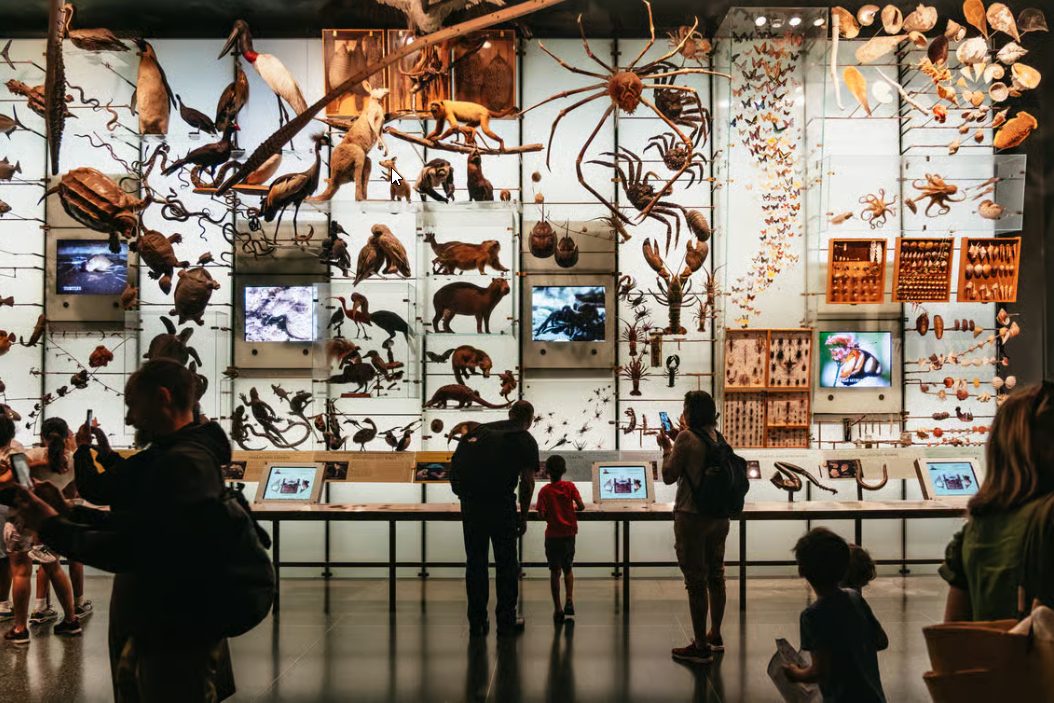
The museum contains displays covering mammals, birds, marine life, biodiversity, and other aspects of the natural world.
This creates an interesting progression:
Ancient life → evolution → modern animals → ecosystems → human interaction with nature
The experience encourages visitors to see the natural world as an interconnected system rather than a series of unrelated species.
Make time for the Milstein Hall of Ocean Life if marine environments interest you.
The enormous blue whale model is one of the museum's most recognizable displays, and the hall provides an opportunity to explore marine ecosystems and ocean biodiversity.
The size of the whale is particularly impressive when viewed in person.
It provides a memorable reminder of the scale that marine life can reach and gives visitors a visual reference that photographs cannot fully reproduce.
Continue toward the Rose Center for Earth and Space for a change of perspective.
Instead of focusing primarily on individual organisms, this part of the museum expands the story toward planets, stars, Earth science, and the universe.
It is a natural transition from the biological world to the larger physical environment in which Earth exists.
For children, the subject can inspire questions about planets and space.
For adults, it provides a chance to step away from the busy streets of Manhattan and think about the enormous scale of the universe.
The Richard Gilder Center for Science, Education, and Innovation adds a contemporary dimension to the museum.
The Gilder Center includes exhibition galleries and spaces designed to encourage exploration and scientific discovery. The museum describes the center as a four-floor addition connecting different parts of the institution.
The architecture is also part of the experience.
Its interior spaces create a dramatic contrast with traditional museum galleries, making the journey between exhibitions itself visually interesting.
For returning visitors, the Gilder Center provides another reason to explore the museum beyond its classic collections.
If your admission includes the Invisible Worlds upgrade, reserve time for this immersive experience.
Invisible Worlds explores the networks that connect living systems, from microscopic biological processes to larger ecosystems and planetary systems.
The experience moves through different environments and scales, encouraging visitors to consider connections that cannot normally be seen.
The museum states that the experience uses a 360-degree immersive environment and can respond to visitors' movements, creating an interactive element.
Traditional museum displays ask you to look at an object.
Invisible Worlds asks you to enter an environment.
That distinction can make the experience particularly memorable for travelers who enjoy immersive technology.
Rather than examining one fossil or specimen at a time, you experience visual representations of networks, connections, and living systems.
The museum contains a huge variety of subjects, so travelers can tailor their visit around personal interests.
Prioritize the fossil halls and dinosaur collections.
Look for major prehistoric skeletons and take time to understand how fossils help scientists reconstruct ancient life.
Explore the mammal and biodiversity halls.
These areas provide an opportunity to see representations of animals from different environments and regions.
Visit the Milstein Hall of Ocean Life and spend time beneath the giant blue whale.
Head toward the Rose Center for Earth and Space.
Combine dinosaurs, large animal displays, ocean life, the Gilder Center, and interactive or immersive experiences.
Explore the museum's natural-history collections, Earth and space exhibitions, biodiversity displays, and Invisible Worlds.
Combine the museum with Central Park and other Upper West Side attractions.
There is no universal amount of time required to visit the American Museum of Natural History because the museum contains a very large number of galleries and collections.
A shorter visit can focus on several major highlights.
A longer visit can include multiple floors, permanent halls, the Gilder Center, and additional experiences.
Travelers who want a relaxed experience should avoid creating an overly ambitious schedule.
The museum is better experienced as a destination rather than a checklist.
If your New York itinerary is busy, concentrate on a few priority areas such as:
With more time, add:
The one-day ticket structure gives visitors flexibility to spend the day exploring rather than having to complete the attraction within a short fixed window.
The best time for an individual traveler depends on personal schedule and crowd preferences.
For a quieter museum experience, many travelers prefer arriving earlier in the day.
An early arrival can also help visitors make better use of their time because there are many galleries to explore.
If you are traveling with children, consider the family's energy levels when planning your arrival.
A museum visit can involve considerable walking, so comfortable clothing and footwear are useful.
Always confirm the latest opening hours and visitor policies before departure because schedules may change.
A museum visit does not require specialized equipment, but a few practical choices can make the experience more comfortable.
You may spend several hours walking through exhibition halls.
A phone can be useful for photographs where photography is permitted and for accessing digital information.
Keep your reservation details accessible when arriving.
Staying hydrated is useful during a long sightseeing day. Follow current museum rules regarding where food and drinks can be consumed.
A smaller bag can be easier to carry through a large museum than heavy luggage.
Comfort is more important than formal clothing.
Choose comfortable walking shoes because exploring the museum can involve significant walking.
New York weather may also be very different outside and inside, so layering can be useful depending on the season.
Families traveling with young children should consider clothing that allows children to move comfortably while exploring the galleries.
Yes. The wide variety of exhibitions makes the museum suitable for family visits, particularly for children who are interested in dinosaurs, animals, oceans, science, or space.
The visual nature of many displays means children can learn through observation as well as reading.
A family can also choose its own pace.
Instead of requiring children to remain focused on one subject for a long period, parents can move between different types of exhibitions.
A dinosaur hall can be followed by marine life.
A mammal exhibition can be followed by space.
A traditional collection can be followed by an immersive experience.
This variety can help maintain children's curiosity throughout the visit.
The museum can also be incorporated into a multigenerational New York City itinerary.
However, because the institution is large, visitors should plan around individual mobility and energy levels.
Rather than attempting to cover every exhibition hall, choose priority areas and allow time for breaks.
The museum's scale means that a slower visit can still provide a substantial experience.
Travelers should consult the museum's current accessibility information if they have specific mobility, seating, elevator, or accessibility requirements.
A solo visit allows you to explore according to your own interests.
You can spend as long as you want at a particular exhibit without needing to coordinate with a group.
You can move quickly through galleries that do not interest you and slow down when something captures your attention.
Solo travelers who enjoy museums, science, photography, architecture, or natural history may particularly appreciate this flexibility.
A museum visit can provide a relaxed alternative to New York City's faster-paced sightseeing attractions.
Couples can explore together, choose favorite galleries, and spend time discussing exhibits.
The combination of natural history, architecture, science, and immersive experiences provides plenty of conversation points throughout the visit.
The museum can also be combined with a walk through Central Park before or after the visit.
Rain does not need to cancel this part of your New York sightseeing plan.
The American Museum of Natural History is primarily an indoor attraction, making it an option for travelers who need a substantial indoor activity.
A rainy day can even be an opportunity to slow down and spend more time exploring the museum.
Instead of rushing between outdoor landmarks, you can spend several hours discovering dinosaurs, marine life, mammals, cultural collections, Earth science, and space.
Always follow current museum policies and operating schedules, particularly during severe weather.
The museum provides accessibility information for visitors who need assistance.
Because accessibility features and visitor services can change, travelers with specific requirements should consult the museum's official accessibility guidance before visiting.
Planning ahead can help ensure that your route through the museum is comfortable and appropriate for your needs.
For visitors traveling with children, seniors, or people with mobility requirements, advance planning can make a large museum experience considerably easier.
A full museum visit can take several hours, so planning a break is useful.
Instead of trying to rush continuously from one exhibition to another, consider allowing time for food or rest according to the museum's current dining and visitor policies.
Food and beverage availability can change, so check the latest information before your visit.
If you are building a full-day Upper West Side itinerary, you can also plan a meal outside the museum before continuing your New York sightseeing.
The museum's galleries offer many memorable photographic subjects, including architecture, fossils, animal displays, and large-scale installations.
Photography policies can vary by exhibition and experience.
Always follow posted instructions and staff guidance regarding photography, flash, tripods, and special exhibitions.
For the best experience, take photographs without allowing the camera to replace the experience itself.
Sometimes the most memorable moments are the ones you spend simply looking.
You do not need a rigid itinerary, but identifying your must-see exhibitions before arrival can save time.
Expect plenty of walking.
The museum contains more than 40 permanent exhibition halls, so it is easy to underestimate how much there is to see.
If immersive experiences appeal to you, review the ticket options and consider selecting the admission that includes Invisible Worlds.
The museum's Explorer App can assist with navigation and provide additional stories and information.
Opening hours, special exhibitions, ticket requirements, and visitor procedures can change.
Families, seniors, and travelers with mobility needs may benefit from a slower itinerary.
A New York City vacation can become expensive and complicated when every attraction requires a separate short visit.
The American Museum of Natural History offers an opportunity to spend a substantial part of the day exploring one destination with a broad range of subjects.
You are not limited to one theme.
You can move between:
Dinosaurs → animals → oceans → cultures → Earth → space → modern science → immersive technology
That variety makes it easier for travelers with different interests to enjoy the same attraction.
For families, it offers educational entertainment.
For science enthusiasts, it offers extensive collections.
For casual tourists, it offers iconic displays and spectacular spaces.
For repeat New York visitors, it provides an opportunity to explore a different side of Manhattan.
Imagine starting your morning looking at creatures that lived millions of years ago.
A few galleries later, you are standing beneath an enormous representation of a blue whale.
Then you are exploring ecosystems, human cultures, and biodiversity.
Next, you are surrounded by the architecture and exhibitions of the Gilder Center.
Then you turn toward Earth and space and begin thinking about the universe beyond our planet.
If you have selected Invisible Worlds, you can finish with an immersive exploration of hidden networks connecting life at scales that humans normally cannot see.
That progression is what makes this experience distinctive.
The museum does not tell only one story.
It presents many interconnected stories.
For travelers considering the optional upgrade, Invisible Worlds deserves special attention.
The experience focuses on networks and connections.
Some of these connections happen at scales too small to see directly.
Others unfold across ecosystems or even extend beyond the immediate environment.
The museum explains that Invisible Worlds explores networks of life from microscopic scales to ecosystems and beyond.
The visual environment can make abstract scientific concepts easier to understand because visitors do not simply read about connections—they experience visual representations of them.
The result is an attraction that feels different from a conventional gallery.
One of the central ideas visitors can take away from Invisible Worlds is that life does not exist in isolation.
A rainforest is not simply a collection of individual plants and animals.
An ocean is not simply water containing separate creatures.
The human body is not simply a collection of independent organs.
The natural world operates through relationships.
Invisible Worlds uses immersive technology to communicate this concept through changing environments and visual networks.
For travelers who enjoy science, technology, nature, or experiential attractions, this can add a modern layer to a traditional museum day.
The museum's location across from Central Park makes it easy to combine two very different New York experiences.
You can begin outdoors in one of the world's most famous urban parks, then move indoors to explore natural history and science.
Alternatively, start inside the museum and finish with a walk through Central Park.
This combination can create a balanced day:
Nature outdoors → science and history indoors → Manhattan sightseeing
The surrounding Upper West Side also provides opportunities to continue exploring after leaving the museum.
New York City rewards travelers who plan their neighborhoods efficiently.
Because the American Museum of Natural History is located on the Upper West Side, it can be incorporated into an itinerary focused on Central Park and nearby Manhattan attractions.
Rather than spending large amounts of time crossing the city between unrelated destinations, consider grouping nearby activities together.
For example:
Explore part of Central Park.
Enter the American Museum of Natural History.
Continue exploring the museum's major galleries.
Finish with the Gilder Center or Invisible Worlds if included in your ticket.
Continue to another Upper West Side or Manhattan activity.
This is only a suggested structure; travelers can adapt it to their own schedule.
The museum works with many types of New York City travelers.
Focus on dinosaurs, animals, ocean life, and immersive experiences.
Explore science, biodiversity, Earth, space, and cultural collections.
Combine the museum with Central Park and other Manhattan landmarks.
Take a relaxed museum day followed by Central Park and neighborhood exploration.
Use the flexibility of independent exploration to focus deeply on personal interests.
Discover galleries and newer spaces that you may not have explored on previous trips.
The museum's biggest strength is its variety of scale.
A visitor can stand in front of a fossil and think about millions of years.
A few minutes later, a giant animal display can make you appreciate the physical scale of Earth's wildlife.
An immersive exhibit can shift your attention toward microscopic systems.
The Rose Center can expand your perspective toward the universe.
This constant movement between scales creates a distinctive sightseeing experience.
You are not simply looking at objects.
You are repeatedly changing your perspective on the world.
Before booking, review the available admission options and determine whether you want standard General Admission or an option that includes Invisible Worlds.
The official museum recommends purchasing tickets in advance, and current admission information should be checked before your visit.
When making your reservation, pay attention to:
Ticket inclusions and policies can vary, so the details displayed at the time of booking should be treated as the final reference.
A few minutes of preparation can make your museum day smoother.
Confirm the latest hours before leaving your hotel.
Make sure you know whether your reservation includes only General Admission or an additional experience.
Identify the galleries you most want to visit.
The museum is located at 200 Central Park West and is accessible from several Manhattan subway routes and bus services. Current transportation details should be checked before travel.
You may spend several hours walking.
A charged phone is useful for tickets, maps, photography, and museum digital resources.
The American Museum of Natural History is ultimately an invitation to be curious.
Ask how dinosaurs lived.
Ask how ecosystems function.
Ask why whales became so large.
Ask how humans have interacted with the natural world.
Ask what exists beyond Earth.
Ask what is happening inside systems too small for the human eye.
And then allow the museum's exhibitions to provide pieces of the answer.
That sense of curiosity is what connects the museum's many galleries.
A New York City trip can be filled with iconic views, busy streets, restaurants, shopping, theaters, and landmarks.
The American Museum of Natural History offers a different rhythm.
Inside its galleries, you can slow down.
You can explore.
You can learn.
You can look closely.
You can travel through millions of years without leaving Manhattan.
And with the Invisible Worlds upgrade, you can move beyond visible specimens and enter an immersive environment exploring the hidden networks that connect life.
From dinosaurs and mammals to oceans and outer space, the museum provides a broad window into the natural world.
A well-planned visit can include many of the museum's most recognizable experiences.
Discover prehistoric life and see impressive fossil skeletons.
Experience the enormous scale of the famous blue whale display in the Milstein Hall of Ocean Life.
Shift your perspective from life on Earth to the universe beyond.
Explore the museum's contemporary science and innovation center.
Upgrade your admission for an immersive exploration of interconnected life systems.
Choose from an extensive range of natural history and cultural exhibitions.
Use digital navigation and self-guided resources to enhance your visit.
The American Museum of Natural History is not an attraction that needs to be rushed.
Give yourself room to be surprised.
You may arrive for the dinosaurs and leave fascinated by astronomy.
You may come for the blue whale and discover an interest in biodiversity.
You may choose the museum because of its reputation and discover that the Gilder Center becomes your favorite part.
Or you may select Invisible Worlds and leave thinking differently about the invisible networks that connect life.
That unpredictability is part of the fun.
If your New York City itinerary includes museums, science, family attractions, or memorable indoor experiences, the American Museum of Natural History provides an opportunity to explore an extraordinary range of subjects in one destination.
Choose your preferred admission option, plan your visit around the exhibitions you most want to see, and give yourself enough time to enjoy the museum rather than simply passing through it.
Explore prehistoric life.
Meet the animals of the natural world.
Discover the oceans.
Look toward the universe.
Experience the Richard Gilder Center.
And, if selected, step into Invisible Worlds and explore the hidden connections that make life possible.
Your New York adventure is not limited to what you can see from the city's streets.
Inside the American Museum of Natural History, an entire world of discovery is waiting.
Book your American Museum of Natural History NYC ticket and prepare to explore one of Manhattan's most fascinating journeys through nature, science, history, and the universe.
A visit can take several hours because the museum has more than 40 permanent exhibition halls plus additional ticketed experiences. Travelers with limited time can focus on highlights such as dinosaurs, the Blue Whale, Rose Center for Earth and Space, and the Gilder Center. Visitors who want a more relaxed experience should allow substantially more time. The museum is open daily from 10:00 AM to 5:30 PM, except Thanksgiving Day and Christmas Day.
General Admission provides access to the museum's permanent exhibition halls and included museum areas. Additional ticketed exhibitions and experiences may require an upgrade or separate ticket. Current options should be checked when booking because inclusions can change.
Only if you select an admission option that includes it. Invisible Worlds is an additional ticketed immersive experience. The museum describes it as a 12-minute looping experience with ongoing showtimes and limited capacity.
Invisible Worlds is an immersive 360-degree experience exploring hidden networks of life. It looks at connections across different scales, including systems that can be too fast, too small, or too slow for people to observe directly. At certain points, visitors' movements can affect the surrounding projections.
Yes. The museum offers a broad range of subjects that can appeal to children, including dinosaurs, animals, marine life, Earth science, and space. Strollers are permitted throughout the museum except in theaters, where dedicated stroller parking is provided. Children aged 12 and under must be accompanied by an adult.
The museum's permanent dinosaur-related galleries are part of its broader museum experience, while certain special dinosaur exhibitions can be separately ticketed. Because exhibition availability can change, check the admission details for the date of your visit.
Yes. The famous life-size Blue Whale is one of the museum's major highlights and is located in the Milstein Hall of Ocean Life. The museum identifies the Blue Whale as one of its signature highlights.
The Rose Center for Earth and Space is part of the museum complex, and General Admission currently includes access to the Rose Center. Some specific programs or experiences within the museum may require an additional ticket.
The Richard Gilder Center is included with General Admission according to the museum's current visitor information. Certain exhibitions or experiences located within the museum may have separate admission requirements.
The museum currently states that it is open daily from 10:00 AM to 5:30 PM and closed on Thanksgiving Day and Christmas Day. Temporary exhibition or facility closures can occur, so visitors should check the official schedule shortly before visiting.
The museum is located at 200 Central Park West, New York, NY 10024, on Manhattan's Upper West Side, next to Central Park.
The B and C subway lines serve the 81st Street–Museum of Natural History station. The museum also notes that the 1 train stops at Broadway and West 79th Street. Travelers requiring an accessible subway station should note that the 81st Street station is not wheelchair accessible; the museum identifies the 72nd Street station for the 1, 2, and 3 trains as the closest accessible subway option.
Yes. The museum currently lists four dining options: The Restaurant at Gilder, Food Court, Cafe on 1, and Cafe on 4. Opening days and hours vary by location. Eating is prohibited inside museum galleries.
Yes. Restrooms are available within the museum, and the free Explorer App can help visitors locate the nearest restroom and other amenities.
The museum states that visitors may leave and return using the same ticket on the same day. Re-entry requires visitors to enter through designated entrances and pass through security again.
Yes. Strollers are generally welcome throughout the museum, although there are restrictions in theaters and some ticketed exhibition spaces. The museum recommends the Rose Center and Gilder Center entrances for visitors with strollers.
The museum provides accessible, step-free entrances and accessibility resources. The Gilder Center entrance at 415 Columbus Avenue and the Rose Center entrance at 54 West 81st Street are among the accessible entrances identified by the museum.
Yes. The museum offers the free Explorer App, which provides maps, turn-by-turn directions, customized recommendations, and routes to amenities. It can also provide accessible routes and help visitors find nearby restrooms and other facilities.
Personal photography is permitted under the museum's visitor rules using handheld cameras and available light or electronic flash attachments. Selfie sticks and tripods are not permitted. Special exhibitions may have additional photography restrictions.
The museum provides storage lockers, with current information listing large lockers at $12 per day. Large bags, backpacks, luggage, and food or beverage items are not permitted in the lockers according to the museum's visitor information.
After completing your reservation, our team will contact you one day before your tour to confirm your exact hotel / Airbnb pickup time or meeting point.
If you selected a meeting point during your booking, please note that your reservation is fully confirmed — simply arrive at the chosen location at the scheduled time.
Please ensure the WhatsApp number, phone number, or email you entered during booking is correct so we can reach you smoothly.
For any changes to your reservation, weather questions, or special requests, feel free to contact us:
We look forward to welcoming you! 🌴✨