La Fortuna: Rio Celeste Full Day Tour
5.0(90)
From$125
La Fortuna: Rio Celeste Full Day Tour
5.0 (90)
From$125per person
Explore Uvita's ancient stone spheres at Finca 6 and Batambal with a bilingual guide, museum visit, scenic views, and Costa Rica's rich Diquís heritage.
Uvita Archaeological Sites with Stone Spheres: Explore Costa Rica’s Ancient Diquís Culture
Discover the Mystery of Costa Rica’s Ancient Stone Spheres
Step beyond Costa Rica’s beaches, rainforests, and tropical wildlife and discover a fascinating chapter of the country’s history on the Uvita Archaeological Sites with Stone Spheres tour. This cultural and historical experience takes you into the Diquís region of southern Costa Rica, where ancient settlements, remarkable stone spheres, traditional landscapes, and spectacular views reveal the story of pre-Columbian societies that flourished centuries before modern Costa Rica existed.
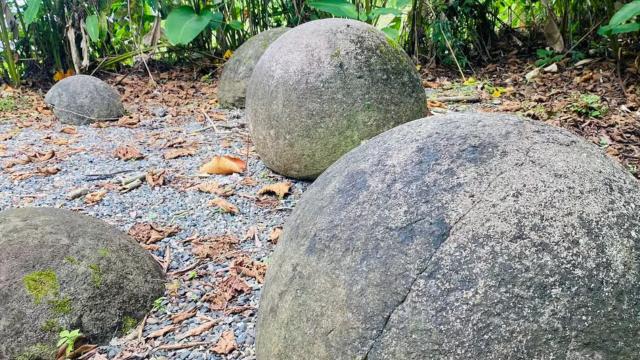
Located in the southern Pacific region of Costa Rica, the Diquís Delta is home to one of the country’s most intriguing archaeological treasures: the famous Diquís stone spheres. These almost perfectly rounded stone sculptures are among the most recognizable archaeological discoveries in Costa Rica and form part of the Precolumbian Chiefdom Settlements with Stone Spheres of the Diquís, a UNESCO World Heritage property inscribed in 2014. The World Heritage property includes four archaeological sites: Finca 6, Batambal, El Silencio, and Grijalba-2.
This guided Uvita archaeological tour gives travelers the opportunity to visit two of these important archaeological locations while learning about the people, landscapes, beliefs, social structures, and craftsmanship connected to the Diquís culture.
Rather than simply looking at ancient objects behind glass, you experience history in the landscape where it actually happened.
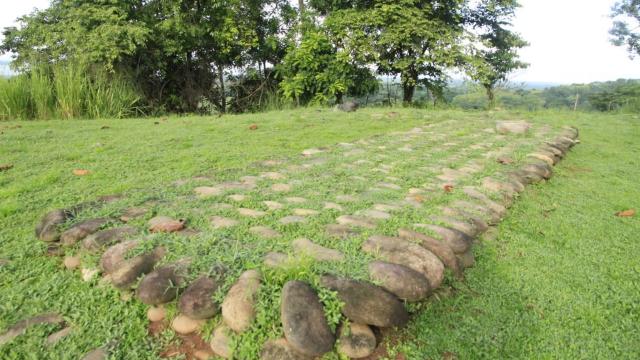
At Finca 6, you can encounter a remarkable archaeological setting where stone spheres remain associated with ancient settlement structures. The site is particularly important because it preserves stone spheres in original locations and is the only one of the four UNESCO sites known for surviving alignments of spheres.
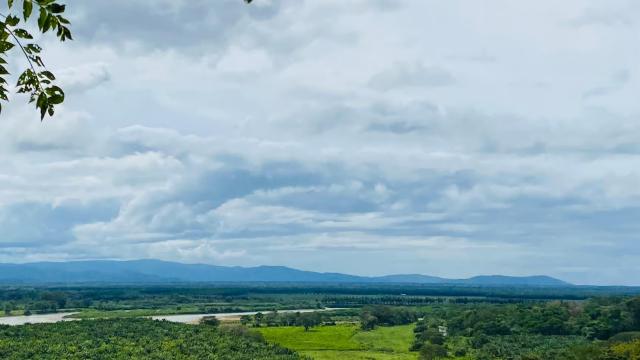
At Batambal, the experience changes from the flat landscape of the Diquís Delta to a strategic elevated setting overlooking the Térraba River, delta plain, Pacific Ocean, and surrounding mountains. The panoramic scenery helps visitors understand why this location may have held special importance to the ancient inhabitants of the region.
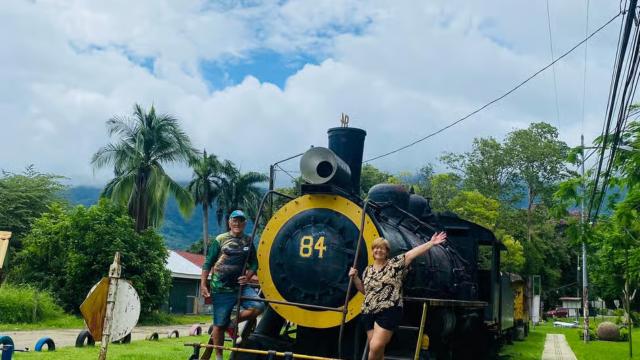
Along the way, the tour also connects the ancient past with more recent Costa Rican history. Stops at Palmar Sur’s public park and the historic old railway associated with the banana industry provide another perspective on how the region evolved over time.
The result is a cultural experience that combines archaeology, history, landscapes, local heritage, photography, and storytelling into one memorable journey.
One of the most compelling reasons to visit the archaeological sites around Uvita is their global significance.
The Diquís archaeological sites are not simply collections of old artifacts. They provide evidence of complex pre-Columbian societies that developed organized settlements, social hierarchies, productive systems, monumental works, and distinctive artistic traditions in southern Central America.
UNESCO recognizes four archaeological components within the property, representing different types of settlements associated with pre-Columbian chiefdom societies. The sites contain features such as artificial mounds, paved areas, burial areas, and the distinctive stone spheres for which the region is famous. Archaeological evidence places the broader cultural development represented by the World Heritage property within the period from approximately AD 500 to 1500.
For travelers, this means that a visit to the Diquís region can be much more than a sightseeing stop.
It becomes an opportunity to understand how communities lived, organized themselves, used their surroundings, created monumental objects, and expressed cultural identity through craftsmanship.
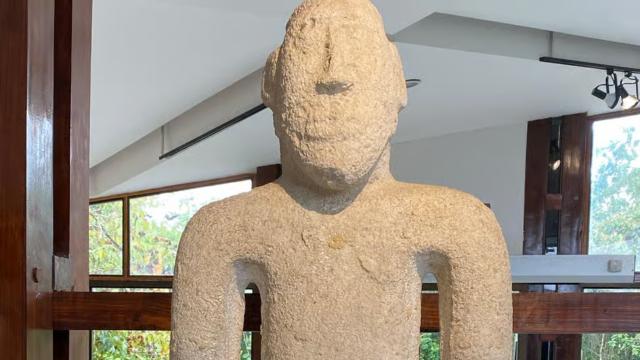
The stone spheres themselves remain particularly fascinating.
Their remarkable roundness, wide range of sizes, quantity, placement, and association with archaeological settlements have made them subjects of continued archaeological interest. UNESCO notes that the spheres range from approximately 0.7 meters to 2.57 meters in diameter, while many questions about their precise production, meaning, and use continue to attract attention.
That mystery is part of what makes seeing them in person so powerful.
Instead of encountering the stone spheres only as photographs online, you can stand within the archaeological landscape and see how these objects relate to ancient settlement structures and the surrounding environment.
Finca 6 is one of the most important stops on this archaeological experience.
Located in the Palmar Sur area of Osa, Finca 6 is an archaeological site and museum associated with the Diquís Delta. The site preserves evidence of ancient residential structures and stone spheres, including spheres that remain in situ, meaning they have not been moved from their original archaeological locations.
This detail is especially important for visitors.
There is a major difference between seeing an ancient artifact displayed in isolation and seeing it within the landscape where it was originally positioned. At Finca 6, the relationship between the spheres, settlement structures, terrain, and surrounding environment becomes part of the story.
The archaeological site includes surviving alignments of stone spheres, artificial mounds, and other archaeological features. Official information about Finca 6 identifies two alignments of spheres remaining in their original positions, making the site especially significant within the Diquís World Heritage property.
During your guided visit, your bilingual guide helps put these discoveries into context.
Instead of wondering only, “How were these spheres made?” you can begin to explore larger questions.
Who created them?
Why were they placed where they were?
What did they communicate?
How did ancient communities organize their settlements?
What role did monumental objects play in society?
Why have some spheres survived in their original positions while so many archaeological objects in other areas were moved, damaged, or lost?
These questions make the visit engaging for both dedicated history enthusiasts and travelers who simply enjoy discovering unusual places.
The Finca 6 museum component also adds depth to the outdoor experience by introducing archaeological materials and cultural information connected to the region.
Together, the museum and archaeological landscape create a stronger understanding of the Diquís people and their achievements.
After exploring Finca 6, the journey continues toward Batambal, another important archaeological site within the Diquís World Heritage property.
Batambal offers a completely different visual experience.
Situated on elevated terrain near the foothills of Fila Retinto and overlooking the Térraba River, the site provides broad views across the delta, Pacific Ocean, and surrounding mountains. Official Diquís heritage information highlights Batambal’s strategic location and its remarkable visibility over the surrounding landscape.
For visitors, the panoramic setting is one of the highlights of the tour.
Imagine standing above the landscape and looking across the same broad geographic region that ancient inhabitants once observed.
The landscape provides an important clue to understanding why archaeological sites were established where they were.
Ancient communities did not exist separately from their environment. Rivers, fertile plains, forests, mountains, wetlands, agricultural areas, and access routes all influenced where people lived and how communities developed.
Batambal helps bring that relationship between people and landscape into focus.
Archaeological research has identified stone structures, spheres, sculptures, and other cultural remains at the site. Official information also describes evidence of activities that may have had ceremonial or special significance.
Your guide can transform these archaeological remains into a much more understandable story.
Rather than seeing a stone structure as simply an old pile of rocks, you learn how archaeological interpretation helps researchers understand the communities that created and used these places.
This is where the experience becomes especially engaging for travelers who appreciate authentic cultural tourism.
You are not merely visiting an attraction.
You are interpreting a landscape.
The stone spheres are undoubtedly the centerpiece of the experience.
Their extraordinary appearance has inspired countless questions and theories, but responsible cultural tourism means separating fascinating possibilities from established archaeological evidence.
The Diquís spheres are remarkable examples of stone craftsmanship and are associated with pre-Columbian chiefdom settlements in southern Costa Rica. Their exceptional roundness, size, number, and placement distinguish them from ordinary stones found naturally in the landscape.
Some spheres are relatively small, while others are enormous.
The largest sphere identified within the Diquís archaeological tradition reaches approximately 2.57 meters in diameter.
Standing beside one of these objects can change your perspective immediately.
The scale makes it easier to appreciate the amount of knowledge, labor, planning, craftsmanship, and social organization that may have been required to produce and position such monumental objects.
Yet the spheres are important for more than their size.
Their placement within settlements appears to have had cultural significance. Finca 6 is particularly notable because surviving spheres remain arranged in alignments, providing rare evidence of how some spheres were positioned within an ancient settlement.
This is one reason a guided visit is so valuable.
A guide can explain what archaeologists know, what remains uncertain, and why the archaeological context matters.
The experience becomes a journey of discovery rather than a collection of disconnected facts.
The Diquís region provides a window into the complex societies that existed in southern Central America long before European contact.
The archaeological sites associated with the stone spheres include evidence of settlement structures and other features that help researchers understand ancient social organization. UNESCO describes the four sites as evidence of complex political, social, and productive systems associated with pre-Columbian chiefdom societies.
This history gives the tour a deeper meaning.
Costa Rica is often associated internationally with beaches, volcanoes, cloud forests, wildlife, surfing, and adventure. All of these experiences are important parts of the country’s tourism identity, but the archaeological heritage of the southern Pacific region reveals another side of Costa Rica.
It is a story about people.
It is a story about communities.
It is a story about power, identity, craftsmanship, belief, agriculture, settlement, and the relationship between human societies and the natural world.
The stone spheres provide one of the most visible expressions of that history.
As you walk through the archaeological sites, your guide can help connect individual discoveries to the larger cultural picture.
That makes the experience particularly rewarding for travelers who want to return home with more than photographs.
Although archaeology is the primary focus, the scenery surrounding the sites adds another dimension to the experience.
The Diquís region is characterized by broad lowland landscapes, rivers, wetlands, agricultural areas, mountains, and Pacific coastal scenery.
Batambal is particularly well known for its elevated position and views across the Térraba River, delta plain, ocean, and surrounding mountains.
These viewpoints provide excellent opportunities for photography.
Bring your camera because the most memorable images may not be limited to the stone spheres themselves.
You can photograph archaeological landscapes, tropical vegetation, distant mountains, river valleys, rural scenery, and expansive Pacific views.
The changing light throughout the day can also transform the appearance of the landscape.
For travelers interested in photography, cultural heritage, or nature, this combination makes the tour especially versatile.
The journey does not stop with pre-Columbian history.
A visit to Palmar Sur provides an opportunity to connect ancient heritage with the more recent development of southern Costa Rica.
The region has a strong connection to agriculture and the banana industry, and the tour includes a stop at the public park and the historic old railway associated with the Banana Company era of the 1930s.
This creates an interesting historical contrast.
At one moment, you are learning about communities that existed centuries before European arrival.
Later, you encounter physical reminders of Costa Rica’s more modern agricultural and transportation history.
The contrast helps demonstrate that landscapes are never frozen in time.
The same region can contain evidence of ancient civilizations, colonial and post-colonial development, agricultural expansion, transportation networks, and modern communities.
For travelers interested in cultural heritage, these connections can make the experience much richer.
A major advantage of this experience is the presence of a certified bilingual guide, with the tour available in English or Spanish.
Archaeological sites can be fascinating even when visited independently, but interpretation makes them considerably more meaningful.
A stone sphere may look impressive.
A guide can explain why its archaeological context matters.
A mound may look like a simple rise in the ground.
A guide can help you understand what researchers believe it may have represented.
A panoramic view may simply appear beautiful.
A guide can explain how the landscape relates to the ancient settlement and why the location may have been strategically important.
This educational element is particularly valuable because archaeological heritage can easily be misunderstood when viewed without context.
The goal of the tour is not simply to tell travelers that the stone spheres are mysterious.
It is to introduce the archaeological evidence, cultural significance, and ongoing questions surrounding these remarkable objects in a way that is accessible and engaging.
The bilingual format also makes the experience more inclusive for international travelers and Spanish-speaking visitors.
The tour is designed as a small-group guided experience, creating a more personal way to explore the archaeological sites.
Small-group travel can make cultural experiences more comfortable because travelers have greater opportunities to listen, ask questions, take photographs, and interact with their guide.
Instead of moving quickly through a large crowd, you can take time to appreciate the details of the landscape.
You can ask about the stone spheres.
You can discuss archaeological theories.
You can learn more about local history.
You can pause for photographs.
You can simply enjoy the atmosphere of the sites.
For travelers who value meaningful experiences over rushed sightseeing, this approach makes the tour especially appealing.
Exploring archaeological sites in southern Costa Rica means spending time outdoors, so staying hydrated is important.
The experience includes fresh water as well as fruit such as pineapple and watermelon.
These simple refreshments are a pleasant addition to the journey, particularly in Costa Rica’s warm tropical climate.
They also complement the local character of the experience.
After walking, exploring, listening, and taking photographs, having fresh tropical fruit provides a refreshing moment during the day.
Travelers should still bring a reusable water bottle and drink regularly, especially when temperatures and humidity are high.
This tour is particularly well suited to travelers who enjoy discovering places beyond the standard tourist route.
If your ideal Costa Rica vacation includes learning about local culture, meeting knowledgeable guides, visiting meaningful heritage sites, and understanding the history behind the landscapes you see, the Uvita archaeological experience offers a compelling addition to your itinerary.
It is also an excellent choice for travelers who have already experienced Costa Rica’s famous natural attractions and want to explore another dimension of the country.
The tour combines:
Because the experience combines history and scenery, it appeals to a broad range of travelers.
History lovers can focus on archaeology.
Photographers can enjoy the landscapes.
Culture-focused travelers can learn about indigenous heritage.
Families can turn the visit into an educational adventure.
Curious travelers can finally see the famous Costa Rican stone spheres in person.
The stone spheres are not simply relics of a distant past.
They are part of Costa Rica’s cultural heritage and an important reminder of the achievements of ancient societies in the region.
The four Diquís archaeological sites were inscribed on the UNESCO World Heritage List in 2014. Their preservation allows visitors and researchers to better understand the organization and cultural achievements of pre-Columbian communities in southern Central America.
Their survival is particularly meaningful because archaeological sites across the region have experienced damage from agriculture, looting, development, and other pressures. The preservation of original archaeological contexts therefore provides valuable information that cannot be recreated once it is lost.
Visiting responsibly helps travelers appreciate the importance of protecting these places.
The stone spheres should be treated as cultural heritage rather than curiosities.
The archaeological landscape should be respected.
Visitors should follow guide instructions, remain on appropriate paths, avoid touching or climbing protected structures, and never remove stones, artifacts, plants, or other materials.
Responsible travel ensures that future generations can experience these remarkable places too.
Uvita is widely appreciated for its dramatic coastline, lush tropical surroundings, and proximity to some of southern Costa Rica’s most spectacular natural attractions.
But the region also offers a fascinating cultural dimension.
The archaeological heritage of the Diquís Delta reveals that the area’s importance extends far beyond modern tourism.
Long before contemporary towns and roads existed, communities were already shaping this landscape.
They built settlements.
They developed social systems.
They created monumental stone objects.
They worked with natural resources.
They expressed identity through art and craftsmanship.
They established communities within a complex tropical environment.
The Uvita Archaeological Sites with Stone Spheres tour allows modern travelers to step into that deeper history.
It is an opportunity to see Costa Rica from a perspective that many visitors overlook.
Instead of simply passing through southern Costa Rica, you can pause and ask what came before.
Instead of seeing the landscape only as beautiful scenery, you can begin to understand its archaeological significance.
Instead of hearing about the mysterious stone spheres secondhand, you can stand near them and experience their extraordinary scale and presence yourself.
The best travel experiences often combine discovery with emotion.
This tour does exactly that.
There is the excitement of arriving at an archaeological site.
There is the curiosity of seeing a stone sphere up close.
There is the surprise of learning how sophisticated ancient societies were.
There is the beauty of looking across the Diquís landscape from Batambal.
There is the contrast between ancient archaeological heritage and the historic railway at Palmar Sur.
There is the simple pleasure of walking through a tropical landscape with a knowledgeable local guide.
And there is the satisfaction of understanding a little more about the country you are visiting.
These details turn a sightseeing excursion into a meaningful travel memory.
Years later, you may not remember every archaeological term your guide mentioned.
But you are likely to remember standing beneath the tropical sky, looking at an almost perfectly rounded stone created by people centuries ago, while the mountains and Pacific landscape stretched into the distance.
That is the kind of experience that stays with you.
Several elements make this cultural experience stand out.
First, it takes you to an internationally recognized archaeological heritage area.
Second, it includes visits to two important archaeological sites rather than limiting the experience to a single attraction.
Third, it combines archaeological interpretation with scenic exploration.
Fourth, it includes a museum visit at Finca 6, adding educational context to the outdoor experience.
Fifth, a certified bilingual guide helps make the history accessible in English or Spanish.
Sixth, the itinerary includes Palmar Sur and its historic railway heritage, providing a broader understanding of the region.
Finally, refreshments such as water and fresh tropical fruit help make the outdoor experience more comfortable.
Together, these elements create a balanced Costa Rican cultural excursion that is educational without feeling like a traditional classroom.
Travel is often about changing the way we see a destination.
Before visiting the Diquís region, the stone spheres might simply seem like mysterious round rocks from an ancient civilization.
After the tour, they can become something much more meaningful.
They represent craftsmanship.
They represent social organization.
They represent cultural identity.
They represent the relationship between ancient communities and their environment.
They represent a surviving connection to a civilization whose story continues to be researched and interpreted.
And because some spheres remain in archaeological context, they also provide physical evidence that helps researchers understand the settlements in which they were placed.
That transformation in perspective is one of the most valuable parts of the experience.
You do not simply visit a site.
You learn how to look at it.
Come prepared to walk, explore, listen, ask questions, and take in the scenery.
Comfortable clothing and hiking shoes are recommended because portions of the experience take place outdoors.
Rain gear is also useful in Costa Rica, where weather conditions can change quickly, particularly during the rainy season.
A hat, camera, reusable water bottle, biodegradable sunscreen, and insect repellent are also recommended.
Most importantly, bring curiosity.
The Diquís stone spheres do not provide every answer immediately.
That is part of their fascination.
Some questions about their production, symbolism, and precise functions continue to interest researchers. UNESCO itself recognizes the spheres as exceptional archaeological objects whose production, meaning, and use remain subjects of study.
A good guide does not need to turn every mystery into a definitive answer.
Instead, the experience becomes an invitation to understand what archaeology has discovered, what researchers believe, and what questions remain.
The Uvita Archaeological Sites with Stone Spheres experience offers something different from a conventional Costa Rican excursion.
It is not simply a museum visit.
It is not only a scenic drive.
It is not just a history lesson.
It is a journey through layers of time.
You explore an archaeological museum and site at Finca 6.
You see stone spheres associated with their original archaeological context.
You visit Batambal and take in expansive views over the Diquís landscape.
You learn about pre-Columbian communities and their cultural achievements.
You stop at Palmar Sur to discover another chapter of regional history.
You see remnants of the old railway associated with the banana industry.
You enjoy fresh water and tropical fruit.
And throughout the experience, a certified bilingual guide helps connect these places into one coherent story.
For travelers looking to go deeper into Costa Rica, this is an opportunity to move beyond the obvious attractions and discover a cultural heritage that is both fascinating and deeply connected to the land.
Imagine beginning your day surrounded by the tropical landscapes of southern Costa Rica.
As the journey unfolds, modern roads give way to stories of ancient settlements.
You arrive at Finca 6 and encounter the remarkable stone spheres that have made the Diquís region internationally famous.
Your guide explains the archaeological significance of the site.
You explore the museum.
You walk through the landscape.
You look closely at the spheres and the structures surrounding them.
Then the journey continues toward Batambal.
The landscape opens up.
The views become wider.
The Térraba River, delta plain, mountains, and Pacific Ocean form a natural panorama around the archaeological site.
You begin to understand that the scenery itself was part of the story.
Later, Palmar Sur introduces another chapter.
The ancient world gives way to more recent history, represented by the town’s public spaces and railway heritage.
Throughout the day, archaeology and modern history exist side by side.
That is what makes this experience so memorable.
It does not present Costa Rica as a single moment in time.
It allows you to see the country as a living landscape shaped by generations of people.
The Diquís spheres have attracted fascination around the world, but the most rewarding way to experience them is to look beyond the mystery.
Their real story is already extraordinary.
Ancient communities in southern Costa Rica developed complex social structures and created highly distinctive monumental stone objects. The surviving archaeological sites provide evidence of settlements and cultural systems that flourished centuries ago.
The spheres are therefore not merely unexplained objects.
They are part of an archaeological landscape.
They belong to a cultural tradition.
They are connected to settlement organization and expressions of social and symbolic power.
And they remain important evidence of the ingenuity and artistic traditions of the people who created them.
That perspective makes the visit more respectful, more educational, and ultimately more fascinating.
A vacation can be filled with beautiful photographs, exciting activities, and unforgettable landscapes.
But cultural experiences add another layer.
They help travelers understand the destination rather than simply consume it.
The Uvita archaeological tour is an ideal choice for travelers who want to add that deeper dimension to a Costa Rica itinerary.
Whether you are staying in Uvita, exploring the Osa region, traveling through southern Puntarenas, or looking for an enriching cultural activity alongside Costa Rica’s natural attractions, this experience provides a memorable way to connect with the country’s ancient heritage.
You will leave with photographs of stone spheres and tropical landscapes.
More importantly, you will leave with a stronger understanding of the people and history behind them.
If you are ready to discover a side of Costa Rica that many travelers never experience, the Uvita Archaeological Sites with Stone Spheres tour offers an unforgettable journey into the country’s pre-Columbian heritage.
Explore Finca 6.
Discover the remarkable Diquís stone spheres.
Visit the Batambal archaeological site.
Take in panoramic views across the Diquís Valley, Térraba-Sierpe region, Pacific Ocean, and surrounding mountains.
Learn from a certified bilingual guide.
Explore the Finca 6 museum.
Discover the historic railway heritage of Palmar Sur.
Enjoy refreshing water and tropical fruit along the way.
Most importantly, experience these remarkable places with the context and interpretation they deserve.
The Diquís stone spheres are among Costa Rica’s most intriguing cultural treasures. Their presence within protected archaeological sites offers a rare opportunity to connect with a chapter of Central American history that reaches back centuries.
Make time during your Costa Rica adventure to step away from the ordinary itinerary.
Come discover the stories hidden within the landscape.
Come see the stone spheres in person.
Come explore Finca 6 and Batambal.
Come experience the history of the Diquís region.
And come away with a deeper appreciation for the ancient cultures that helped shape southern Costa Rica.
Your journey into the archaeological heart of Costa Rica begins in Uvita.
The Uvita Archaeological Sites with Stone Spheres tour is designed to reveal the cultural heritage of southern Costa Rica through a combination of archaeological discovery, scenic landscapes, local history, and guided interpretation.
Rather than treating the Diquís stone spheres as isolated curiosities, the experience connects them with the archaeological sites, communities, landscapes, and more recent history of the region.
The itinerary includes visits to two important archaeological sites, Finca 6 and Batambal, together with stops at Palmar Sur public park and the historic old railway associated with the banana industry.
Throughout the experience, a certified bilingual guide provides explanations in English or Spanish, helping travelers understand the significance of what they are seeing.
Fresh water and tropical fruit are also provided during the tour, offering welcome refreshments while exploring the warm southern Pacific environment.
Your archaeological adventure begins with a journey into one of Costa Rica’s most historically fascinating regions.
The southern Pacific area around Uvita is known for lush tropical scenery, rivers, agricultural landscapes, wildlife, beaches, and coastal communities. Yet beneath and within this modern landscape lies a much older cultural story.
As you travel toward the archaeological sites, your guide introduces the history of the Diquís region and explains why the area is internationally significant.
This introduction helps set the stage for the rest of the day.
Instead of arriving at the first site without context, you begin to understand the importance of the archaeological landscape and the people who once lived here.
Your guide can discuss the ancient Diquís culture, the development of pre-Columbian chiefdom societies, the importance of stone craftsmanship, and the continuing archaeological research that helps experts interpret the surviving sites.
Finca 6 is one of the principal highlights of the experience.
This archaeological site is particularly significant because stone spheres remain in their original archaeological context.
The experience allows you to see these extraordinary objects as part of a wider ancient settlement rather than as individual museum pieces.
As you walk around the site, take time to observe the relationship between the spheres and the surrounding archaeological structures.
The placement of the spheres is an important part of their story.
Your guide helps explain the archaeological evidence and the significance of the site, giving you a better understanding of why Finca 6 is included within the Diquís stone-sphere World Heritage property.
This is also an excellent opportunity to slow down and appreciate the craftsmanship represented by the spheres.
Their smooth surfaces and strikingly rounded forms are impressive even before you know their history.
Once you understand that these objects were created by ancient communities using the tools and techniques available to them, their presence becomes even more remarkable.
The Finca 6 museum adds an important educational component to the outdoor archaeological experience.
Inside, travelers can learn more about artifacts and archaeological discoveries connected to the region.
The museum helps explain the broader context of the Diquís culture and gives visitors a clearer picture of how archaeologists interpret evidence from ancient settlements.
This combination of museum and outdoor exploration is especially valuable.
At the archaeological site, you experience the landscape.
Inside the museum, you gain additional context.
Together, the two experiences make the history easier to understand.
For travelers who have little previous knowledge of Costa Rican archaeology, the museum is a useful introduction.
For travelers already interested in ancient cultures, it offers an opportunity to deepen their understanding of the Diquís region.
One of the most engaging portions of the tour is learning about what the spheres may have represented to the communities that created them.
The exact meanings and functions of individual spheres cannot always be reduced to a single simple explanation.
Archaeology relies on evidence, comparison, context, and interpretation.
Your guide can explain the established knowledge while also making clear where questions remain.
This is important because the stone spheres have inspired many stories and theories over the years.
The most fascinating experience is not necessarily discovering a sensational explanation.
It is discovering the real archaeological story.
The spheres demonstrate the technical abilities, organization, craftsmanship, and cultural expression of the societies that produced them.
Their positioning within settlements provides additional information about the way communities organized important spaces.
At Finca 6, surviving sphere alignments are especially valuable because they help researchers understand how some of these monumental objects were positioned within the settlement landscape.
After exploring Finca 6, the journey continues toward Batambal.
The scenery gradually becomes an important part of the experience.
The Diquís region is a landscape of tropical vegetation, agricultural areas, rivers, lowlands, mountains, and distant Pacific views.
As you approach Batambal, the elevated position of the site provides a dramatically different perspective.
This transition is one of the strengths of the tour.
You are not spending the entire experience indoors.
You are moving through the landscape and seeing how archaeology is connected to geography.
Batambal offers one of the most scenic moments of the tour.
The site is located on elevated terrain and provides broad views over the surrounding region.
From here, you can appreciate the Diquís landscape from above while learning about the archaeological importance of the location.
The panoramic views may include the Térraba River, the Diquís lowlands, surrounding mountains, and the Pacific Ocean.
Take time to look beyond the immediate archaeological remains.
The landscape itself helps explain why location mattered to ancient communities.
The combination of visibility, elevation, natural resources, and surrounding terrain contributed to the character of the site.
Your guide can explain the archaeological discoveries associated with Batambal and help you understand how researchers interpret the remains.
This is also one of the best places on the itinerary for photographs.
Batambal provides an opportunity to appreciate the scale of southern Costa Rica.
From the elevated archaeological site, the region opens before you.
The view connects ancient history with the modern landscape.
Look across the valley.
Notice the rivers and lowlands.
Observe the distant mountains.
Look toward the Pacific.
Then consider that the same broad landscape has supported human communities for centuries.
For photographers, this can be one of the most rewarding moments of the experience.
For history enthusiasts, it provides valuable geographical context.
For everyone else, it is simply an opportunity to pause, breathe, and appreciate the beauty of Costa Rica.
The itinerary then connects ancient history with more recent local heritage through a stop in Palmar Sur.
Palmar Sur is closely connected with the history of the region's banana industry and transportation network.
The public park offers a chance to observe the local environment and learn more about the community.
This stop also adds variety to the experience.
Instead of spending the entire day focused exclusively on archaeology, you get to see how the region developed through more recent periods.
The result is a broader understanding of southern Costa Rica.
The region is not simply an archaeological destination.
It is a living community with a layered history.
The old railway provides another fascinating historical element.
Railways played an important role in the development of Costa Rica's agricultural economy, particularly in regions associated with banana production.
The remains and historical traces connected with the railway offer a tangible reminder of this more recent chapter.
For visitors interested in history, this creates an interesting timeline:
Ancient Diquís settlements.
Pre-Columbian stone spheres.
Colonial and post-colonial transformation.
Agricultural development.
Banana production.
Railway transportation.
Modern communities.
Tourism today.
Seeing these layers during one experience helps travelers understand how dramatically landscapes can change while still retaining evidence of earlier generations.
Throughout the experience, water and fresh tropical fruit are provided.
The refreshments are particularly welcome during outdoor exploration in the warm Costa Rican climate.
Fresh pineapple and watermelon offer a simple taste of the tropical environment and provide a pleasant break between activities.
Even small details like these can improve the overall travel experience.
You can stay hydrated, take a short break, and enjoy a refreshing snack before continuing the cultural journey.
Travelers should still bring their own reusable water bottle and drink regularly.
The experience is designed around discovery rather than rushing from one attraction to another.
You can expect a combination of:
The exact rhythm can vary according to site conditions, weather, group pace, and other operational factors.
This flexibility is useful in a tropical environment where conditions can change throughout the day.
Costa Rica is famous for adventure and nature, but its cultural heritage deserves equal attention.
This tour introduces a side of the country that many visitors overlook.
You discover archaeological sites rather than simply passing through the region.
You learn about pre-Columbian societies rather than only hearing general references to indigenous history.
You see the stone spheres in context rather than viewing photographs.
You visit places connected to both ancient and modern regional history.
For travelers who want a more complete understanding of Costa Rica, that makes the experience particularly valuable.
The itinerary visits Finca 6 and Batambal, providing two different perspectives on the Diquís archaeological landscape.
Finca 6 emphasizes the stone spheres and archaeological settlement context.
Batambal adds elevated scenery and a different archaeological setting.
Together, the two sites create a more complete experience than visiting only one location.
Some cultural tours are heavily focused on museums and indoor exhibits.
This experience is different.
You spend time outdoors and enjoy some of southern Costa Rica's most impressive scenery.
The combination of archaeology and nature makes the tour appealing to travelers who enjoy variety.
Having a certified guide makes a significant difference when visiting archaeological sites.
The guide can interpret the remains, answer questions, explain cultural context, and help distinguish archaeological evidence from popular myths.
English and Spanish language options make the experience accessible to international and Spanish-speaking travelers.
The experience is available during both dry and rainy seasons.
Costa Rica's tropical weather is part of the country's character, and each season can create a different atmosphere.
The dry season may provide generally easier outdoor conditions, while the rainy season can bring greener landscapes and dramatic tropical scenery.
Travelers should be prepared for changing weather regardless of the season.
Comfortable hiking shoes are strongly recommended.
Even if the tour does not involve an extreme hike, archaeological sites are outdoor environments and may include uneven ground, grass, dirt, slopes, or wet surfaces.
Good footwear provides better stability and comfort.
Avoid wearing delicate shoes or footwear that you would not want to get dirty.
Choose lightweight, comfortable clothing suitable for warm and humid weather.
Breathable fabrics are a good choice.
Longer lightweight clothing can also provide additional protection from sun and insects.
The most important thing is comfort.
You may spend a meaningful amount of time outdoors, so restrictive or overly heavy clothing can make the experience less enjoyable.
Costa Rica's weather can change quickly.
A compact rain jacket or other suitable rain gear is a practical addition to your day bag.
Even if the forecast looks favorable, tropical showers can develop quickly.
Being prepared means a short rain shower does not have to disrupt your experience.
Bring a hat and biodegradable sunscreen.
Sun exposure can be stronger than travelers expect, particularly during outdoor activities.
Apply sunscreen before beginning the tour and reapply as necessary.
A hat also provides additional protection while walking through exposed areas.
Southern Costa Rica has a tropical environment, so insect repellent is useful.
Choose an appropriate biodegradable product and apply it before entering outdoor areas.
This small preparation can make a major difference in comfort.
Water is provided, but carrying your own reusable bottle is still recommended.
Staying hydrated is especially important in warm and humid conditions.
Refill as appropriate and drink regularly rather than waiting until you feel thirsty.
This is a tour worth photographing.
You will have opportunities to capture:
Remember to follow site rules regarding photography and avoid touching or climbing protected archaeological structures.
A well-prepared traveler should consider packing the following:
It is also sensible to carry a small day bag for personal essentials.
Avoid overpacking.
The goal is to remain comfortable and mobile throughout the experience.
Archaeological heritage cannot be replaced.
Once an artifact is removed from its original context, valuable information can be lost forever.
For this reason, visitors should treat the sites with care.
Do not climb on archaeological structures.
Do not touch protected artifacts unless your guide specifically indicates that it is permitted.
Do not move stones.
Do not remove anything from the site.
Follow marked paths and guide instructions.
Avoid leaving trash behind.
Use biodegradable personal-care products whenever possible.
These practices help protect the Diquís heritage for future generations.
One of the greatest strengths of the experience is educational value.
You do not have to be an archaeologist to appreciate it.
The guide presents complex history in a way that can be understood by ordinary travelers.
You can ask questions.
You can discuss what you see.
You can compare the archaeological evidence with what you may already know about ancient civilizations.
You can learn how researchers use physical remains to reconstruct aspects of past societies.
This makes the tour suitable for travelers who enjoy learning through direct experience.
Couples visiting southern Costa Rica may enjoy this tour as a slower cultural experience between more active adventures.
Instead of spending another day rushing between attractions, you can explore together, learn something new, take photographs, enjoy scenic views, and share an unusual travel experience.
The combination of history and landscape provides plenty of conversation and discovery.
It can be especially memorable for couples who enjoy cultural travel.
Families traveling with older children and teenagers can also find plenty to discuss.
The stone spheres naturally create curiosity.
Children may wonder how ancient people made such remarkably rounded objects.
Older students may become interested in archaeology, anthropology, history, engineering, or indigenous cultures.
The experience can therefore turn a vacation day into an informal educational adventure.
Parents can encourage children to ask questions and observe details rather than simply taking photographs.
For travelers who specifically seek archaeological and cultural attractions, this experience is an obvious highlight.
The opportunity to visit two archaeological sites associated with the Diquís stone spheres provides access to a significant chapter of Costa Rica's pre-Columbian history.
The combination of museum interpretation and outdoor archaeological exploration is particularly useful for travelers who want more than a superficial cultural encounter.
Even if your main interests are wildlife, beaches, rainforest, or adventure, the archaeological tour can add balance to your itinerary.
Costa Rica is more than its natural environment.
Its human history is equally fascinating.
Adding a cultural excursion can give you a more complete travel experience.
After spending days exploring forests, waterfalls, beaches, and wildlife habitats, a visit to the Diquís archaeological sites can provide a completely different perspective.
Photography is one of the natural strengths of this itinerary.
The stone spheres offer distinctive subjects that are difficult to replicate elsewhere.
Finca 6 provides archaeological compositions.
Batambal provides expansive landscapes.
The Diquís region offers tropical vegetation and changing skies.
Palmar Sur adds local cultural and historical elements.
The old railway provides an atmospheric reminder of another era.
To improve your photographs, take time to consider scale.
A person standing at a respectful distance from a sphere can help communicate its size.
At scenic viewpoints, wider compositions can show the relationship between archaeological remains and the surrounding environment.
Avoid stepping into protected areas simply to get a better photograph.
The best photograph is never worth damaging a heritage site.
Southern Costa Rica has a tropical climate, so visitors should be prepared for warmth, humidity, and the possibility of rain.
The tour operates in both dry and rainy seasons, which means weather conditions can vary.
During the rainy season, tropical showers may occur even when part of the day is sunny.
During the drier months, outdoor conditions can feel hotter and more exposed.
The key is preparation rather than trying to predict every weather change.
Bring rain gear.
Wear suitable footwear.
Protect yourself from the sun.
Carry water.
Keep an adaptable mindset.
Rain does not necessarily make the archaeological landscape less beautiful.
In many cases, tropical rain intensifies the greens of the surrounding vegetation and creates a distinctly Costa Rican atmosphere.
Your guide is one of the most valuable parts of the experience.
Do not hesitate to ask questions.
You might ask about:
The more curious you are, the more rewarding the experience can become.
One of the most important archaeological concepts introduced during the experience is context.
An artifact's location can be just as important as the object itself.
When a stone sphere is moved away from its original position, researchers can lose information about its relationship to other spheres, structures, pathways, buildings, and landscape features.
That is why Finca 6 is particularly valuable.
Some spheres remain in their archaeological setting, allowing visitors and researchers to see more of the original arrangement.
This makes the experience more than a visit to an unusual object.
You are seeing evidence within its cultural landscape.
Southern Costa Rica is sometimes overshadowed by better-known destinations elsewhere in the country.
That is precisely what makes the region appealing to travelers looking for a more distinctive experience.
The Diquís region combines:
It offers an opportunity to explore Costa Rica from a perspective that combines people, history, and place.
Choosing a guided archaeological tour removes much of the uncertainty that can come with independent cultural exploration.
Instead of researching every archaeological term yourself, you have a knowledgeable guide available throughout the experience.
Instead of wondering what you are looking at, you can ask.
Instead of trying to understand the significance of a structure from a sign, you can hear a fuller explanation.
Instead of visiting only one location, the itinerary connects multiple points of interest.
The inclusion of museum admission and visits to two archaeological sites also simplifies the experience.
Water and fruit are included, while the bilingual guide provides interpretation.
For travelers who value convenience and educational depth, these inclusions make the guided option particularly attractive.
The best tours do more than take you somewhere.
They help you understand where you are.
The Uvita Archaeological Sites with Stone Spheres experience does exactly that.
It introduces you to an ancient culture.
It explains the significance of the stone spheres.
It takes you through archaeological landscapes.
It connects the past with modern regional history.
It offers scenic views.
It creates opportunities for questions and conversation.
And it gives you a deeper appreciation of the place you are visiting.
That is what makes this more than a standard sightseeing activity.
It is cultural travel with context.
No.
Although archaeology is the central theme, the tour also includes scenic viewpoints, tropical landscapes, local history, photography opportunities, and an enjoyable outdoor experience.
You do not need previous archaeological knowledge.
The tour recommends hiking shoes and comfortable clothing, but the focus is cultural exploration rather than an extreme hiking expedition.
Good footwear is important because outdoor archaeological sites can have uneven surfaces.
Yes.
The tour includes a certified bilingual guide and can be conducted in English or Spanish.
Photography is an important part of the experience, and travelers are encouraged to bring a camera.
However, always follow site-specific rules and your guide's instructions.
Yes.
Water is included, along with fresh fruit such as pineapple and watermelon.
Bringing a reusable water bottle is still recommended.
There are many activities travelers can add to a Costa Rica itinerary.
Few involve standing next to ancient stone spheres that were created centuries ago and remain connected to the landscape where they were originally placed.
That physical connection is powerful.
The objects are not simply pictures in a guidebook.
They are real.
The archaeological sites are real.
The landscape is real.
The history happened here.
As your guide explains the evidence, you can look around and imagine how different this region must have been hundreds of years ago.
You begin to see the landscape differently.
That is the real value of cultural travel.
A trip to Costa Rica can be adventurous, relaxing, romantic, educational, or all four.
But regardless of your travel style, adding cultural heritage to your itinerary can make the journey richer.
The Uvita archaeological experience offers an opportunity to discover a lesser-known dimension of Costa Rica.
You can enjoy the tropical environment while learning about ancient societies.
You can take photographs while exploring archaeological sites.
You can enjoy panoramic views while discussing history.
You can visit a museum and then walk through the landscape where the archaeological evidence was found.
This balance makes the tour appealing to travelers who want variety without sacrificing depth.
Allow yourself enough time to enjoy each stop without feeling rushed.
The stone spheres deserve attention.
The museum deserves time for reading and observation.
The Batambal viewpoint deserves a pause.
The historic railway deserves a moment of reflection.
Your guide's explanations are an important part of the experience, so listen actively and ask questions.
If photography is important to you, be prepared to put the camera down occasionally.
Some of the best moments happen when you simply look.
Cultural heritage should always be approached with respect.
The archaeological sites are not entertainment props.
They are evidence of real communities and cultural traditions.
Approach the experience with an open mind.
Avoid reducing the stone spheres to unexplained mysteries.
Listen to the archaeological interpretation.
Recognize that some questions remain unanswered.
Appreciate the achievements of the people who created them.
And understand that preservation depends on visitors behaving responsibly.
This respectful approach makes the experience more meaningful.
The Uvita Archaeological Sites with Stone Spheres tour brings together a remarkable range of experiences in one journey.
You explore Finca 6.
You visit the museum.
You see ancient stone spheres in their archaeological setting.
You learn about the Diquís culture.
You visit Batambal.
You enjoy panoramic views.
You discover Palmar Sur.
You see the historic railway heritage.
You receive guidance from a certified bilingual professional.
You enjoy water and fresh tropical fruit.
You photograph the landscapes.
And you gain a deeper understanding of Costa Rica's pre-Columbian heritage.
The tour package includes:
These inclusions allow travelers to focus on the experience without having to arrange each cultural component independently.
For the most comfortable experience, bring:
A small backpack is ideal for carrying these essentials.
Come curious.
Come comfortable.
Come prepared for tropical weather.
Come ready to learn.
Most importantly, come without expecting every question to have a simple answer.
The stone spheres are fascinating precisely because they reveal so much while still leaving room for research and interpretation.
The archaeological sites provide evidence.
Your guide provides context.
Your own observations complete the experience.
Choose the Uvita Archaeological Sites with Stone Spheres experience if you want to:
The most memorable journeys often begin with a simple question.
What was here before us?
In the Diquís region, the answer is extraordinary.
Ancient communities created settlements, developed complex social systems, worked with stone, and produced the remarkable spheres that continue to define this part of Costa Rica's archaeological identity.
Today, travelers have the opportunity to visit surviving archaeological sites and learn about this heritage directly from knowledgeable guides.
You can walk through Finca 6.
You can see the stone spheres.
You can explore the museum.
You can stand at Batambal and look across the same broad landscape that has supported human communities for generations.
You can visit Palmar Sur.
You can see traces of the railway era.
And you can return from the journey with a stronger connection to the history of southern Costa Rica.
If you are searching for a cultural experience in Uvita that combines archaeology, history, scenery, and authentic Costa Rican heritage, this tour offers an unforgettable opportunity to explore the Diquís region.
Discover the stone spheres that have made southern Costa Rica internationally famous.
Explore two significant archaeological sites.
Visit Finca 6 and its museum.
Experience the panoramic setting of Batambal.
Learn about the Diquís culture from a certified bilingual guide.
Discover Palmar Sur and the region's railway history.
Enjoy tropical fruit and refreshing water along the way.
Whether you are a history enthusiast, cultural traveler, photographer, curious explorer, couple, family, or visitor looking for something different to do in southern Costa Rica, this experience offers a meaningful way to connect with the destination.
Do not simply travel through Uvita.
Take time to understand it.
Look beyond the beaches.
Look beyond the rainforest.
Look beyond the modern roads and towns.
Discover the ancient stories embedded within the landscape.
Stand beside the remarkable stone spheres.
Listen to the stories of the Diquís region.
See the archaeological sites where history remains connected to the land.
Your Costa Rica adventure can be more than an unforgettable vacation.
It can be a journey through time.
Ready to discover one of Costa Rica's most fascinating archaeological treasures?
Book your Uvita Archaeological Sites with Stone Spheres experience and step into the history of the Diquís region.
Explore Finca 6.
Discover Batambal.
See the famous stone spheres.
Learn from a certified bilingual guide.
Enjoy breathtaking views across southern Costa Rica.
Connect ancient heritage with modern local history.
And create a travel memory that goes far beyond the ordinary sightseeing experience.
The stone spheres are waiting to tell their story.
Come discover the history, culture, landscapes, and mysteries of the Diquís region for yourself.
The Uvita Archaeological Sites with Stone Spheres tour is a guided cultural and historical experience in southern Costa Rica that explores important archaeological sites associated with the ancient Diquís culture.
The experience includes visits to Finca 6 and Batambal, two archaeological sites connected with Costa Rica's famous Diquís stone spheres. Travelers also visit the Finca 6 museum, Palmar Sur public park, and the historic old railway associated with the region's banana industry.
A certified bilingual guide provides cultural and archaeological interpretation in English or Spanish, while water and fresh tropical fruit are included during the experience.
The tour takes place in southern Costa Rica, around the Uvita and Diquís region of Puntarenas.
The archaeological portion focuses on Finca 6 and Batambal. These sites form part of the Precolumbian Chiefdom Settlements with Stone Spheres of the Diquís, a UNESCO World Heritage property.
The experience also includes stops in Palmar Sur, allowing travelers to discover more about the area's recent history and railway heritage.
The tour visits two archaeological sites: Finca 6 and Batambal.
Finca 6 is especially notable for its stone spheres and surviving archaeological context, while Batambal provides an elevated archaeological setting with panoramic views over the surrounding Diquís landscape and Pacific region.
Visiting both sites gives travelers two different perspectives on the cultural heritage of the Diquís region.
The Diquís stone spheres are large, carefully shaped stone objects created by pre-Columbian societies in southern Costa Rica.
They are famous for their remarkable roundness, variety of sizes, and association with ancient settlements.
Some spheres remain in archaeological contexts, allowing researchers and visitors to better understand how they were positioned within ancient communities.
The spheres are among Costa Rica's most distinctive archaeological treasures and are associated with the UNESCO-recognized Diquís archaeological sites.
The stone spheres are important because they provide evidence of the craftsmanship, social organization, cultural traditions, and technological abilities of ancient communities in southern Costa Rica.
Their archaeological context is also significant. Their placement within settlements can provide clues about how ancient communities organized important spaces and expressed cultural or social identity.
The four archaeological sites associated with the Diquís stone spheres were inscribed as a UNESCO World Heritage property in 2014.
Yes. Finca 6 is one of the principal archaeological stops included in the experience.
The visit includes access to the Finca 6 museum and archaeological site, where travelers can learn about the Diquís culture and see stone spheres associated with their original archaeological setting.
This is one of the most important stops for understanding the history behind the famous spheres.
Yes. Museum entrance tickets are included in the tour.
The Finca 6 museum provides additional context about archaeological discoveries and the ancient communities associated with the Diquís region.
The museum visit complements the outdoor exploration of the archaeological site.
Batambal combines archaeological heritage with impressive scenery.
The site is located on elevated terrain and offers broad views across the Diquís landscape, including the Térraba River area, surrounding lowlands, mountains, and Pacific Ocean region.
The archaeological remains and panoramic landscape make Batambal an especially interesting stop for both history enthusiasts and photographers.
Yes. The experience is available with a certified bilingual guide who can conduct the tour in English or Spanish.
This makes the tour suitable for international visitors as well as Spanish-speaking travelers who want to explore Costa Rica's archaeological heritage with professional interpretation.
Absolutely.
You do not need prior knowledge of archaeology, anthropology, or Costa Rican history to enjoy the experience.
The guide explains the archaeological sites and cultural background in an accessible way, helping visitors understand the significance of the stone spheres, settlements, landscapes, and historical remains.
The combination of history, scenery, photography, and outdoor exploration also makes the experience enjoyable for travelers with varied interests.
The experience can be suitable for families, particularly those traveling with older children and teenagers who are interested in history, archaeology, culture, or unusual discoveries.
The famous stone spheres naturally encourage questions and curiosity.
Parents should consider the child's ability to walk outdoors, remain comfortable in tropical conditions, and follow archaeological-site rules.
Young children should be supervised closely around uneven outdoor surfaces and protected heritage areas.
The tour may be suitable for active seniors who are comfortable walking outdoors on potentially uneven terrain.
Comfortable hiking shoes are recommended.
Because archaeological sites can have natural surfaces rather than fully paved walkways, travelers with mobility concerns should consider their individual abilities before booking.
If you have specific accessibility requirements, it is best to confirm the current site conditions and arrangements before traveling.
Wear lightweight, comfortable clothing suitable for warm tropical conditions.
Hiking or sturdy walking shoes are recommended because parts of the experience take place outdoors on potentially uneven surfaces.
A hat is useful for sun protection, while rain gear is recommended because weather can change quickly in southern Costa Rica.
Recommended items include:
A small backpack is useful for carrying your personal essentials comfortably throughout the experience.
Yes. Water is included.
Fresh tropical fruit, including options such as pineapple and watermelon, is also provided.
Because the tour takes place in a warm tropical environment, bringing a reusable water bottle is still recommended so you can stay hydrated throughout the day.
The listed inclusions provide water and fresh fruit, but a full lunch is not listed as part of the standard tour inclusions.
Travelers should therefore plan accordingly if they expect a full meal during the experience.
If your booking information specifies a different meal arrangement, follow the current confirmation provided for your reservation.
The experience operates during both dry and rainy seasons, so travelers should be prepared for changing tropical weather.
Rain gear is specifically recommended.
A rain shower does not necessarily prevent you from enjoying the archaeological sites, and wet tropical conditions can make the surrounding landscape particularly lush and atmospheric.
Operational decisions may vary according to severe weather or site safety conditions.
Bathroom availability can vary between archaeological sites and stops.
Because this is a multi-location outdoor cultural experience, travelers should use available facilities when possible and ask their guide about the next restroom opportunity.
It is also wise to avoid waiting until the last moment, especially during longer transfers between locations.
Yes, travelers should bring a camera because the tour offers many photography opportunities.
You can photograph the stone spheres, archaeological landscapes, tropical surroundings, panoramic views, Palmar Sur, and historic railway features where photography is permitted.
Always follow the instructions of your guide and the rules of each archaeological site.
Do not climb on archaeological structures or move objects to improve a photograph.
Yes.
The experience offers a distinctive combination of archaeological subjects and tropical scenery.
Finca 6 provides opportunities to photograph stone spheres and archaeological structures, while Batambal offers expansive views across the surrounding landscape.
Palmar Sur and the historic railway also add cultural and historical subjects to the itinerary.
Travelers should bring appropriate camera equipment while keeping their gear manageable for outdoor walking.
This experience focuses on Costa Rica's cultural and archaeological heritage rather than concentrating exclusively on wildlife, beaches, waterfalls, or adventure activities.
It allows travelers to explore the ancient Diquís culture, see famous stone spheres, visit archaeological sites, learn from a bilingual guide, and understand the historical development of southern Costa Rica.
It is particularly appealing to travelers who want to experience a deeper and less conventional side of the country.
Yes.
The Precolumbian Chiefdom Settlements with Stone Spheres of the Diquís were inscribed on the UNESCO World Heritage List in 2014.
The property consists of four archaeological sites: Finca 6, Batambal, El Silencio, and Grijalba-2.
The tour provides access to two of these archaeological sites, Finca 6 and Batambal.
Yes. The tour is available during both dry and rainy seasons.
However, travelers should expect tropical weather conditions and bring suitable rain protection.
Comfortable footwear is particularly important during wetter periods because outdoor paths and surfaces can become damp or muddy.
Seeing photographs of the stone spheres cannot fully communicate their scale, craftsmanship, and relationship with the surrounding archaeological landscape.
Visiting in person allows you to see the objects within their historical environment, learn directly from a guide, and understand why their placement and archaeological context matter.
The experience transforms the spheres from mysterious images into tangible evidence of an ancient culture.
This experience is an excellent choice for travelers who want to combine cultural discovery, archaeology, scenic exploration, and local history in southern Costa Rica.
The tour includes two archaeological sites, museum admission, a certified bilingual guide, water, fresh fruit, and additional historical stops.
It offers an opportunity to discover the Diquís stone spheres while gaining a deeper understanding of Costa Rica's pre-Columbian heritage.
For travelers who want more than a conventional sightseeing experience, it provides a memorable journey through one of the country's most fascinating archaeological landscapes.
Nach Abschluss Ihrer Reservierung wird Sie unser Team einen Tag vor Ihrer Tour kontaktieren, um Ihre genaue Abholzeit am Hotel / Airbnb oder den Treffpunkt zu bestätigen.
Wenn Sie bei der Buchung einen Treffpunkt ausgewählt haben, beachten Sie bitte, dass Ihre Reservierung vollständig bestätigt ist — finden Sie sich einfach zur vereinbarten Zeit am gewählten Ort ein.
Bitte stellen Sie sicher, dass die bei der Buchung eingegebene WhatsApp-Nummer, Telefonnummer oder E-Mail-Adresse korrekt ist, damit wir Sie problemlos erreichen können.
Für Änderungen an Ihrer Reservierung, Fragen zum Wetter oder Sonderwünsche können Sie uns gerne kontaktieren:
Wir freuen uns darauf, Sie begrüßen zu dürfen! 🌴✨