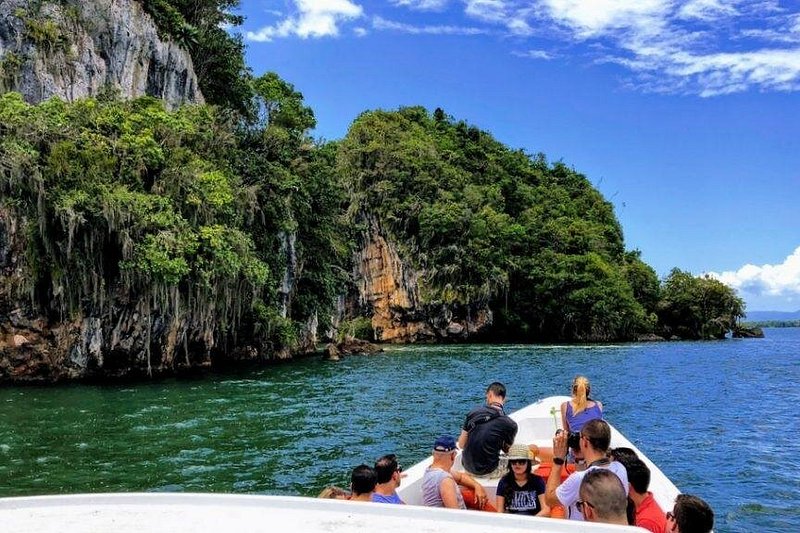
Los Haitises Combo Tours: What's Included & Booking Tips 2026

Cave Tours in Samaná Beyond Los Haitises: Hidden Grottos
Los Haitises National Park is one of the Dominican Republic's most famous destinations for limestone caves, mangrove landscapes, and Indigenous Taíno heritage. However, the geological story of Samaná extends beyond this well-known protected area.
The Samaná Peninsula contains several types of natural rock formations, including limestone landscapes, marble outcrops, coastal cavities, and underground karst systems. These features have developed over long geological periods through natural processes involving water and soluble rock.
For visitors interested in geology, natural history, and cultural heritage, Samaná offers an interesting subject to explore beyond the familiar images of Los Haitises.
This 2026 guide introduces the peninsula's wider cave geology, the science behind hidden grottos, the importance of Taíno archaeological heritage, and the need to protect fragile underground environments.
1. Are There Caves in Samaná Beyond Los Haitises?
Yes. Geological research documents cave systems and karst formations in several parts of the Samaná Peninsula beyond Los Haitises National Park.
A geological report published by the Dominican Republic's National Geological Service describes caves associated with marble formations and coastal cliffs in the peninsula.
The report identifies underground karst development as part of the region's geological structure. It also describes natural features such as stalactites, stalagmites, columns, and other mineral formations.
This research demonstrates that the peninsula's cave landscape is much broader than the caves commonly associated with Los Haitises.
However, a documented geological formation is not necessarily an officially accessible tourist attraction. Some caves are fragile, isolated, or unsuitable for general visitors.
2. Understanding the Geology of Samaná's Hidden Grottos
To understand the caves of Samaná, it is useful to learn about karst landscapes.
Karst is a type of terrain created when water gradually dissolves soluble rocks such as limestone and marble.
Over thousands of years, these processes can create underground cavities, passages, chambers, and unusual surface formations.
Limestone and Marble
The Samaná Peninsula contains important marble and carbonate rock formations.
These geological materials contribute to the development of natural cavities and underground features.
Although limestone and marble have different geological characteristics, both can be associated with karst development under suitable conditions.
Underground Water Processes
Rainwater can interact with carbon dioxide in the atmosphere and soil, creating slightly acidic water.
As this water moves through cracks and fractures in soluble rock, it can gradually enlarge existing openings.
Over long periods, small cracks may develop into more complex underground cavities.
Mineral Formations
Some caves contain formations created by mineral deposits left behind by dripping or flowing water.
Common examples include:
- Stalactites hanging from cave ceilings.
- Stalagmites growing upward from cave floors.
- Columns formed when ceiling and floor formations meet.
- Mineral deposits that create unusual textures and patterns.
These formations are scientifically valuable because they provide evidence of long-term geological processes.
3. Coastal Cave Landscapes of the Samaná Peninsula
The coastal geology of Samaná is particularly interesting because the peninsula contains dramatic rock formations shaped by natural processes.
The Dominican Republic's National Geological Service documents cave development associated with coastal cliffs and marble landscapes in the wider peninsula.
These geological features demonstrate how underground and coastal environments can develop together.
Some coastal cavities are influenced by the interaction between rock formations, groundwater, and marine processes.
It is important to distinguish between natural caves, small rock openings, and sea-related geological features. They are not all suitable or authorized for visitor access.
4. The Connection Between Caves and Taíno Heritage
Caves have an important place in the Indigenous history of the Caribbean.
The Taíno people, who inhabited Hispaniola before European colonization, created rock art in caves and other natural settings.
These artistic records include pictographs and petroglyphs that provide evidence of Indigenous beliefs, cultural practices, and symbolic traditions.
Pictographs
Pictographs are images created using pigments applied to rock surfaces.
They may represent human figures, animals, symbols, and other elements of Indigenous cultural expression.
Petroglyphs
Petroglyphs are images or symbols carved directly into rock surfaces.
Their preservation is important because they represent physical evidence of historical artistic and cultural activity.
Why Archaeological Protection Matters
Cave paintings and carvings are extremely vulnerable to damage.
Touching rock art, scratching surfaces, introducing chemicals, or altering cave environments can cause lasting damage.
Archaeological cave sites should therefore be treated as protected cultural environments rather than ordinary sightseeing locations.
5. How Are Samaná's Caves Different from Los Haitises?
Los Haitises is especially famous for its combination of mangroves, limestone hills, coastal landscapes, and caves containing Taíno archaeological features.
Beyond the national park, the wider Samaná Peninsula has a more varied geological story involving marble formations and additional karst environments.
The differences can be understood through several characteristics.
Geological Setting
Los Haitises is widely associated with limestone formations and distinctive karst hills.
Other parts of the peninsula contain marble landscapes and different geological structures.
Natural Appearance
Some caves are associated with coastal rock formations, while others are part of underground karst systems.
Their appearance depends on the type of rock, geological history, and the processes that shaped them.
Archaeological Importance
Some caves contain evidence of Indigenous occupation and artistic activity.
However, archaeological importance varies between individual sites. It should never be assumed that every natural cave contains Taíno artwork.
6. What Makes a Hidden Grotto Scientifically Interesting?
A grotto is a small cave or cave-like natural cavity.
Although some grottos appear simple from the outside, they may contain important geological features.
Researchers may study them to understand:
- The development of underground drainage systems.
- The dissolution of limestone and marble.
- Changes in groundwater movement.
- The formation of mineral deposits.
- Evidence of past environmental conditions.
- Relationships between underground and coastal ecosystems.
These subjects make caves valuable for geological research and environmental education.
7. Cave Conservation in Samaná
Natural caves are fragile environments.
Their underground conditions can be affected by human activity, pollution, physical contact, and changes to surrounding water systems.
Conservation is especially important when caves contain archaeological remains or sensitive mineral formations.
Protecting Geological Formations
Stalactites, stalagmites, and other mineral structures may take extremely long periods to develop.
Even minor physical damage can permanently alter their appearance.
Protecting Archaeological Remains
Taíno paintings, carvings, and other archaeological materials are important parts of Caribbean cultural heritage.
Their preservation requires careful management and respect for official site regulations.
Protecting Underground Ecosystems
Caves can support specialized organisms adapted to dark and humid environments.
Introducing waste, chemicals, or other pollutants can affect these ecosystems.
Responsible Tourism
Responsible tourism means respecting protected areas, cultural heritage, and environmental restrictions.
Not every geological feature should become a tourist attraction. Protecting sensitive sites is sometimes more important than providing public access.
8. Are All Caves in Samaná Open to Visitors?
No. A cave's existence does not automatically mean it is open to tourism.
Some caves are documented through geological research but do not have established visitor facilities or approved public access.
Others may be restricted because of archaeological importance, environmental sensitivity, or safety concerns.
Visitors researching cave-related attractions should distinguish between:
- Geologically documented caves.
- Archaeological heritage sites.
- Officially managed visitor attractions.
- Natural cavities without established public access.
Current access information should come from the relevant environmental and heritage authorities.
9. Learning About Samaná's Natural Heritage Beyond Caves
The peninsula offers several subjects for nature and cultural education that do not require entering underground environments.
Samaná Bay
Samaná Bay is an important natural landscape associated with marine biodiversity, coastal ecosystems, and the seasonal migration of humpback whales.
Mangrove Ecosystems
Mangroves are valuable coastal habitats that support aquatic organisms and contribute to shoreline protection.
Coastal Geology
The peninsula's rock formations, cliffs, and unusual landscapes provide opportunities to learn about geological development.
Indigenous Heritage
The wider Dominican Republic has important archaeological and historical connections with the Taíno people.
Together, these subjects help explain why Samaná is an important destination for natural and cultural heritage.
10. Important Safety and Preservation Considerations
Caves and underground environments can contain unstable surfaces, limited visibility, narrow spaces, and environmental hazards.
They should not be treated as informal exploration locations.
For educational visits to officially managed heritage sites:
- Follow all official access restrictions.
- Remain in authorized visitor areas.
- Never enter an unapproved or restricted cave.
- Do not touch archaeological paintings or carvings.
- Avoid disturbing wildlife or collecting natural objects.
- Follow conservation instructions from responsible site personnel.
- Children and teenagers should remain under appropriate adult supervision.
Respecting these principles helps protect both visitors and the natural environment.
Frequently Asked Questions
1. Are there caves in Samaná beyond Los Haitises?
Yes. Geological research documents additional karst caves and underground formations in other parts of the Samaná Peninsula.
2. What is karst geology?
Karst geology describes landscapes formed when water gradually dissolves soluble rocks such as limestone and marble, creating cavities and underground drainage systems.
3. Does Samaná contain marble formations?
Yes. Geological research identifies marble formations in parts of the Samaná Peninsula, and these are associated with some of the region's karst development.
4. What are stalactites and stalagmites?
Stalactites are mineral formations that hang from cave ceilings, while stalagmites grow upward from cave floors.
5. Are all Samaná caves open to tourists?
No. Some caves are geological or archaeological sites without established public visitor access. Restrictions may apply to protect safety and heritage.
6. Did the Taíno people use caves?
Caves were important in Taíno cultural traditions, and archaeological evidence from several Dominican caves includes paintings and carvings associated with Indigenous heritage.
7. What is the difference between a cave and a grotto?
A cave is a natural underground cavity or passage. A grotto usually refers to a smaller cave or sheltered natural cavity.
8. Why should cave formations be protected?
Mineral formations can take extremely long periods to develop. Physical damage, pollution, and environmental disturbance can permanently affect cave ecosystems and geological features.
9. Can geological reports help identify caves?
Yes. Geological reports provide information about rock formations, underground structures, and natural processes. However, they do not automatically establish visitor access or tourist facilities.
Final Thoughts
Samaná's cave landscape extends beyond the famous formations of Los Haitises National Park. Geological research reveals a wider network of karst features, marble formations, coastal cavities, and underground environments across the peninsula.
These natural structures offer an interesting opportunity to understand the geological history of the Dominican Republic. Their connection with Indigenous heritage also makes some caves culturally significant.
For a 2026 Samaná travel guide, exploring the science, history, and conservation of these hidden grottos provides a valuable perspective beyond conventional beach tourism.
The most important principle is responsible preservation. Geological formations and archaeological remains are irreplaceable, and their protection should always come before unrestricted visitor access.