Transfer to Cayo Santa María
5.0(71)
From$35
Transfer to Cayo Santa María
5.0 (71)
From$35per person
Book top-rated tours, excursions, and adventures in Punta Cana, Bayahibe, Santo Domingo, and across the Dominican Republic.
Step beyond the usual Miami sightseeing itinerary and discover a side of the city that is best experienced around a table, inside a welcoming home, with the irresistible aromas of Cuban cooking filling the air.
The Traditional Cuban Cooking Class in Miami is an immersive culinary experience designed for travelers who want more than simply tasting Cuban food—they want to understand it, prepare it, share it, and take a little piece of its tradition home with them.
Located in the vibrant Little Havana area of Miami, this intimate cooking experience brings guests into a charming private residence where Cuban food, family-style hospitality, storytelling, music, conversation, and hands-on cooking come together. Rather than watching a chef prepare a meal from a distance, you become part of the process. You chop, mix, season, cook, taste, and learn directly under the guidance of an experienced professional chef.
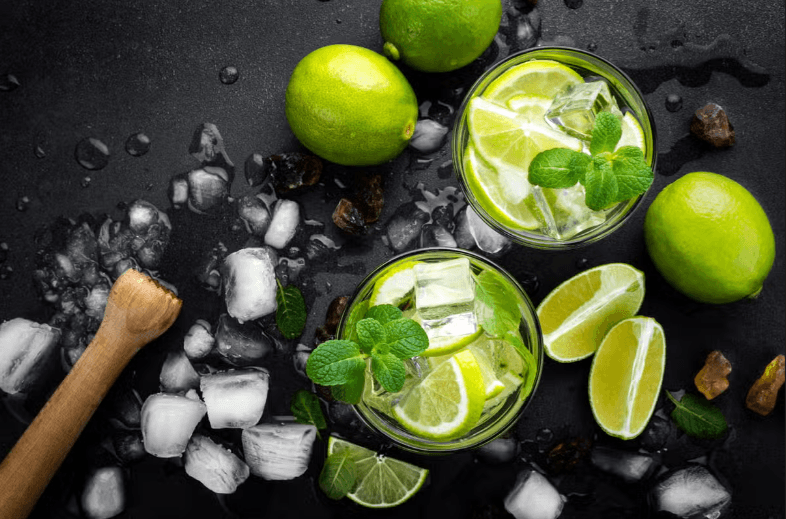
Over approximately 3 hours and 30 minutes, you will explore the flavors and traditions behind some of Cuba's most beloved dishes, including the iconic Ropa Vieja, flavorful side dishes, traditional appetizers, and sweet Cuban desserts. You will also learn how to prepare one of Cuba's most famous cocktails—the classic Mojito—during an engaging mixology demonstration.
The experience begins with a warm welcome, homemade sangria, and traditional Cuban appetizers before moving into the kitchen. As you cook, your host and chef share insights into Cuban culinary traditions and the cultural influences that have shaped the cuisine over generations.
By the end of the evening, you won't simply have eaten a Cuban dinner. You will have participated in creating one.
And when the experience is over, you can take the recipes and Cuban spices home so that the flavors, techniques, and memories of Miami can continue long after your vacation ends.
Miami is one of the world's most exciting destinations for experiencing Cuban culture outside Cuba.
The relationship between Miami and Cuban heritage can be felt throughout the city, but nowhere is that connection more vivid than in and around Little Havana. Cuban restaurants, bakeries, cafés, music, art, family businesses, and colorful cultural traditions have helped shape the identity of this Miami neighborhood.
Food is at the center of that cultural connection.
Cuban cuisine tells a story of migration, family, resilience, creativity, and tradition. Its flavors reflect generations of culinary influences, including Spanish, African, Caribbean, and other cultural traditions that have contributed to Cuba's distinctive food heritage.
A traditional Cuban cooking class gives travelers the opportunity to experience this heritage in a personal and interactive way.
Instead of simply ordering a plate of Ropa Vieja at a restaurant, you can learn what goes into creating it. Instead of ordering a Mojito at a bar, you can learn how the ingredients come together. Instead of simply photographing a Cuban dessert, you can understand the techniques and traditions behind it.
That makes this experience especially meaningful for food lovers, curious travelers, couples, families, friends, and anyone who believes that the best travel memories are often created through food.
One of the most memorable aspects of this Miami Cuban cooking experience is its intimate setting.
Rather than taking place in a large commercial cooking school filled with strangers and spectators, the experience welcomes travelers into a private home environment.
There is something special about learning food traditions in a setting that feels personal.
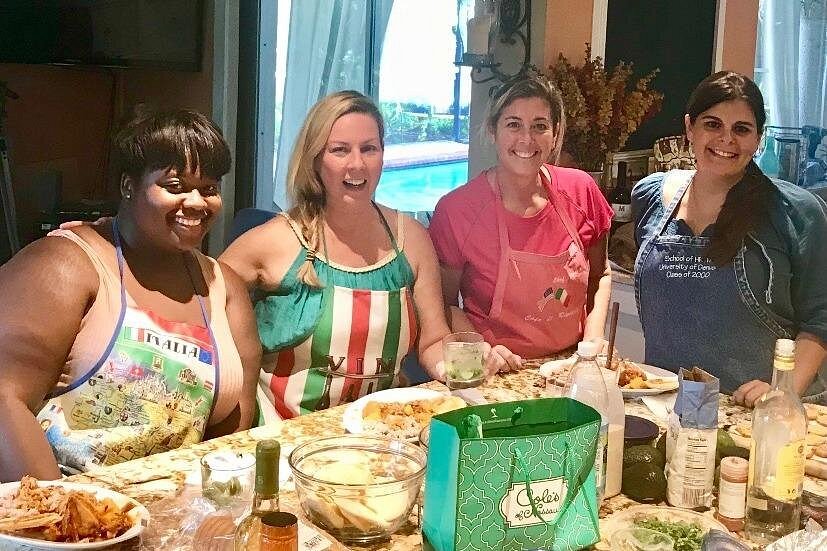
You can relax, ask questions, interact with the chef, meet fellow food lovers, and experience Cuban hospitality in a way that feels much closer to a family gathering than a conventional tourist activity.
The atmosphere is warm, informal, and social.
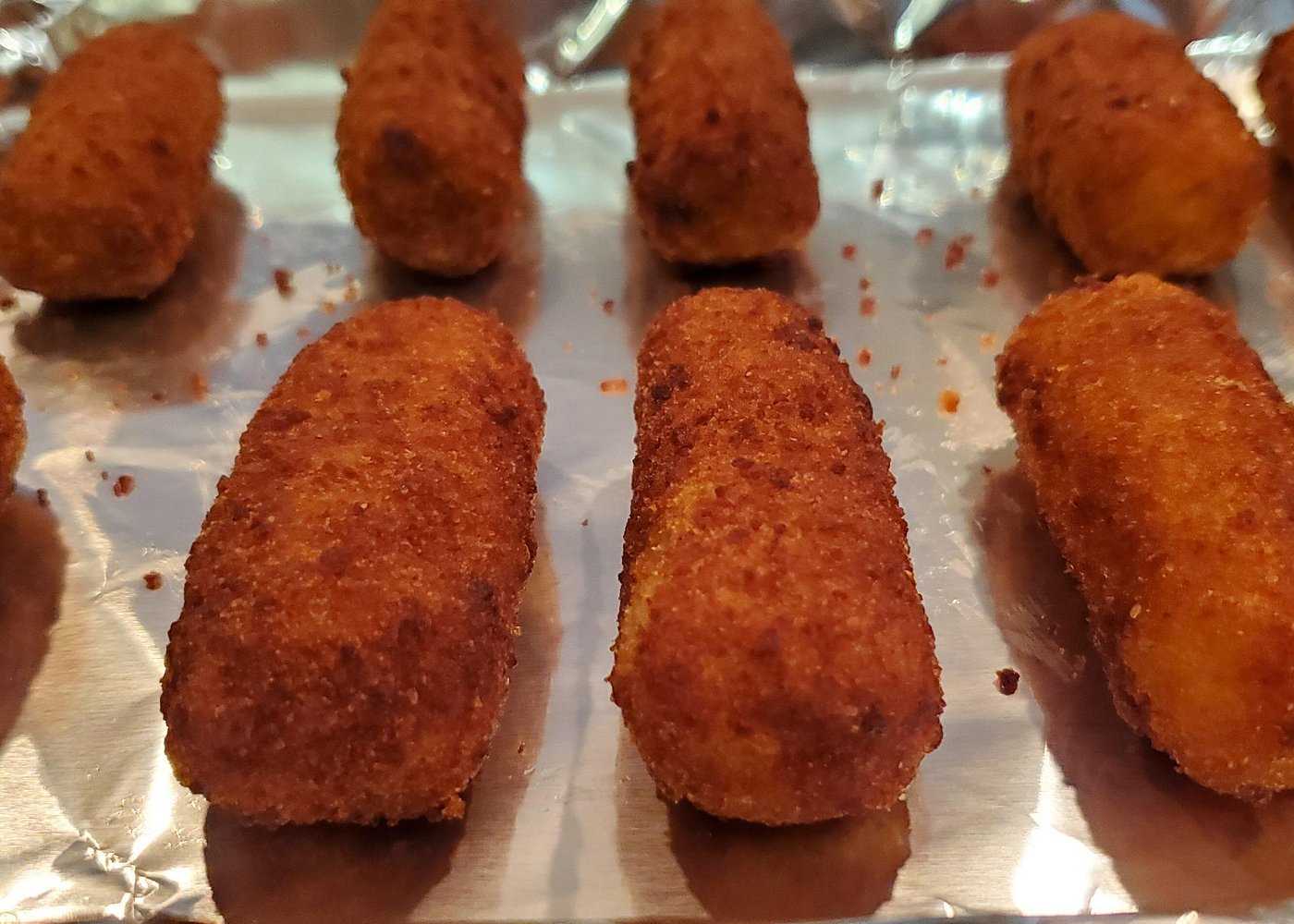
As you arrive, you are welcomed with a glass of homemade sangria and traditional Cuban bites such as croquetas or pastelitos. This first moment immediately sets the tone for the experience: you are not simply arriving for a lesson—you are arriving to share food and culture.
The setting creates opportunities for natural conversation and storytelling. As the ingredients are prepared and the meal comes together, you begin to see how Cuban cuisine is connected to everyday life, family traditions, celebrations, and memories.
This personal atmosphere is one reason the experience can become one of the most memorable activities of a Miami vacation.
Cuban food is often described as comforting, flavorful, generous, and deeply connected to family.
At its heart, traditional Cuban cooking is not about complicated ingredients or unnecessary presentation. It is about making simple ingredients incredibly satisfying through careful preparation, seasoning, slow cooking, and generations of culinary knowledge.
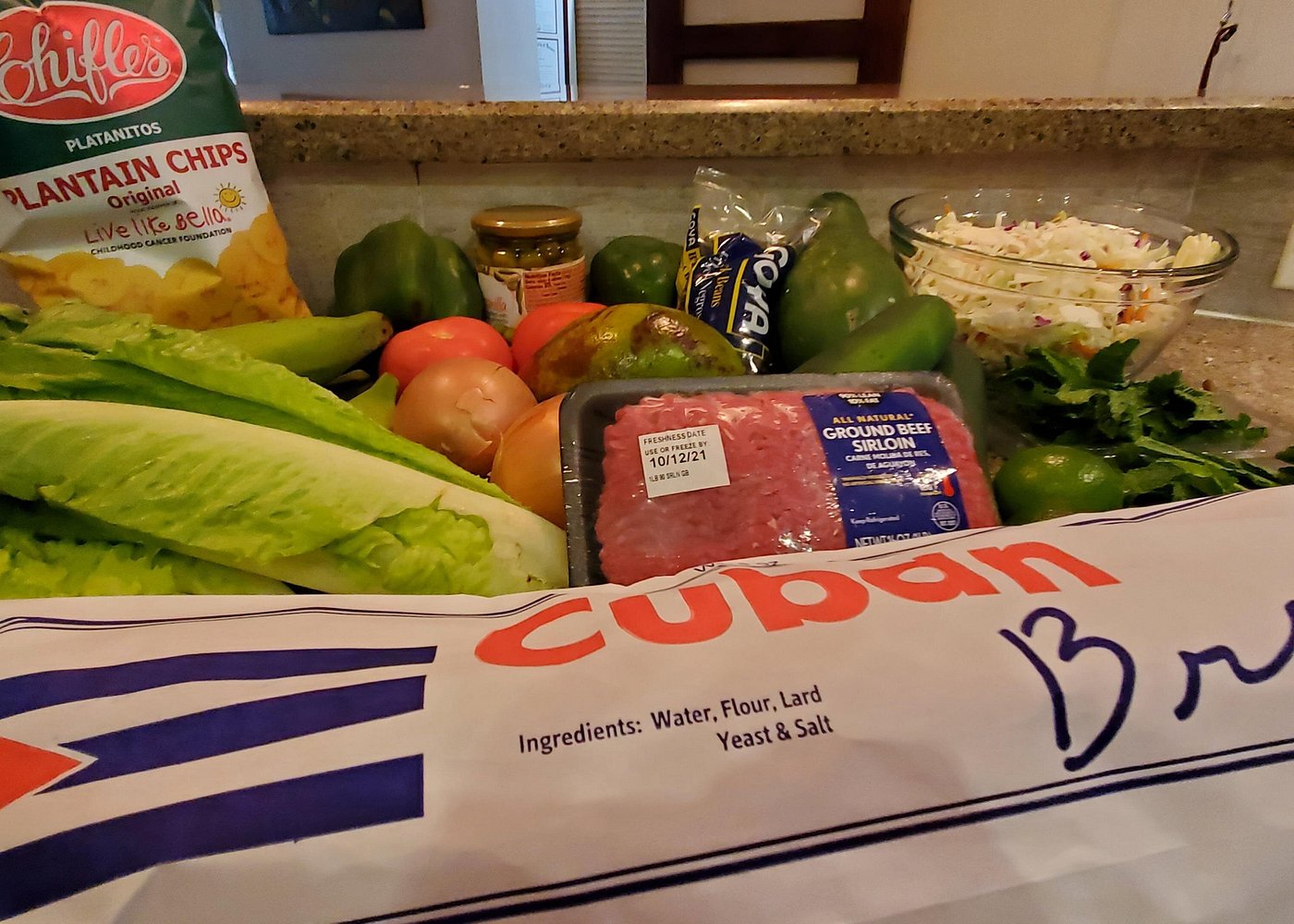
Ingredients such as rice, beans, plantains, cassava, beef, chicken, garlic, onions, peppers, herbs, citrus, and spices form the foundation of many beloved Cuban dishes.
But the ingredients themselves only tell part of the story.
The real magic comes from the techniques used to transform them.
During your cooking experience, you will learn how different ingredients work together and why certain preparation methods create the flavors associated with Cuban home cooking.
You may hear about the importance of aromatic ingredients such as onions and peppers, discover how garlic and citrus contribute brightness, and see how slow cooking develops the rich character of dishes such as Ropa Vieja.
These are not merely recipes.
They are pieces of culinary heritage.
Cuban cuisine developed through centuries of cultural exchange.
Spanish culinary traditions have played a major role, while African influences have also deeply shaped Cuban food culture. Indigenous Caribbean ingredients and cooking traditions, along with broader Caribbean and European influences, have contributed to the cuisine travelers experience today.
That cultural combination is one of the reasons Cuban food has such a distinctive identity.
A cooking class gives you the opportunity to explore these influences through actual food rather than simply reading about them.
You can taste the difference between ingredients, learn how dishes are assembled, and understand why certain foods have become staples of Cuban family meals.
The result is a much deeper appreciation of what you are eating.
Instead of asking only, “Does this taste good?” you begin asking, “Where did this dish come from?” “Why is it prepared this way?” and “How has this recipe been passed down?”
That is what makes culinary travel so rewarding.
This is not a demonstration where you sit quietly while someone else prepares the food.
You are actively involved.
Under professional chef instruction, you participate in preparing elements of the meal and learn techniques that can be repeated in your own kitchen.
You can ask questions, watch demonstrations, practice techniques, and gain confidence as the meal comes together.
For travelers who love interactive experiences, this is a major advantage.
You don't simply watch Cuban cooking—you participate in it.
The menu centers around traditional Cuban flavors and dishes.
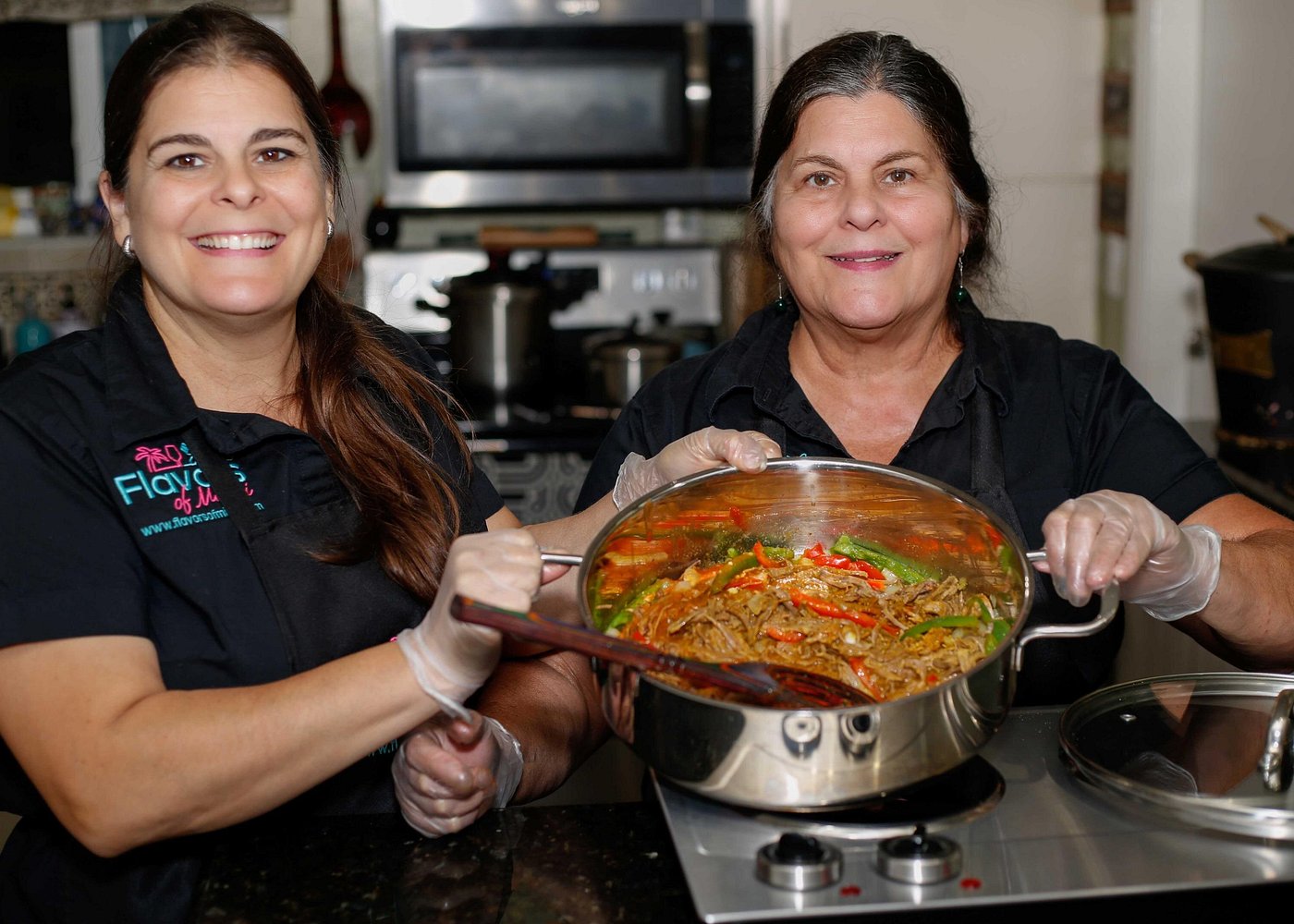
One of the signature dishes is Ropa Vieja, a famous Cuban preparation of tender shredded beef cooked with a richly seasoned sauce.
Ropa Vieja is more than just a popular menu item. It is one of the dishes most strongly associated with Cuban cuisine and is an excellent introduction to the flavors and cooking methods that define the island's culinary traditions.
Depending on availability, menu variations may include other Cuban favorites such as Picadillo or chicken-based preparations, while traditional sides complement the main course.
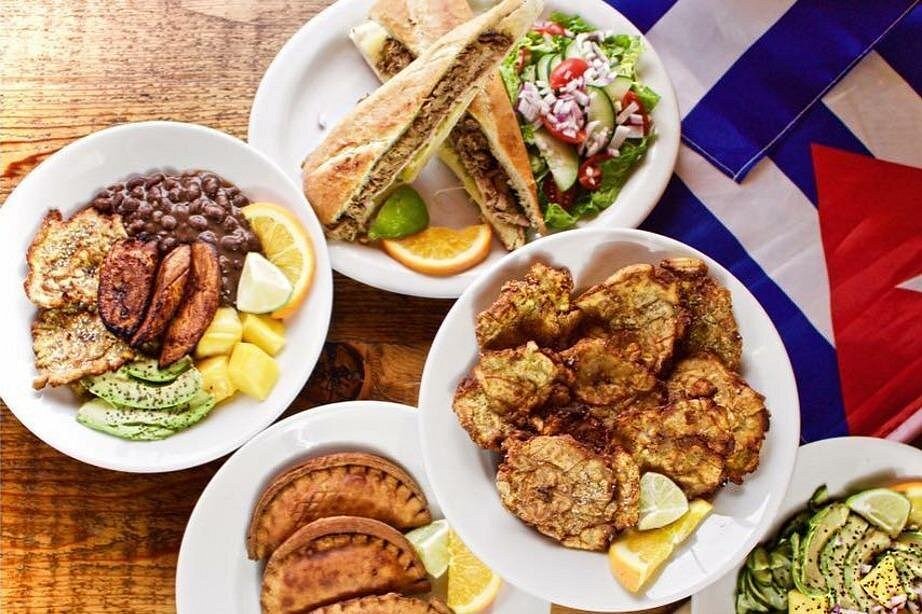
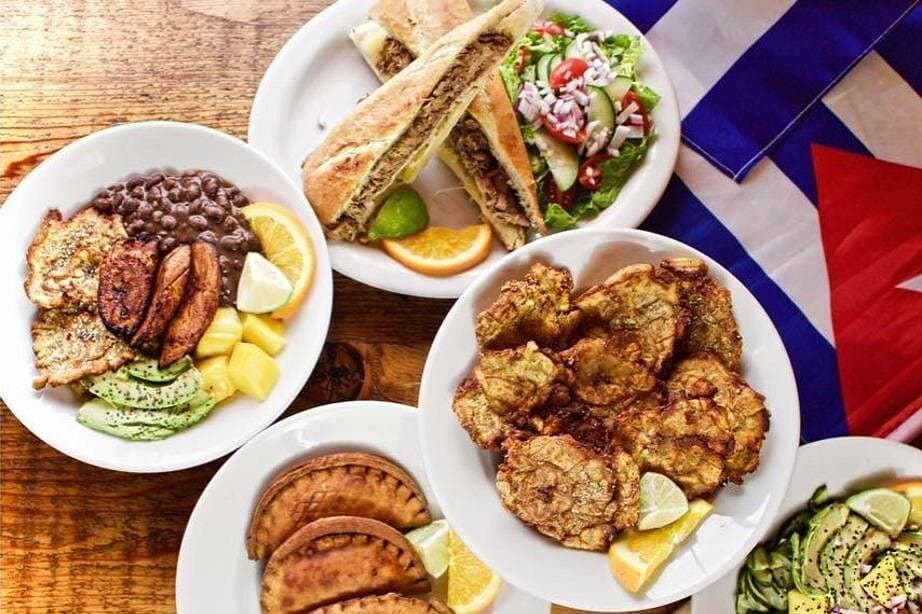
The meal can include ingredients and dishes such as:
Menu items may vary according to availability and the experience schedule.
Few dishes represent Cuban cuisine as strongly as Ropa Vieja.
The name literally translates to “old clothes,” a memorable name for a dish whose appearance comes from tender beef being pulled into long, shredded strands.
The dish is traditionally slow-cooked until the meat becomes tender enough to shred, then combined with a flavorful sauce and aromatic ingredients.
During the cooking experience, Ropa Vieja becomes more than something you simply eat.
You learn how the ingredients work together.
You observe the transformation that takes place during cooking.
You understand why patience matters.
And eventually, you get to sit down and enjoy the results of your work.
For many travelers, that moment—lifting a forkful of food that they helped prepare—is one of the highlights of the entire experience.
Before the main cooking begins, the experience starts with traditional Cuban appetizers and drinks.
You may be welcomed with favorites such as croquetas or pastelitos, giving you an early introduction to the flavors and textures of Cuban food.
Croquetas are known for their crisp exterior and creamy interior, while pastelitos can offer a delicious combination of flaky pastry and sweet or savory fillings.
Other Cuban-inspired starters may include tostones or fried yuca depending on the menu.
These small bites do more than satisfy your appetite.
They introduce you to the idea at the center of Cuban hospitality: food is meant to be shared.
A table filled with small plates naturally encourages conversation, curiosity, and connection.
Cuban cuisine and cocktails go hand in hand, and no Cuban culinary experience would feel complete without the opportunity to explore the famous Mojito.
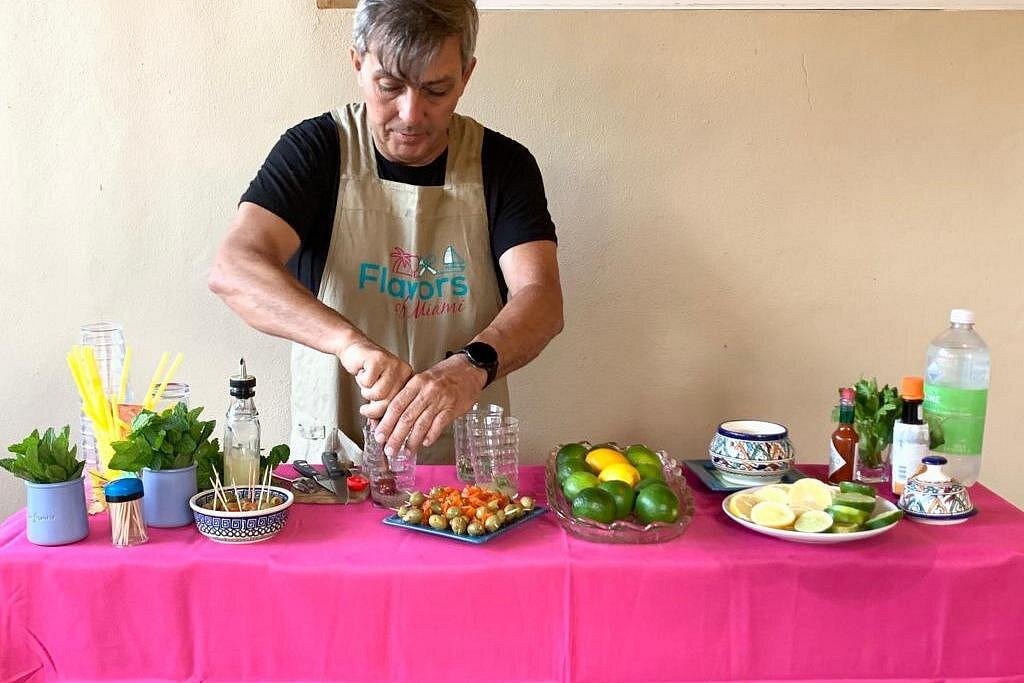
During the class, you participate in a Mojito demonstration and learn how the drink comes together.
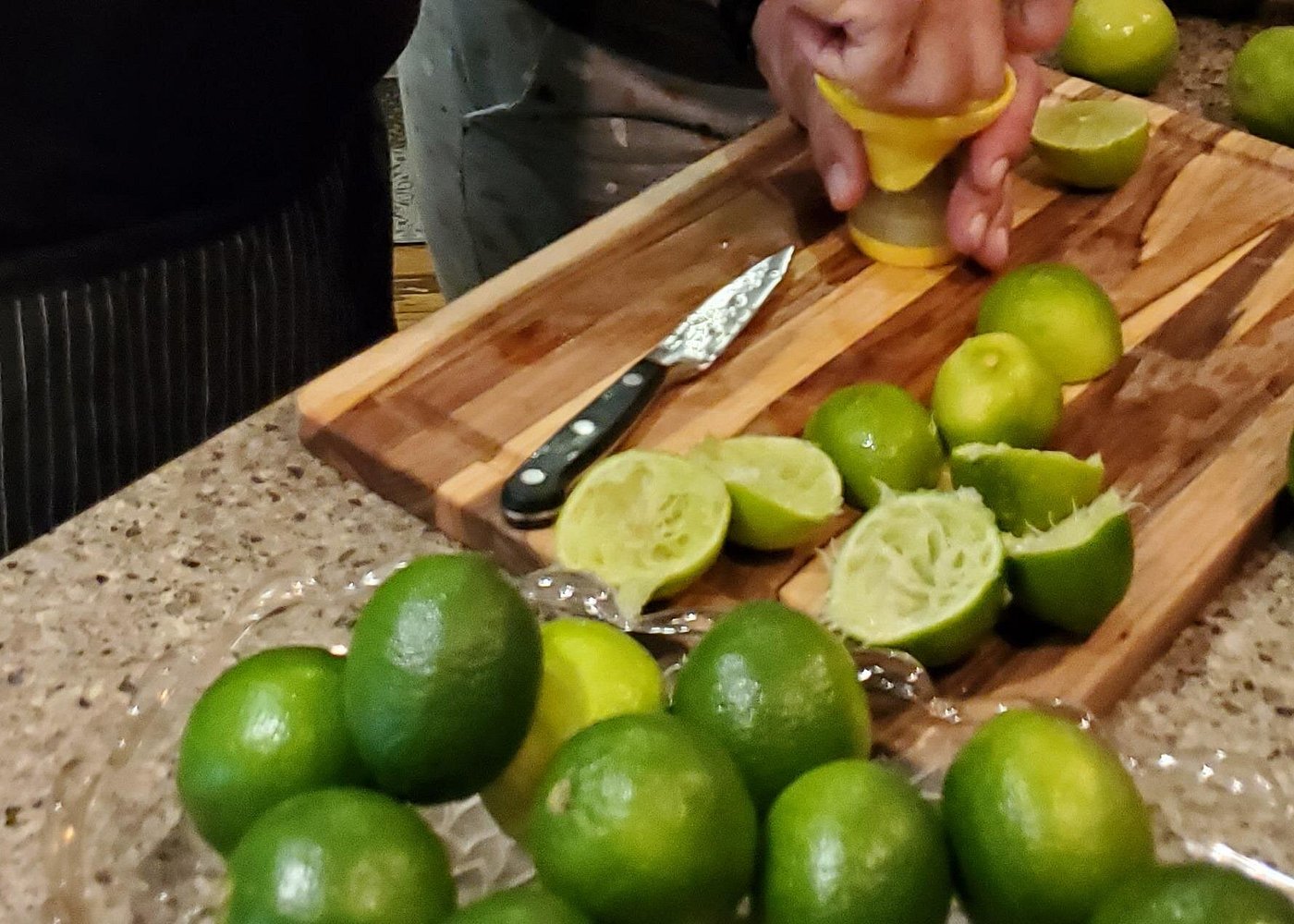
Fresh ingredients, citrus, mint, sweetness, and rum combine to create the refreshing cocktail that has become famous around the world.
The mixology portion adds another interactive element to the experience.
Instead of simply being handed a cocktail, you get to understand the process.
You can watch the preparation, follow the technique, and create your own drink while enjoying the social atmosphere of the evening.
Homemade sangria is also part of the welcome experience, making the evening feel more like a relaxed Cuban gathering than a formal cooking lesson.
Alcoholic beverages are included as part of the experience, alongside coffee, tea, and bottled water.
Guests who consume alcohol should drink responsibly and observe applicable age requirements.
One of the biggest advantages of this experience is that your cooking lesson leads directly to a complete meal.
The experience includes a four-course dinner, allowing you to enjoy multiple aspects of Cuban cuisine during one evening.
The meal typically brings together:
Begin with traditional Cuban small bites such as croquetas, pastelitos, tostones, or other local favorites.
These starters introduce the flavors and textures of the cuisine while creating the perfect setting for the cooking experience.
The main course may feature Ropa Vieja or another traditional Cuban preparation such as Picadillo or chicken.
The main dish is accompanied by classic Cuban sides, creating the hearty, comforting combination associated with home-style meals.
Expect traditional accompaniments such as rice, black beans, plantains, yuca, salad, or Cuban bread, depending on the menu.
These sides are an important part of the Cuban dining experience.
They balance the main dish and create a meal that is generous, colorful, and satisfying.
The experience concludes with a traditional Cuban-style dessert.
Possible dessert selections can include flan, guava and cheese pastries, or arroz con leche.
Each offers a different expression of Cuban culinary tradition, from creamy custard to the sweet-tart combination of guava and cheese or the comforting texture of Cuban rice pudding.
One of the strongest reasons travelers choose this experience is the atmosphere.
There is a major difference between eating Cuban food at a restaurant and learning how to prepare it inside a private residence.
At a restaurant, you are a customer.
Here, you become a participant.
You have the opportunity to interact with the chef, fellow travelers, and hosts. You can ask about ingredients, cooking traditions, Cuban culture, and the stories behind the dishes.
The experience encourages conversation.
You can laugh over cooking mistakes.
You can compare techniques.
You can share the finished meal.
And you can leave with something far more valuable than a photograph.
You leave with knowledge.
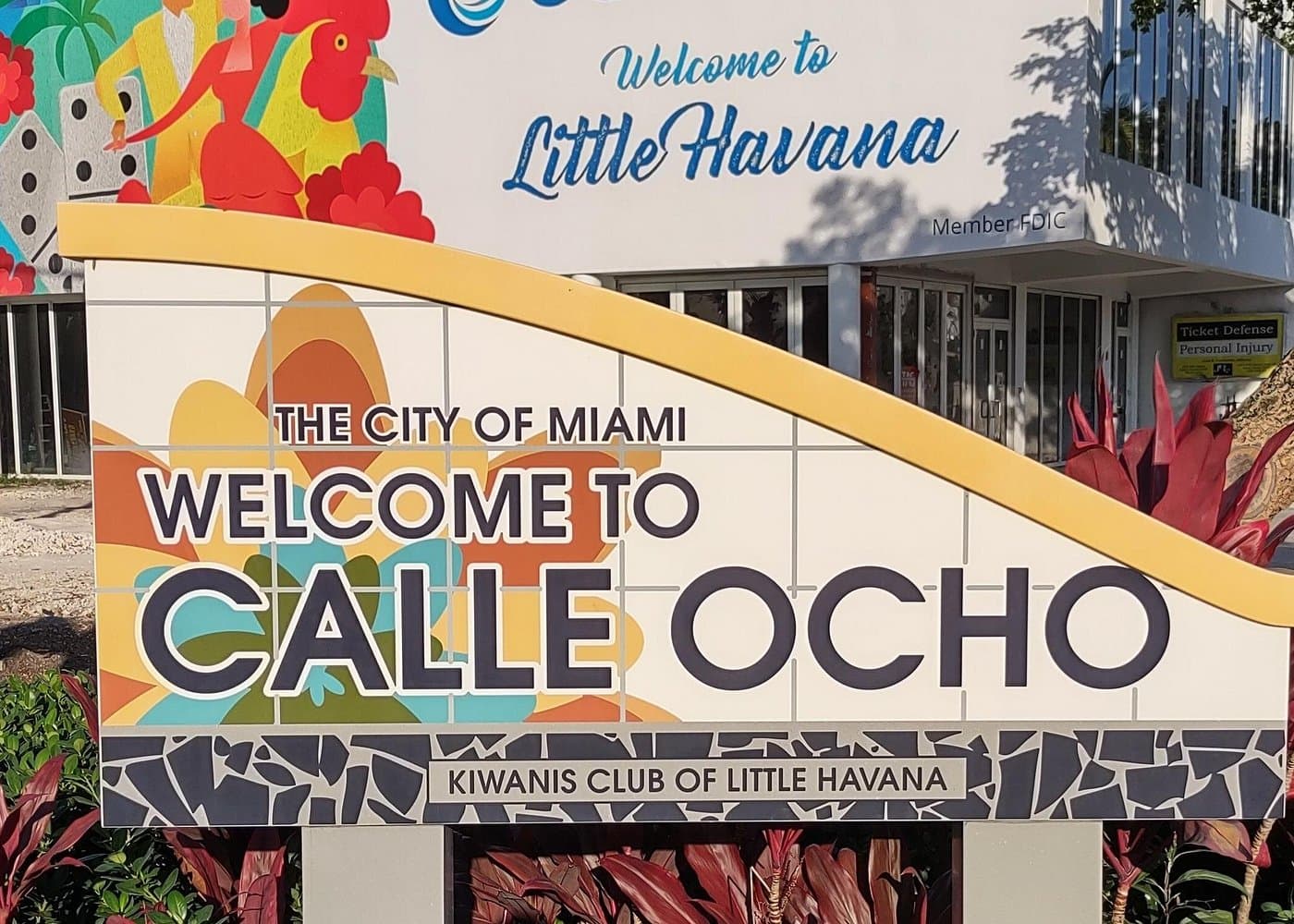
Little Havana is one of Miami's most recognizable cultural neighborhoods and an essential destination for travelers interested in Cuban heritage.
The area is famous for its Cuban restaurants, bakeries, cafés, music, art, and lively street atmosphere.
But culture cannot be fully experienced through sightseeing alone.
Food offers a deeper connection.
Cuban cuisine is an important part of Miami's cultural identity, and a cooking class provides an opportunity to understand that identity through your own senses.
You hear the stories.
You smell the ingredients.
You taste the food.
You touch the ingredients.
You prepare the dishes.
You share the meal.
This combination transforms an ordinary food activity into a cultural experience.
Miami is famous for beaches, nightlife, luxury hotels, art, architecture, and sunshine.
Those attractions are worth experiencing.
But travelers increasingly look for experiences that allow them to connect with the destination rather than simply photograph it.
A traditional Cuban cooking class does exactly that.
It takes you away from the standard sightseeing routine and invites you into an intimate culinary environment.
Instead of spending another evening choosing between restaurants, you can spend the evening learning how Cuban food is actually made.
Instead of simply visiting Little Havana, you can experience one of the traditions that gives the neighborhood and the wider Miami community its cultural character.
Instead of purchasing another souvenir, you can take home recipes and Cuban spices that allow you to recreate the experience.
That makes this activity particularly valuable for travelers who want meaningful, participatory experiences.
The experience doesn't end when dinner is finished.
Guests receive a recipe booklet and Cuban spices to take home.
This is one of the most practical elements of the experience.
Travel memories can fade, but recipes can bring them back.
Imagine returning home weeks or months after your Miami vacation and preparing Ropa Vieja for your family or friends.
You can remember the kitchen.
You can remember the conversations.
You can remember the smell of garlic and spices.
You can remember learning how to prepare a Mojito.
And you can recreate the meal using techniques you learned during your class.
In this way, the cooking experience becomes a lasting travel souvenir.
You don't need to be a professional cook to enjoy this experience.
In fact, beginners can often benefit the most.
The class is designed around guided instruction, allowing participants to learn through demonstration and practice.
Whether you are comfortable in the kitchen or usually rely on takeout, you can participate at your own pace and discover techniques that make Cuban cooking approachable.
This experience is especially appealing to:
The focus is not on culinary perfection.
It is on participation, learning, sharing, and enjoying the process.
For couples visiting Miami, a cooking class can be a refreshing alternative to a standard restaurant dinner.
Instead of sitting across from each other waiting for food to arrive, you experience the meal together from beginning to end.
You can chop ingredients together.
Learn new techniques.
Prepare cocktails.
Taste the food.
Laugh over the process.
Then sit down for a relaxed Cuban dinner.
The intimate private-home environment also creates a warm setting for conversation and connection.
For a couple celebrating a vacation, anniversary, birthday, honeymoon, or simply looking for something different to do in Miami, this culinary experience can become a standout memory.
Food naturally brings people together, making this Cuban cooking class an excellent activity for friends traveling as a group.
Instead of dividing the evening between separate activities, everyone can participate in the same experience.
Some guests can focus on ingredients.
Others can help with preparation.
Everyone can participate in the Mojito demonstration and eventually gather around the table for the meal.
The shared experience creates natural opportunities for conversation and laughter.
It can also be a fun choice for special group celebrations and social occasions.
Families who enjoy learning through hands-on activities can also find plenty to enjoy here.
Cooking provides a natural way to introduce younger travelers to another culture.
They can see unfamiliar ingredients, learn about Cuban food traditions, and understand how meals can connect families and communities.
Parents can also use the experience as an opportunity to talk with children about migration, cultural heritage, traditions, and the role food plays in preserving identity.
For families, the experience can become more than dinner.
It becomes a shared lesson and a shared memory.
The strongest travel experiences are often the ones that engage more than one sense.
This Cuban cooking class does exactly that.
You smell the ingredients as they cook.
You hear stories and conversations.
You feel the texture of ingredients as you prepare them.
You taste the finished dishes.
You see the meal come together.
That sensory combination creates powerful memories.
And because you actively participate in the experience, the memory becomes personal.
You won't simply remember that you ate Cuban food in Miami.
You will remember helping make it.
At the heart of this experience is the idea of gathering around food.
Cuban cooking has strong associations with family, hospitality, celebration, and generosity.
The family-style dinner captures that spirit.
After the cooking portion, guests sit down together and enjoy the food.
The kitchen becomes a dining space.
The meal becomes a conversation.
The people you arrived with—and perhaps the fellow travelers you met during the class—become part of the evening.
It is this sense of connection that can make the experience feel so different from a conventional cooking lesson.
You are not simply learning recipes.
You are experiencing the social culture surrounding them.
Your evening begins at the designated meeting point in the Little Havana area of Miami:
3120 NW 4th St, Miami, FL 33125
From there, the culinary experience unfolds inside a private residence.
The exact flow can vary slightly depending on the menu, seasonal ingredients, and host arrangements, but the experience generally includes a warm welcome, Cuban appetizers, an introduction to Cuban cuisine, hands-on cooking instruction, Mojito preparation, and a family-style four-course meal.
The experience lasts approximately 3 hours and 30 minutes, giving you plenty of time to learn, cook, eat, and socialize without feeling rushed.
The listed starting price is from $155 per person.
Because menus and operational details can vary, travelers should review the confirmed booking information for the exact schedule, meeting instructions, and availability for their selected date.
Your booking includes a comprehensive combination of food, drinks, instruction, and take-home materials.
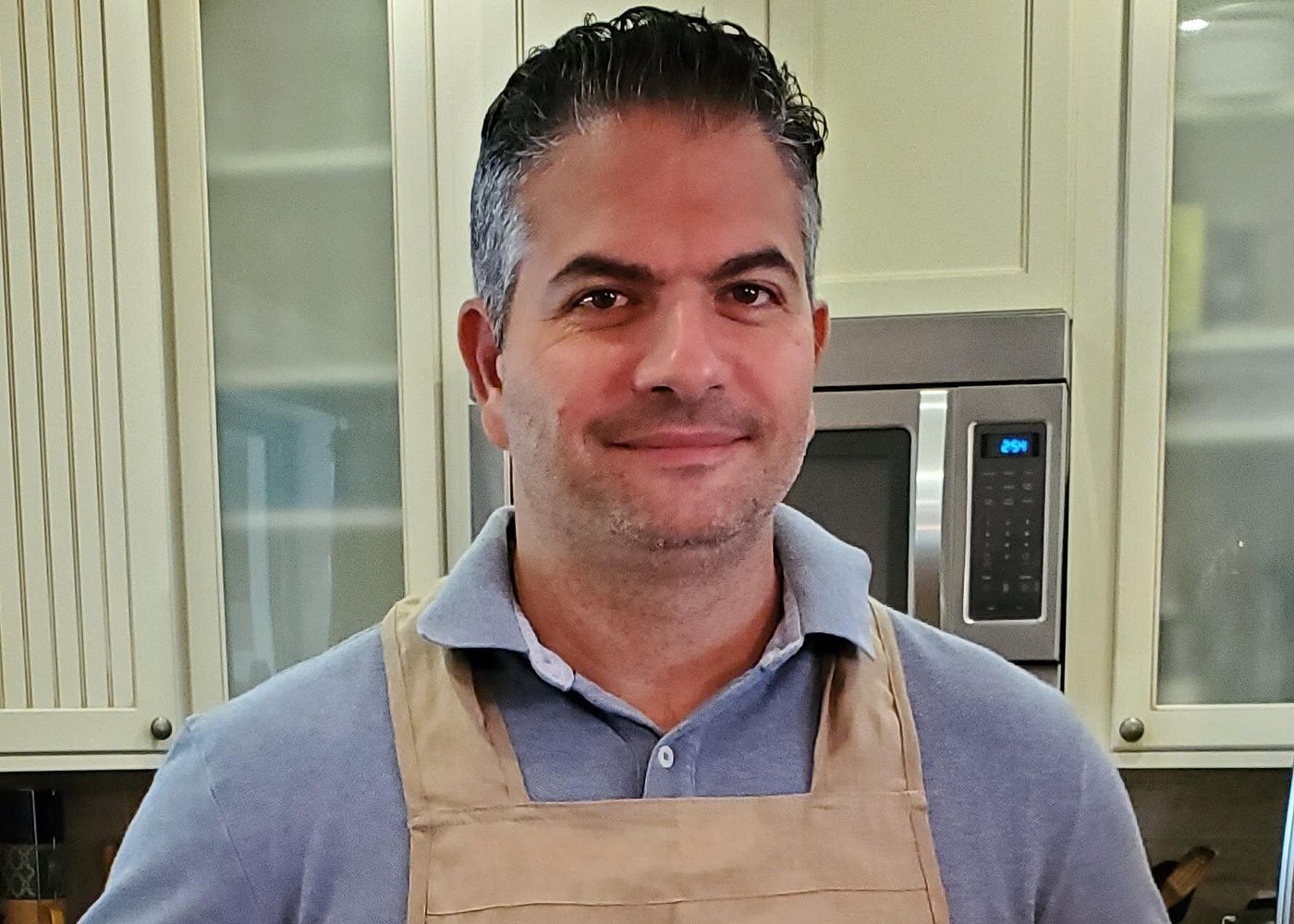
Learn directly from an experienced chef who guides you through the cooking process and helps you understand traditional Cuban techniques.
Enjoy a complete Cuban meal featuring appetizers, a main dish, side dishes, and dessert.
The experience includes homemade sangria and Mojitos, subject to applicable requirements and the experience's beverage arrangements.
Traditional non-alcoholic beverages are also available.
Bottled water is provided throughout the experience.
Take home recipes so you can continue practicing after your Miami vacation.
Bring home specialty Cuban spices to help recreate the flavors of the experience in your own kitchen.
Together, these inclusions make the experience much more than a simple cooking lesson.
To make the most of your cooking class, arrive prepared to participate.
Wear comfortable clothing that allows you to move freely while cooking.
Because this is a hands-on experience, choose something practical rather than formal.
There will be plenty of opportunities to photograph the ingredients, dishes, cooking process, and finished meal.
A camera or smartphone can help you capture memories of the evening.
Most importantly, arrive hungry.
With appetizers, drinks, a multi-course meal, dessert, and plenty of opportunities to taste what you prepare, this is an experience designed for people who enjoy generous food and good company.
Authenticity in travel is not simply about using traditional ingredients.
It is about context.
It is about understanding where food comes from, why people prepare it, and how recipes connect generations.
That is what makes this experience particularly appealing.
You are not simply presented with a plate of Cuban food.
You participate in the preparation.
You hear about the culture.
You interact with a local culinary expert.
You experience a private home environment.
You share a meal.
And you leave with recipes and spices.
The result is a more complete understanding of Cuban food culture.
There is no better way to understand a food culture than to get your hands involved.
The Traditional Cuban Cooking Class in Miami transforms Cuban cuisine from something you consume into something you experience.
From the first glass of homemade sangria to the final bite of dessert, the evening is built around discovery.
You discover the ingredients.
You discover the techniques.
You discover the stories.
You discover the hospitality.
And perhaps most importantly, you discover that authentic Cuban cooking can be recreated in your own kitchen.
For travelers who want to experience Miami through food, culture, and personal connection, this cooking class offers a memorable way to step beyond the ordinary tourist itinerary.
Imagine arriving in Miami expecting another evening of sightseeing.
Instead, you step into a welcoming private home.
A glass of homemade sangria is placed in your hand.
Traditional Cuban appetizers arrive.
You meet your chef.
You learn about the cultural history behind the food.
Then the cooking begins.
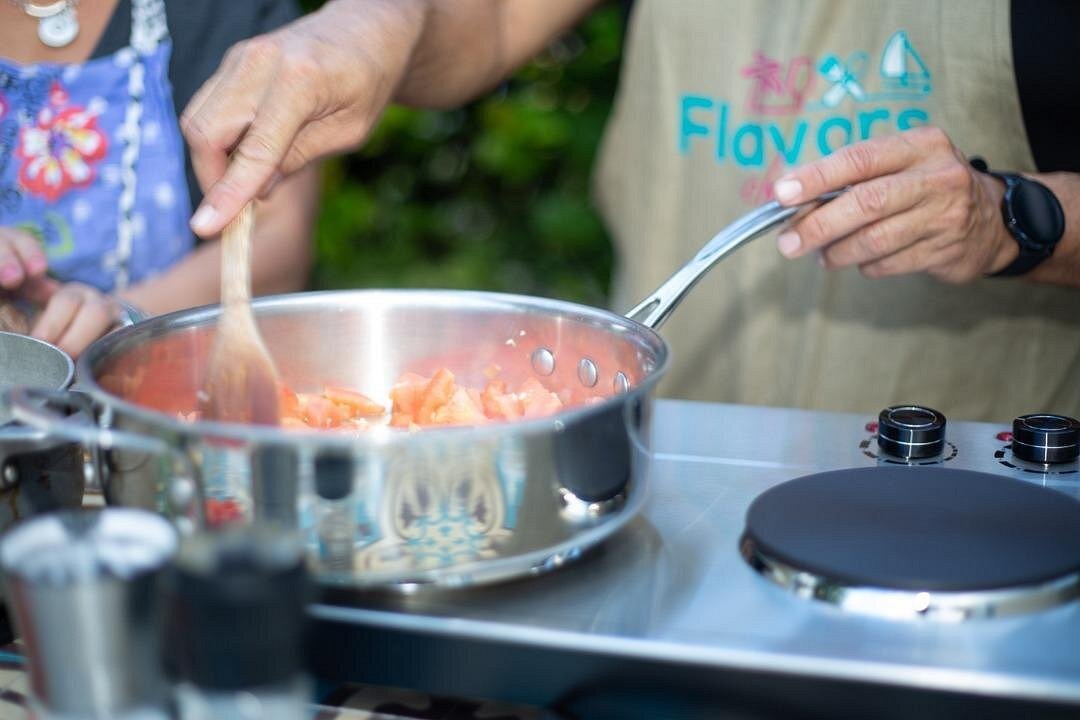
Garlic, onions, peppers, spices, meat, plantains, beans, rice, and other ingredients slowly transform into a traditional Cuban feast.
You learn how to prepare Ropa Vieja.
You participate in a Mojito demonstration.
You taste your work.
You sit down with fellow travelers.
You share stories.
You enjoy a four-course dinner.
And finally, you receive recipes and Cuban spices to take home.
That is the difference between simply visiting Miami and experiencing it.
The city becomes more than a destination.
It becomes a collection of flavors, stories, people, and memories.
The best souvenirs are not always things that sit on a shelf.
Sometimes they are skills.
Sometimes they are recipes.
Sometimes they are memories that return every time you smell a familiar spice or taste a familiar dish.
This Cuban cooking class gives you all three.
You learn practical cooking techniques.
You receive recipes to continue making Cuban dishes at home.
And you create an evening filled with food, conversation, culture, and hospitality that can remain one of the most distinctive memories of your Miami trip.
Whether you are a dedicated foodie, a first-time visitor to Miami, a couple seeking a unique evening, a group of friends looking for something different, or simply a traveler who believes the best way to discover a culture is through its food, this experience offers an inviting introduction to the flavors of Cuba.
Come hungry.
Come curious.
Come ready to cook.
And leave with a full stomach, new culinary skills, Cuban recipes, specialty spices, and a deeper appreciation for the culture that makes Miami so vibrant.
Experience: Traditional Cuban Cooking Class in Miami
Location: Little Havana area, Miami, Florida
Meeting Point: 3120 NW 4th St, Miami, FL 33125
Duration: Approximately 3 hours 30 minutes
Price: From $155 per person
Experience Type: Hands-on Cuban cooking and cultural experience
Setting: Private residence
Cuisine: Traditional Cuban cuisine
Signature Dish: Ropa Vieja
Cocktail Experience: Cuban Mojito demonstration
Meal: Four-course dinner
Beverages: Homemade sangria, Mojitos, coffee, tea, and bottled water
Take-Home Items: Recipe booklet and Cuban spices
Recommended For: Food lovers, couples, families, friends, cultural travelers, and culinary enthusiasts
What to Bring: Comfortable clothing, camera or smartphone, and a healthy appetite
Experience details, menu selections, and operational arrangements may vary according to availability and the selected date. Travelers should follow the confirmed booking information supplied for their reservation.
Miami offers countless ways to spend an evening, but few are as personal and memorable as sitting down to a meal you helped create.
The Traditional Cuban Cooking Class in Miami invites you to slow down, meet people, learn something new, and experience Cuban culture through the universal language of food.
From Ropa Vieja and plantains to black beans, rice, Cuban desserts, homemade sangria, and Mojitos, every part of the experience is designed to bring Cuban culinary traditions to life.
This is not simply a cooking class.
It is an invitation to enter a home, share a table, learn from a chef, and discover the flavors that have helped shape Miami's Cuban identity.
For a traveler looking for an authentic, interactive, and delicious way to experience Miami, this is an evening worth remembering.
A great travel experience should leave you with more than photographs.
It should give you a story to tell.
The Traditional Cuban Cooking Class in Miami is designed to do exactly that. Over approximately 3 hours and 30 minutes, travelers are welcomed into an intimate private-home environment where Cuban food, culture, hospitality, and hands-on learning come together around one shared table.
The experience is listed from $155 per person and takes place in the Little Havana area of Miami, with the meeting point at 3120 NW 4th St, Miami, FL 33125.
The experience is currently listed on Booking Adventures with a 5.0 rating from 73 reviews, reinforcing its appeal among travelers looking for a memorable Cuban culinary experience.
But what makes this experience valuable is not simply the food.
It is the way the food becomes a gateway to culture.
You don't merely taste Cuban cuisine—you learn how it is prepared, discover the traditions behind it, participate in the cooking, prepare a Mojito, sit down for a four-course dinner, and take recipes and Cuban spices home with you.
Your culinary adventure begins at the designated meeting point:
3120 NW 4th St, Miami, FL 33125
The location places the experience within the broader Little Havana area, one of the most recognizable cultural districts associated with Miami's Cuban heritage.
Arrive ready to participate rather than simply observe.
Because this is a hands-on cooking experience, comfortable clothing and an open mind are more useful than formal attire.
Once you arrive, the welcoming atmosphere immediately begins to distinguish the experience from a conventional restaurant visit.
The cooking class takes place inside a charming private residence.
This setting is an important part of the experience.
Instead of entering a commercial culinary school, you enter a more intimate environment where the focus is on hospitality, conversation, cooking, and sharing.
The atmosphere is intended to feel personal and relaxed.
This creates a natural environment for travelers to interact with the chef, ask questions, learn about Cuban food traditions, and get to know other participants.
For many travelers, the private-home setting is one of the most memorable elements of the entire evening.
Your first moments are designed to help you settle into the experience.
Guests are welcomed with homemade sangria and traditional Cuban appetizers such as croquetas or pastelitos.
This opening is more than an introduction to the menu.
It introduces the philosophy behind Cuban hospitality.
Food is not simply something placed in front of a guest.
It is a way of welcoming people.
As you enjoy your first bites and drink, you can begin getting to know the chef and fellow travelers before the hands-on cooking starts.
Before getting deep into the cooking process, you are introduced to the history and cultural influences behind Cuban food.
This part of the experience helps explain why Cuban cuisine has developed such a distinctive character.
You learn about the influences that have shaped Cuban cooking, including Spanish and African traditions and the broader Caribbean environment.
Understanding this background makes the dishes more meaningful.
For example, when you later prepare a traditional Cuban dish, you are not simply following instructions from a recipe.
You understand that the ingredients and cooking techniques are connected to generations of culinary tradition.
This cultural context is one of the features that separates an immersive cooking experience from a standard food tasting.
Then comes the most interactive part of the evening.
It's time to cook.
Under the guidance of a professional chef, you begin preparing the meal.
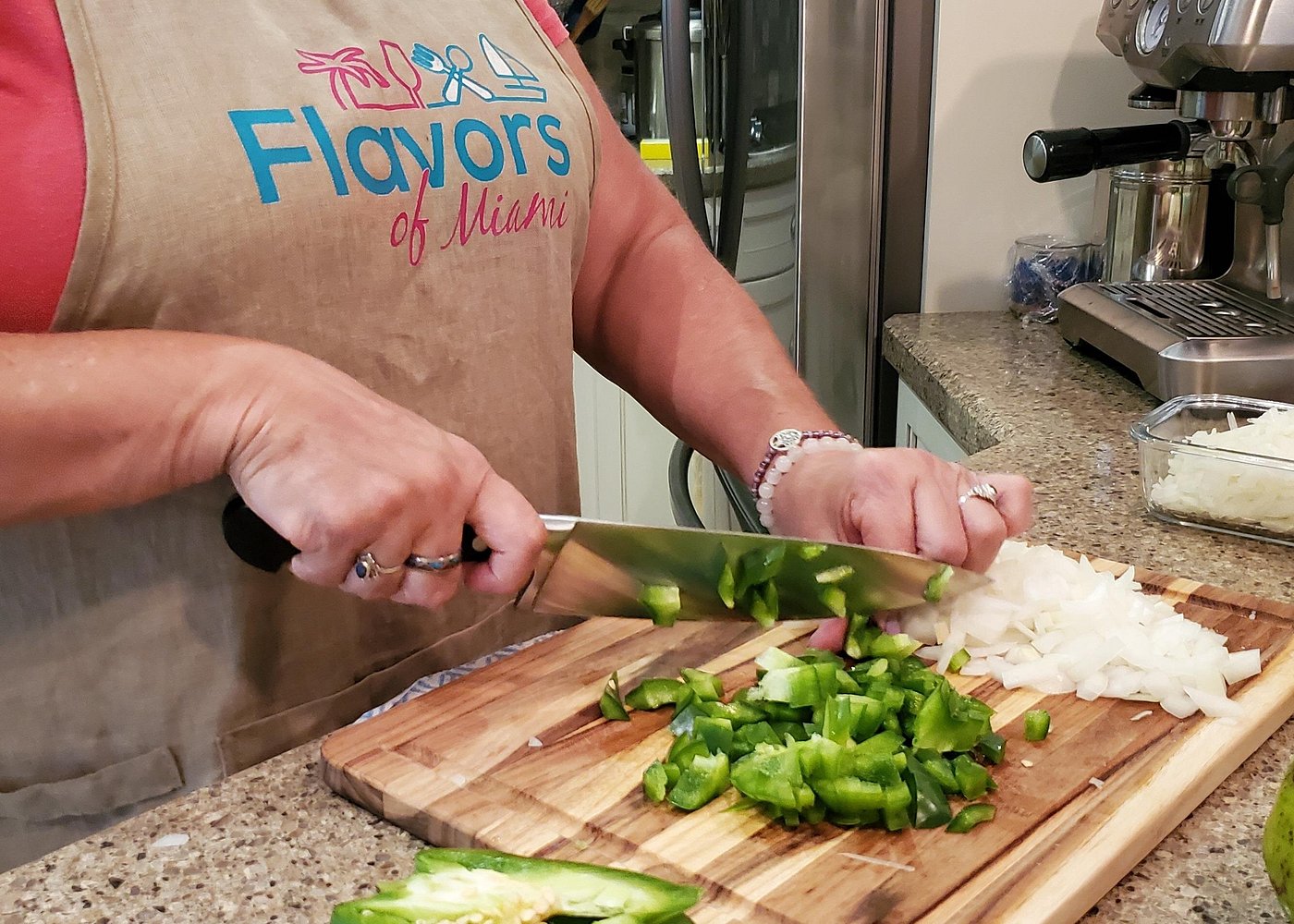
You may work with ingredients used throughout Cuban cuisine, learning how to combine seasonings, prepare vegetables, handle ingredients, and develop the flavors that characterize traditional dishes.
The chef guides you through each stage, making the experience approachable for beginners while still giving experienced home cooks new ideas and techniques to take away.
You can ask questions throughout the process.
You can learn why certain ingredients are used.
You can discover how traditional Cuban dishes achieve their depth of flavor.
And, most importantly, you get to practice what you are learning.
A major highlight of the cooking experience is learning how to prepare a classic Cuban main course.
The signature dish is often Ropa Vieja, one of the most famous dishes associated with Cuban cuisine.
Depending on the menu and availability, the main course may also feature Picadillo or another traditional preparation.
The exact menu can vary, but the culinary focus remains on authentic Cuban flavors and techniques.
Ropa Vieja is made from tender shredded beef and is typically cooked with a richly seasoned mixture of aromatic ingredients.
The dish is famous for its comforting texture and deeply developed flavor.
Learning to prepare it gives travelers insight into the patience and seasoning required to create traditional Cuban home cooking.
Picadillo is another classic Cuban comfort food, traditionally prepared with ground meat and a flavorful combination of aromatics and seasonings.
It demonstrates another side of Cuban cuisine: simple ingredients transformed into a satisfying family-style dish.
A Cuban meal is about more than the main course.
Side dishes play an essential role in creating the complete dining experience.
During the cooking class, you may prepare or learn about traditional accompaniments such as:
These foods help create the familiar combination of textures and flavors associated with Cuban home cooking.
Rice and beans provide a comforting foundation.
Plantains bring sweetness and caramelized flavor.
Yuca provides a hearty alternative to potatoes.
Together, the side dishes turn the main course into a generous Cuban feast.
The cooking experience also includes a dedicated mixology component.
You participate in a demonstration showing how to prepare a traditional Cuban Mojito.
The Mojito is one of the world's most recognizable Cuban cocktails, and learning how it is prepared adds another cultural dimension to the experience.
You can observe the technique, understand the role of the ingredients, and participate in preparing your own drink.
The combination of cooking and mixology creates a more complete Cuban culinary evening.
You are learning not just what Cubans eat, but also one of the drinks strongly associated with Cuban culture.
Alcoholic beverages, including homemade sangria and Mojitos, are included as part of the experience, along with coffee, tea, and bottled water.
Guests consuming alcohol should drink responsibly and comply with applicable legal age requirements.
After the preparation comes the reward.
You sit down with your fellow participants and enjoy the food you helped create.
The experience includes a four-course dinner, generally consisting of an appetizer, main course, side dishes, and dessert.
This family-style meal is the moment when the individual parts of the cooking class come together.
The aromas that filled the kitchen become plates on the table.
The techniques you practiced become food you can actually taste.
And the people you met during the experience become dinner companions.
It is a relaxed and social conclusion to the cooking portion of the evening.
No memorable Cuban dinner would be complete without something sweet.
The final course gives you an opportunity to discover traditional Cuban-style desserts.
Depending on the menu, dessert may include favorites such as flan, arroz con leche, or another Cuban sweet.
Dessert is also a fitting end to the experience because it encourages guests to slow down and enjoy the final moments around the table.
After several hours of cooking, tasting, learning, and socializing, this final course brings the culinary journey to a satisfying close.
Your experience doesn't end when you leave the table.
Guests receive a recipe booklet and Cuban spices to take home.
These items transform the experience from a one-time activity into something you can continue exploring.
You can use the recipes to recreate Cuban dishes for friends and family.
You can experiment with the spices.
You can revisit techniques learned during the class.
And every time you prepare one of the dishes, you can reconnect with your Miami experience.
That makes the recipe booklet and spices more than simple souvenirs.
They become tools for keeping the memory alive.
This is a hands-on experience.
Don't arrive expecting to sit quietly throughout the evening.
The more willing you are to participate, ask questions, taste ingredients, and interact with others, the more rewarding the class is likely to be.
Cooking is an active experience.
Choose comfortable clothing that allows you to move easily and that you don't mind wearing in a kitchen environment.
Avoid clothing that is overly formal or restrictive.
Comfortable shoes are also a sensible choice because you may spend part of the experience standing and preparing food.
Food photography is practically part of the experience.
The preparation process offers plenty of opportunities to capture photographs of ingredients, dishes, cooking techniques, and the finished meal.
Your smartphone can also be useful for recording notes about recipes or ingredients you want to remember.
However, don't let photography distract you from participating.
The most valuable part of the evening is the experience itself.
This may be the most important travel tip of all.
You are not attending a small tasting.
The experience includes:
There is plenty to eat and drink.
Arriving hungry allows you to fully appreciate the meal you helped prepare.
One of the biggest advantages of a hands-on experience is the opportunity to interact directly with the chef.
Don't be afraid to ask questions.
Ask why a particular spice is used.
Ask how to adapt a recipe at home.
Ask about Cuban culinary traditions.
Ask about ingredient substitutions.
Ask how the dish changes from one Cuban household to another.
The questions you ask can turn a good cooking class into an exceptional learning experience.
Recipes are useful, but cooking techniques are even more valuable.
Pay attention to:
These techniques can be applied to other recipes once you return home.
A restaurant allows you to taste Cuban food.
This experience allows you to understand it.
You participate in preparation, learn from a chef, and experience the cultural background of the dishes.
That creates a deeper connection with Cuban cuisine.
A good travel experience should give you something you can carry into the future.
Here, that something is culinary knowledge.
You leave knowing more about Cuban ingredients, techniques, recipes, and food traditions.
You also receive recipes and spices that allow you to continue practicing.
The private residence provides an intimate environment that commercial cooking schools often cannot reproduce.
Instead of feeling like another tourist attraction, the evening feels more personal and social.
That sense of hospitality is central to the experience.
Some activities focus entirely on food.
Others focus entirely on history or sightseeing.
This experience combines both.
You learn about Cuban culture through its cuisine.
That makes it especially appealing to travelers who want a cultural experience rather than a simple meal.
You are not simply watching.
You are participating.
That makes the experience suitable for travelers who prefer active and immersive activities.
The recipe booklet and Cuban spices mean you can continue the culinary journey after returning home.
Instead of leaving with only photographs, you leave with something you can actually use.
If you plan trips around restaurants and local cuisine, this experience is a natural addition to your Miami itinerary.
You get to explore Cuban food from the inside rather than simply ordering from a menu.
Couples can enjoy a shared activity that combines food, conversation, learning, and a relaxed dinner.
It is an especially appealing alternative to a standard evening restaurant reservation.
Families can use the cooking experience as an opportunity to discover another culture together.
Children and adults can learn about ingredients, food traditions, and Cuban heritage in an interactive setting.
Cooking together naturally encourages interaction.
Friends can share tasks, learn together, prepare cocktails, and enjoy the final meal as a group.
Travelers interested in heritage and local traditions will appreciate the cultural context surrounding the food.
The class offers a window into Cuban culinary traditions and the cultural influence of Cuban communities in Miami.
If it is your first visit to Miami, this experience provides an opportunity to explore an important part of the city's cultural identity.
It can complement more traditional attractions such as beaches, downtown sightseeing, museums, and nightlife.
Instead of booking separate activities for food tasting, cooking, cocktails, and cultural education, this experience combines them into one evening.
You can learn to cook.
Prepare a Mojito.
Enjoy traditional food.
Learn about Cuban heritage.
Socialize.
And take recipes home.
That makes the experience efficient for travelers with limited time.
Many Miami itineraries become crowded with attractions.
A cooking class provides a slower, more personal experience.
It gives you time to interact with people and enjoy the destination through food.
This can be particularly valuable during a longer vacation when you want to balance sightseeing with meaningful experiences.
Culinary tourism continues to be an important part of modern travel because food offers a direct connection to local identity.
For travelers who want to build their Miami itinerary around food, this experience provides a particularly strong cultural component.
Authenticity is one of the biggest reasons travelers choose experiences like this.
The combination of a private-home setting, professional instruction, traditional Cuban dishes, cultural storytelling, and family-style dining helps create an environment that feels personal rather than mass-produced.
The experience is built around traditions that are meaningful beyond tourism.
Cuban cooking is connected to family kitchens, celebrations, everyday meals, and cultural identity.
By learning to prepare the food yourself, you gain a better understanding of those connections.
You don't have to travel to Cuba to explore Cuban culinary traditions.
Miami has become one of the most important centers of Cuban culture outside the island, and food plays a major role in that identity.
The cooking class allows visitors to explore that cultural connection directly.
You can discover traditional flavors while surrounded by the modern energy of Miami.
This contrast is part of what makes the experience so interesting.
Miami is a global city, but Cuban heritage remains deeply visible in its food, neighborhoods, music, art, businesses, and traditions.
The cooking class gives you a personal way to experience one part of that story.
A well-designed Miami itinerary might include beaches, architecture, nightlife, shopping, museums, and cultural neighborhoods.
But adding a culinary experience can make the trip feel more complete.
Consider scheduling the cooking class on an evening when you want something relaxed and social.
The approximately 3.5-hour duration gives you enough time to enjoy the experience without turning your entire day into a single activity.
It can also work well as part of a broader Little Havana exploration.
Travelers interested in Cuban culture can combine culinary activities with walking tours, cultural attractions, Cuban coffee experiences, music, and neighborhood exploration.
The result is a richer understanding of Miami's Cuban heritage.
A cooking class should be judged by more than what appears on the menu.
The quality of the interaction matters.
The atmosphere matters.
The instruction matters.
The opportunity to ask questions matters.
And the feeling you have when you leave matters.
This experience has earned a 5.0 rating across 73 reviews on the Booking Adventures listing, indicating strong traveler satisfaction among reviewers.
That reputation fits the experience's strongest qualities: intimate hospitality, generous food and drinks, hands-on instruction, and practical skills travelers can take home.
Years after a vacation, travelers often remember individual moments more clearly than entire sightseeing schedules.
They remember the smell of food cooking.
They remember laughing with strangers.
They remember learning something unexpected.
They remember a meal shared around a table.
They remember a local person who welcomed them.
This cooking class is designed around those kinds of memories.
The experience gives you a story.
You can tell your friends that you learned how to prepare Ropa Vieja in Miami.
You can recreate the recipe at home.
You can make a Mojito using techniques learned during the class.
And you can remember the evening every time you use the Cuban spices you brought home.
Yes. The class is designed around professional chef guidance and hands-on participation, making it accessible to travelers who may not have advanced cooking skills.
You do not need to be an experienced chef to enjoy the experience.
Yes. The experience includes a full four-course dinner consisting of an appetizer, main course, side dishes, and dessert.
Yes. The listed inclusions include homemade sangria, Mojitos, coffee, tea, and bottled water.
Alcoholic beverages are subject to applicable age and responsible-consumption requirements.
The cooking experience lasts approximately 3 hours and 30 minutes.
This provides enough time for introductions, cooking instruction, mixology, dining, and socializing.
The experience takes place in a private residence in the Little Havana area of Miami.
The listed meeting point is 3120 NW 4th St, Miami, FL 33125.
Review your booking confirmation carefully.
Confirm the meeting instructions and scheduled time.
Wear comfortable clothing.
Bring a smartphone or camera if you want to capture the experience.
Most importantly, arrive with an appetite and curiosity.
Participate as much as possible.
Ask questions.
Watch the chef's techniques closely.
Taste when appropriate.
Talk to other travelers.
Pay attention to how traditional Cuban flavors are built.
The more engaged you are, the more useful the experience becomes.
Take your time.
The meal is the reward for your work, but it is also part of the cultural experience.
Enjoy the food slowly.
Discuss the dishes.
Ask questions about the recipes.
Share the experience with the people around you.
Take your recipe booklet and Cuban spices home.
Try recreating one of the dishes soon after returning from Miami while the techniques are still fresh in your memory.
Invite friends or family over.
Prepare a Cuban-inspired meal.
Tell them about the cooking class.
In this way, the experience becomes something you can share rather than something that ends when your vacation does.
Travel is often remembered through the senses.
A photograph captures what you saw.
A souvenir captures what you brought home.
But food can capture a much broader memory.
One taste can remind you of an entire evening.
One aroma can bring back a kitchen.
One recipe can transport you to another country.
That is why culinary experiences have such lasting value.
The Traditional Cuban Cooking Class in Miami combines taste, smell, touch, conversation, learning, and cultural storytelling.
It gives you multiple ways to remember the destination.
Cuban cuisine has a strong social dimension.
Meals are often associated with family gatherings, celebrations, conversation, and hospitality.
This cooking class embraces that spirit.
The experience begins with shared appetizers and drinks.
It continues with collaborative cooking.
It moves into a family-style dinner.
And it ends with travelers leaving with new knowledge and memories.
The structure naturally encourages interaction.
For solo travelers, this can provide an opportunity to meet people.
For couples, it creates a shared activity.
For friends and families, it gives everyone something to do together.
Calling the experience a cooking class only tells part of the story.
It is also:
That combination is what gives the activity its distinctive appeal.
You are not paying simply to learn a recipe.
You are participating in a complete evening centered on Cuban culture and hospitality.
Miami can be experienced from many perspectives.
You can see it through its beaches.
You can explore it through architecture.
You can experience it through nightlife.
You can discover it through art.
Or you can taste it through its Cuban culinary heritage.
For travelers who want something personal and interactive, the cooking experience provides an opportunity to see a different side of the city.
The evening slows the pace down.
Instead of rushing from one attraction to another, you spend several hours focused on one experience.
You learn.
You cook.
You eat.
You connect.
And you remember.
If you are looking for an experience that combines authentic Cuban food, cultural discovery, hands-on cooking, cocktails, hospitality, and a memorable dinner, this experience brings those elements together in one evening.
It is especially appealing if you want to:
The current listing shows the experience from $155 per person, with a 5.0 traveler rating based on 73 reviews.
There are many ways to experience Miami.
But some of the most memorable begin with a simple invitation:
Come inside.
Sit down.
Taste this.
Learn how to make it.
Share the meal.
That is the spirit of the Traditional Cuban Cooking Class in Miami.
You arrive as a traveler.
You leave with new culinary knowledge, recipes, Cuban spices, stories, and the memory of a meal you helped create.
Whether this is your first introduction to Cuban cuisine or you already love Cuban food, the experience offers a chance to go deeper.
You can discover why Ropa Vieja has become such an iconic dish.
You can learn how Cuban side dishes create balance around the plate.
You can experience the preparation of a Mojito.
You can hear about the cultural influences that shaped Cuban cuisine.
And you can experience the warmth of Cuban hospitality inside an intimate private-home setting.
If your idea of a great vacation includes tasting local food, meeting people, learning something new, and experiencing a destination from a more personal perspective, this Cuban cooking experience deserves a place on your Miami itinerary.
With approximately 3 hours and 30 minutes of hands-on cooking, cultural storytelling, mixology, and dining, it offers an immersive alternative to a conventional evening out.
The experience includes professional chef instruction, a four-course dinner, homemade sangria, Mojitos, coffee, tea, bottled water, a recipe booklet, and Cuban spices to take home.
You simply need comfortable clothes, your camera or smartphone, and a big appetite.
Everything else is part of the adventure.
So come ready to discover Miami through its flavors.
Come ready to learn the traditions behind Cuban food.
Come ready to roll up your sleeves and cook.
Come ready to share a table with fellow travelers.
And come ready to discover why a meal prepared together can become one of the most unforgettable memories of a trip.
Your Cuban culinary adventure starts in Miami.
Traditional Cuban Cooking Class in Miami
Location: Little Havana area, Miami, Florida
Meeting Point: 3120 NW 4th St, Miami, FL 33125
Duration: Approximately 3 hours 30 minutes
Starting Price: From $155 per person
Rating: 5.0 based on 73 reviews on the Booking Adventures listing
Setting: Private residence
Experience: Hands-on Cuban cooking, cultural learning, Mojito mixology, and dinner
Meal: Four-course Cuban dinner
Signature Dish: Ropa Vieja
Drinks: Homemade sangria, Mojitos, coffee, tea, and bottled water
Take-Home Gifts: Recipe booklet and Cuban spices
Ideal For: Couples, families, friends, foodies, solo travelers, and culture seekers
Don't just visit Miami.
Taste its Cuban soul.
Join a hands-on Cuban cooking experience where traditional recipes, local culture, professional instruction, homemade drinks, and warm hospitality come together.
Learn the techniques.
Prepare the food.
Mix the Mojitos.
Share the table.
Take the recipes home.
And create a Miami memory that you can recreate long after your vacation is over.
Book your Traditional Cuban Cooking Class in Miami and turn an ordinary evening into an unforgettable culinary journey through Cuban culture
The Traditional Cuban Cooking Class in Miami lasts approximately 3 hours and 30 minutes. The experience includes a welcome with Cuban appetizers and homemade sangria, an introduction to Cuban cuisine, hands-on cooking instruction, a Mojito mixology session, and a four-course dinner.
The duration provides enough time to enjoy the cooking process without making the experience feel rushed.
The experience takes place in a private residence in the Little Havana area of Miami.
The listed meeting point is:
3120 NW 4th St, Miami, FL 33125
Travelers should always check their booking confirmation for the latest meeting instructions and arrival information before the experience.
The experience is listed from $155 per person.
Pricing can vary depending on availability, booking date, group size, or other operational factors. Travelers should confirm the final price shown during booking before completing their reservation.
Yes. The experience includes a full four-course dinner.
The meal includes an appetizer, main course, side dishes, and dessert. Traditional Cuban dishes can include favorites such as Ropa Vieja or Picadillo, black beans, rice, fried plantains, and Cuban-style desserts.
The exact menu may vary depending on availability.
This experience is primarily structured as an evening culinary experience with dinner, rather than a lunch tour.
The included meal is a four-course dinner served after the hands-on cooking portion.
Travelers should check the confirmed start time for their selected date when booking.
Yes. Ropa Vieja is one of the signature Cuban dishes associated with the experience.
The cooking class gives participants the opportunity to learn about traditional Cuban preparation techniques and prepare a main dish that may feature Ropa Vieja or another Cuban favorite such as Picadillo, depending on the menu.
Ropa Vieja is particularly valuable for travelers interested in learning one of the most recognizable dishes of Cuban cuisine.
Yes. A Cuban Mojito mixology demonstration is included.
Participants can learn about the ingredients and preparation technique behind this iconic Cuban cocktail and participate in preparing their own Mojito.
Alcoholic beverages are included in the experience. Guests should follow applicable age requirements and consume alcohol responsibly.
Yes. The listed inclusions include homemade sangria and Mojitos.
The experience also includes coffee, tea, and bottled water.
The availability and serving arrangements of beverages may be subject to the experience provider's operational policies and applicable legal requirements.
Yes. The experience is designed around professional chef instruction and hands-on participation, making it suitable for travelers without professional cooking experience.
You do not need to be an expert cook.
The chef guides participants through the process and provides practical instruction that can be used again at home.
Yes.
Hands-on participation is one of the main features of the experience.
Rather than simply watching a chef prepare Cuban food, guests participate in preparing the meal, learning cooking techniques, working with ingredients, and experiencing the process from preparation to dinner.
Yes. The experience can be an excellent choice for couples looking for a unique activity in Miami.
Instead of simply going to another restaurant, couples can prepare food together, learn about Cuban culture, enjoy Mojitos and dinner, and share an interactive culinary experience.
It can work particularly well for travelers celebrating an anniversary, birthday, honeymoon, or special vacation.
The experience can be appealing to families because cooking is interactive and educational.
However, parents should confirm the provider's current age requirements and child participation policies before booking, particularly because alcoholic beverages are part of the experience.
Children should always be supervised by their accompanying adults.
It can be suitable for seniors who are comfortable participating in a hands-on cooking activity.
The experience takes place over approximately 3.5 hours, and participants may spend some time standing while preparing food.
Travelers with mobility concerns should confirm the accessibility and seating arrangements with the provider before booking.
Wear comfortable, practical clothing suitable for cooking.
Light and comfortable clothing is generally preferable to formal attire.
Closed-toe, comfortable footwear can also be a sensible choice for a hands-on kitchen experience.
Avoid clothing that you would be uncomfortable wearing around food preparation areas.
Travelers should bring:
A smartphone can be particularly useful for photographing the cooking process and finished dishes.
Yes. Guests receive a recipe booklet to take home.
This allows you to recreate the Cuban dishes after returning home and continue practicing what you learned during the class.
The recipes turn the cooking experience into a lasting travel souvenir rather than a one-time activity.
Yes.
The experience includes a recipe booklet and Cuban spices for guests to take home.
These items make it possible to continue exploring Cuban cuisine after your Miami vacation.
You can use the spices and recipes to recreate Cuban-inspired meals for family and friends.
The experience focuses on traditional Cuban cuisine.
Depending on the menu, travelers may encounter dishes and ingredients such as:
The exact dishes can vary according to availability and the cooking schedule.
Because the cooking experience takes place primarily inside a private residence, normal rain in Miami should not prevent the indoor cooking activity from taking place.
However, travelers should follow any weather-related instructions provided by the operator.
If severe weather affects transportation or operations, the provider's cancellation, rescheduling, or weather policy will apply.
Because the experience takes place in a private-home setting, bathroom arrangements are generally associated with the residence.
However, travelers who require specific accessibility features or guaranteed facilities should confirm these details with the provider before booking.
The experience is described as an intimate small-group cooking experience in a private residence.
It should therefore not automatically be interpreted as an exclusively private booking for one party.
Travelers who specifically require a fully private class should confirm private-booking availability before making a reservation.
Yes.
Solo travelers who enjoy meeting people can benefit from the social format of the experience.
The shared cooking process and family-style dinner create natural opportunities to interact with the chef and fellow participants.
It can be a particularly good option for travelers who want to combine food, culture, and social interaction.
Traditional Cuban cuisine is generally more focused on aromatic herbs, garlic, onions, peppers, citrus, spices, and slow-developed flavors than extreme heat.
However, individual dishes and personal preparation styles can vary.
If you have a strong preference or dietary concern regarding spice levels, it is best to communicate this to the provider before the experience.
Dietary restrictions and allergies should be communicated to the provider before booking or as early as possible after booking.
Because the experience involves a planned multi-course menu and hands-on food preparation, the provider needs sufficient notice to determine whether suitable modifications are possible.
Do not assume that a particular dietary requirement can be accommodated unless the provider confirms it.
Absolutely.
Experienced home cooks can still benefit from learning Cuban-specific techniques, flavor combinations, preparation methods, and cultural traditions.
The class also provides an opportunity to discover dishes that may not normally appear in a traveler's everyday cooking routine.
No.
Cooking is the central activity, but the experience also combines:
This makes it a broader cultural and culinary experience rather than simply a cooking lesson.
Little Havana is strongly associated with Miami's Cuban cultural heritage.
Experiencing Cuban cuisine in this part of Miami provides additional context for understanding the city's Cuban influence.
The cooking class allows travelers to explore that heritage through food, hospitality, and culinary traditions.
At a restaurant, you primarily experience the finished food.
During a cooking class, you experience the entire journey.
You learn about the ingredients.
You participate in preparation.
You learn cooking techniques.
You discover cultural context.
You prepare a Mojito.
You sit down for the meal.
And you take recipes and spices home.
That makes the experience more immersive than a standard restaurant visit.
No.
The class is intended for travelers who want to learn, experiment, and enjoy Cuban food.
Professional cooking skills are not required.
The chef provides guidance throughout the cooking process.
For travelers interested in food, culture, local traditions, and hands-on activities, it can be a strong addition to a Miami itinerary.
The combination of Cuban cooking, a private-home setting, Mojito preparation, dinner, cultural storytelling, and take-home recipes creates an experience that goes beyond conventional sightseeing.
Після завершення бронювання наша команда зв'яжеться з вами за день до поїздки для уточнення часу трансферу від готелю/Airbnb.
Якщо ви обрали точку збору, ваше бронювання підтверджено — просто прибувайте на місце вчасно.
Переконайтеся, що номер WhatsApp, телефон та email вказано вірно.
З питань змін, погоди або особливих побажань зв'яжіться з нами:
Будемо раді бачити вас! 🌴✨