Playa Bonita Day Trip
5.0(75)
From$64
Playa Bonita Day Trip
5.0 (75)
From$64per person



Book top-rated tours, excursions, and adventures in Punta Cana, Bayahibe, Santo Domingo, and across the Dominican Republic.
Santiago de Cuba is a city that does not simply tell its history — it lives it in its plazas, music-filled streets, colonial buildings, waterfront views, and revolutionary landmarks. On this guided tour of Santiago de Cuba, travelers are invited to explore one of Cuba’s most fascinating destinations through the stories, places, and cultural experiences that have shaped the city for centuries.
Known as the “cradle of the Cuban Revolution,” Santiago de Cuba offers an extraordinary combination of Spanish colonial heritage, Caribbean energy, Afro-Cuban culture, music, architecture, and modern Cuban history. As Cuba’s second-largest city, it has played an important role in the country’s cultural and political development, making it an especially rewarding destination for travelers who want to understand more than what they can see from a sightseeing bus window.
This Santiago de Cuba city tour brings together some of the destination’s most significant landmarks in approximately 2.5 to 3 hours. From the historic Cathedral of Santiago de Cuba and the cultural atmosphere around Casa de la Trova to the panoramic scenery of Santiago Bay, the Malecon, Abel Santamaría Historical Park, and the exterior of Moncada Barracks, every part of the experience adds another chapter to the story of the city.
With a professional English-speaking guide, convenient transportation, and hotel pickup available from hotels in the historic center, the experience is designed to make exploring Santiago de Cuba straightforward, informative, and enjoyable.
Travelers can also choose an upgraded tour option that includes a traditional lunch and welcome mojito at the emblematic Bodeguita del Medio, adding a flavorful Cuban culinary experience to an already memorable cultural journey.
Whether you are visiting Santiago de Cuba for the first time, traveling through Cuba as part of a larger itinerary, or simply looking for an efficient way to discover the city’s essential landmarks, this guided Santiago de Cuba tour offers an engaging introduction to the history and character of one of the Caribbean’s most distinctive cities.
There are many places where travelers can read about Cuban history. Santiago de Cuba is different because history is woven directly into the streets.
The city has witnessed centuries of political change, cultural development, religious traditions, musical evolution, and revolutionary activity. Walking through its historic center provides a unique opportunity to see how different periods of Cuban history overlap.
One moment you may be standing beside an architectural landmark with roots reaching back to the early colonial period. A few minutes later, you may be hearing about the cultural traditions that helped make Santiago one of Cuba’s great musical centers. Soon afterward, the conversation may shift toward the events that transformed the country during the 20th century.
This layered character is one of the reasons a guided tour is so valuable.
Buildings can be photographed independently, but understanding why a particular plaza matters, what happened at a historic site, or how a neighborhood developed requires context. A knowledgeable local guide helps connect the landmarks together so that Santiago becomes more than a collection of attractions.
Instead of simply asking, “What is this building?”, you begin to understand how it fits into the wider story of Cuba.
The result is a city tour that combines sightseeing with interpretation, allowing travelers to appreciate Santiago de Cuba through architecture, culture, geography, and history.
Your experience begins with convenient hotel pickup from participating hotels in the historic center, allowing you to start your exploration without the stress of finding transportation across an unfamiliar city.
For travelers staying in private homes or accommodations outside the historic center, the designated meeting point is Céspedes Park. The exact pickup or meeting arrangements are confirmed with travelers before the tour, helping create a smoother start to the experience.
From there, the tour moves toward the historic heart of Santiago de Cuba.
The atmosphere changes quickly as you enter the older parts of the city. Streets, plazas, historic facades, cultural venues, and everyday Cuban life come together to create an environment that feels both historic and alive.
This is one of the great strengths of exploring Santiago with a guide: the experience is not limited to isolated monuments. You also get to observe the rhythm of the city around them.
Local streets become part of the sightseeing experience.
Music becomes part of the history lesson.
The waterfront becomes part of the geography story.
And historic buildings become gateways into the events that shaped Cuba.
Rather than rushing between attractions, the tour provides a connected introduction to Santiago’s most important cultural and historical areas.
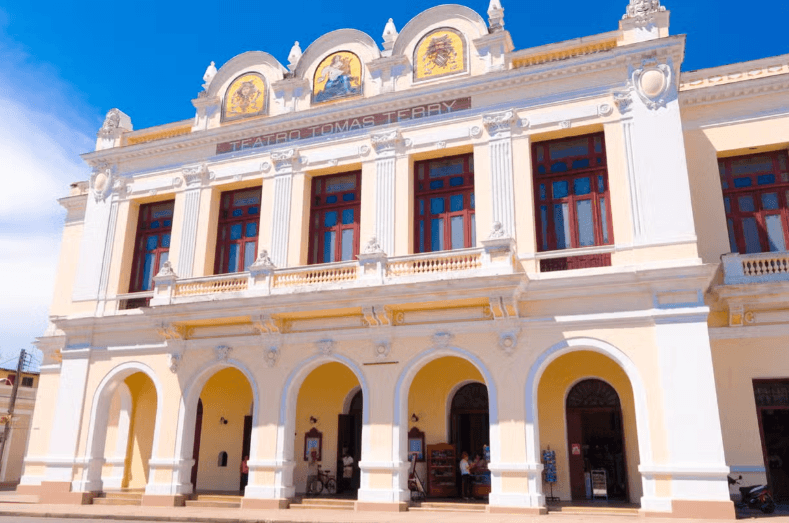
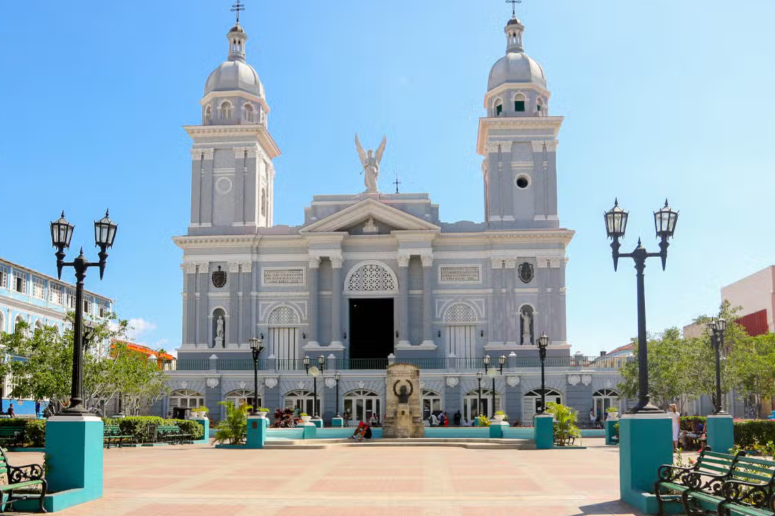
One of the first major landmarks on the route is the Cathedral of Santiago de Cuba, a remarkable architectural symbol of the city.
The cathedral has origins dating to the early 16th century, making it one of the most historically significant religious landmarks in Santiago. Its presence in the historic center offers travelers an immediate connection to the city’s colonial past.
For visitors interested in colonial Cuba, this is an especially important stop.
The cathedral represents a period when Santiago was developing as one of the major urban centers of the island. Its history reflects the long relationship between religion, architecture, Spanish colonial society, and the growth of the city.
Your guide helps place the cathedral within that larger historical context, allowing you to appreciate more than its exterior appearance.
Take time to observe the architectural details, surrounding streets, and atmosphere of the historic center. This is also an excellent opportunity for photographs, particularly for travelers interested in architectural and cultural photography.
Standing near a structure with roots extending back centuries creates a powerful sense of connection with the past.
The modern city continues to move around you, while the cathedral remains a physical reminder of Santiago’s earliest chapters.
After exploring the cathedral area, the tour continues through cultural corridors of the historic city.
Among the notable landmarks are the facades of the Emilio Bacardi Museum, Casa de la Trova, and the Carnival Museum. These cultural locations help reveal another side of Santiago de Cuba — one defined not only by political history, but also by music, art, celebration, and Cuban identity.
Santiago has long been associated with vibrant musical traditions, and Casa de la Trova is particularly emblematic of that cultural heritage.
Even when the tour is not structured as a dedicated music performance experience, simply passing through this part of the city helps travelers understand why Santiago has such a strong connection to Cuban music.
The city’s cultural identity is impossible to separate from its streets.
Music, architecture, public spaces, and local traditions all contribute to the atmosphere.
For travelers who enjoy cultural tourism, this portion of the tour offers a welcome contrast to the more formal historical landmarks.
Instead of experiencing Santiago only through dates and political events, you begin to see the city as a living cultural destination.
After exploring the historic center, the experience transitions toward the coastline.
A stroll along the Santiago de Cuba Malecon provides a completely different perspective of the city. Here, the urban landscape opens toward Santiago Bay, creating panoramic views and a refreshing coastal atmosphere.
The Malecon is an ideal place to pause and appreciate the geographical setting of Santiago.
The city is not only historically important; its position beside the bay has also contributed to its character and development.
As you walk along the waterfront, your guide can connect the scenery with the broader history of Santiago, helping you understand how geography, maritime connections, trade, and urban growth influenced the city over time.
For photographers, the Malecon also provides a natural opportunity to capture a different side of Santiago.
Instead of colonial facades and narrow historic streets, you have open water, coastal scenery, city views, and the distinctive Caribbean atmosphere.
It is a moment to slow down.
Look across the bay.
Feel the sea breeze.
Take photographs.
And appreciate how naturally Santiago combines urban history with its coastal setting.
Santiago Bay is one of the defining geographical features of the city, and the waterfront portion of the tour creates an opportunity to appreciate it without dedicating an entire day to a separate excursion.
For travelers on a limited schedule, this is particularly valuable.
A short city tour can sometimes feel like a checklist of monuments. This experience is designed to offer more variety. You move from historic architecture to cultural landmarks, from revolutionary history to the coast, giving the tour a natural sense of progression.
The bay also provides a welcome visual break from the city streets.
It gives you space to reflect on what you have already learned and prepare for the next chapter of the tour.
Because the experience combines walking with transportation, travelers can cover several important areas while still having opportunities to explore on foot.
This balance makes the tour suitable for visitors who want meaningful sightseeing without committing to a full-day historical excursion.
The route continues toward Santiago’s historic City Hall and the location associated with the first “Casa de América.”
These landmarks provide another opportunity to explore Santiago’s colonial history and the role the city played during the early centuries of Cuba’s development.
The story of 16th-century Santiago is particularly fascinating because the city was already emerging as an important center during the early colonial period.
Your guide helps transform the surrounding architecture into a historical narrative.
Instead of seeing a building simply as an old structure, you begin to understand what the city looked like, how people lived, how colonial society developed, and why Santiago became such an important part of Cuba’s history.
This historical interpretation is one of the major advantages of taking a guided Santiago de Cuba walking tour.
You do not need to arrive with an extensive knowledge of Cuban history.
You simply need curiosity.
The guide provides the context, explains the significance of the landmarks, and connects different periods so that the overall story is easier to understand.
Santiago de Cuba is particularly important for travelers interested in modern Cuban history.
The city is widely associated with the origins of the Cuban Revolution, and this portion of the tour takes travelers to places connected with that dramatic period.
At Abel Santamaría Historical Park, the focus shifts from colonial history to the political events that shaped 20th-century Cuba.
The tour then continues to the exterior of Moncada Barracks, one of the most significant revolutionary landmarks in Santiago de Cuba. The site is associated with Fidel Castro’s July 1953 attack, an event that became a major chapter in the history of the Cuban Revolution.
Standing outside Moncada Barracks can feel very different from visiting a traditional monument.
The significance comes from the events that took place there and the way those events influenced Cuba’s subsequent history.
Your guide provides the historical context needed to understand why the site matters.
For travelers who have previously studied the Cuban Revolution, the experience offers a chance to see an important location firsthand.
For those who know very little about the subject, it provides an accessible introduction without requiring extensive prior knowledge.
This part of the experience is especially valuable because it shows how Santiago de Cuba was not simply a witness to Cuban history — it was one of the places where pivotal events unfolded.
Although Santiago is famous for its revolutionary history, this tour does not reduce the city to politics.
That is an important part of the experience.
Santiago de Cuba is also a city of music, food, architecture, religion, coastal scenery, and everyday life.
By combining revolutionary landmarks with colonial buildings, cultural spaces, public boulevards, and waterfront scenery, the tour presents a broader and more balanced picture of the destination.
Travelers can therefore understand Santiago as a living city rather than simply a historical location.
This balance is especially useful for first-time visitors.
You may arrive expecting to learn about the Cuban Revolution and leave with a much deeper appreciation for Santiago’s cultural identity.
You may come for the landmarks and remember the music.
You may come for the history and remember the bay.
You may come simply to see the city and leave understanding why Santiago occupies such an important place in Cuban culture.
The tour continues along Las Enramadas Boulevard, one of the lively areas of Santiago de Cuba.
This portion of the experience introduces travelers to a more contemporary and everyday side of the city.
After exploring centuries-old architecture and revolutionary history, walking along a bustling boulevard provides a sense of how Santiago functions today.
The surroundings are more dynamic.
People move through the streets.
Shops and commercial spaces add activity.
The city feels less like an open-air museum and more like a place where people live, work, socialize, and experience daily Cuban life.
This transition is important because authentic travel is not only about seeing famous attractions.
It is also about observing the spaces between them.
The streets.
The storefronts.
The sounds.
The pace of local life.
The architecture that continues to serve modern purposes.
Las Enramadas helps bring those elements into the experience.
One of the most anticipated stops for many travelers is the emblematic Bodeguita del Medio.
The venue is strongly associated with Cuban culinary and cocktail culture, making it a natural addition to a city tour that explores the country’s cultural identity.
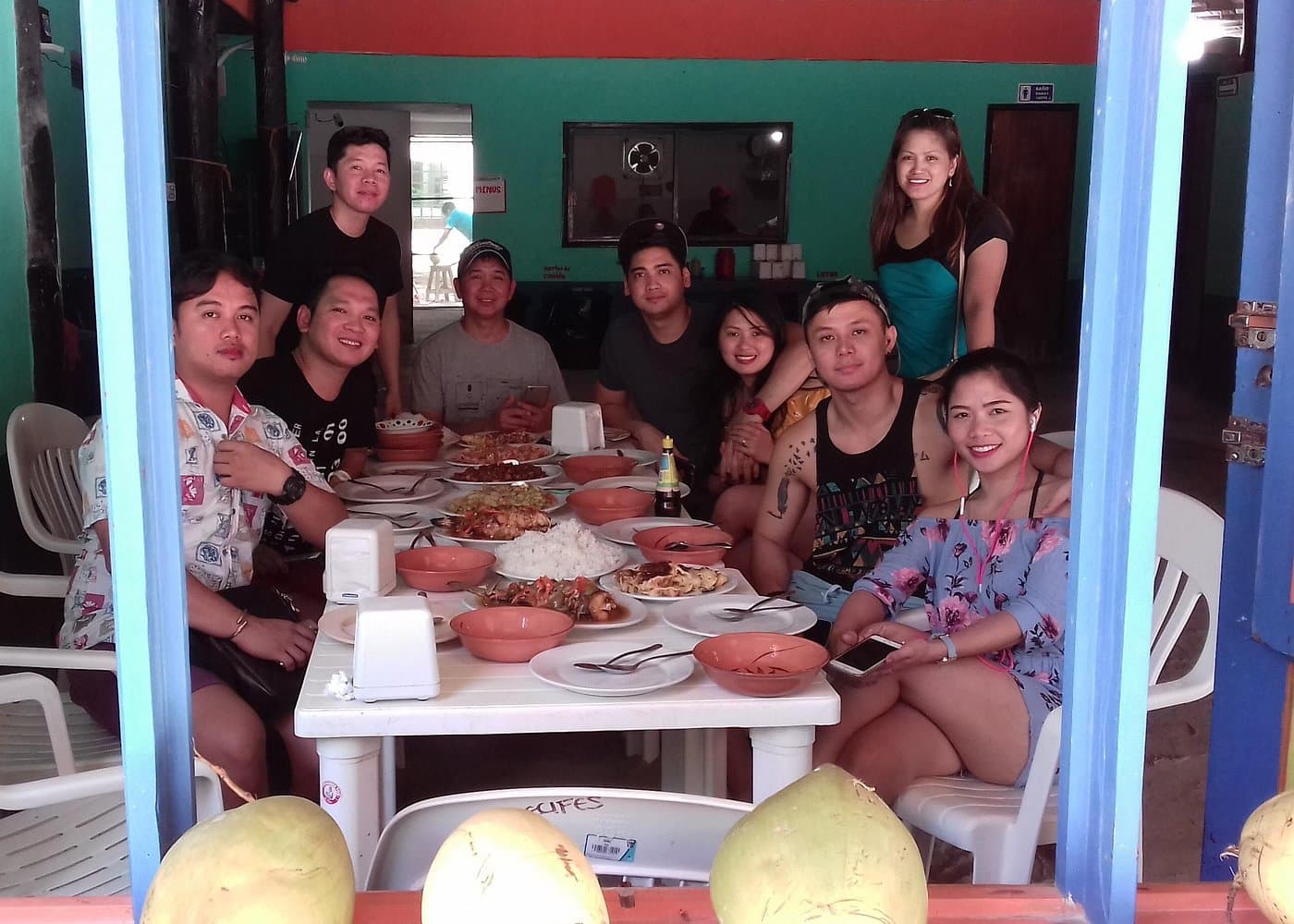
For travelers who select the tour option with lunch, the experience includes a welcome mojito and traditional lunch at Bodeguita del Medio.
This optional culinary component transforms the tour from a purely sightseeing experience into something more sensory.
History can be heard.
Architecture can be seen.
And Cuban culture can also be tasted.
A traditional meal provides an opportunity to pause after exploring the city and enjoy a more relaxed moment before the tour concludes.
One of the featured traditional dishes is Ropa Vieja, a classic Cuban preparation that is particularly appealing to travelers who want to experience local cuisine during their visit.
Depending on the selected lunch option, the meal may include traditional accompaniments and dessert selections.
The welcome mojito adds another distinctly Cuban touch.
For travelers who enjoy combining food and culture, choosing the lunch option can make the experience feel more complete.
One of the biggest advantages of this Santiago de Cuba guided tour is its variety.
Within approximately three hours, travelers can experience:
This variety means the tour appeals to different types of travelers.
History enthusiasts can focus on the cathedral, colonial sites, Abel Santamaría Historical Park, and Moncada Barracks.
Culture lovers can pay closer attention to Casa de la Trova, the Carnival Museum, local streets, and Cuban traditions.
Photographers can capture historic architecture, waterfront scenery, public spaces, and everyday life.
Food lovers can choose the lunch option and enjoy a traditional Cuban meal with a welcome mojito.
First-time visitors can use the tour as an efficient introduction to Santiago before deciding which parts of the city they would like to explore in greater depth.
A city can be difficult to understand when you explore it without context.
A historic building may look impressive, but you may not know why it matters.
A public square may appear beautiful, but you may not understand the events that took place there.
A revolutionary landmark may look like another old structure until you learn the story behind it.
A professional guide changes that.
With an English-speaking guide leading the experience, travelers can ask questions, hear historical explanations, and better understand the relationship between Santiago’s landmarks.
The goal is not simply to move from one attraction to another.
It is to connect the attractions into a coherent story.
That makes the experience especially useful for travelers who want to learn while they explore.
The guide also helps make the experience more approachable for visitors who may have limited knowledge of Cuban history.
You do not need to memorize historical dates before arriving.
You simply follow the route, listen to the stories, observe the surroundings, and ask questions when something catches your interest.
The tour combines walking exploration with transportation by air-conditioned bus or minibus.
This provides an important balance for travelers.
Santiago’s historic center is best experienced on foot because walking allows you to observe architectural details, public spaces, cultural venues, and everyday city life at a closer level.
At the same time, transportation makes it easier to connect different areas of the city during a relatively short experience.
The tour lasts approximately 2.5 to 3 hours, making it an attractive option for travelers who want to experience Santiago without dedicating an entire day to sightseeing.
The pace also makes the experience easy to incorporate into a broader Cuba itinerary.
You can explore Santiago’s essential landmarks during the tour and still have time afterward to continue discovering the city independently, relax at your accommodation, enjoy a meal, or pursue another activity.
If it is your first visit to Santiago de Cuba, it can be challenging to decide where to begin.
There are historic plazas, churches, museums, cultural venues, waterfront areas, revolutionary landmarks, shopping streets, restaurants, and countless stories competing for your attention.
A guided city tour solves that problem by providing a structured introduction.
Instead of spending valuable vacation time figuring out transportation and researching every landmark individually, you can follow a carefully planned route led by someone familiar with the destination.
The result is a more efficient first look at Santiago.
After the tour, you will have a better understanding of the city’s layout and history.
You may even discover places you want to revisit later.
This makes the tour useful not only as a sightseeing experience but also as a starting point for the rest of your Santiago de Cuba adventure.
Few destinations are better suited to travelers who enjoy history.
Santiago’s story stretches across multiple periods, from the early colonial era to the development of modern Cuban society and the revolutionary events of the 20th century.
The tour brings these periods together.
The Cathedral introduces the colonial era.
The cultural landmarks reveal Santiago’s artistic and musical identity.
The waterfront illustrates the importance of the city’s geographical position.
The City Hall and Casa de América provide additional historical context.
Abel Santamaría Historical Park and Moncada Barracks bring the story into the modern revolutionary period.
Because these elements appear within the same tour, travelers can see how Santiago evolved across centuries.
The result is a compact but surprisingly comprehensive historical introduction.
Travelers who want to experience Cuban culture will also find plenty to appreciate.
Santiago de Cuba has a distinctive cultural character shaped by Caribbean influences, Cuban traditions, music, food, religion, architecture, and history.
The Casa de la Trova and Carnival Museum help illustrate this cultural dimension.
The streets themselves provide another layer.
Then there is the food.
Selecting the lunch option allows travelers to experience traditional Cuban cuisine in an iconic setting while enjoying a welcome mojito.
Together, these experiences create a more complete understanding of Santiago.
Culture becomes something you see, hear, taste, and experience rather than something explained only through a museum display.
You do not need to be a professional historian to enjoy this tour.
You do not need to know the details of the Cuban Revolution.
You do not need to recognize every architectural style.
You simply need to be interested in discovering a new place.
The tour is designed to make Santiago’s complex history accessible through storytelling.
The guide provides the information.
The city provides the setting.
And you experience the destination firsthand.
This approach makes the tour suitable for couples, solo travelers, friends, families, and visitors traveling as part of a larger Cuban itinerary.
Bring your camera because Santiago de Cuba provides plenty of photographic opportunities.
The historic cathedral offers architectural imagery.
The old city streets provide colorful urban scenes.
Cultural landmarks create opportunities for detail photography.
The Malecon and Santiago Bay provide open coastal views.
Historic public spaces offer a combination of architecture and everyday life.
And the revolutionary landmarks provide powerful visual reminders of Cuba’s modern history.
Even travelers who normally take only a few photographs will likely find plenty to capture during this experience.
A good approach is to balance landmark photographs with candid observations of the city.
Look beyond the obvious attraction.
Photograph the streets connecting the landmarks.
Capture the textures of old buildings.
Look toward the bay.
Notice how historic architecture interacts with modern life.
These details often become some of the most meaningful travel memories.
A strong city tour should do more than show travelers famous places.
It should help them understand the destination.
That is the central idea behind this experience.
Rather than focusing on one single theme, the guided tour combines several defining aspects of Santiago de Cuba.
It explores the city’s colonial heritage without ignoring its modern history.
It introduces Cuban culture without turning the experience into a performance.
It visits revolutionary landmarks while showing that Santiago is much more than its political past.
It includes coastal scenery alongside urban exploration.
And it gives travelers the option to add a traditional Cuban lunch and mojito.
The result is a balanced Santiago de Cuba sightseeing experience that fits a wide range of travel interests.
Santiago de Cuba has earned a reputation as the cradle of the Cuban Revolution, but understanding why requires seeing the city for yourself.
The revolutionary landmarks are not isolated from the rest of Santiago.
They exist alongside colonial churches, cultural venues, busy boulevards, traditional restaurants, historic plazas, and Caribbean coastal scenery.
That contrast is what makes the city so compelling.
A visit to Moncada Barracks becomes more meaningful when you understand the city in which it stands.
The history of Abel Santamaría becomes easier to appreciate when you have already explored Santiago’s earlier colonial chapters.
And the modern city becomes more interesting when you understand the centuries of history beneath it.
This tour creates those connections.
Perhaps the most compelling feature of this experience is the way it moves through time.
You begin with the early colonial history represented by the Cathedral of Santiago de Cuba.
You continue through cultural landmarks associated with music, art, and Cuban identity.
You reach the waterfront and explore the city’s relationship with Santiago Bay.
You learn about colonial society and historic institutions.
Then the narrative moves forward into the revolutionary era at Abel Santamaría Historical Park and Moncada Barracks.
Finally, you return to the energy of contemporary Santiago along Las Enramadas Boulevard before concluding near Céspedes Park.
In a relatively short period, you experience several centuries of history.
That is what makes this more than a basic sightseeing tour.
It is a journey through the evolution of Santiago de Cuba.
The tour concludes at Céspedes Park, an important central location in Santiago de Cuba.
Ending here provides a natural conclusion to the experience.
You have moved through historic streets, cultural landmarks, the waterfront, revolutionary sites, and one of the city’s lively commercial areas.
Now you are positioned in a central part of Santiago from which you can continue your own exploration.
Perhaps you want to find a local restaurant.
Perhaps you want to revisit a favorite street.
Perhaps you want to shop for souvenirs.
Or perhaps you simply want to sit for a while and watch the city continue around you.
The tour gives you the foundation.
The rest of Santiago is yours to discover.
A little preparation can make the experience even more enjoyable.
Comfortable walking shoes are strongly recommended because the tour includes walking through historic streets and public areas.
Sun protection is also important. A hat, sunglasses, and sunscreen can help make the outdoor portions of the experience more comfortable, particularly during sunny Caribbean weather.
A camera is recommended for travelers who want to capture the architecture, cultural landmarks, streets, and Santiago Bay views.
It is also useful to carry a small amount of cash for souvenirs or additional drinks.
If you have selected the lunch option, come prepared with an appetite.
The combination of sightseeing and traditional Cuban food is one of the memorable elements of the upgraded experience.
Two and a half to three hours may sound short when considering everything Santiago de Cuba has to offer.
But the carefully selected route makes it possible to experience many of the city’s defining highlights within one compact excursion.
This is especially valuable for travelers with limited time.
You do not need to spend an entire day traveling between distant attractions.
Instead, you can experience a focused selection of important sites while receiving historical and cultural context from a professional guide.
The tour provides an efficient way to answer the most important question many first-time visitors have:
“Where should I begin?”
Start with the city’s history.
Walk through its culture.
See its coastline.
Understand its revolutionary legacy.
Taste its cuisine if you choose the lunch option.
Then continue exploring Santiago with a much stronger sense of place.
It is easy for travelers to treat a city as simply another stop on a larger vacation.
Santiago de Cuba deserves more than that.
Its history, culture, music, architecture, and Caribbean atmosphere make it one of Cuba’s most distinctive destinations.
A guided Santiago de Cuba city tour provides a way to slow down and understand what makes the city special.
You will not simply say that you visited Santiago.
You will remember the cathedral.
You will remember the bay.
You will remember the revolutionary landmarks.
You will remember the lively streets.
You may remember the sound of music around Casa de la Trova.
And if you select the lunch option, you may also remember the taste of traditional Cuban food and a refreshing mojito at Bodeguita del Medio.
These are the details that turn sightseeing into travel memories.
Santiago de Cuba is a destination where different eras meet.
Colonial architecture stands beside modern streets.
Historic plazas coexist with busy commercial boulevards.
Revolutionary landmarks share the city with music venues and traditional restaurants.
The Caribbean coast frames an urban center filled with centuries of stories.
This guided tour brings those elements together in a way that is accessible, engaging, and easy to fit into your Cuba travel plans.
With hotel pickup available from the historic center, professional English-speaking guidance, transportation by air-conditioned bus or minibus, and an optional traditional lunch and mojito, the experience is designed to remove much of the logistical uncertainty from exploring Santiago.
Whether your priority is Cuban history, colonial architecture, revolutionary heritage, local culture, photography, food, or simply seeing the highlights of Santiago de Cuba, this experience gives you an opportunity to discover the city from several different perspectives.
Come ready to walk.
Come ready to listen.
Come ready to photograph.
Come ready to taste.
Most importantly, come ready to discover a city whose story reaches far beyond its famous nickname.
Santiago de Cuba is not simply the “cradle of the Cuban Revolution.”
It is a city of music, memory, culture, architecture, coastline, and people.
And the best way to begin understanding it is to walk through its history with someone who can help bring every chapter to life.
A great Santiago de Cuba sightseeing experience should give you more than a list of attractions. It should help you understand how the city developed, why its historic landmarks matter, how its revolutionary past shaped modern Cuba, and where its cultural character comes from.
This guided Santiago de Cuba tour is designed around exactly that idea.
Over approximately 2.5 to 3 hours, you will travel through some of the city's most important historic and cultural areas with a professional English-speaking guide. The experience combines transportation by air-conditioned bus or minibus with walking exploration, allowing you to cover several key areas without spending your entire day moving between attractions.
The route brings together colonial heritage, Cuban music and culture, Santiago Bay, revolutionary history, lively streets, and traditional Cuban cuisine.
For travelers who choose the lunch option, the experience also includes a welcome mojito and traditional lunch, adding an authentic culinary dimension to the day.
The result is a compact but comprehensive introduction to one of Cuba's most historically significant cities.
Your Santiago de Cuba experience begins with convenient pickup from participating hotels in the historic center.
This simple beginning allows you to avoid the inconvenience of arranging separate transportation and makes it easier to begin your sightseeing experience on schedule.
If you are staying in a private home or accommodation outside the historic-center pickup area, the meeting point is Céspedes Park.
Once everyone is together, you begin your journey toward the historic heart of Santiago de Cuba.
As the tour starts, your guide introduces you to the destination and provides context about Santiago's role within Cuba. This initial orientation helps you understand what you are about to see and why the city occupies such an important place in Cuban history.
Rather than arriving at a landmark without background information, you begin the tour already aware that Santiago is a city shaped by several distinct historical periods.
The first major highlight is the Cathedral of Santiago de Cuba.
With origins dating back to the early 16th century, the cathedral represents one of the oldest layers of Santiago's history.
Your guide explains the importance of the cathedral and its place within the development of the historic city center.
Take your time to appreciate the architectural character of the building and the surrounding urban environment.
This is also a natural point for photography.
Travelers interested in architecture can focus on details of the cathedral and nearby historic structures, while visitors more interested in the atmosphere of Santiago can photograph the surrounding streets and public spaces.
The cathedral introduces the colonial chapter of the tour and provides a foundation for understanding how Santiago developed over the centuries.
From the cathedral, the tour continues through an area filled with cultural significance.
You will see the facades associated with the Emilio Bacardi Museum and the famous Casa de la Trova.
The Emilio Bacardi Museum connects the city with its artistic and historical heritage, while Casa de la Trova represents Santiago's deep relationship with Cuban music.
This section of the tour helps demonstrate that Santiago cannot be understood solely through political history.
Music is central to the city's identity.
Traditional sounds, local celebrations, cultural traditions, and social gatherings have all contributed to Santiago's reputation as one of Cuba's important musical centers.
As you move through this part of the city, your guide provides background that helps you recognize the cultural importance of the locations you encounter.
The Carnival Museum provides another perspective on Santiago's cultural identity.
Carnival traditions have played an important role in the city's social and cultural life, and the museum helps illustrate the importance of celebration, performance, costumes, music, and community traditions.
For visitors interested in Cuban culture, this is an opportunity to see how local identity extends beyond famous historical events.
It also provides useful context for understanding why Santiago's cultural traditions are so vibrant.
The experience becomes increasingly multidimensional.
You are not simply learning what happened in Santiago.
You are discovering how people expressed themselves, celebrated, created music, and built cultural traditions.
The route then transitions toward the coast.
Walking along the Malecon creates a welcome change of scenery after exploring the historic center.
Here, the urban landscape opens toward Santiago Bay.
The waterfront provides panoramic views and an opportunity to appreciate the city's Caribbean setting.
This is one of the most visually appealing sections of the tour and an excellent opportunity to pause for photographs.
Look across the water and take in the relationship between the city and the bay.
The coastal setting is a reminder that Santiago's history has always been connected to its geography.
Its location helped shape its development, trade connections, maritime importance, and cultural exchanges.
The Malecon also provides a more relaxed portion of the itinerary.
After absorbing information about architecture and history, you have space to enjoy the scenery and experience the atmosphere of the waterfront.
The tour continues to historic City Hall, another landmark connected with Santiago's civic and political development.
Your guide explains the site's relevance while placing it within the broader story of colonial and post-colonial Santiago.
This part of the experience helps travelers see that historical cities are shaped not only by churches and military sites but also by civic institutions.
Public buildings, plazas, and government spaces reveal how communities were organized and how political life evolved.
The surrounding area also provides additional opportunities to observe Santiago's architecture and everyday activity.
The itinerary then introduces travelers to the historic location associated with the first "Casa de América."
This stop provides another window into the early colonial period and allows the guide to explain elements of 16th-century life.
Rather than treating the location as an isolated attraction, the guide connects it with the wider development of Santiago.
This is particularly useful for visitors who want a deeper understanding of how Cuba's colonial cities evolved.
The stories told here help bridge the gap between what you see and what happened centuries ago.
The historical narrative now moves forward into Cuba's modern era.
At Abel Santamaria Historical Park, travelers are introduced to an important part of Santiago's revolutionary history.
This is one of the moments when the tour changes tone.
The colonial architecture and cultural traditions give way to the political events of the 20th century.
Your guide provides context about the people, events, and historical circumstances associated with this period.
The goal is not simply to name dates.
It is to help travelers understand how revolutionary movements developed and why Santiago became so important to the story of modern Cuba.
For travelers with an interest in Cuban history, this section can be one of the most meaningful parts of the tour.
The tour then continues to the exterior of Moncada Barracks.
This is one of Santiago de Cuba's most important revolutionary landmarks.
The site became famous because of the July 1953 attack led by Fidel Castro and the group of revolutionaries who attempted to seize the barracks.
The event is widely recognized as an important early chapter in the Cuban Revolution.
Seeing the exterior of the site provides travelers with a physical connection to an event that had major consequences for Cuba's subsequent history.
Your guide helps explain the historical significance and broader context.
This is an especially valuable stop for visitors who have studied Cuban history but have never seen one of its defining locations firsthand.
It is equally useful for travelers who are unfamiliar with the subject because the guide provides an accessible explanation.
After the revolutionary landmarks, the experience moves toward the lively atmosphere of Las Enramadas Boulevard.
This is where the tour begins to shift back toward everyday Santiago.
The boulevard provides an opportunity to observe contemporary city life.
Instead of focusing entirely on monumental buildings and historical events, you can see Santiago as a functioning modern city.
The streets are active.
Local businesses add energy.
People go about their daily routines.
The architecture reflects different periods.
This is an important part of authentic travel because it allows visitors to understand that Santiago's history is not frozen in the past.
It continues to evolve.
One of the final highlights is Bodeguita del Medio.
The famous venue is closely associated with Cuban food and cocktail culture and provides a fitting conclusion to a tour focused on Cuban identity.
Travelers who choose the tour with lunch can enjoy a traditional meal and welcome mojito here.
A featured Cuban dish is Ropa Vieja, offering travelers the opportunity to experience a familiar part of traditional Cuban cuisine in a memorable setting.
This culinary stop is more than simply a meal.
Food is another way of understanding a destination.
After spending hours learning about Santiago's history and culture, sitting down to enjoy traditional Cuban flavors creates a more relaxed and personal travel experience.
The mojito also adds a classic Cuban touch.
For many travelers, this becomes one of the most enjoyable memories of the tour.
The tour concludes at Céspedes Park.
This central location provides a convenient point from which to continue exploring Santiago independently.
You can use the knowledge gained during the tour to decide where you would like to spend more time.
Perhaps a particular cultural site caught your attention.
Perhaps you want to return to the historic center for photographs.
Maybe you want to find a local restaurant, shop for souvenirs, or simply enjoy the atmosphere of Santiago.
Because the tour has given you a geographical and historical orientation, independent exploration afterward becomes much easier.
The standard experience includes several practical elements designed to make your sightseeing easier.
Travelers staying at eligible hotels in the historic center can benefit from hotel pickup.
This removes one of the common inconveniences associated with city tours: figuring out where to meet the group.
For accommodations outside the designated pickup zone, the meeting point is Céspedes Park.
A professional English-speaking guide accompanies the experience.
This is particularly important because Santiago's attractions have stories that are not immediately obvious.
The guide provides historical explanations, cultural context, and information about the significance of each major location.
Transportation is provided by air-conditioned bus or minibus.
This makes the journey between different sections of the tour more comfortable, particularly in Cuba's warm climate.
The welcome mojito and traditional lunch are included when you select the appropriate tour option.
Travelers who book the standard option should carefully review the selected package because the lunch component is optional and affects the price.
The exact inclusions depend on the selected booking option.
The traditional lunch and welcome mojito are associated with the "Tour with Lunch" selection, so travelers booking the standard experience should not assume that meals are included.
Additional drinks, souvenirs, personal purchases, and other expenses outside the listed inclusions are generally the traveler's responsibility.
A good approach is to review the selected tour option before booking so that you know exactly which services are included in your reservation.
Comfortable shoes are one of the most important things to bring.
Although transportation is provided between portions of the route, the tour also includes walking through historic streets, public areas, and cultural districts.
Shoes with good support can make a noticeable difference, especially if you are accustomed to spending most of your vacation time at a hotel or beach resort.
Santiago de Cuba has a warm Caribbean climate, and portions of the tour take place outdoors.
Bring:
Sun protection is particularly useful during the waterfront and outdoor walking portions.
Santiago offers many opportunities for photography.
The cathedral, historic streets, cultural landmarks, Malecon, Santiago Bay, revolutionary sites, and lively boulevards all provide different visual perspectives.
A smartphone is sufficient for most travelers, but photography enthusiasts may want to bring additional equipment.
Remember that the best travel photographs are not always the obvious ones.
Capture architectural details, street scenes, coastal views, and small moments that communicate the atmosphere of Santiago.
It is useful to carry a small amount of cash for souvenirs, optional purchases, or additional drinks.
Avoid carrying more money than you need for the day.
A small wallet or secure travel pouch can help keep your essentials organized while walking through the city.
If you have selected the lunch option, leave room for traditional Cuban food.
The culinary portion of the experience gives you a chance to slow down and enjoy a meal after sightseeing.
Travelers interested in local cuisine should consider choosing the lunch package if they want to make food part of their Santiago experience.
This tour is particularly valuable for first-time visitors because it covers several of the city's defining highlights in one organized experience.
Instead of spending your first hours in Santiago trying to understand the layout, you can follow a curated route and receive historical context from a professional guide.
Travelers interested in colonial Cuba, Cuban independence, revolutionary history, and the development of Santiago will find plenty to explore.
The combination of the cathedral, historic institutions, Abel Santamaria Historical Park, and Moncada Barracks creates a strong historical narrative.
Music, carnival traditions, architecture, food, and everyday Cuban life all feature in the experience.
Stops around Casa de la Trova, the Carnival Museum, Las Enramadas Boulevard, and Bodeguita del Medio create a broader cultural perspective.
The tour includes a variety of photographic environments.
You can photograph historic architecture, cultural landmarks, city streets, the waterfront, Santiago Bay, and public spaces.
The approximately 2.5-to-3-hour duration makes this experience practical for visitors who do not want to dedicate an entire day to sightseeing.
It can fit comfortably into many Cuba travel itineraries.
Travelers with limited time in Santiago can use the tour as a concentrated introduction to the destination.
The exact suitability depends on your arrival and departure schedule, but the relatively short duration makes the experience easier to combine with other plans.
Families who enjoy history, culture, and walking-based sightseeing can find this tour rewarding.
Children and teenagers may particularly enjoy the combination of different environments.
Instead of spending several hours in one museum, the itinerary moves between historic buildings, cultural landmarks, the waterfront, revolutionary sites, and lively streets.
Parents should consider the child's age, walking ability, attention span, and comfort with historical discussions when deciding whether the tour is appropriate.
Comfortable shoes, sun protection, water, and appropriate clothing can help make the experience easier for younger travelers.
The tour can be a good option for active seniors who are comfortable with walking and spending time outdoors.
However, the experience does involve walking through historic areas, so travelers with limited mobility should consider their personal comfort level before booking.
The use of transportation between locations reduces the amount of continuous walking compared with a purely walking-based city tour.
If mobility is a significant concern, it is advisable to communicate any relevant requirements when making the reservation so that the operator can clarify what arrangements may be possible.
One of the best ways to enjoy this Santiago city tour is to arrive prepared.
Try to learn a little about Cuban history before your visit, but do not feel that you need to become an expert.
A basic understanding of Cuba's colonial period and 20th-century revolutionary history can make the stories even more interesting.
During the tour, listen for connections between different historical periods.
Notice how colonial buildings coexist with modern life.
Compare the quiet atmosphere around historic landmarks with the energy of Las Enramadas Boulevard.
Pay attention to the geography around Santiago Bay.
And ask your guide questions.
The more curious you are, the more rewarding a guided cultural experience becomes.
When booking, pay attention to the package selection.
The experience is available from approximately $35 USD, with the final price varying according to whether the lunch option is selected.
Travelers who want a sightseeing-focused experience can choose the standard option.
Those who want to include the culinary component can select the tour with lunch.
Choosing the right option in advance helps avoid confusion about what is included.
If food and the welcome mojito are an important part of your plans, confirm that you have selected the appropriate lunch package before completing your reservation.
Planning an independent Santiago itinerary requires research into locations, transportation, opening times, routes, and historical context.
A guided tour brings many of the city's most important highlights together within one organized experience.
A guide provides context that you would likely miss when viewing the landmarks independently.
This can turn ordinary sightseeing into a deeper cultural experience.
Air-conditioned transportation helps make moving around the city more comfortable.
Hotel pickup from eligible historic-center accommodations also simplifies the beginning of the experience.
The itinerary does not focus on a single attraction.
You experience history, culture, architecture, revolutionary heritage, coastal scenery, and cuisine.
A carefully planned route helps ensure that your limited vacation time is used effectively.
You can see key Santiago highlights without spending your day organizing logistics.
One of the biggest advantages of guided travel is the ability to understand what you are seeing.
Imagine standing in front of Moncada Barracks without knowing its history.
It is a building.
Now imagine standing there while hearing the story of the 1953 attack, understanding why the event mattered, and learning how it fits into the broader story of the Cuban Revolution.
The physical location becomes much more meaningful.
The same principle applies to the cathedral.
The Malecon.
The cultural venues.
The colonial buildings.
The historic parks.
The guide transforms places into stories.
That is what makes a guided Santiago de Cuba experience particularly valuable.
The tour naturally changes rhythm throughout the experience.
The historic center encourages observation.
The cultural landmarks invite curiosity.
The Malecon encourages you to slow down and look across the bay.
The revolutionary sites invite reflection.
Las Enramadas brings energy and movement.
Bodeguita del Medio offers a relaxed culinary finish.
This variation prevents the experience from feeling repetitive.
You are constantly encountering something different.
That makes the approximately three-hour duration feel purposeful rather than rushed.
Some city tours focus almost entirely on historical monuments.
Others focus mainly on food and entertainment.
This experience takes a broader approach.
It introduces travelers to Santiago's historical foundations while also allowing them to experience the city's cultural and everyday character.
The combination is particularly useful for travelers who do not want to choose between history and local culture.
You can have both.
You can learn about the colonial period in the morning, walk along the bay, hear about revolutionary history, see modern Santiago, and finish with Cuban cuisine.
That variety is one of the defining strengths of the experience.
Responsible tourism begins with respecting the places and people you visit.
When photographing local residents, ask permission where appropriate.
Treat historic buildings and cultural landmarks with care.
Follow your guide's instructions at museums, monuments, and other protected sites.
Avoid littering.
Support local businesses when making purchases.
And remember that Santiago is not simply a tourist attraction.
It is home to a community with its own daily life and traditions.
Travel becomes more meaningful when visitors approach destinations with curiosity and respect.
Santiago de Cuba is a warm Caribbean destination, so travelers should expect generally sunny and warm conditions, although weather can vary.
Outdoor portions of the tour may feel hot during the middle of the day.
This is why lightweight clothing, sun protection, comfortable footwear, and adequate hydration are important.
Weather conditions can occasionally affect outdoor activities.
If weather changes significantly, the tour operator may adjust the route or timing where necessary for safety and practicality.
Travelers should remain flexible and understand that conditions can influence sightseeing plans.
A simple day bag is usually enough.
Recommended essentials include:
If you have chosen the lunch option, no special equipment is needed for the meal.
The most important thing to bring is an interest in discovering Santiago.
The optional lunch changes the character of the experience.
Without lunch, the tour remains a focused cultural and historical sightseeing experience.
With lunch, it becomes a more complete sensory journey.
After visiting historic landmarks and learning about Santiago's past, you can sit down and experience traditional Cuban flavors.
The welcome mojito provides an additional cultural touch, while the traditional meal creates a more relaxed moment during the itinerary.
For food-focused travelers, couples, and visitors who enjoy combining sightseeing with culinary experiences, the lunch option can be an appealing upgrade.
First impressions matter when visiting a new city.
A well-organized introduction can influence how you experience everything that follows.
This tour gives travelers a chance to understand Santiago before exploring it independently.
After the experience, streets that might initially have seemed unfamiliar can become recognizable.
Historic buildings have context.
Cultural venues have meaning.
The bay has a story.
Revolutionary landmarks have significance.
And the city's neighborhoods become easier to navigate.
That foundation can make the rest of your stay more enjoyable.
Your Santiago adventure does not need to end when the guided experience finishes.
Because the tour concludes at Céspedes Park, you can use the remaining time to continue exploring.
Depending on your interests, you might spend additional time photographing the historic center, looking for local handicrafts, visiting cultural venues, enjoying Cuban cuisine, or simply observing daily life.
The tour can therefore function as both an experience and an orientation.
It gives you enough context to decide what you want to discover next.
Travelers often remember destinations because of a single emotional moment.
In Santiago, that moment could happen while looking across the bay.
It could happen when standing outside Moncada Barracks and realizing the significance of the events that occurred there.
It could happen inside the atmosphere of a historic cultural district.
It could happen while looking at a cathedral whose history reaches back to the early colonial period.
Or it could happen over a traditional Cuban meal and mojito.
The strength of this tour is that it gives you many opportunities for those moments.
Because the tour lasts approximately 2.5 to 3 hours, it can work well as one component of a broader Santiago itinerary.
Consider keeping some free time before or after the tour rather than filling every hour of your day.
This gives you room to revisit an interesting area, enjoy a meal, shop, take photographs, or simply relax.
The tour provides the structure.
Your additional free time provides flexibility.
Together, they create a balanced travel day.
Independent travelers often want freedom but also appreciate local expertise.
This experience provides both.
You can join a structured guided tour for the key historical and cultural highlights, then use your remaining time to explore Santiago according to your own interests.
You do not have to spend your entire trip following a group itinerary.
Instead, you can use the tour as a concentrated introduction and then travel independently with greater confidence.
Couples can enjoy the combination of history, culture, architecture, waterfront scenery, and food.
The Malecon provides a scenic moment beside Santiago Bay, while the historic center creates opportunities for photographs and shared discoveries.
Choosing the lunch option can also provide a relaxed culinary experience during the tour.
For couples who prefer meaningful sightseeing over purely passive beach days, this experience offers a good balance.
Solo travelers can benefit from the convenience and structure of a guided experience.
Having a professional guide provides an opportunity to ask questions and learn more about Santiago without having to research every landmark independently.
The organized transportation also reduces some of the logistical challenges associated with exploring an unfamiliar city.
The tour's relatively short duration means solo travelers can still retain plenty of independent time.
For travelers who prioritize learning about destinations, the tour offers a particularly rich combination.
Colonial architecture introduces the city's early history.
Cultural landmarks reveal Santiago's musical and artistic identity.
The waterfront shows the importance of geography.
Revolutionary sites explain the city's role in modern Cuban history.
Traditional food introduces another dimension of Cuban culture.
Few short city tours provide such a broad combination.
Hotel pickup from eligible historic-center hotels simplifies the start of the experience.
An English-speaking guide makes the historical and cultural information accessible to international travelers.
Air-conditioned transportation provides a more comfortable way to connect different parts of Santiago.
The ability to select a package with or without lunch lets travelers choose the experience that best matches their preferences.
At approximately 2.5 to 3 hours, the tour fits easily into many travel schedules.
Instead of focusing on one landmark, the itinerary introduces travelers to several major areas of Santiago.
A positive tour experience begins with knowing what to expect.
This Santiago de Cuba experience provides a clearly defined duration, meeting arrangements, transportation details, guide service, and optional lunch selection.
Travelers should review their reservation details before the tour, particularly if staying outside the historic-center hotel area.
If your accommodation does not qualify for pickup, plan to meet at the designated location at Céspedes Park.
Arriving prepared and understanding your selected package helps ensure a smooth experience.
On the morning or afternoon of your tour, avoid carrying a heavy bag.
Wear shoes that you have already walked in comfortably.
Apply sunscreen before leaving your accommodation.
Bring water and keep your camera accessible.
If you have selected lunch, consider allowing yourself enough time to enjoy the meal rather than treating it as something to rush through.
Most importantly, maintain a flexible travel mindset.
Historic cities do not always move at the same pace as modern tourist attractions.
Part of the charm of Santiago is observing the city as it is.
The most memorable part of a city tour is often not the official attraction.
It is the story that connects one attraction to another.
Why did Santiago develop here?
How did its colonial history influence its culture?
Why is music so important to the city?
What role did Santiago play in the Cuban Revolution?
How did the city's relationship with the bay shape its identity?
What makes Cuban food part of the cultural experience?
These are the questions that transform sightseeing into understanding.
This tour is structured to help travelers make those connections.
By the time the tour reaches its conclusion, you will have experienced several different identities of Santiago de Cuba.
Santiago the colonial city.
Santiago the cultural capital.
Santiago the Caribbean waterfront destination.
Santiago the revolutionary city.
Santiago the modern Cuban community.
Santiago the culinary destination.
None of these identities exists separately.
They overlap.
That is what makes the city so compelling.
If you want to discover Santiago de Cuba through more than photographs and isolated attractions, this guided experience provides an excellent introduction.
Walk through the historic center.
Admire the Cathedral of Santiago de Cuba.
Discover cultural landmarks connected with Cuban music and carnival traditions.
Take in the scenery along the Malecon.
Look across Santiago Bay.
Learn about colonial Santiago.
Explore the history surrounding Abel Santamaria Historical Park.
Stand outside Moncada Barracks and hear the story behind its revolutionary importance.
Walk through Las Enramadas Boulevard.
Enjoy the atmosphere of Bodeguita del Medio.
And, if you choose the lunch option, finish with traditional Cuban food and a welcome mojito.
The experience is compact, but the story is extensive.
Santiago de Cuba rewards travelers who take the time to understand it.
This guided city tour offers a convenient way to explore the destination's most important historical and cultural highlights while traveling with a professional English-speaking guide and comfortable transportation.
With a duration of approximately 2.5 to 3 hours and prices starting from around $35 USD, it is also an accessible option for travelers who want meaningful sightseeing without committing an entire day to a single excursion.
Choose the standard tour for a focused historical and cultural introduction, or select the lunch option if you want to add a traditional Cuban meal and welcome mojito to your experience.
Prepare your comfortable walking shoes, protect yourself from the Caribbean sun, bring your camera, and arrive ready to discover a city filled with stories.
Santiago de Cuba is waiting to be explored.
Book your guided Santiago de Cuba city tour and experience the colonial heritage, vibrant culture, Caribbean scenery, and revolutionary history that make this destination one of the most fascinating places to visit in Cuba.
The guided Santiago de Cuba tour lasts approximately 2.5 to 3 hours. This duration allows travelers to visit or see many of the city's most important historic and cultural landmarks without committing an entire day to sightseeing.
The itinerary combines transportation by air-conditioned bus or minibus with walking sections through historic areas. Depending on the selected option, the experience can also include a traditional Cuban lunch and welcome mojito.
The tour introduces travelers to several of Santiago de Cuba's most significant landmarks and areas. Highlights include the Cathedral of Santiago de Cuba, the Emilio Bacardi Museum area, Casa de la Trova, the Carnival Museum, the Malecon, Santiago Bay views, historic City Hall, the location associated with the first Casa de América, Abel Santamaria Historical Park, the exterior of Moncada Barracks, Las Enramadas Boulevard, Bodeguita del Medio, and Céspedes Park.
The combination provides an overview of Santiago's colonial, cultural, coastal, and revolutionary heritage.
Hotel pickup is available from hotels located in the historic center of Santiago de Cuba.
Travelers staying in private homes or accommodations outside the designated historic-center pickup area generally meet at Céspedes Park instead. Travelers should review their booking confirmation for the exact pickup or meeting instructions applicable to their accommodation.
For private homes and accommodations outside the historic-center hotel pickup area, the designated meeting point is Céspedes Park.
This central location makes it a practical starting point for travelers who are not eligible for hotel pickup. Confirm the meeting instructions and recommended arrival time in your booking information before the tour.
Yes. Transportation by air-conditioned bus or minibus is included as part of the tour experience.
Transportation allows travelers to comfortably move between different parts of Santiago while the walking sections provide a closer look at the city's historic streets, landmarks, cultural venues, and public spaces.
Yes. The experience includes a professional English-speaking guide.
The guide provides historical and cultural context throughout the tour, helping travelers understand the significance of the places they visit. This is particularly useful at landmarks connected with Cuba's colonial history and the Cuban Revolution.
Lunch is included only when you select the appropriate "Tour with Lunch" option.
The lunch package also includes a welcome mojito. The traditional meal adds a culinary component to the sightseeing experience and may include classic Cuban food such as Ropa Vieja.
Travelers who book the standard tour without lunch should not assume that a meal or welcome mojito is included.
For travelers who select the lunch option, the culinary experience takes place at the emblematic Bodeguita del Medio.
The venue adds cultural atmosphere to the meal and provides an opportunity to experience traditional Cuban food and a classic mojito during the Santiago sightseeing experience.
Ropa Vieja is one of the best-known traditional Cuban dishes. It is generally prepared using shredded beef cooked with a flavorful sauce and seasonings.
When available as part of the selected lunch experience, it gives travelers an opportunity to try a recognizable example of Cuban cuisine rather than simply sightseeing without experiencing the local food culture.
The tour can be suitable for families traveling with children who are comfortable with walking, sightseeing, and historical storytelling.
Parents should consider the child's age, walking ability, tolerance for warm weather, and interest in cultural attractions before booking. Comfortable footwear, sun protection, water, and lightweight clothing are especially useful for younger travelers.
Any child-specific booking requirements, age restrictions, or pricing rules should be confirmed during the reservation process.
The tour can be suitable for active seniors who are comfortable walking through historic streets and spending time outdoors.
Because the itinerary includes walking, travelers with significant mobility limitations should evaluate whether the experience matches their abilities. The included transportation reduces the need for continuous long-distance walking, but the tour is not purely vehicle-based.
If you have mobility concerns, it is advisable to communicate them when booking so the operator can clarify the practical arrangements.
Comfortable, lightweight clothing and supportive walking shoes are recommended.
Because Santiago de Cuba has a warm Caribbean climate, travelers should also consider bringing a hat, sunglasses, and sunscreen. Breathable clothing can make the outdoor portions of the tour more comfortable.
If you plan to take photographs, choose clothing that allows you to walk comfortably for several hours.
Recommended items include comfortable walking shoes, sunscreen, sunglasses, a hat, a camera or smartphone, and a small amount of cash for souvenirs or additional purchases.
A bottle of water is also useful during the walking portions.
Travelers selecting the lunch option should also arrive ready to enjoy a traditional Cuban meal.
Bathroom access may be available at some venues or stops along the route, but travelers should not assume that a dedicated restroom is continuously available at every sightseeing location.
If you need regular bathroom access, it is best to use facilities when available at hotels, restaurants, or other appropriate stops and inform your guide if necessary.
The tour may continue during light or manageable rain because Santiago's itinerary includes both transportation and outdoor sightseeing.
However, weather conditions can affect outdoor portions of the experience. If severe weather creates safety concerns, the operator may need to modify the route, adjust timing, or make other practical changes.
Travelers should bring appropriate weather protection when rain is possible and remain flexible about outdoor sightseeing conditions.
The experience combines walking with transportation.
You will walk through historic areas and explore landmarks at closer range, while an air-conditioned bus or minibus helps connect different parts of the itinerary.
Because walking is an important component, comfortable shoes are strongly recommended.
Yes, travelers can generally take photographs during appropriate sightseeing portions of the experience.
Santiago de Cuba offers many excellent photographic subjects, including historic architecture, cultural landmarks, city streets, Santiago Bay, the Malecon, and public spaces.
Always follow your guide's instructions and any photography rules at individual attractions.
Yes. Cuban history is one of the central themes of the experience.
The tour covers colonial heritage through landmarks such as the Cathedral of Santiago de Cuba and historic civic locations, then moves into modern Cuban history at Abel Santamaria Historical Park and the exterior of Moncada Barracks.
The result is a chronological and cultural introduction to several important periods in Santiago's development.
Santiago de Cuba is strongly associated with the Cuban Revolution because of its role in important revolutionary events, particularly the 1953 attack on Moncada Barracks led by Fidel Castro and his supporters.
During the tour, travelers visit the exterior of Moncada Barracks and receive historical context explaining why the site is important to Cuba's modern history.
This gives visitors the opportunity to connect the historical narrative with a real location in Santiago.
This tour combines several of the city's defining experiences into one relatively short excursion.
Travelers can discover colonial architecture, Cuban cultural traditions, historic streets, Santiago Bay, revolutionary landmarks, Las Enramadas Boulevard, and Bodeguita del Medio while accompanied by a professional English-speaking guide.
The option to add a traditional lunch and welcome mojito makes the experience even more appealing for travelers who want to combine sightseeing with Cuban cuisine.
For first-time visitors or travelers with limited time, it provides an efficient and informative introduction to Santiago de Cuba.
Po dokončení rezervácie vás náš tím kontaktuje deň pred túrou, aby potvrdil presný čas vyzdvihnutia v hoteli / Airbnb alebo miesto stretnutia.
Ak ste si počas rezervácie vybrali miesto stretnutia, vaša rezervácia je plne potvrdená — stačí prísť na zvolené miesto v plánovanom čase.
Uistite sa, že telefónne číslo pre WhatsApp alebo e-mail zadaný pri rezervácii je správny, aby sme vás mohli bez problémov kontaktovať.
V prípade akýchkoľvek zmien rezervácie, otázok o počasí alebo špeciálnych požiadaviek nás neváhajte kontaktovať:
Tešíme sa na vašu návštevu! 🌴✨