Havana Walking Tour
5.0(61)
From$35
Havana Walking Tour
5.0 (61)
From$35per person
Explore El Cobre from Santiago de Cuba by classic car. Visit the Cimarrón Monument, sacred sanctuary, historic town and mountain landscapes.
Cimarrón Monument and El Cobre Sanctuary Tour – Discover Cuba’s History, Faith & Cultural Heritage
A Journey from Santiago de Cuba to the Heart of El Cobre
Step beyond the familiar sights of Santiago de Cuba and discover a side of the island where history, spirituality, resistance, culture, and dramatic mountain scenery come together. The Cimarrón Monument and El Cobre Sanctuary Tour is a four-hour cultural experience that takes you from the heart of Santiago de Cuba into the historic countryside of El Cobre, traveling in the timeless style of a classic vintage car.
Beginning at Plaza de Marte in Santiago de Cuba, this guided excursion offers far more than a simple visit to a monument or church. It is an opportunity to understand some of the powerful stories that have shaped Cuban identity. Along the way, you will explore the legacy of enslaved people who resisted oppression, stand before the striking Cimarrón Monument, visit the National Basilica Sanctuary of Our Lady of Charity of El Cobre, admire the surrounding mountains and historic mining landscape, and walk through the streets of El Cobre to experience everyday life in this remarkable Cuban community.
El Cobre is a destination where different chapters of Cuban history meet. Its mining heritage is inseparable from the history of slavery and resistance, while its sanctuary has become one of the country's most important places of pilgrimage and devotion. UNESCO's Tentative List describes the El Cobre Cultural Landscape as an important site connected both to Cuban religious identity and to the history of early slave resistance and mining.
That combination makes this experience particularly meaningful for travelers who want to explore Cuban history and culture beyond the traditional sightseeing route.
You will not simply see El Cobre.
You will hear its stories.
You will walk through its historic landscape.
You will encounter a place where memory and faith remain deeply connected.
And you will experience it all with a professional English- and Spanish-speaking guide who helps bring the destination to life.
Located in the Santiago de Cuba region, El Cobre is one of the country's most distinctive historic communities. Its story is connected to copper mining, colonial-era labor, Afro-Cuban heritage, resistance, and devotion to the Virgin of Charity.
The landscape itself immediately creates a different atmosphere from the busy streets of Santiago de Cuba.
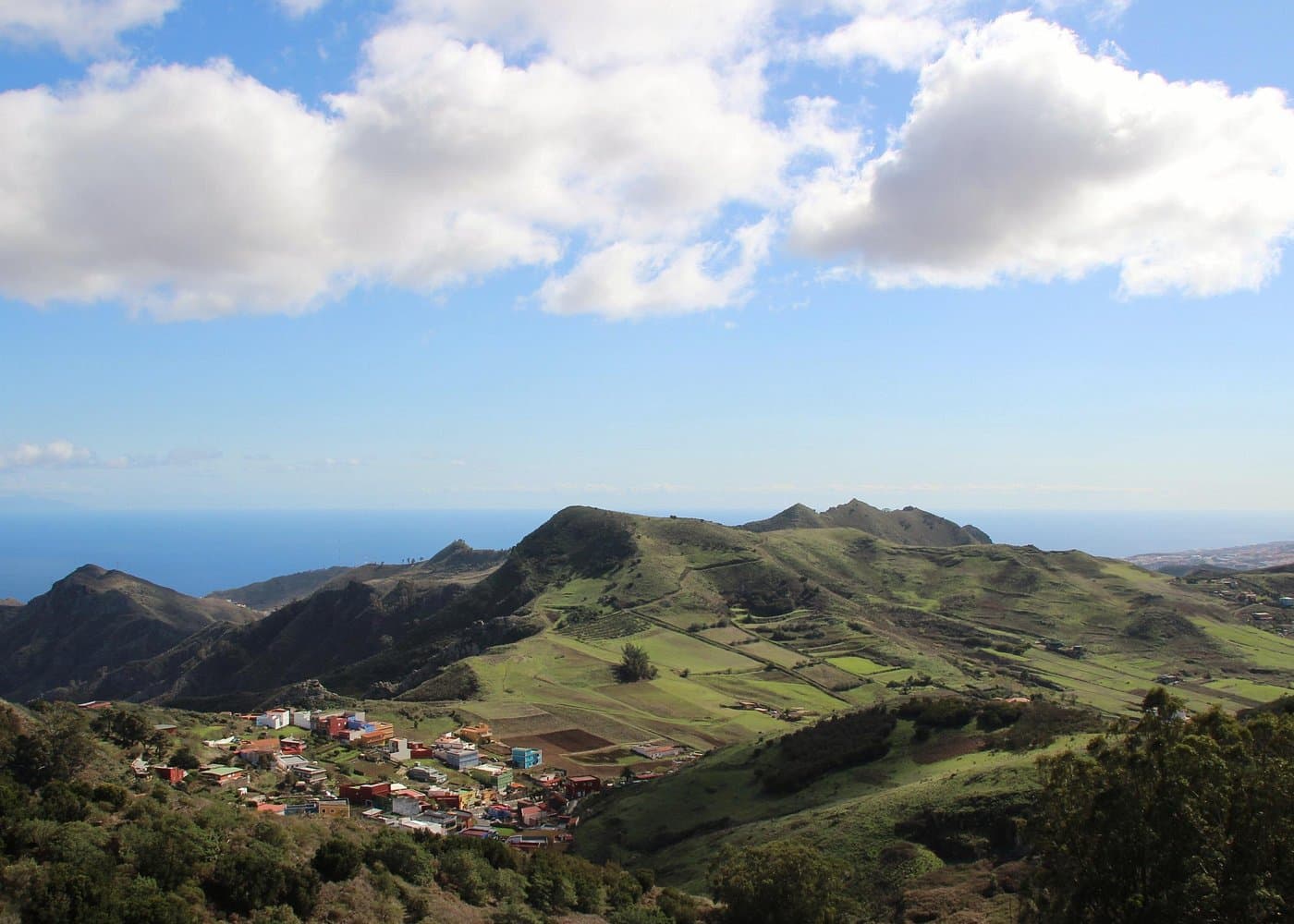
As the classic car leaves the city behind, the scenery gradually becomes greener and more open. Urban streets give way to the Cuban countryside, with hills, vegetation, rural landscapes, and glimpses of the historic mining environment appearing along the route.
The approximately 40-minute journey is part of the experience.
Instead of treating transportation as simply a way to reach the next attraction, this tour allows you to enjoy the journey itself. Sitting in an elegant vintage car, watching the Santiago de Cuba landscape change around you, creates a nostalgic feeling that perfectly matches the historic character of the destination.
Then El Cobre appears.
This is where the journey becomes more than sightseeing.
It becomes a story about people, freedom, faith, and identity.
Your adventure begins at Plaza de Marte, one of the recognizable central meeting points in Santiago de Cuba.
Here, you will meet your professional guide and board a classic vintage car for the journey toward El Cobre.
The choice of transportation adds an unmistakable Cuban character to the experience.
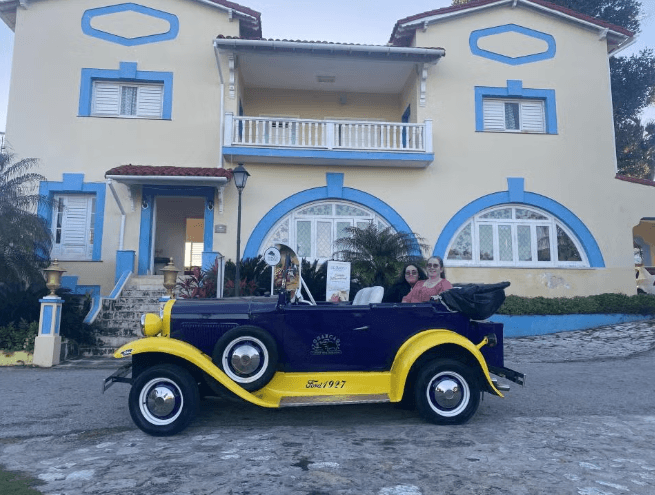
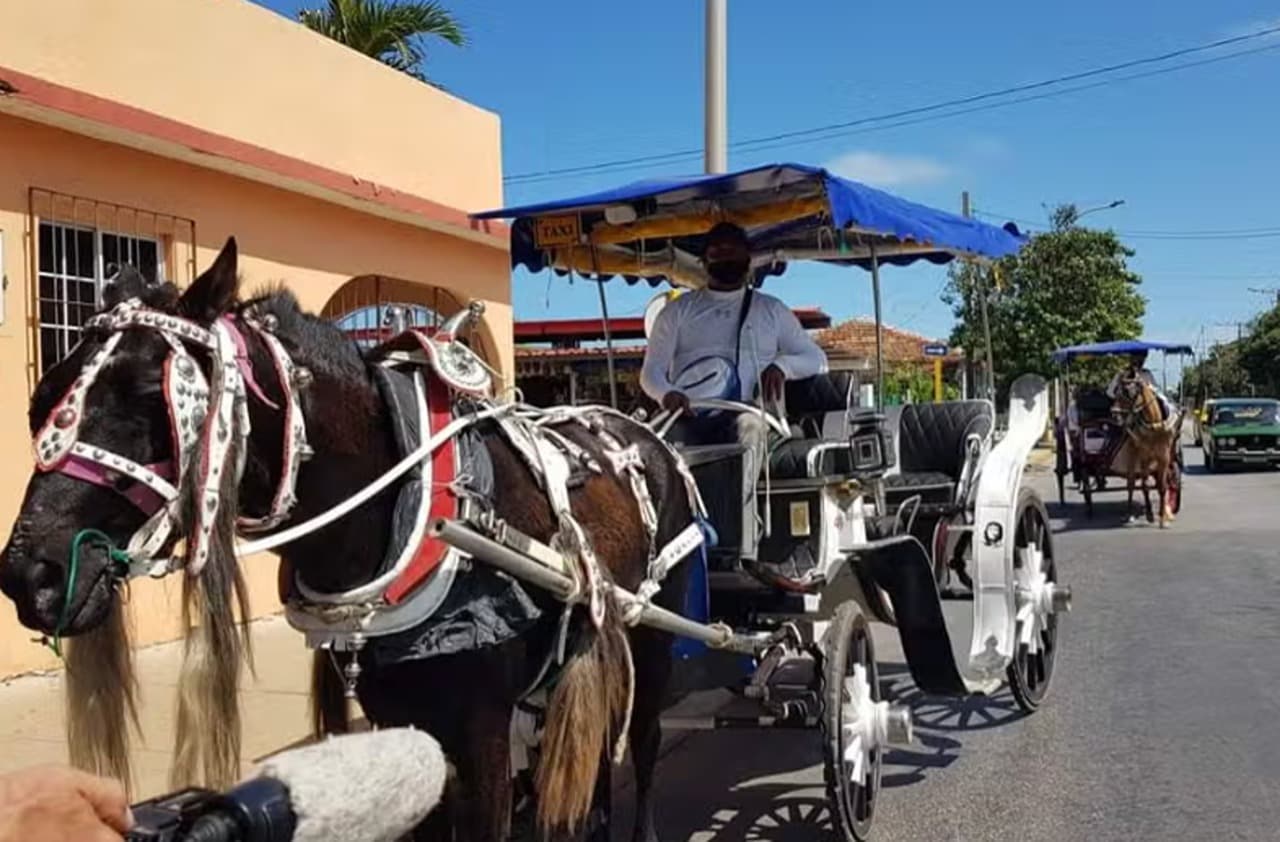
Classic cars are closely associated with the island's visual identity, and traveling through the countryside in a beautifully maintained vintage vehicle makes the journey feel almost like stepping into another era.
As the car moves away from Santiago de Cuba, you can settle back and enjoy the changing scenery.
The experience is intentionally relaxed.
There is no need to worry about navigating unfamiliar roads, organizing separate transportation, or trying to understand the historical significance of the places you pass along the way.
Your guide is there to provide context, answer questions, and help you understand what makes El Cobre such an important destination.
For travelers interested in photography, the drive also creates opportunities to observe the changing landscape between the city and the countryside.
The journey becomes a gentle transition from modern Santiago de Cuba into a community shaped by centuries of history.
To understand the significance of the Cimarrón Monument and El Cobre Sanctuary, it helps to understand the layers of history found in this area.
El Cobre developed around mining, and copper became an important part of the area's history during the colonial period. At the same time, the mining economy was connected to forced labor and slavery.
The story of the cimarrones—enslaved people who escaped bondage and resisted oppression—is therefore an essential part of El Cobre's historical identity.
The El Cobre Cultural Landscape is included on Cuba's UNESCO Tentative List as part of the country's proposed Sites of Memory of Slavery. UNESCO specifically identifies El Cobre as a place associated with the history of mining, early slave resistance, and the religious traditions surrounding the Virgin of Charity.
This historical complexity is one of the reasons the destination feels so powerful.
El Cobre is not defined by a single story.
It represents resistance and remembrance.
It represents religious devotion.
It represents Afro-Cuban cultural heritage.
It represents mining history.
And it represents the continuing relationship between Cuba's past and its present.
The tour gives travelers an opportunity to encounter these stories in the landscape where they unfolded.
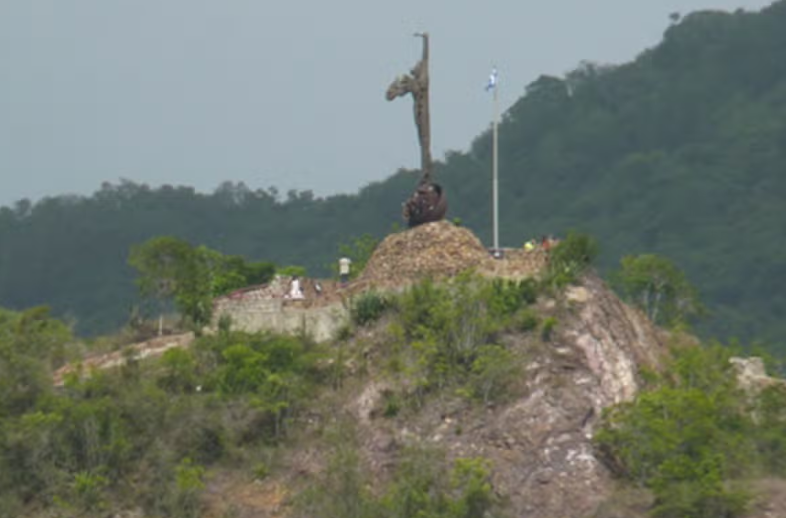
One of the most powerful moments of the tour is your visit to the Cimarrón Monument, a striking sculpture dedicated to the history of resistance by escaped enslaved people.
Created by Cuban artist Alberto Lescay, the monument stands on a hill overlooking the El Cobre area. The sculpture's dramatic form and elevated position make it both a historical memorial and an important visual landmark.
The monument commemorates the legacy of the cimarrones—enslaved people who escaped and sought freedom.
For visitors, standing before the monument provides a moment to reflect on a difficult but essential chapter of Cuban history.
This is not simply a sculpture to photograph.
It represents people who resisted a system that denied them freedom.
It represents courage under extraordinary circumstances.
And it forms part of a wider story about the African roots of Cuban culture and the historical struggles that helped shape the island.
The word cimarrón is associated with enslaved people who escaped from bondage and sought freedom.
In Cuba, the history of cimarronaje forms an important part of the island's wider history of resistance.
El Cobre is particularly significant because of its connection to mining and enslaved labor. The area's historical landscape preserves memories of those who worked under difficult conditions and those who resisted.
As you explore the monument with your guide, you have the opportunity to learn more about the historical circumstances surrounding the site.
Rather than simply presenting dates and names, the experience encourages travelers to consider the human stories behind the landscape.
What did freedom mean to someone who had been denied it?
What risks did people face when escaping?
How did communities of resistance develop?
How did African heritage influence Cuban culture?
These questions give the monument a deeper meaning.
The result is a cultural experience that encourages reflection rather than simply sightseeing.
The location of the Cimarrón Monument adds another dimension to the experience.
Positioned on elevated ground, the monument provides expansive views across the surrounding landscape.
Green hills stretch toward the horizon.
The historic mining area becomes part of the scenery.
The landscape appears peaceful today, creating a striking contrast with the difficult history associated with the area.
This combination of beauty and memory is one of the most memorable characteristics of the tour.
You can take photographs of the monument and surrounding scenery while listening to your guide explain the site's significance.
For travelers interested in landscape photography, cultural photography, or historical travel, this is an especially rewarding stop.
The elevated viewpoint also helps you appreciate why the location has such a strong visual presence within El Cobre.
One of the most meaningful aspects of visiting El Cobre is realizing that the landscape itself is part of the story.
The mountains are not simply beautiful scenery.
The mine is not simply an old industrial feature.
The monument is not simply a sculpture.
The sanctuary is not simply a church.
Together, they form a cultural landscape where several centuries of Cuban history can be experienced in one place.
This is what makes the Cimarrón Monument and El Cobre Sanctuary Tour different from an ordinary sightseeing trip.
The tour encourages you to look beyond individual attractions and understand how they connect.
The monument tells a story of resistance.
The mining landscape tells a story of labor and colonial development.
The sanctuary tells a story of faith.
The town tells a story of community and daily life.
And your journey between them creates a continuous narrative through the countryside of Santiago de Cuba.
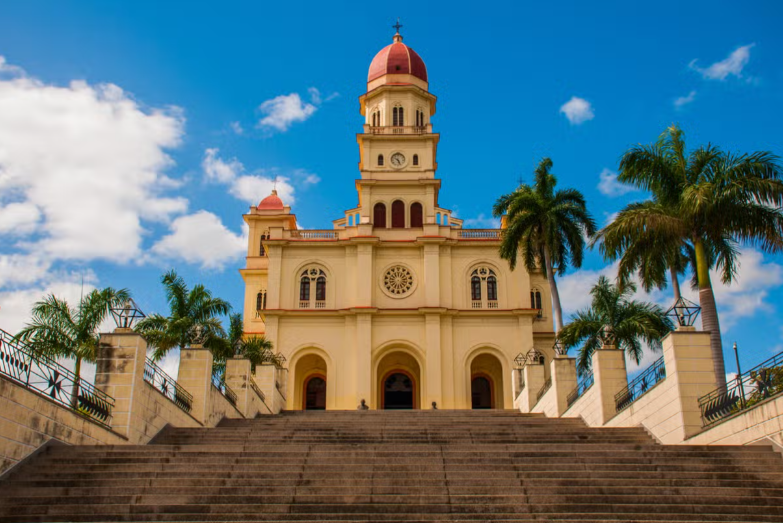
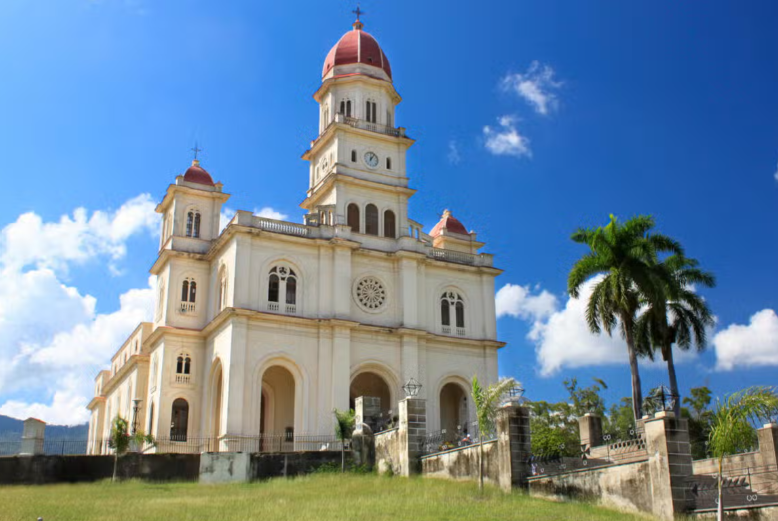
After exploring the Cimarrón Monument, the tour continues to one of the most important religious landmarks in Cuba: the Basílica Santuario Nacional de Nuestra Señora de la Caridad del Cobre, or National Basilica Sanctuary of Our Lady of Charity of El Cobre.
For many travelers, this is the emotional center of the experience.
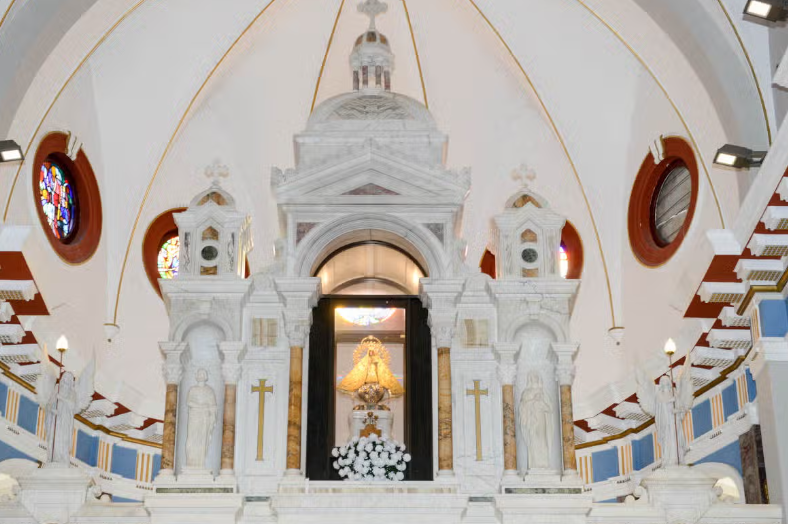
The sanctuary is dedicated to Our Lady of Charity, widely known as the patroness of Cuba.
The importance of the sanctuary extends beyond the Catholic community. The Virgin of Charity has become deeply connected with Cuban cultural identity, and the shrine represents a place where religious devotion, national identity, family traditions, and Afro-Cuban influences intersect.
The Vatican has described the shrine as a place where Mary is venerated as the Mother of Charity and emphasized its importance to the roots and identity of the Cuban people.
As you approach the sanctuary, the atmosphere changes.
The dramatic history of the Cimarrón Monument gives way to a quieter and more contemplative environment.
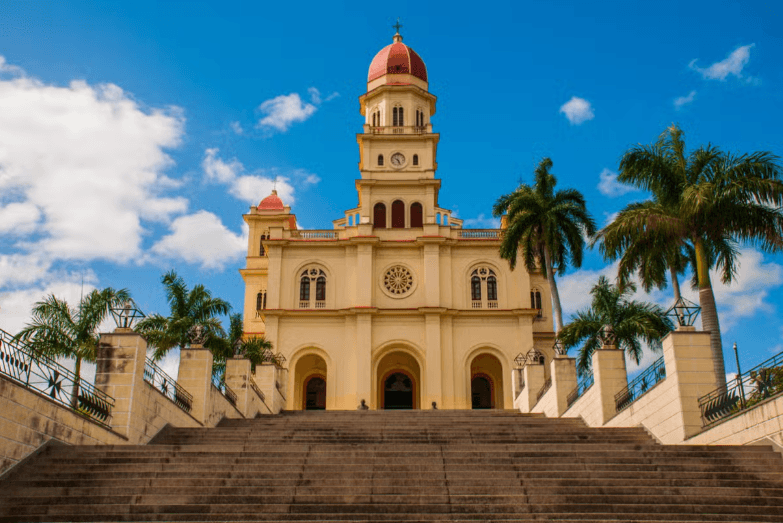
Reaching the basilica involves ascending approximately 254 steps.
For many visitors, the climb becomes part of the experience rather than simply a practical necessity.
With every step, the sanctuary gradually comes into view.
The climb also offers opportunities to pause, take photographs, appreciate the surrounding scenery, and prepare for the peaceful atmosphere inside the basilica.
Because the tour includes this significant stairway, comfortable walking shoes are essential.
Travelers should also consider the local weather when planning what to wear, particularly during warmer parts of the day.
The climb may feel challenging for some visitors, but reaching the sanctuary provides a rewarding sense of arrival.
At the top, the surrounding landscape opens up and the basilica becomes an impressive focal point.
Inside the sanctuary, your guide will help you understand why this location occupies such an important place in Cuban religious and cultural life.
The Virgin of Charity is not simply a religious figure for many Cubans.
She is a powerful national symbol.
The Vatican records that Our Lady of Charity was proclaimed Patroness of Cuba in 1916, reflecting the depth of devotion associated with her among Cubans.
The shrine has also welcomed major religious figures.
Pope Benedict XVI visited the Shrine of Our Lady of Charity in 2012, and Pope Francis visited the shrine during his 2015 apostolic journey to Cuba. Pope Francis celebrated Mass at the Minor Basilica of the Shrine of the Virgin of Charity of El Cobre on September 22, 2015.
Knowing this history adds another layer of significance to your visit.
You are not simply entering a beautiful religious building.
You are entering a place that has played an important role in Cuba's spiritual and cultural history.
For generations of Cubans, the Virgin of Charity has represented hope, protection, faith, and perseverance.
The sanctuary remains a place where visitors come to pray, reflect, give thanks, seek comfort, and honor personal traditions.
Even travelers who are not religious can appreciate the cultural significance of the site.
Religious landmarks often reveal something important about the people who built, maintained, and visited them.
In El Cobre, the sanctuary offers a window into Cuban identity.
It shows how faith can become intertwined with national history.
It also demonstrates how traditions can survive and evolve across generations.
The experience is therefore not limited to religious tourism.
It is equally relevant to travelers interested in Cuban culture, history, architecture, heritage, anthropology, photography, and local traditions.
The spiritual significance of El Cobre is especially interesting because the area's cultural history includes both Catholic devotion and Afro-Cuban traditions.
UNESCO's description of the El Cobre Cultural Landscape recognizes the site's importance to Cuban religious life as well as the influence of Afro-Cuban traditions connected with the Virgin of Charity.
This creates a fascinating cultural intersection.
The sanctuary represents Catholic devotion.
The surrounding historical landscape recalls the African heritage of many communities.
The Cimarrón Monument honors resistance.
The former mining landscape recalls labor and colonial history.
Together, these elements provide a more complete understanding of Cuban culture than any single attraction could offer.
For culturally curious travelers, this is one of the greatest strengths of the experience.
Before returning to Santiago de Cuba, you will have time for a short guided walk through El Cobre.
This part of the experience provides a welcome change of pace.
After visiting major historical and religious landmarks, you can observe the rhythm of everyday life in the town itself.
Walk through local streets.
Look at the surrounding buildings.
Observe residents going about their day.
Notice the relationship between the town and the surrounding hills.
Take photographs.
Listen to your guide.
And simply absorb the atmosphere.
Travelers often remember these quieter moments because they provide a sense of place that major attractions alone cannot create.
A destination is more than its monuments.
It is also the people who live there.
The sounds of daily life.
The streets people walk every day.
The buildings that have witnessed generations.
The landscape that surrounds the community.
The small details that would be easy to miss when traveling independently.
The guided walk through El Cobre gives you the opportunity to slow down and notice these details.
Rather than rushing from one attraction to another, you can experience the town as a living community.
This makes the excursion feel more personal and authentic.
The name El Cobre itself is closely associated with copper mining, and the area's historic mining heritage remains an important part of its identity.
The landscape around the community combines natural beauty with evidence of its industrial past.
From elevated viewpoints, you can appreciate the contrast between the green Cuban countryside and the historic mining environment.
The result is a landscape that feels both beautiful and thought-provoking.
It reminds visitors that natural resources have shaped communities for centuries.
It also highlights how economic development, colonial history, forced labor, resistance, and cultural change can all become connected within one geographic area.
For travelers interested in heritage tourism, El Cobre offers a particularly rich experience because these themes are visible in the landscape itself.
Although the tour focuses heavily on history and culture, nature is never far away.
The elevated areas around El Cobre provide beautiful views of the surrounding green mountains and historic mining landscape.
The scenery offers a peaceful contrast to the emotional weight of the historical sites.
Bring your camera or smartphone because there are plenty of opportunities to capture the character of the area.
Photographs of the Cimarrón Monument against the Cuban countryside can be especially striking.
So can wider panoramic views showing the relationship between El Cobre, the hills, and the historic mine.
These are the kinds of images that help you remember not only what you saw, but how the destination felt.
The vintage car is more than a convenient way to travel.
It contributes to the character of the entire excursion.
Imagine beginning your morning or afternoon in Santiago de Cuba, meeting your guide at Plaza de Marte, and then setting off toward the countryside in a classic vehicle.
The city gradually disappears behind you.
The roads become quieter.
The landscape becomes greener.
The destination draws closer.
The classic car creates a nostalgic atmosphere that fits naturally with a destination defined by history.
For many travelers, the journey itself becomes one of the highlights.
It is a chance to slow down and enjoy the road instead of treating transportation as something to rush through.
With a total duration of approximately 4 hours, this tour is designed for travelers who want a meaningful cultural excursion without committing an entire day.
The experience brings together several different activities:
The result is a compact but immersive introduction to one of the most historically significant areas near Santiago de Cuba.
There are many ways to explore Cuba.
You can spend your days visiting beaches.
You can explore colonial architecture.
You can discover music and nightlife.
You can enjoy traditional cuisine.
But cultural travel offers another kind of reward.
It allows you to understand the stories behind the destination.
The Cimarrón Monument and El Cobre Sanctuary Tour from Santiago de Cuba is designed for travelers who want exactly that.
It connects the past with the present.
It combines difficult history with enduring faith.
It places natural beauty alongside cultural heritage.
And it introduces visitors to a community whose importance reaches far beyond its size.
The most memorable feature of this experience is the contrast between its two central attractions.
At the Cimarrón Monument, the focus is resistance.
You learn about people who escaped enslavement and fought for freedom.
You stand in a landscape connected to mining and colonial history.
You see a monument created to preserve memory.
Then, at the El Cobre Sanctuary, the atmosphere changes.
The focus becomes faith.
You enter a sacred space associated with Our Lady of Charity.
You learn about a religious tradition deeply embedded in Cuban identity.
You experience a quieter, more reflective side of the destination.
Together, these places reveal different aspects of Cuba's historical journey.
That is why the tour feels more complete than a simple monument visit or church tour.
It tells a broader story.
This experience is particularly well suited to travelers who enjoy discovering the meaning behind a destination.
It is an excellent choice for:
If you enjoy learning about colonial history, slavery, resistance, mining, and Cuban heritage, the Cimarrón Monument and El Cobre Cultural Landscape provide fascinating subjects to explore.
The tour offers opportunities to experience local traditions, community life, historical memory, and Cuban identity in an authentic setting.
Visitors interested in Catholic heritage or pilgrimage destinations will appreciate the importance of the National Basilica Sanctuary of Our Lady of Charity of El Cobre.
The classic car, mountain landscapes, monument, basilica, and historic town create varied photography opportunities throughout the experience.
The scenic journey, cultural discoveries, and peaceful sanctuary visit create a memorable experience for couples seeking something beyond conventional sightseeing.
With professional guidance and organized transportation, solo travelers can explore the area comfortably while gaining deeper insight into the destination.
If this is your first visit to Santiago de Cuba, the tour provides a valuable introduction to the wider region and some of the historical forces that shaped it.
A knowledgeable guide can transform a visit from a series of attractions into a meaningful story.
That is why this tour includes a professional guide speaking English and Spanish.
Instead of simply arriving at the Cimarrón Monument, taking a few pictures, and leaving, you can learn why the monument exists and what it represents.
Instead of entering the El Cobre Sanctuary without context, you can understand its place within Cuban religious and cultural history.
Instead of passing through the town without noticing its significance, you can learn more about El Cobre and its relationship with the surrounding landscape.
The guide helps connect the pieces.
And those connections are what make the experience memorable.
Travelers today increasingly look for experiences that offer more than photographs.
They want meaningful encounters.
They want to understand local communities.
They want to learn about history from people who know the destination.
They want experiences that feel authentic rather than manufactured.
The Cimarrón Monument and El Cobre Sanctuary Tour responds to that desire by focusing on heritage, history, spirituality, and local atmosphere.
It does not ask you to simply observe Cuba.
It invites you to understand it.
Because this tour combines outdoor sightseeing, walking, stairs, cultural exploration, and a sanctuary visit, a few simple preparations can make your experience much more comfortable.
This is one of the most important things to bring.
The visit to the sanctuary includes approximately 254 steps, while the monument and town exploration involve walking.
Choose comfortable shoes with good support.
Avoid footwear that becomes uncomfortable after extended walking.
The Cuban sun can be strong, especially when spending time outdoors.
Bring:
Sun protection is particularly useful during the outdoor portions of the tour.
Staying hydrated is important, particularly during warm weather.
Bring bottled water so you can remain comfortable throughout the excursion.
The tour provides several memorable photography opportunities.
You may want to photograph:
A fully charged phone is recommended if you plan to use your smartphone as your primary camera.
Because the El Cobre Sanctuary is a religious site, visitors should dress respectfully.
Modest clothing is recommended when entering the basilica.
This is both a practical consideration and a way to show respect for worshippers and the spiritual importance of the site.
Perhaps the most compelling way to understand this experience is as a journey through two powerful human themes: the search for freedom and the search for hope.
At the Cimarrón Monument, you encounter the memory of people who sought freedom under oppressive conditions.
At the sanctuary, you encounter generations of people who have turned toward faith, devotion, and hope.
These stories may seem very different at first.
But together they reveal something fundamental about human resilience.
People endure.
People resist.
People remember.
People believe.
People build communities.
And people preserve their stories for future generations.
This is what gives the El Cobre experience its emotional depth.
Santiago de Cuba is one of the most culturally significant destinations in the Caribbean, and its surrounding region offers countless opportunities for exploration.
Yet some of the most meaningful experiences are found outside the busiest urban areas.
Traveling from Santiago de Cuba to El Cobre allows you to see how the city connects with the wider region.
The countryside becomes part of the story.
The mountains become part of the story.
The historic mining landscape becomes part of the story.
And El Cobre itself becomes a destination rather than simply a stop.
For visitors who want to understand eastern Cuba more deeply, this excursion is an excellent addition to a Santiago de Cuba itinerary.
The Cimarrón Monument and El Cobre Sanctuary Tour is not designed simply to fill four hours.
It is designed to leave you with a better understanding of Cuba.
You may arrive curious about the monument.
You may leave thinking about freedom.
You may arrive interested in the sanctuary.
You may leave with a greater appreciation for Cuban spirituality.
You may arrive looking for beautiful photographs.
You may leave remembering the stories behind them.
That transformation—from seeing to understanding—is what makes cultural travel so rewarding.
Long after the classic car returns you to Santiago de Cuba, individual moments from the journey may remain with you.
The first glimpse of the green hills.
The unusual shape of the Cimarrón Monument.
The panoramic view over the historic mining landscape.
The climb toward the sanctuary.
The quiet atmosphere inside the basilica.
The symbolism of the Virgin of Charity.
The everyday rhythm of El Cobre's streets.
The stories shared by your guide.
Together, these details create a much richer memory than a standard sightseeing checklist.
You do not simply remember where you went.
You remember what you learned.
You remember how the destination made you feel.
And you remember the people and stories connected to it.
From the moment you meet your guide at Plaza de Marte, this experience is designed to combine convenience with cultural depth.
Your transportation is arranged.
Your guide accompanies you.
The major historical and cultural sites are included.
The journey is structured.
And the experience remains focused on the destination rather than logistical complications.
With a starting price of $39.24 USD, this four-hour excursion offers travelers an accessible way to explore one of the most distinctive cultural landscapes near Santiago de Cuba.
Whether you are passionate about history, fascinated by Cuban spirituality, interested in Afro-Cuban heritage, or simply looking for an unusual experience beyond the city center, the tour offers something meaningful.
There are places that you visit for the view.
There are places that you visit for the architecture.
There are places that you visit for the history.
And then there are places where all three come together.
El Cobre is one of those places.
Here, the landscape carries memories.
The monument carries a message.
The sanctuary carries faith.
The town carries daily life.
And the road connecting Santiago de Cuba to El Cobre gives you time to absorb it all.
The Cimarrón Monument and El Cobre Sanctuary Tour offers a rare opportunity to experience this remarkable combination in a single guided excursion.
Travel through the Cuban countryside in a classic car.
Stand before a monument dedicated to resistance and freedom.
Look across the historic landscape from the hills of El Cobre.
Climb toward one of Cuba's most important religious sanctuaries.
Learn about Our Lady of Charity and her profound importance to Cuban identity.
Walk through the streets of El Cobre.
And return to Santiago de Cuba carrying a deeper understanding of the island's history and culture.
If you are searching for a cultural tour from Santiago de Cuba, a meaningful El Cobre excursion, or a unique way to discover Cuban history and spirituality, this four-hour experience is an excellent choice.
The journey combines the historical significance of the Cimarrón Monument with the spiritual importance of the El Cobre Sanctuary, while the classic vintage car adds an unforgettable Cuban touch.
Meet your guide at Plaza de Marte in Santiago de Cuba, leave the city behind, and travel into a landscape where centuries of Cuban history remain visible.
Discover the story of resistance.
Experience the serenity of the sanctuary.
Meet the character of El Cobre.
Admire the mountains.
Explore the historic landscape.
And experience a side of Cuba that deserves to be understood, not simply photographed.
Reserve your Cimarrón Monument and El Cobre Sanctuary Tour and discover the history, faith, resilience, and cultural heritage that make El Cobre one of the most fascinating destinations near Santiago de Cuba.
The journey from Santiago de Cuba to El Cobre is short in distance but remarkably rich in history.
Within a few hours, this experience takes you through landscapes connected to mining and colonial history, introduces you to the legacy of resistance represented by the Cimarrón Monument, and brings you to one of Cuba's most important religious destinations.
The Cimarrón Monument and El Cobre Sanctuary Tour is designed to make those connections easy to understand.
You do not need to be an expert in Cuban history.
You do not need extensive knowledge of Catholic traditions.
You do not need to organize complicated transportation.
Your professional guide provides the historical and cultural context while your classic vintage car takes you between Santiago de Cuba and El Cobre.
The result is a relaxed but meaningful excursion that combines sightseeing with storytelling.
Your experience begins at Plaza de Marte in Santiago de Cuba.
This central meeting point provides a convenient starting location for the excursion. Here, you will meet your professional English- and Spanish-speaking guide and prepare to leave the city behind.
Before departing, make sure you have everything you need for the outing, particularly comfortable shoes, water, sun protection, and your camera.
Once everyone is ready, you will board the classic vintage car.
The character of the vehicle immediately sets the mood for the experience.
Rather than beginning with an ordinary transfer, your journey starts with a distinctly Cuban travel experience.
The drive to El Cobre takes approximately 40 minutes, depending on traffic and road conditions.
As Santiago de Cuba gradually disappears behind you, the surroundings become increasingly rural.
This is your opportunity to relax and watch the scenery.
The drive is also an important transition in the story of the tour.
You are leaving one of eastern Cuba's major urban centers and heading toward a historic community whose identity is deeply connected with copper mining, resistance, religion, and Cuban cultural heritage.
The classic car makes the journey particularly memorable.
Instead of focusing only on reaching the destination, you can enjoy the road itself.
Upon reaching El Cobre, the atmosphere changes.
The surrounding hills and greenery provide a strong contrast to the urban environment of Santiago de Cuba.
Your guide introduces you to the historical importance of the area before continuing to the first major attraction.
El Cobre's history is closely associated with copper mining and the people who worked in this difficult environment.
The community also became an important center of religious devotion, eventually becoming home to the sanctuary dedicated to Our Lady of Charity.
This combination of mining history, resistance, spirituality, and community life is what gives El Cobre its distinctive character.
The first major cultural stop is the Cimarrón Monument, a powerful memorial associated with the history of enslaved people who escaped bondage and sought freedom.
Created by Cuban artist Alberto Lescay, the monument provides a striking physical representation of resistance.
Your guide explains the historical meaning behind the monument and its relationship to El Cobre.
This is an important moment to slow down.
Look closely at the sculpture.
Observe its setting.
Listen to the historical interpretation.
Then take time to appreciate the surrounding scenery.
The experience is not simply about seeing a monument.
It is about understanding why the monument exists and why its message remains relevant.
The history represented by the monument is difficult, but it is essential to understanding Cuba.
Enslaved Africans were brought to Cuba as part of the colonial labor system, including labor associated with mining.
Some resisted enslavement by escaping and establishing communities away from direct control.
These people became known as cimarrones.
Their history forms part of a much broader story of resistance throughout the Caribbean and the Americas.
At El Cobre, this history becomes particularly tangible because it is connected directly to the landscape around you.
Your guide helps transform an abstract historical concept into something connected to a real place.
This is one of the strongest educational aspects of the excursion.
After learning about the monument, take a moment to appreciate the view.
The elevated position provides an impressive perspective over the surrounding landscape.
Green mountains and hills create a dramatic backdrop.
The historic mining environment adds another layer to the scenery.
It is a reminder that beautiful landscapes can also contain complicated histories.
This viewpoint is an excellent place for photographs.
Try taking both wide landscape photographs and closer images of the monument.
If conditions are clear, the surrounding scenery can provide some of the most memorable photographs of the excursion.
After the Cimarrón Monument, the tour continues to the National Basilica Sanctuary of Our Lady of Charity of El Cobre.
This is the spiritual centerpiece of the excursion.
The sanctuary is dedicated to Our Lady of Charity, the patroness of Cuba.
The importance of the Virgin extends well beyond the walls of the basilica.
The Vatican notes that Our Lady of Charity was proclaimed Patroness of Cuba in 1916, and Pope Francis emphasized the shrine's connection with Cuban roots and identity during his 2015 visit.
For many visitors, learning this history changes the way they experience the sanctuary.
The building becomes more than an architectural attraction.
It becomes a symbol of Cuban faith and identity.
Reaching the sanctuary requires climbing approximately 254 steps.
The climb is an important practical consideration when planning your visit.
Comfortable shoes are strongly recommended.
Take your time.
There is no need to rush.
You can pause when necessary and enjoy the scenery along the way.
For travelers who enjoy photography, the ascent can also provide interesting perspectives of the surrounding landscape and the sanctuary.
Once you reach the top, the effort is rewarded with the impressive presence of the basilica and the atmosphere surrounding this important pilgrimage destination.
Inside the sanctuary, your guide introduces you to the history and importance of Our Lady of Charity.
The Virgin has played a profound role in Cuban religious and national life.
Pope Francis described devotion to Our Lady of Charity as deeply connected with the Cuban people and visited the shrine during his 2015 apostolic journey.
His Mass at the sanctuary in September 2015 further demonstrated the site's international religious significance.
For visitors, this history adds depth to the experience.
You can appreciate the sanctuary as a religious site while also understanding it as an important part of Cuba's cultural heritage.
Take a moment to slow down inside the sanctuary.
The atmosphere is different from the outdoor monument.
The Cimarrón Monument encourages reflection on resistance and freedom.
The basilica creates an atmosphere of quiet devotion and contemplation.
This contrast is one of the most powerful elements of the tour.
Whether you are religious or simply interested in culture, sacred places often reveal important information about a society.
The sanctuary shows how generations of Cubans have expressed hope, gratitude, devotion, and national identity.
Our Lady of Charity is closely connected to Cuban identity.
The Vatican has highlighted her role as Patroness of Cuba and described devotion to her as deeply rooted in the country's history.
During his 2015 visit, Pope Francis emphasized the sanctuary's role in preserving memory, roots, and identity.
This helps explain why El Cobre attracts not only religious pilgrims but also travelers interested in Cuban history and culture.
The sanctuary is a place where personal faith and national identity overlap.
That makes it an especially interesting destination for cultural travelers.
After the sanctuary visit, your experience continues with a short guided walk through El Cobre.
This part of the tour provides a closer look at the community itself.
Walk along the streets.
Observe the local surroundings.
Take in the architecture.
Notice how daily life continues around sites of major historical and religious importance.
The walk is intentionally more relaxed.
After the emotional and educational experience of the monument and sanctuary, it provides time to absorb the atmosphere of the town.
One of the advantages of exploring El Cobre with a guide is that you can see the destination as more than a collection of attractions.
The town is a living community.
People work, walk, meet friends, shop, travel, and carry on their daily routines.
Observing these ordinary moments can sometimes be just as memorable as visiting a major monument.
This is where travel becomes more personal.
You are no longer simply checking attractions from a list.
You are experiencing a place.
After exploring El Cobre, it is time to return to Santiago de Cuba.
The classic car once again becomes part of the experience.
The return journey provides a chance to relax after walking, reflect on what you have learned, and watch the Cuban countryside pass by.
For many travelers, the return drive becomes a natural moment to discuss the experience with their guide.
You may find yourself thinking about the contrast between the Cimarrón Monument and the sanctuary.
You may remember the mountain views.
Or you may simply enjoy the final moments of traveling through the Cuban landscape in a classic vehicle.
The tour concludes back in Santiago de Cuba after approximately four hours.
You return having explored one of the region's most distinctive cultural destinations without needing to organize transportation, research the historical sites independently, or navigate the area alone.
The excursion provides a concentrated introduction to:
It is a compact experience with a surprisingly broad story.
Many tours focus on one subject.
This experience brings together two very different but interconnected themes.
The Cimarrón Monument represents resistance and freedom.
The El Cobre Sanctuary represents faith and hope.
Experiencing both creates a more balanced understanding of the destination.
The classic vintage car is one of the defining features of the excursion.
It adds personality to the journey and creates a nostalgic connection with Cuba.
It also eliminates the need to arrange separate transportation to El Cobre.
You can simply meet your guide and enjoy the ride.
Historical sites can be difficult to understand without context.
A professional guide helps explain the meaning behind what you see.
The English- and Spanish-speaking guide can provide information about the monument, sanctuary, town, landscape, and local traditions.
This makes the experience more engaging than an independent visit.
The sanctuary is not simply a religious attraction.
Our Lady of Charity has a profound place in Cuban cultural history.
Pope Francis's 2015 visit highlighted the shrine's importance to Cuban identity and religious devotion.
For visitors who want to understand Cuba on a deeper level, this cultural context is invaluable.
If you are staying in Santiago de Cuba, it is easy to spend your entire trip exploring the city.
But the surrounding region has its own stories.
This excursion gives you the opportunity to leave the urban environment and discover El Cobre's mountain landscape, historic community, and cultural heritage.
Wear lightweight, breathable clothing suitable for walking and warm weather.
The experience includes outdoor sightseeing and a significant number of steps.
Comfort should be a priority.
Good walking shoes are highly recommended.
The 254-step ascent to the sanctuary makes unsuitable footwear particularly uncomfortable.
Choose shoes with good grip and support.
Bring sunscreen, sunglasses, and a hat.
Outdoor portions of the tour can expose you to direct sunlight.
Applying sunscreen before departure is especially useful.
Hydration is important during a warm-weather cultural excursion.
Bring bottled water and drink regularly throughout the journey.
Remember that the sanctuary is an active religious site.
Modest clothing is appropriate and demonstrates respect for people visiting the basilica for worship and prayer.
There are many opportunities for photography.
The classic car alone can make a memorable subject.
You can also capture:
Do not treat the 254-step climb as a race.
Walk at your own pace.
If you need a break, take one.
The experience is more enjoyable when you have time to appreciate the surroundings.
Yes.
Travelers who enjoy walking and cultural exploration will find the experience rewarding.
The tour is not an extreme physical activity, but the combination of outdoor walking and approximately 254 steps means a basic level of mobility is helpful.
If you have difficulty with stairs or extended walking, consider your personal comfort level before booking.
The guide can help you understand the structure of the experience, but guests should be prepared for the physical nature of the sanctuary ascent.
Absolutely.
History is one of the central themes of the excursion.
You will encounter:
The Cimarrón Monument is especially important for travelers interested in slavery and resistance history in the Caribbean.
The sanctuary adds another dimension by demonstrating how religious traditions became intertwined with Cuban identity.
Yes.
The excursion is particularly suitable for people who want to understand a destination rather than simply photograph it.
The combination of guided interpretation, historical sites, religious heritage, local streets, and countryside scenery creates a broad cultural experience.
You are exposed to several different dimensions of Cuba during a single outing.
It is an excellent choice for travelers who enjoy photography.
The experience offers variety.
You have the vintage car for atmospheric photographs.
You have the Cimarrón Monument for dramatic cultural images.
You have mountain scenery for landscape photography.
You have the sanctuary for architectural and religious heritage photography.
You also have the streets of El Cobre for documentary-style images of everyday life.
The changing environments help ensure that your photographs do not all look alike.
The best way to enjoy this tour is to approach it as a cultural journey rather than a checklist.
Listen to your guide.
Ask questions.
Take time at the monument.
Look at the surrounding landscape.
Do not rush the sanctuary visit.
Observe the details inside and around the basilica.
During the town walk, pay attention to everyday life.
And leave enough mental space to reflect on the contrast between the different parts of the experience.
A slower approach usually creates a richer memory.
Instead of arranging separate transportation, historical visits, and a sanctuary excursion, this tour brings everything together.
One booking gives you access to:
This makes planning much easier.
The meeting point is Plaza de Marte in Santiago de Cuba.
Travelers staying in the city can plan around a clear central meeting location.
Always arrive with enough time to meet your guide comfortably.
Four hours is long enough to experience several major attractions while short enough to fit into a wider Santiago de Cuba itinerary.
You can dedicate part of your day to El Cobre and still have time for other activities.
With a starting price of $39.24 USD, the excursion provides a relatively accessible way to experience a significant cultural destination near Santiago de Cuba.
The package combines transportation, guiding, and visits to the principal sites, making it convenient for travelers who prefer an organized cultural experience.
Your tour package includes the key services needed for the experience.
A professional guide accompanies you and provides cultural and historical information throughout the experience.
Travel between Santiago de Cuba and El Cobre in a classic car.
Explore the monument and learn about the history it represents.
Visit the National Basilica Sanctuary of Our Lady of Charity and discover its religious and cultural importance.
Experience the town's local atmosphere and observe everyday life.
Travelers should plan for personal expenses that are not listed as part of the tour inclusions.
Unless otherwise confirmed at booking, budget separately for items such as:
The core experience focuses on transportation, guiding, the scheduled cultural visits, and the town walk.
Perhaps the greatest strength of this excursion is its ability to connect historical events with modern Cuban life.
The Cimarrón Monument reminds visitors of people who fought for freedom.
The mining landscape recalls a difficult colonial past.
The sanctuary demonstrates the continuing strength of religious tradition.
The town shows how people live today.
The classic car connects the journey with Cuba's unmistakable cultural atmosphere.
The result is a layered experience.
You see history.
You see faith.
You see nature.
You see community.
And you see how all these elements continue to coexist.
The tour works because its two central stops are so different.
You encounter:
Resistance.
Freedom.
Memory.
Historical injustice.
Strength.
You encounter:
Faith.
Hope.
Devotion.
Identity.
Reflection.
Experiencing these places during the same excursion encourages travelers to think about the different ways people respond to hardship.
That is a powerful reason to choose this tour.
You do not have to be a specialist in Cuban history to enjoy this experience.
You simply need curiosity.
Curiosity about the people who lived here.
Curiosity about the history of the region.
Curiosity about the meaning of the monument.
Curiosity about why the sanctuary matters so much to Cubans.
Curiosity about the town and its surroundings.
The tour gives you a framework for exploring those questions.
Cultural travel works best when visitors approach historic and religious sites respectfully.
At the Cimarrón Monument, remember that the site represents a painful chapter in human history.
At the sanctuary, remember that it is a sacred place for many visitors.
During the town walk, remember that El Cobre is a real community rather than a theme park.
Simple actions can make a difference:
Travel becomes more rewarding when it is based on mutual respect.
For couples visiting Santiago de Cuba, this experience provides a different kind of shared adventure.
You can travel together through the countryside in a classic car, explore a historic monument, admire mountain scenery, visit the sanctuary, and wander through El Cobre.
The experience creates plenty of opportunities for conversation and shared discovery.
Instead of spending the entire day at a conventional attraction, you experience a story together.
For couples who value culture and meaningful travel, that can become one of the most memorable parts of a Cuba vacation.
Families traveling with older children or teenagers may also appreciate the educational value of the tour.
The Cimarrón Monument can introduce younger travelers to important themes such as freedom, resistance, slavery, and historical memory.
The sanctuary introduces them to Cuban religious and cultural traditions.
The classic car adds an element of fun to the journey.
Parents can use the experience as an opportunity to discuss history while exploring it in person.
Because the tour involves stairs and walking, families should consider the mobility and stamina of younger children before booking.
Solo travelers can benefit from the structure of a guided excursion.
Instead of figuring out transportation to El Cobre independently, you can meet the guide at the designated meeting point and join the planned experience.
The guide also provides a natural source of information and conversation.
For independent travelers who enjoy cultural immersion but prefer organized transportation, this can be an ideal balance.
Travelers often remember destinations because of the emotions they create.
El Cobre has several layers of emotional impact.
The Cimarrón Monument can inspire reflection.
The landscape can create a sense of peace.
The sanctuary can create a feeling of reverence.
The town can provide a glimpse into everyday Cuban life.
And the classic car can make the entire experience feel nostalgic.
These different emotions combine into a journey that is difficult to reduce to a single attraction.
If you are staying in Santiago de Cuba, consider making space in your itinerary for destinations beyond the city center.
The El Cobre excursion offers a chance to see the surrounding countryside and understand the wider cultural landscape of the region.
Rather than returning home knowing only the major sights of Santiago de Cuba, you can also say that you explored El Cobre and experienced one of Cuba's most important religious and historical destinations.
That makes your trip more complete.
The scheduled duration is approximately 4 hours, making it a convenient half-day cultural excursion from Santiago de Cuba.
The meeting point is Plaza de Marte in Santiago de Cuba.
Transportation is included as part of the experience, with travel in a classic vintage car from Santiago de Cuba.
Yes. A professional guide speaking English and Spanish is included.
Yes. The guided visit to the Cimarrón Monument is part of the tour.
Yes. The itinerary includes a guided visit to the sanctuary.
Yes. The tour includes walking at the monument, sanctuary, and town.
Yes. The sanctuary visit includes approximately 254 steps.
Wear comfortable clothing and supportive walking shoes. Modest clothing is recommended for the basilica.
Yes. Bottled water is recommended.
Photography opportunities are available throughout the outdoor portions of the experience. Inside religious areas, follow the sanctuary's current rules and your guide's instructions.
The Cimarrón Monument and El Cobre Sanctuary Tour from Santiago de Cuba offers something that many travelers search for but rarely find in a single excursion: a genuine connection between history, culture, spirituality, scenery, and local life.
You begin in the city.
You travel through the Cuban countryside.
You arrive in historic El Cobre.
You stand before a monument honoring resistance.
You look across a landscape shaped by mining and history.
You climb toward a sanctuary that represents faith and Cuban identity.
You walk through the town.
And you return to Santiago de Cuba with a deeper appreciation for the destination.
The experience is only four hours long, but the stories extend across centuries.
If your Santiago de Cuba itinerary deserves more than conventional sightseeing, make time for El Cobre.
Travel in a classic vintage car.
Discover the story of the cimarrones.
Visit the striking Cimarrón Monument.
Admire the surrounding Cuban mountains.
Explore the National Basilica Sanctuary of Our Lady of Charity.
Learn why the Virgin of Charity holds such an important place in Cuban identity.
Walk through the historic town of El Cobre.
And experience the powerful contrast between resistance, remembrance, faith, and hope.
With professional guiding, classic-car transportation, cultural visits, and a convenient four-hour format, this excursion makes it easy to discover one of eastern Cuba's most fascinating destinations.
Starting from $39.24 USD, reserve your Cimarrón Monument and El Cobre Sanctuary Tour and turn your Santiago de Cuba visit into a deeper journey through Cuban history, spirituality, and cultural heritage.
Your journey to El Cobre is more than a trip outside the city.
It is a journey into the stories that helped shape Cuba.
The tour lasts approximately 4 hours. It is designed as a convenient cultural excursion from Santiago de Cuba, giving travelers enough time to visit the Cimarrón Monument, explore the El Cobre Sanctuary, enjoy the surrounding scenery, and take a guided walk through the town of El Cobre before returning to Santiago de Cuba.
The tour begins at Plaza de Marte in Santiago de Cuba. This is the designated meeting point where travelers meet their professional guide before boarding the classic vintage car for the journey to El Cobre.
The drive from Santiago de Cuba to El Cobre takes approximately 40 minutes under normal conditions. The journey is part of the experience, with travelers traveling through the Cuban countryside in a classic vintage car.
The experience includes a guided visit to the Cimarrón Monument, a visit to the National Basilica Sanctuary of Our Lady of Charity of El Cobre, panoramic views of the surrounding landscape, and a guided walk through the historic town of El Cobre.
The Cimarrón Monument is a significant memorial in El Cobre dedicated to the history of cimarrones, enslaved people who escaped bondage and sought freedom. The monument was created by Cuban artist Alberto Lescay and stands in a dramatic elevated setting overlooking the surrounding landscape.
The National Basilica Sanctuary of Our Lady of Charity of El Cobre is one of Cuba's most important religious and cultural landmarks. It is dedicated to Our Lady of Charity, who is regarded as the patroness of Cuba. The sanctuary has deep significance for Cuban religious devotion and national identity.
Yes. Our Lady of Charity, also known as the Virgin of Charity of El Cobre, has a particularly important place in Cuban religious and cultural life. She was proclaimed Patroness of Cuba in 1916, and the sanctuary has remained an important destination for pilgrims and visitors.
Yes. Transportation between Santiago de Cuba and El Cobre is included in the experience. Travelers journey in a classic vintage car, adding a distinctive Cuban character to the excursion.
Yes. The tour includes a professional guide who speaks English and Spanish. The guide provides historical and cultural information throughout the experience and helps travelers understand the significance of the monument, sanctuary, town, and surrounding landscape.
The itinerary involves climbing approximately 254 steps to reach the sanctuary. Travelers should wear comfortable walking shoes and take the ascent at a comfortable pace.
The tour can be suitable for active seniors who are comfortable with walking and stairs, but the approximately 254-step ascent to the sanctuary should be considered carefully. Travelers with limited mobility should assess whether the walking and stairs are appropriate for their individual needs before booking.
The experience can be interesting for families, particularly children and teenagers who enjoy history, culture, and sightseeing. However, families should consider the walking involved and the 254 steps at the sanctuary. The suitability of the tour for very young children may depend on their ability to manage the walking and stairs comfortably.
Lunch is not listed among the included services. The advertised inclusions focus on the professional guide, classic vintage car transportation, guided visits to the Cimarrón Monument and El Cobre Sanctuary, and the town walk.
Travelers should plan separately for meals or personal refreshments unless otherwise confirmed when booking.
Yes. Bottled water is recommended. The excursion includes outdoor sightseeing and walking, and staying hydrated is particularly important in Cuba's warm climate.
Wear comfortable, lightweight clothing and supportive walking shoes. Sun protection such as a hat, sunglasses, and sunscreen is recommended.
Because the itinerary includes a visit to a religious sanctuary, travelers should also wear modest clothing appropriate for entering a basilica.
There are many excellent opportunities for photography, including the classic vintage car, Cuban countryside, Cimarrón Monument, surrounding mountains, historic mining landscape, basilica exterior, and El Cobre town.
Inside the sanctuary, follow any photography restrictions in effect and respect religious services and worshippers.
The tour includes outdoor portions, so weather can affect the experience. Light rain may not necessarily prevent sightseeing, but conditions can change and access or activities may be adjusted when necessary for safety.
Travelers should bring suitable protection for changing weather and follow the guide's instructions during the excursion.
Bathroom availability can vary by stop and current operating conditions. Travelers should use available facilities before departure when possible and ask the guide about suitable restroom opportunities during the excursion.
Because the itinerary includes a rural destination and outdoor sightseeing, it is advisable not to rely on continuous restroom access.
El Cobre offers a rare combination of history, spirituality, Afro-Cuban heritage, mining history, scenic landscapes, and local culture.
The Cimarrón Monument and El Cobre Sanctuary provide two very different perspectives on Cuban history, making the excursion particularly valuable for travelers who want to understand more about the country's cultural identity.
Yes. History is one of the central themes of the experience. The excursion introduces travelers to the history of copper mining, enslaved labor, resistance, cimarronaje, religious traditions, and Cuban cultural identity.
The professional guide provides additional context, helping visitors understand the significance of the places they see.
Después de completar su reserva, nuestro equipo se comunicará con usted un día antes de su recorrido para confirmar la hora exacta de recogida en su hotel / Airbnb o el punto de encuentro.
Si seleccionó un punto de encuentro durante su reserva, tenga en cuenta que su reserva está completamente confirmada; simplemente llegue al lugar elegido a la hora programada.
Asegúrese de que el número de WhatsApp, el número de teléfono o el correo electrónico que ingresó durante la reserva sean correctos para que podamos comunicarnos con usted sin problemas.
Para cualquier cambio en su reserva, preguntas sobre el clima o solicitudes especiales, no dude en contactarnos:
¡Esperamos darle la bienvenida! 🌴✨