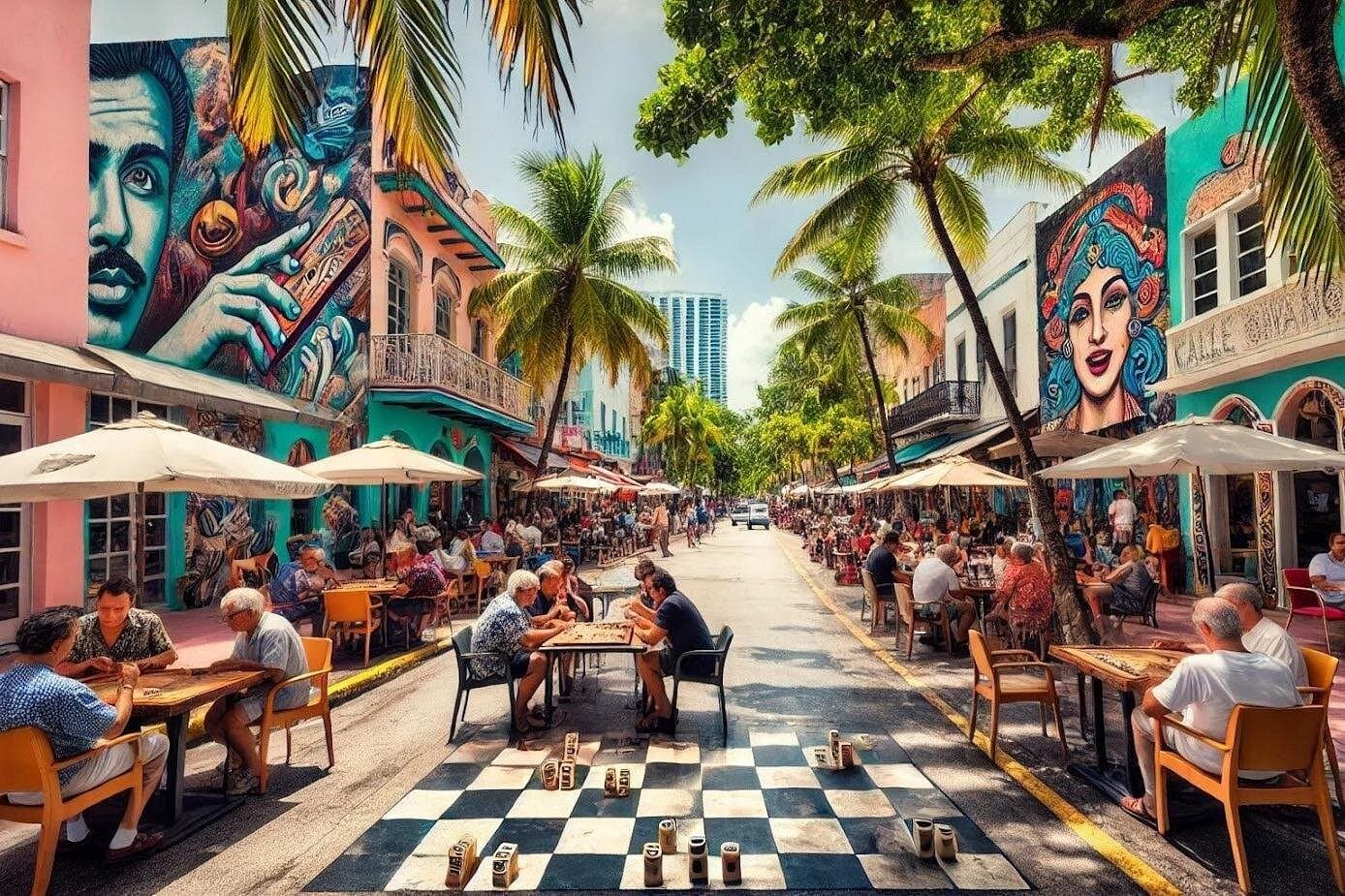
Private Cultural and Food Walking Tour of Little Havana


Explore Santa Cruz Island on a half-day bay tour with sea lions, snorkeling, marine iguanas, sharks and swimming at stunning Las Grietas.
Half Day Bay Tour in Santa Cruz Island: Snorkel, Sea Lions & Las Grietas
Discover the Wild Beauty of Santa Cruz Island on a Half-Day Galapagos Adventure
Imagine slipping into the clear waters of the Galapagos and finding yourself just a short distance from playful sea lions, their graceful bodies moving effortlessly through the water. Picture walking across ancient volcanic landscapes where marine iguanas bask on warm lava rocks, watching blue-footed boobies perched above turquoise channels, and ending your adventure with a refreshing swim inside the spectacular volcanic walls of Las Grietas.
This is the Half Day Bay Tour in Santa Cruz Island, an immersive coastal adventure designed for travelers who want to experience the extraordinary wildlife, scenery, and marine environments of the Galapagos without spending an entire day at sea.
Starting from Puerto Ayora, the main tourism hub on Santa Cruz Island, this approximately 3- to 4-hour Galapagos bay tour takes you across the waters of Academy Bay and to some of the most memorable natural attractions surrounding the town. The experience combines boat travel, snorkeling, wildlife observation, easy walking, volcanic scenery, and swimming into one compact adventure.
The tour begins at the Main Pier, Muelle Gus Angermeyer, where you board the boat and set out across the waters of Academy Bay. From there, the landscape changes quickly. Puerto Ayora fades behind you, the coastline opens up, and the remarkable natural world of Santa Cruz takes center stage.
One moment you may be watching a sea lion glide beneath the surface. The next, you may be standing on a lava shoreline surrounded by marine iguanas. Later, you can look into clear turquoise water and spot white-tip reef sharks resting in a protected channel before making your way to Las Grietas for a swim.
It is precisely this variety that makes the Santa Cruz Island Bay Tour such an appealing experience for first-time visitors, couples, families, photographers, nature enthusiasts, and travelers with limited time in the Galapagos.
Rather than choosing between wildlife, snorkeling, landscapes, and swimming, you can experience all of them during one carefully designed half-day adventure.
The Galapagos Islands are famous around the world for their extraordinary wildlife and volcanic landscapes, but one of the best ways to appreciate their character is to experience the relationship between land and sea.
Santa Cruz Island offers an ideal setting for this.
Located in the central part of the Galapagos archipelago, Santa Cruz is home to Puerto Ayora, one of the islands' principal population centers and a major base for exploring the surrounding marine environment. The island combines rugged volcanic terrain, coastal ecosystems, beaches, mangroves, marine habitats, and unique wildlife.
The local tourism authority describes Santa Cruz as the most populated island in the Galapagos and highlights its combination of beaches, endemic wildlife, volcanic formations, vegetation, lava tunnels, and other natural attractions.
The waters surrounding Puerto Ayora provide an especially convenient introduction to this environment.
A traditional bay tour around Academy Bay can combine several experiences in just a few hours, including sea-lion encounters, snorkeling, marine wildlife observation, volcanic scenery, and walks through coastal landscapes. The municipal tourism information for Santa Cruz specifically identifies bay tours as an opportunity to see sea lions, blue-footed boobies, marine iguanas, sharks, and other characteristic wildlife around the bay.
That makes this Half Day Bay Tour in Santa Cruz Island more than a simple boat excursion.
It is a concentrated introduction to the natural character of the Galapagos.
Enter the water at La Loberia and experience one of the most exciting wildlife encounters around Santa Cruz Island.
Walk across a dramatic coastal environment where marine iguanas can often be seen resting on sun-warmed volcanic rocks.
Keep your eyes open for blue-footed boobies, pelicans, marine birds, and other wildlife around the rocky coastline and marine channels.
Visit the Shark Channel, where white-tip reef sharks can be observed from a safe vantage point in the clear waters around Santa Cruz.
Admire a striking volcanic channel surrounded by cliffs and calm turquoise water.
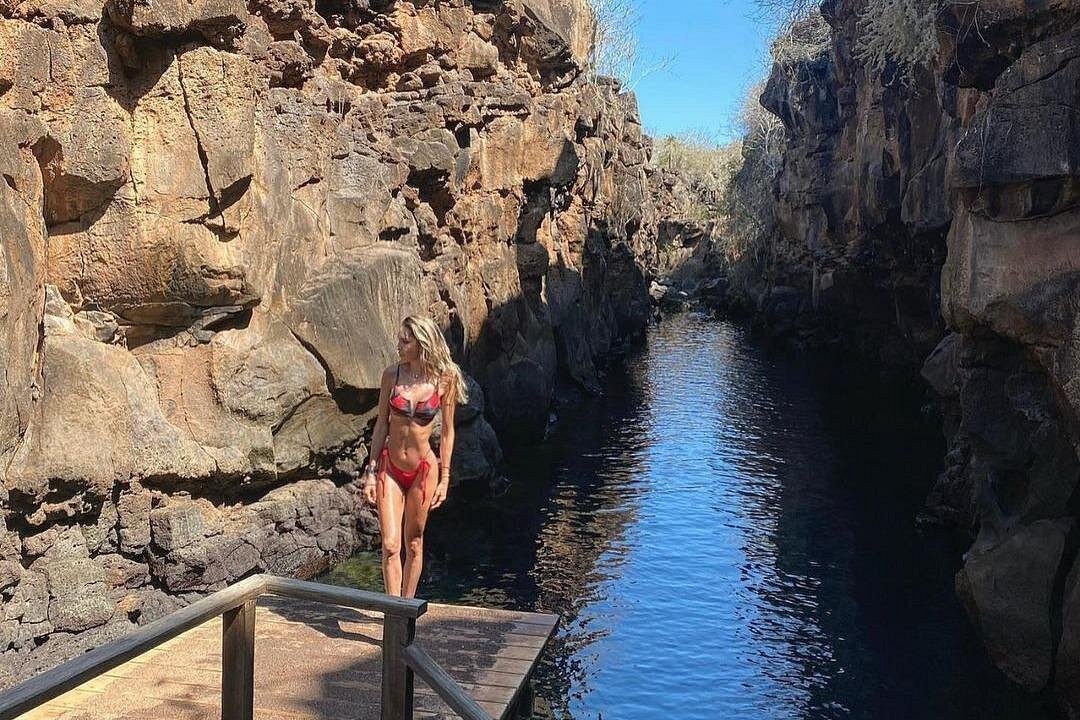
Finish the adventure at one of Santa Cruz's most recognizable natural formations, where crystal-clear water occupies a narrow volcanic fissure between towering rock walls.
Learn more about the wildlife, geology, ecosystems, and landscapes you encounter along the way.
A smaller group atmosphere allows for a more personal experience, easier communication with the guide, and more opportunities to appreciate the environment at a comfortable pace.
Your adventure begins at Muelle Gus Angermeyer, the main pier in Puerto Ayora.
This meeting point places you directly at the gateway to Academy Bay. After meeting your professional bilingual naturalist guide and preparing for the excursion, you board the boat and begin your journey along the Santa Cruz coastline.
The departure itself becomes part of the experience.
As the boat moves away from Puerto Ayora, the character of Santa Cruz begins to change. The developed waterfront gives way to rocky shores, small coves, volcanic cliffs, and marine habitats.
The waters of Academy Bay have long been an important part of life on Santa Cruz Island, and the surrounding coastline offers an impressive concentration of wildlife and geological features.
You do not need to travel deep into the archipelago to begin seeing the unique character of the Galapagos.
That is one of the greatest advantages of this half-day excursion.
For travelers staying in Puerto Ayora, the tour provides a convenient opportunity to discover several iconic coastal sites while keeping the rest of the day available for additional activities, relaxing in town, visiting other attractions, or simply enjoying your accommodation.
One of the most anticipated moments of the tour is the visit to La Loberia, a coastal wildlife site associated with sea lions and snorkeling.
The Galapagos sea lion is one of the animals that travelers most hope to encounter during a visit to the islands. Seeing these animals from a distance is memorable enough, but entering the water and observing their natural movements in the marine environment can create an entirely different experience.
At La Loberia, you may have the opportunity to snorkel in clear water while sea lions move through the area.
There is something unforgettable about watching a sea lion underwater.
On land, these animals can appear relaxed and playful. In the water, their movements become remarkably graceful. They can glide, turn, dive, and change direction with impressive speed.
During your snorkeling experience, allow the animals to determine the distance between you. The goal is not to chase wildlife or force an interaction. Instead, remain calm, observe respectfully, and enjoy the privilege of seeing these animals in their natural habitat.
This approach is especially important in the Galapagos, where conservation and responsible wildlife encounters are fundamental to preserving the ecosystems that make the islands so special.
The experience is not about getting the closest possible photograph.
It is about being present.
You may find yourself floating quietly in the water while a sea lion passes nearby. For many travelers, moments like this become the defining memory of their Galapagos vacation.
Snorkeling is one of the most accessible ways to experience the marine environment around Santa Cruz Island.
You do not need to be an experienced diver to appreciate what lies beneath the surface. With a mask and fins, you can observe the underwater environment from above while moving at a relaxed pace.
The tour includes snorkeling equipment, including a mask and fins, making it easier for visitors to enjoy the marine portions of the excursion without arranging separate equipment.
The underwater experience can vary according to visibility, sea conditions, weather, currents, and natural wildlife activity. These conditions are part of the authentic nature of the Galapagos.
The islands are not an aquarium.
They are a living ecosystem.
That means every snorkeling session can feel different. You may encounter fish, sea lions, marine life around rocky areas, or simply enjoy the sensation of floating in remarkably clear water surrounded by volcanic scenery.
For many visitors, snorkeling at La Loberia becomes one of the most exciting parts of the day because it transforms wildlife observation from something you simply watch into an immersive experience.
After the experience at La Loberia, the boat continues through the coastal environment around Academy Bay toward the Canal del Amor, or Love Channel.
The name itself hints at the atmosphere.
This is a striking volcanic formation where rock walls surround calm, turquoise-colored water. The contrast between dark volcanic stone and bright water creates a landscape that feels almost surreal.
The geological character of the area is a reminder that the Galapagos was shaped by volcanic forces.
The scenery is not simply beautiful because of its color.
It tells a story.
The cliffs, lava formations, channels, and coastal fissures are physical evidence of the volcanic processes that created the islands. Over time, wind, waves, salt, and other natural forces have continued to reshape the landscape.
For travelers interested in photography, Canal del Amor offers plenty of opportunities to capture the distinctive visual character of Santa Cruz.
Look beyond the obvious.
Photograph the contrast between black volcanic rock and blue water. Capture the shapes created by the cliffs. Watch for seabirds resting on rocky surfaces. Notice how sunlight changes the appearance of the water throughout the day.
The Galapagos rewards travelers who slow down and observe.
The journey continues toward the Shark Channel, another memorable stop in the Academy Bay area.
The channel is known for opportunities to observe white-tip reef sharks, locally associated with the term “tintoreras.”
For visitors unfamiliar with sharks, seeing these animals in their natural environment can be both exciting and educational.
White-tip reef sharks are distinctive because of the white markings at the tips of their fins. Around the Galapagos, certain sheltered channels provide opportunities to observe them from designated viewing areas.
The local Santa Cruz tourism information describes the Shark Channel as a place where white-tip reef sharks can be observed moving through clear turquoise water, with walkways and viewing areas making wildlife observation easier.
The experience is very different from a traditional shark-diving adventure.
You are not being asked to pursue or feed the animals.
Instead, you observe them from a safe vantage point and appreciate their role within the marine ecosystem.
This is one of the moments when the educational side of traveling with a naturalist guide becomes particularly valuable. Rather than simply saying, “There are sharks,” your guide can help put what you are seeing into the larger context of the Galapagos marine environment.
From the marine channels, the adventure continues toward Playa de los Perros, an area known for its distinctive volcanic coastline and marine iguanas.
The transition from boat to land creates another change in perspective.
Now, instead of viewing the Galapagos from the water, you begin exploring its terrestrial environment on foot.
The walk allows you to slow down and appreciate details that are easy to miss from a moving boat.
Look at the lava.
Notice the shapes of the rocks.
Watch the cactus and coastal vegetation.
Listen for seabirds.
And, most importantly, keep an eye out for marine iguanas.
Marine iguanas are among the most extraordinary animals found in the Galapagos. They are the only modern iguanas adapted to a marine lifestyle, making them a remarkable example of evolutionary specialization.
At Playa de los Perros, colonies of marine iguanas can often be seen resting on volcanic rocks and warming themselves in the sun. The municipal tourism information for Santa Cruz specifically highlights the presence of marine iguanas along the trail and describes the site as a place where visitors can observe these animals among volcanic landscapes and endemic vegetation.
This is a perfect example of why wildlife photography in the Galapagos requires patience.
An iguana may appear completely motionless.
Then it moves.
Or another one suddenly emerges from behind a rock.
The best experience comes from observing rather than rushing.
Few wildlife encounters feel as distinctly “Galapagos” as seeing a marine iguana.
Their appearance can seem almost prehistoric.
Dark scales, powerful claws, long tails, and a body adapted to life along volcanic shores make them immediately recognizable. Their ability to forage in marine environments makes them even more remarkable.
But seeing them is also a reminder that the Galapagos is not simply a destination for beautiful photographs.
It is a place where evolution can be observed through living species.
Marine iguanas have adapted to a difficult coastal environment where food resources, temperature, waves, and predators have shaped their behavior over generations.
The Galapagos National Park has also emphasized the importance of protecting marine iguana nesting areas, asking visitors to respect marked zones and avoid disturbing these animals during sensitive periods.
During the tour, responsible wildlife viewing is therefore essential.
Stay on designated paths where required.
Keep a respectful distance.
Do not touch animals.
Do not feed wildlife.
Avoid loud behavior around resting or nesting animals.
And never attempt to make wildlife move for a photograph.
The reward for responsible behavior is an authentic encounter that leaves the animal completely undisturbed.
Another important part of the experience is the area around Punta Estrada, a coastal section of Puerto Ayora associated with several natural attractions and marine habitats.
Punta Estrada is positioned along the southern side of Santa Cruz Island and embraces part of Academy Bay. The local tourism authority identifies the area as a gateway to several notable sites, including Las Grietas, the Shark Channel, Canal del Amor, and Playa de los Perros.
Its landscape combines volcanic cliffs, coastal vegetation, clear water, and marine habitats.
This makes the area especially rewarding for travelers who enjoy combining wildlife observation with scenery.
Keep your camera ready, but also remember to look away from the lens.
The Galapagos can be easy to experience through a camera screen, but it is far better experienced with your own eyes.
Watch seabirds flying above the coastline.
Look at the shape of the volcanic cliffs.
Observe the movement of the water.
Notice the way marine iguanas blend into the rocks.
Listen to your guide.
These small details transform a sightseeing excursion into a genuine nature experience.
One of the animals travelers hope to see around Santa Cruz is the famous blue-footed booby.
The species is instantly recognizable because of its striking blue feet and characteristic appearance.
Around the rocky coastlines and channels of Santa Cruz, seabirds can be observed resting, flying, hunting, and interacting with the marine environment.
Punta Estrada and the surrounding coastal areas are known for birdlife, and local tourism information identifies blue-footed boobies among the birds found around the cliffs and rocky environments of the area.
Depending on natural conditions and wildlife activity, you may also see pelicans or other seabirds during the excursion.
Wildlife sightings are naturally unpredictable.
That unpredictability is part of what makes the Galapagos special.
A professional guide can increase your chances of noticing animals by knowing where wildlife is commonly found and understanding its behavior, but no responsible tour should promise a guaranteed encounter with a wild animal.
Instead, the focus is on creating the best possible opportunity for observation while respecting the ecosystem.
The final major highlight of the Half Day Bay Tour is Las Grietas, one of the most recognizable natural attractions near Puerto Ayora.
The name means “The Crevices,” an appropriate description for this extraordinary geological formation.
Two towering volcanic rock walls create a narrow natural channel filled with clear water. The result is a dramatic swimming environment that feels completely different from an ordinary beach.
Las Grietas is formed by volcanic fissures and contains water influenced by both freshwater filtration and seawater, producing brackish conditions. Local information describes the formation as a series of natural pools between volcanic walls and notes its popularity for swimming and snorkeling because of the clarity of the water.
This is where geology and recreation come together.
You can swim inside a landscape created by volcanic forces.
You can look upward at dark rock walls while floating in clear water.
You can snorkel and observe the underwater environment.
And you can take a moment to appreciate just how unusual the setting is.
Las Grietas is not simply another swimming stop.
It is a reminder that the Galapagos landscape is constantly telling a geological story.
For many travelers, swimming at Las Grietas becomes the defining moment of the entire excursion.
After the boat ride, snorkeling, wildlife observation, and coastal walk, entering the cool water provides a refreshing conclusion to the adventure.
The setting is dramatic.
Dark volcanic rock rises on either side.
Clear water stretches through the natural fissure.
The atmosphere feels sheltered from the open ocean.
And every direction offers something worth looking at.
Whether you choose to swim, snorkel, or simply relax near the water, Las Grietas provides a peaceful contrast to the excitement of the earlier wildlife encounters.
The official Galapagos visitor information describes Las Grietas as a crevasse formed by volcanic rock cliffs and highlights its crystal-clear emerald water as one of its defining features.
Because conditions and access arrangements can change, travelers should always follow the instructions of their guide and local authorities during the visit.
In protected environments like the Galapagos, conservation comes first.
What makes this Santa Cruz Island excursion so memorable is the contrast between its environments.
You begin on the ocean.
You snorkel with marine wildlife.
You observe sharks.
You travel through coastal channels.
Then you step onto volcanic ground.
You walk among marine iguanas.
You look toward seabirds.
And finally, you enter a natural volcanic fissure filled with clear water.
In just a few hours, the tour introduces you to both sides of the Galapagos ecosystem.
This is especially valuable for travelers who may have only a short amount of time on Santa Cruz Island.
Rather than spending the entire morning on a single activity, the tour creates a varied experience where each stop feels different from the previous one.
That variety also makes the excursion suitable for different travel styles.
Photographers can focus on wildlife and landscapes.
Nature lovers can concentrate on endemic species.
Adventure travelers can enjoy snorkeling and swimming.
Families can experience the excitement of seeing sea lions and marine iguanas.
Couples can share a memorable coastal adventure.
And first-time visitors can gain a broad introduction to the Galapagos environment.
If this is your first visit to the Galapagos, it can be difficult to decide which experiences deserve a place in your itinerary.
There are islands to explore, wildlife to see, beaches to discover, volcanic formations to photograph, and countless marine activities available.
The Half Day Bay Tour in Santa Cruz Island provides a convenient starting point because it combines several classic Galapagos experiences without requiring an entire day.
You can experience:
Wildlife encounters
Snorkeling
Sea lions
Marine iguanas
White-tip reef sharks
Coastal birdlife
Volcanic landscapes
Boat travel
Short nature walks
Swimming
Las Grietas
All within approximately three to four hours.
That makes the tour particularly attractive for visitors who want a strong introduction to Santa Cruz while keeping the rest of their day flexible.
You could use your free time to explore Puerto Ayora, visit another attraction, enjoy a meal, relax at your accommodation, or simply wander along the waterfront.
The tour is designed around a small-group setting, helping create a more personal and engaging experience than a large-scale sightseeing excursion.
A smaller group can make it easier to communicate with your guide, ask questions, hear explanations, and move through the different environments without feeling lost in a crowd.
This is particularly valuable on a wildlife-focused tour.
You may want to stop for a few extra moments when you see an iguana.
Someone else may be fascinated by a seabird.
Another traveler may want to ask about volcanic geology.
A knowledgeable naturalist guide can help connect these observations to the wider story of Santa Cruz Island.
The tour also includes a professional bilingual naturalist guide, adding an educational element to the experience.
You are not simply transported from one attraction to another.
You have someone who can help interpret what you are seeing.
That can make an enormous difference in the Galapagos.
The Galapagos is famous for wildlife, but its deeper appeal comes from understanding how those animals, landscapes, and marine environments are connected.
A sea lion is not simply a cute animal.
A marine iguana is not simply a photographic subject.
A volcanic cliff is not simply a beautiful backdrop.
Each is part of a larger ecosystem.
The naturalist guide helps turn these individual observations into a broader story.
You can learn about how wildlife adapts to island conditions, why volcanic landscapes look the way they do, how marine and terrestrial ecosystems interact, and why conservation is so important throughout the archipelago.
This educational component is one of the reasons a guided experience can be particularly rewarding for travelers visiting Santa Cruz for the first time.
You return to Puerto Ayora with photographs, but also with a better understanding of what those photographs represent.
The best travel experiences are rarely defined by how many places you check off a list.
They are defined by moments.
A sea lion swimming unexpectedly close.
The first glimpse of a marine iguana against black lava.
A blue-footed booby appearing on a rocky ledge.
The quiet movement of a white-tip reef shark beneath turquoise water.
The feeling of stepping into Las Grietas.
The sound of the boat moving away from Puerto Ayora.
The warm Galapagos sun on your face.
These are the details that stay with you.
The Half Day Bay Tour in Santa Cruz Island is structured to create opportunities for exactly these kinds of memories.
It gives you enough variety to keep the experience exciting while allowing enough time at the key sites to appreciate them.
Not every traveler has the opportunity to spend weeks exploring the Galapagos.
Some visitors may have only a few days on Santa Cruz Island.
Others may be combining Santa Cruz with Isabela, San Cristobal, or another destination.
Some may be arriving in Puerto Ayora between other activities.
For these travelers, a half-day excursion can be an excellent way to experience the Galapagos without committing an entire day.
At approximately 3 to 4 hours, this experience fits naturally into a flexible itinerary.
You can choose a morning or afternoon departure according to the available schedule and your broader travel plans.
That flexibility makes it easier to build a balanced Santa Cruz vacation.
Instead of spending every day on a long excursion, you can combine shorter experiences with free time and independent exploration.
Santa Cruz is one of the most important islands for travelers visiting the Galapagos.
Its location, infrastructure, wildlife, and accessibility make it a natural base for exploring the archipelago.
Puerto Ayora provides access to numerous marine and terrestrial experiences, while the island itself offers everything from coastal ecosystems to highland landscapes.
The local tourism authority notes that Santa Cruz lies near the center of the Galapagos archipelago and combines diverse vegetation zones, beaches, endemic wildlife, volcanic formations, lava tunnels, and other natural attractions.
This diversity is reflected in the Half Day Bay Tour.
You do not have to travel far from Puerto Ayora to encounter the essence of the islands.
Within a relatively compact area, you can move from open water to volcanic shoreline, from marine wildlife to seabirds, and from a coastal trail to a natural swimming formation.
That concentration of experiences is what makes the Academy Bay area so appealing.
Academy Bay forms the natural setting for much of the experience.
From the boat, the bay offers a constantly changing view of Santa Cruz.
The water changes color depending on sunlight and depth.
Volcanic cliffs rise along parts of the coastline.
Small channels create sheltered marine environments.
Birds move between land and sea.
And wildlife appears in places you might never expect.
The official tourism information for Santa Cruz describes a traditional bay tour as a roughly three-hour boat experience that combines several of the area's major attractions, including La Loberia, the Shark Channel, Canal del Amor, Playa de los Perros, and other coastal sites.
Your experience follows this same general idea while creating a convenient half-day adventure centered around the area's most memorable wildlife and swimming opportunities.
Visiting the Galapagos is a privilege.
The same qualities that make the islands extraordinary also make them environmentally sensitive.
Wildlife should always be observed respectfully.
During this tour, travelers should follow the guide's instructions and any local conservation rules.
Do not feed wildlife.
Do not touch animals.
Do not chase sea lions.
Do not approach marine iguanas closely for photographs.
Stay on authorized paths where required.
Avoid disturbing nesting areas.
Take all personal belongings and waste with you.
Use biodegradable sunscreen when possible.
And leave the landscape exactly as you found it.
The local Santa Cruz tourism authorities emphasize the importance of following Galapagos National Park visitor rules because several of these attractions are located within protected environments.
Responsible tourism does not make the experience less exciting.
It makes it more meaningful.
When you observe an animal without disturbing it, you become part of a better kind of tourism—one that allows future travelers to experience the same extraordinary wildlife.
Bring your camera.
This tour offers an impressive variety of photography subjects.
Sea lions, marine iguanas, seabirds, and potentially white-tip reef sharks provide opportunities for unforgettable wildlife photographs.
If you have a waterproof camera or underwater housing, snorkeling can reveal a completely different side of Santa Cruz.
Volcanic cliffs, turquoise channels, rocky coastlines, and Las Grietas create dramatic compositions.
The boat journey itself provides opportunities to capture Puerto Ayora, Academy Bay, and the changing coastline.
A waterproof camera is especially useful because several of the tour's most memorable moments happen around water.
However, remember that the best photograph is never more important than wildlife welfare.
Put the camera down occasionally.
Experience the Galapagos directly.
The tour is active enough that preparation can make the experience more comfortable.
Bring swimwear and a towel because snorkeling and swimming are central parts of the adventure.
Comfortable walking shoes or sandals with good grip are recommended for the coastal trails and volcanic terrain.
Bring biodegradable sunscreen and a sun hat to protect yourself from the strong equatorial sun.
A refillable water bottle is useful for staying hydrated throughout the excursion.
And, of course, bring your camera.
A waterproof camera or waterproof phone case is particularly useful because some of your favorite memories may happen in or beside the water.
Travel light, but prepare for both land and sea.
Not every traveler wants a physically demanding full-day expedition.
This experience offers a comfortable balance.
There is movement, but it is broken into manageable sections.
There is snorkeling, but you can focus on enjoying the water rather than completing a technical dive.
There is walking, but the experience centers on coastal sites rather than a long mountain hike.
There is wildlife observation, but there is also time to appreciate the scenery.
And there is swimming at Las Grietas, providing a relaxing finish after the earlier activities.
That balance makes the excursion attractive to travelers who want adventure without turning the day into an exhausting endurance challenge.
If your idea of a perfect vacation involves wildlife, clear water, volcanic landscapes, and outdoor exploration, this Santa Cruz Island excursion deserves a place on your itinerary.
The tour brings together many of the experiences that define a Galapagos adventure.
You can snorkel with sea lions.
You can observe marine iguanas.
You can look for blue-footed boobies and pelicans.
You can see white-tip reef sharks from a safe viewing location.
You can explore volcanic formations.
You can swim in Las Grietas.
And you can learn from a professional naturalist guide throughout the journey.
It is a compact but remarkably diverse experience.
The tour's variety also makes it easy to enjoy with different types of travel companions.
Share an unforgettable snorkeling experience, explore volcanic scenery together, and finish with a swim in the remarkable surroundings of Las Grietas.
Children and adults can enjoy seeing charismatic wildlife while learning about the unusual animals and landscapes of the Galapagos.
Parents should consider each child's swimming ability, comfort with boats, sun exposure, and ability to participate safely in the walking portions of the experience.
The combination of boat travel, snorkeling, wildlife watching, and swimming creates plenty of opportunities to share photographs and memorable moments.
A small-group guided setting provides an easy way to explore the bay while meeting other travelers and learning from a professional naturalist.
There are destinations you visit for their scenery.
There are destinations you visit for their history.
And there are destinations that change the way you look at the natural world.
The Galapagos belongs to the third category.
Standing on volcanic ground while watching marine iguanas can make evolution feel tangible.
Floating in the ocean while a sea lion moves through the water can make wildlife feel incredibly close.
Looking down into a clear channel and seeing a white-tip reef shark can replace fear with curiosity.
Swimming inside Las Grietas can make geology feel like something you can physically experience.
These moments create an emotional connection with the destination.
And that connection is one of the strongest reasons to choose a guided Santa Cruz Island bay tour.
From the moment you meet at Muelle Gus Angermeyer, the experience begins to move away from ordinary sightseeing.
You are not simply checking attractions off a list.
You are entering an environment where wildlife moves freely, volcanic landscapes dominate the coast, and the sea is an essential part of life.
The boat becomes your connection between these different worlds.
La Loberia introduces you to sea lions.
The Shark Channel introduces you to marine predators.
Canal del Amor reveals volcanic beauty.
Playa de los Perros introduces you to marine iguanas.
Punta Estrada brings together coastal scenery and birdlife.
And Las Grietas provides the unforgettable finale.
By the time you return to Puerto Ayora, you may have spent only a few hours away from town, but the experience can feel much larger.
That is the magic of the Half Day Bay Tour in Santa Cruz Island.
A visit to the Galapagos should never feel rushed.
Even when you only have a few hours, the goal should be to slow down enough to notice what makes the islands different.
Look carefully.
Listen to your guide.
Respect the wildlife.
Feel the volcanic landscape beneath your feet.
Let the water surround you.
And give yourself permission to be amazed.
The Half Day Bay Tour in Santa Cruz Island is designed around that philosophy.
It brings together some of the most recognizable experiences around Puerto Ayora into a single guided journey, making it an excellent choice for travelers who want wildlife, snorkeling, scenery, and swimming in one memorable excursion.
With boat transportation, snorkeling equipment, a professional bilingual naturalist guide, and light snacks included, the experience is designed to keep your attention on the adventure rather than the logistics.
Starting from $65 per person, it also provides an accessible way to add a genuine Galapagos marine and coastal experience to your Santa Cruz itinerary.
Whether this is your first Galapagos excursion or one of several adventures during your island stay, the combination of sea lions, sharks, marine iguanas, seabirds, volcanic formations, and Las Grietas creates a powerful introduction to the natural character of Santa Cruz.
Come prepared to swim.
Come ready to walk.
Bring your camera.
Keep your eyes open.
And most importantly, come ready to experience the Galapagos as a living ecosystem rather than simply a destination on a map.
Your Santa Cruz Island adventure begins in Puerto Ayora—and within minutes, the extraordinary world of the Galapagos unfolds around you.
The Half Day Bay Tour in Santa Cruz Island is designed for travelers who want to experience several of the most distinctive coastal attractions around Puerto Ayora in a single, well-organized adventure.
The approximately 3- to 4-hour experience combines boat transportation, snorkeling, wildlife observation, short walks, volcanic landscapes, and swimming. The route focuses on the remarkable natural attractions around Academy Bay and Punta Estrada, creating a compact introduction to the marine and coastal environments of Santa Cruz Island.
The experience begins at Muelle Gus Angermeyer, Puerto Ayora's main tourist pier. From there, you travel by boat toward the first wildlife-focused stop before continuing through a series of volcanic channels, coastal habitats, and natural formations.
The official Santa Cruz tourism information confirms that Academy Bay excursions connect several of these attractions, including La Loberia, the Shark Channel, Canal del Amor, Playa de los Perros, Punta Estrada, and Las Grietas.
This makes the excursion particularly valuable for travelers who want to see a broad selection of Santa Cruz's natural attractions without dedicating an entire day to a single activity.
Your adventure begins at the Main Pier, Muelle Gus Angermeyer, in Puerto Ayora.
Arrive prepared for a day—or morning or afternoon—on the water. Your guide will help coordinate the beginning of the excursion before you board the boat.
This is more than a transportation point.
It is your transition from the urban environment of Puerto Ayora into the protected natural world surrounding Santa Cruz.
As the boat departs, look back toward the town and then toward the coastline ahead.
The scenery changes quickly.
The waterfront gives way to open water, volcanic shorelines, rocky outcrops, and marine habitats.
The boat journey also gives you the opportunity to settle into the rhythm of the Galapagos.
There is no need to rush.
The landscape itself becomes part of the experience.
The boat takes you through the waters of Academy Bay, one of the most important marine environments accessible from Puerto Ayora.
Academy Bay is surrounded by a fascinating combination of volcanic coastlines, beaches, channels, small coves, and wildlife habitats.
The municipal tourism information describes the bay's network of visitor sites as a compact way to experience many of the natural attractions associated with Santa Cruz.
During the boat ride, keep your eyes open.
Wildlife sightings are never guaranteed because these are wild environments, but the coastal scenery itself is worth watching.
Depending on conditions, you may notice seabirds, rocky islands, changing shades of blue in the water, or animals moving along the coastline.
Your naturalist guide can help you identify interesting features and understand the environment you are passing through.
One of the major highlights of the excursion is La Loberia, associated with the sea-lion colony around the small islet of Caamaño.
This is where the tour shifts from sightseeing to immersion.
After arriving in the area, you have the opportunity to enter the water for a snorkeling experience.
The possibility of seeing Galapagos sea lions underwater is one of the reasons this tour is so memorable.
Sea lions are naturally curious and agile in the water. Their movements can be very different from their behavior on land, and observing them swimming through their natural marine environment can be an unforgettable travel experience.
The official Santa Cruz tourism information identifies La Loberia at Islote Caamaño as one of the principal sites included in Academy Bay excursions and notes opportunities for swimming and wildlife observation in the area.
The best approach is to remain calm and allow the animals to behave naturally.
Do not chase a sea lion if it swims away.
Do not attempt to touch it.
Do not block its movement.
Instead, float calmly, observe, and enjoy the encounter.
A respectful approach often creates a much better experience because the animals can continue behaving naturally.
You may see them diving, turning, swimming around rocks, or moving through the water with surprising speed.
For many visitors, this becomes the moment when the Galapagos vacation truly feels real.
The tour includes mask and fins, allowing you to enjoy the snorkeling portions of the excursion without arranging separate equipment.
If you have never snorkeled in the Galapagos before, the experience can be especially exciting.
The underwater world is different from what you see from the boat.
Volcanic rocks continue beneath the surface.
Fish move around rocky areas.
Sea lions can suddenly appear.
The sunlight creates changing patterns across the water.
The clarity can reveal details that are impossible to appreciate from above.
Remember that underwater visibility depends on weather, tides, currents, season, and other natural conditions.
Rather than expecting a perfectly predictable underwater scene, treat the snorkeling experience as an opportunity to explore a living ecosystem.
That mindset makes the experience more rewarding.
After the La Loberia experience, the boat continues toward the coastal formations around Punta Estrada.
One of the fascinating areas is the Canal del Amor, a narrow volcanic channel surrounded by dramatic rock formations.
The name translates to “Love Channel,” and the setting certainly has a romantic quality.
Turquoise water is enclosed by volcanic cliffs, creating a peaceful environment that contrasts with the open bay.
The local Santa Cruz tourism authority describes Canal del Amor as a volcanic-rock channel with calm turquoise water and identifies the area as suitable for swimming, snorkeling, and kayaking under appropriate conditions.
Even if your itinerary does not involve a long stop here, the scenery adds another dimension to the experience.
This is a place where you should take a moment to appreciate the relationship between volcanic geology and the sea.
The Galapagos is ultimately a volcanic archipelago, and formations such as Canal del Amor make that geological history visible.
Next comes one of the most intriguing wildlife observation points in Academy Bay: the Shark Channel.
This is where you may observe white-tip reef sharks, sometimes locally called tintoreras.
For many visitors, seeing sharks in the Galapagos is a highlight.
Yet the experience is not about danger or adrenaline.
It is about observing a marine predator calmly existing in its natural habitat.
The local tourism authority explains that the Shark Channel provides a viewing area where white-tip reef sharks can be observed in clear water, and it specifically notes that swimming and snorkeling are not permitted in the channel itself.
That distinction is important.
Your snorkeling experience and your shark observation are different parts of the excursion.
At the Shark Channel, follow the guide's instructions and observe the animals from the designated safe area.
Watch how slowly and effortlessly the sharks move through the water.
Notice their streamlined bodies.
Observe the white markings on their fins.
And remember that the most powerful wildlife experiences often happen when you simply watch rather than interact.
After exploring the marine environment, the experience transitions onto land.
The walking sections provide an opportunity to slow down and observe the smaller details of the Galapagos.
The volcanic landscape can look harsh at first.
Dark rocks.
Dry terrain.
Sharp formations.
Sparse vegetation.
But look more closely and you begin to notice life everywhere.
Plants have adapted to the conditions.
Birds move through the coastal habitat.
Marine iguanas blend into the lava.
Crabs move around the shoreline.
This is where having a naturalist guide becomes particularly useful.
Your guide can help you understand why the landscape looks the way it does and point out wildlife that you might otherwise walk past.
The route continues to Playa de los Perros, another iconic coastal site around Academy Bay.
This area is particularly famous for its marine iguanas.
The local tourism authority describes Playa de los Perros as a site where colonies of marine iguanas can be seen basking among volcanic rocks and Opuntia cactus.
For photographers, this is an excellent place to slow down.
Marine iguanas can blend surprisingly well into their surroundings, so take your time.
Instead of searching only for the largest animal, look across the rocks carefully.
You may notice several iguanas resting together.
Some may be completely still.
Others may move between rocks.
Their dark coloring and rugged appearance create a striking contrast with the coastal landscape.
When taking photographs, remember that the animals are not models.
Do not move toward them simply to improve your composition.
Do not touch them.
Do not block their path.
Avoid using flash where prohibited or where it could disturb wildlife.
The Galapagos experience becomes more meaningful when the photograph is secondary to the animal's wellbeing.
The Santa Cruz coastline is also home to remarkable birdlife.
As you explore areas around Punta Estrada and Academy Bay, keep an eye out for birds perched on volcanic cliffs, flying above the water, or moving through the coastal vegetation.
Possible sightings can include blue-footed boobies and pelicans, among other marine and coastal birds.
The local tourism authority specifically notes blue-footed boobies, frigatebirds, masked boobies, marine iguanas, and other species around Punta Estrada.
Wildlife activity changes throughout the day and according to season and conditions.
That unpredictability is exactly what makes wildlife tourism different from visiting a zoo.
You never know what will appear around the next bend.
The final major attraction is Las Grietas, one of the most recognizable natural formations near Puerto Ayora.
From the surrounding trail, you make your way toward the narrow volcanic fissure.
The landscape gradually changes.
You pass volcanic terrain and coastal vegetation before reaching the dramatic rock walls that define Las Grietas.
The official Santa Cruz tourism information places Las Grietas in Punta Estrada and describes it as a lava fissure containing brackish water formed from the mixing of filtered freshwater and seawater.
This geological setting is what gives the site its unusual character.
It is not simply a pool.
It is a natural formation created through the interaction of volcanic geology, water, and time.
After the earlier wildlife encounters, Las Grietas provides a refreshing conclusion.
Enter the clear water and enjoy a swim inside the narrow volcanic formation.
The surrounding walls make the experience feel completely different from snorkeling in open water.
Instead of an expansive ocean horizon, you are surrounded by volcanic rock.
Instead of waves and open sea, the water feels more sheltered.
And instead of looking at a landscape from a distance, you are physically inside it.
The official tourism information identifies Las Grietas as a popular location for swimming, snorkeling, and apnea because of its clear water.
Conditions can vary by season. Local information notes that water levels and temperatures change throughout the year, with cooler conditions generally associated with the dry season and warmer water during the wetter months.
For this reason, bring a towel and appropriate swimwear and listen carefully to your guide regarding conditions on the day of your visit.
After completing the Las Grietas experience, you begin the return portion of the excursion.
By this point, you will have experienced several very different sides of Santa Cruz.
You have traveled by boat.
You have entered the marine environment.
You have encountered wildlife.
You have walked across volcanic terrain.
You have explored natural formations.
And you have swum in one of the island's most recognizable geological attractions.
The return to Puerto Ayora is therefore more than the end of transportation.
It is the moment when you can begin processing everything you have seen.
For many travelers, the photographs come out during the journey home.
But often the best memories are not the photographs.
They are the unexpected moments.
The experience is designed to simplify the logistics of exploring Academy Bay.
A professional bilingual naturalist guide accompanies the experience, helping travelers understand the wildlife, geology, and environment.
The tour includes mask and fins, so you can participate in the snorkeling activities without arranging the basic equipment separately.
Boat transportation connects the main coastal attractions included in the experience.
Light snacks are provided during the excursion, giving you something to enjoy while traveling between the different experiences.
These inclusions make the tour convenient for visitors who want a guided experience without spending time arranging every individual component themselves.
While the tour includes the core elements described above, travelers should plan for their own personal expenses and any services not specifically listed as included.
This can include items such as:
Personal purchases
Additional food or drinks beyond the provided snacks
Personal travel insurance
Optional gratuities
Personal equipment not supplied by the tour
Other activities outside the scheduled excursion
Because local operating conditions and protected-area regulations can change, always confirm the final inclusions and meeting instructions at the time of booking.
The tour lasts approximately 3 to 4 hours.
That duration makes it an excellent option for travelers who want a substantial Galapagos experience while keeping part of the day free.
A half-day excursion is especially convenient for travelers who are:
Staying in Puerto Ayora
Visiting Santa Cruz for only a few days
Combining multiple activities
Traveling with children
Looking for a morning adventure
Looking for an afternoon activity
Interested in snorkeling without committing to a full-day boat trip
Wanting a first introduction to Academy Bay
The exact timing at each stop can vary according to weather, sea conditions, wildlife activity, park regulations, group logistics, and the operating schedule.
The best departure time depends on your personal itinerary.
A morning excursion can be ideal if you want to complete your main wildlife and snorkeling experience early and keep the afternoon free.
After returning to Puerto Ayora, you can enjoy lunch, explore the town, visit another attraction, or simply relax.
An afternoon departure may suit travelers who want a slower start to the day.
You can have breakfast without rushing, explore Puerto Ayora beforehand, and then head to the pier for your bay adventure.
There is no universally perfect departure time.
The best choice is the one that fits your travel schedule and available tour departure.
Do not arrive at the pier at the last possible minute.
Give yourself enough time to locate Muelle Gus Angermeyer, meet your guide, organize your belongings, and prepare for departure.
Swimming and snorkeling are major parts of the experience, so a towel is essential.
The walking portions involve volcanic terrain and trails.
Shoes or sandals with good grip are recommended.
The equatorial sun can be intense.
Wear a hat and apply biodegradable sunscreen according to local conservation guidance.
Bring a refillable water bottle and stay hydrated.
If you want underwater photographs, a waterproof camera or waterproof phone case can be extremely useful.
The guide's instructions are especially important around wildlife, water, boats, and protected areas.
Never touch, feed, chase, or deliberately disturb animals.
Take your waste with you and avoid leaving anything behind.
The ideal clothing combination for this tour is simple and practical.
Wear comfortable, lightweight clothing suitable for warm outdoor conditions.
Bring swimwear underneath your clothing if possible so that changing is easier.
For the walking sections, choose shoes or sandals with reliable grip.
A sun hat is strongly recommended.
A lightweight cover-up can also be useful after snorkeling, particularly if there is wind during the boat ride.
Because you will move between water and land, avoid wearing clothing that becomes uncomfortable when wet.
The goal is to stay comfortable while being prepared for both snorkeling and walking.
Yes, the experience is designed as an accessible introduction to the coastal environment of Santa Cruz.
You do not need to be an experienced scuba diver.
The snorkeling portion uses basic mask-and-fin equipment.
The walking portions are short compared with a full-day trekking excursion.
However, travelers should still feel comfortable around water and on uneven volcanic terrain.
Anyone with concerns about swimming ability, mobility, balance, or medical limitations should evaluate the activities carefully and communicate relevant concerns to the tour operator before participating.
The Galapagos is an outdoor environment, so conditions can change.
The variety of activities can make the tour appealing to families.
Children may especially enjoy seeing sea lions, marine iguanas, birds, and other wildlife.
Swimming and snorkeling can also be exciting family experiences.
However, parents or guardians should consider the age and swimming ability of each child.
Children should always remain under appropriate adult supervision around water.
The boat ride, sun exposure, walking trails, and snorkeling activities should all be considered when deciding whether the tour is suitable for younger travelers.
Because wildlife and protected-area rules must be respected, children should also understand that animals cannot be touched or approached.
Suitability depends on individual mobility and comfort.
The tour includes boat travel, walking over volcanic terrain, snorkeling, and swimming.
Travelers who are active and comfortable with these activities may find the experience enjoyable.
Those with limited mobility or difficulty walking on uneven ground should ask about current conditions before booking.
The key is not age itself.
It is physical comfort and ability to participate safely.
One of the strongest advantages of a guided experience is convenience.
Instead of figuring out how to reach each location separately, the tour connects the major attractions into one organized itinerary.
You also have a naturalist guide who can help identify wildlife and explain the environment.
This can be particularly valuable in the Galapagos, where many attractions are located inside protected areas and visitor rules are designed to minimize environmental impact.
For example, Las Grietas is within a protected area where visitors are expected to follow conservation rules and where access and visitor controls can apply.
A guided tour therefore gives you both convenience and interpretation.
You do not have to choose between wildlife, snorkeling, volcanic scenery, and swimming.
The itinerary combines them.
The boat provides a marine perspective, while the walking sections reveal the volcanic coastline.
Sea lions, marine iguanas, sharks, and seabirds are among the possible wildlife highlights.
The tour concludes with one of Santa Cruz's most distinctive natural swimming environments.
The guide adds educational context to the wildlife and landscapes.
At approximately 3 to 4 hours, the excursion fits comfortably into a larger Santa Cruz itinerary.
The meeting point at Muelle Gus Angermeyer makes the experience practical for travelers staying in Puerto Ayora.
A wildlife tour can sometimes involve long periods of observation.
A snorkeling tour can sometimes focus almost entirely on the underwater environment.
A hiking tour can keep you on land.
This experience combines all three dimensions.
You move through the water.
You walk across volcanic landscapes.
You observe wildlife.
That variety helps keep the excursion engaging from beginning to end.
One moment you are swimming.
The next you are photographing an iguana.
Then you are watching a shark channel.
Then you are surrounded by volcanic cliffs.
Then you are floating in Las Grietas.
The experience keeps changing without requiring an exhausting full-day itinerary.
A knowledgeable guide can change the way you experience the Galapagos.
Without a guide, you might see a marine iguana and think, “What an unusual animal.”
With a naturalist explanation, that same animal becomes part of a fascinating story about island evolution, adaptation, food sources, temperature regulation, and survival.
The same is true for volcanic landscapes.
Instead of seeing a black rock formation, you begin to recognize how lava flows and geological processes shaped the coastline.
At the Shark Channel, you can understand that sharks are not simply exciting animals for tourists—they are important predators within the marine ecosystem.
This is why the guide is more than someone who manages logistics.
The guide helps interpret the destination.
Photography is one of the most popular reasons people visit Santa Cruz.
But photographing wildlife successfully requires a different approach from photographing landscapes.
Wildlife may not appear exactly when you want it to.
Wait.
Observe.
Let the moment happen naturally.
Instead of always trying to fill the frame with an animal, include the volcanic rocks, sea, or vegetation.
This creates a stronger sense of place.
Follow local guidance and avoid anything that may disturb animals.
A respectful distance often produces better photographs anyway because the animal appears naturally within its environment.
A sea lion swimming, an iguana basking, or a seabird taking flight tells a stronger story than a static portrait.
Choosing a half-day guided experience can simplify your Santa Cruz itinerary.
Instead of coordinating separate transport, equipment, wildlife viewing, and site visits, the tour combines the essential components.
The published starting price is $65 per person, although final pricing and availability should always be confirmed when booking.
The experience includes:
Professional bilingual naturalist guide
Boat transportation
Mask and fins
Light snacks
This means you can focus on the experience rather than arranging the basic components yourself.
Because this is a half-day activity, it can work well as one part of a larger Santa Cruz itinerary.
For example, travelers may choose to use the morning for the bay tour and keep the afternoon available for Puerto Ayora.
Alternatively, the tour can be scheduled later in the day, allowing a relaxed morning.
The important thing is to avoid overloading your schedule.
The Galapagos rewards slow travel.
Give yourself some breathing room between activities.
Allow time for meals.
Leave space for unexpected wildlife encounters.
And remember that transportation in island environments can sometimes take longer than expected.
The Galapagos has a year-round travel appeal, but conditions vary.
Weather, water temperature, visibility, wind, currents, and marine conditions can change.
This means the experience you have on one day may not be identical to someone else's experience on another day.
At Las Grietas, for example, local information notes seasonal changes in water level and temperature.
The same principle applies to wildlife.
Animals are wild and free-moving.
A responsible tour operator cannot guarantee exactly which animals will appear or precisely how they will behave.
Instead, the goal is to provide excellent opportunities for observation while following conservation regulations.
Outdoor excursions are naturally affected by weather and sea conditions.
If conditions become unsuitable or unsafe, the operator may adjust the route, activity sequence, or itinerary according to local regulations and operational judgment.
This is not a weakness of the tour.
It is part of responsible travel in a protected marine environment.
The Galapagos should never be treated like a theme park where every event must happen exactly as advertised regardless of nature.
Safety and conservation come first.
Every traveler has a role to play.
The Galapagos remains extraordinary because its ecosystems are protected and visitors are expected to behave responsibly.
When visiting the sites included in the bay tour:
Stay on designated trails.
Keep appropriate distance from wildlife.
Never feed animals.
Never touch wildlife.
Do not collect rocks, shells, plants, or other natural materials.
Take your rubbish with you.
Use biodegradable sunscreen where appropriate.
Follow your naturalist guide's instructions.
Respect visitor capacity and site-specific regulations.
Las Grietas and other attractions around Punta Estrada form part of the protected visitor environment, and official local information emphasizes compliance with Galapagos conservation rules.
Responsible tourism is not simply a rule.
It is a way of ensuring that the Galapagos remains extraordinary for generations.
For couples visiting the Galapagos, this tour offers a wonderful mixture of adventure and scenic moments.
Swim together near sea lions.
Explore the volcanic coastline.
Watch sharks from a safe observation point.
Take photographs around Canal del Amor.
Walk through the landscape at Playa de los Perros.
Then finish with a swim at Las Grietas.
The variety creates plenty of shared memories without requiring an entire day away from Puerto Ayora.
The Canal del Amor is particularly atmospheric, with its turquoise water and volcanic cliffs creating a naturally romantic setting.
For families, the tour can become a natural outdoor classroom.
Children can learn that:
Sea lions are adapted to life in the ocean.
Marine iguanas are uniquely adapted to a marine environment.
Sharks are important parts of marine ecosystems.
Volcanic activity helped create the islands.
Different species have evolved unique survival strategies.
Protected areas require responsible visitor behavior.
Instead of reading these concepts in a textbook, children can observe the environment directly.
That can make the experience much more powerful.
If you have never been to the Galapagos before, it can be difficult to understand how diverse the islands are until you experience them.
This half-day tour offers a concentrated introduction.
You get the ocean.
You get volcanic landscapes.
You get wildlife.
You get snorkeling.
You get swimming.
You get a naturalist guide.
And you get the opportunity to see several iconic attractions around Santa Cruz.
It does not attempt to replace a multi-day Galapagos expedition.
Instead, it provides something different:
A compact, accessible, highly varied introduction to the natural world around Puerto Ayora.
The order of the experience matters.
After several hours of movement and wildlife observation, Las Grietas creates a sense of arrival.
The dramatic volcanic walls frame the water.
The setting feels enclosed and peaceful.
The clear water invites you to slow down.
The experience becomes less about searching for wildlife and more about appreciating the environment.
It is a fitting ending because the entire tour has been about discovering how land and water interact.
At Las Grietas, you are literally inside that interaction.
The most important advice is simple:
Do not rush.
You may be tempted to photograph everything.
Instead, choose a few moments to experience without a camera.
When snorkeling, look around rather than focusing only on taking pictures.
When you see an iguana, observe its behavior.
At the Shark Channel, watch the sharks move.
At Canal del Amor, appreciate the volcanic scenery.
At Las Grietas, take a moment to simply float and look upward at the rock walls.
A short tour can feel surprisingly expansive when you give yourself permission to be present.
Half Day Bay Tour in Santa Cruz Island
Santa Cruz Island, Galapagos, Ecuador
Muelle Gus Angermeyer, Puerto Ayora
Approximately 3–4 hours
From $65 per person
Boat tour
Wildlife observation
Snorkeling
Swimming
Coastal walking
Volcanic landscape exploration
Nature photography
La Loberia
Sea lions
Canal del Amor
Shark Channel
White-tip reef sharks
Playa de los Perros
Marine iguanas
Punta Estrada
Blue-footed boobies and pelicans
Las Grietas
Professional bilingual naturalist guide
Boat transportation
Snorkeling mask
Fins
Light snacks
Swimwear
Towel
Comfortable walking shoes or sandals with grip
Biodegradable sunscreen
Sun hat
Refillable water bottle
Camera or waterproof camera
Choosing this experience means choosing variety.
You are not spending the entire excursion looking at one type of scenery.
You are not limited to one activity.
Instead, the tour creates a sequence of experiences that represents many of the things travelers come to the Galapagos to discover.
You can experience the excitement of snorkeling near sea lions.
You can observe white-tip reef sharks.
You can walk through volcanic landscapes.
You can photograph marine iguanas.
You can search for distinctive seabirds.
You can explore the dramatic formations around Punta Estrada.
And you can swim inside the unforgettable environment of Las Grietas.
All while traveling with a professional bilingual naturalist guide.
That combination makes this one of the most convenient ways to introduce yourself to the natural wonders surrounding Puerto Ayora.
If you are looking for a Santa Cruz Island tour from Puerto Ayora that combines wildlife, snorkeling, volcanic landscapes, and swimming, the Half Day Bay Tour in Santa Cruz Island offers an experience that packs remarkable variety into approximately three to four hours.
From the moment your boat leaves Muelle Gus Angermeyer, you begin moving into a world defined by wildlife and volcanic scenery.
At La Loberia, the ocean becomes your playground.
At the Shark Channel, the marine environment becomes your classroom.
At Playa de los Perros, volcanic terrain becomes the stage for marine iguanas.
At Punta Estrada, coastal wildlife and dramatic scenery come together.
And at Las Grietas, the journey concludes with an unforgettable swim inside a natural volcanic formation.
The tour starts from $65 per person and includes boat transportation, snorkeling equipment, light snacks, and the assistance of a professional bilingual naturalist guide.
For travelers with limited time, it offers an efficient way to experience several of the signature attractions around Academy Bay.
For first-time visitors, it provides an exciting introduction to Santa Cruz.
For wildlife lovers, it offers opportunities to encounter some of the Galapagos' most recognizable animals.
For photographers, it delivers an extraordinary variety of landscapes and subjects.
And for anyone who simply wants to experience something unforgettable while visiting the Galapagos, it offers the chance to step beyond ordinary sightseeing and into a living natural world.
Come to Santa Cruz ready for something different.
Come prepared to get wet.
Come ready to walk across volcanic ground.
Come prepared to watch wildlife without disturbing it.
Bring your camera, your curiosity, and your sense of adventure.
Then let Academy Bay reveal itself one extraordinary moment at a time.
Reserve your Half Day Bay Tour in Santa Cruz Island and discover sea lions, marine iguanas, sharks, seabirds, volcanic landscapes, and the crystal-clear waters of Las Grietas—all within one unforgettable Galapagos adventure.
The Half Day Bay Tour in Santa Cruz Island lasts approximately 3 to 4 hours. The excursion is designed to provide a compact but varied introduction to the coastal attractions around Puerto Ayora, combining boat transportation, wildlife observation, snorkeling, walking, and swimming.
The exact duration can vary depending on weather, sea conditions, wildlife activity, local regulations, and the operating schedule on the day of the tour.
The tour starts at the Main Pier, Muelle Gus Angermeyer, in Puerto Ayora.
Travelers should arrive with enough time to locate the meeting point, meet their guide, prepare their belongings, and board the boat before departure.
Because Puerto Ayora is the principal tourism center on Santa Cruz Island, the meeting point is convenient for many visitors staying in or around town.
The itinerary focuses on several coastal attractions around Academy Bay and Punta Estrada.
Major highlights include:
La Loberia
Canal del Amor
Shark Channel
Playa de los Perros
Punta Estrada
Las Grietas
The experience combines these locations with wildlife observation, snorkeling, boat transportation, coastal walking, and swimming.
The exact sequence and time spent at individual sites may vary according to local operating and environmental conditions.
Yes. Snorkeling is one of the main activities included in the experience.
The tour provides a mask and fins, allowing travelers to explore the marine environment around La Loberia and other appropriate areas.
Snorkeling conditions depend on sea conditions, visibility, currents, weather, and wildlife activity.
Travelers should always follow the guide's instructions regarding where and when it is safe and appropriate to enter the water.
The tour provides an opportunity to snorkel in the waters around La Loberia where sea lions may be present.
Sea lions are wild animals, so their behavior and proximity cannot be guaranteed.
Travelers should never chase, touch, feed, or intentionally disturb the animals. The best approach is to remain calm and allow the sea lions to move naturally through the environment.
This respectful approach creates a more authentic wildlife experience.
Yes. The tour includes snorkeling equipment consisting of a mask and fins.
You should still bring your own swimwear and towel.
If you prefer to use personal snorkeling equipment, you may also consider bringing it, subject to the operator's rules and available storage space.
The itinerary includes a visit to the Shark Channel, where travelers may have the opportunity to observe white-tip reef sharks.
The sharks are viewed from a safe vantage point rather than being approached for direct interaction.
Wildlife sightings are naturally unpredictable, so seeing sharks cannot be guaranteed.
The Shark Channel is a wildlife observation experience, not a shark-feeding or shark-diving activity.
No. The Shark Channel should be treated as a wildlife observation site rather than a swimming location.
Local visitor information specifically indicates that swimming and snorkeling are not permitted in the Shark Channel.
Your snorkeling experience takes place in designated areas where water activities are permitted.
Always follow your naturalist guide and local Galapagos National Park regulations.
Playa de los Perros is particularly known for its volcanic coastline and marine iguanas.
You may see marine iguanas resting on the warm lava rocks, along with coastal vegetation and seabirds.
The area provides an excellent opportunity to observe how wildlife has adapted to the volcanic environment of Santa Cruz Island.
Because marine iguanas are protected wild animals, visitors should maintain a respectful distance and never touch or feed them.
Las Grietas is a dramatic volcanic formation consisting of narrow rock walls surrounding clear water.
The formation creates a unique swimming and snorkeling environment near Puerto Ayora.
The water is influenced by both seawater and freshwater, creating brackish conditions. Local tourism information identifies Las Grietas as a popular location for swimming and snorkeling because of its clear water.
For many travelers, swimming at Las Grietas is one of the most memorable parts of the Santa Cruz Island experience.
Yes. Swimming at Las Grietas is part of the experience when local conditions and visitor regulations permit the activity.
Bring swimwear and a towel.
Water temperature can vary depending on the season, so travelers who are sensitive to cooler water may want to prepare accordingly.
Your guide will provide instructions about safe access and current conditions.
The recommended items include:
Swimwear
Towel
Comfortable walking shoes or sandals with good grip
Biodegradable sunscreen
Sun hat
Refillable water bottle
Camera
Waterproof camera or waterproof phone case
Because you will move between boat, land, and water, pack light and keep valuable electronics protected from splashes.
Yes. Biodegradable sunscreen is recommended for the tour.
The Galapagos is an environmentally sensitive destination, and travelers should minimize their impact on marine and terrestrial ecosystems.
Apply sunscreen before entering the water and follow any specific environmental guidance provided by your guide or local authorities.
Yes. Light snacks are included during the tour.
The excursion is only approximately 3 to 4 hours long, so travelers should still consider having a suitable meal before or after the activity, depending on whether they choose a morning or afternoon departure.
Bring drinking water in a refillable bottle to stay hydrated.
No full lunch is listed among the tour inclusions.
The experience includes light snacks, but travelers should plan their main meals separately.
This is another advantage of the half-day format because you can enjoy lunch in Puerto Ayora before or after the excursion depending on your departure time.
The tour can be suitable for families, but parents should consider each child's age, swimming ability, comfort on boats, and ability to walk over uneven volcanic terrain.
Children should always be supervised around water.
Parents should also explain that Galapagos wildlife must be observed without touching, chasing, feeding, or disturbing animals.
For very young children or children who are not comfortable swimming, confirm suitability with the operator before booking.
It can be suitable for active seniors who are comfortable with boat travel, short walks, snorkeling, and swimming.
The tour does involve uneven volcanic terrain and water activities, so individual mobility and fitness should be considered.
Travelers with mobility concerns should ask about current trail and access conditions before booking.
Age alone does not determine suitability; the ability to participate safely in the activities is more important.
The Galapagos is an outdoor destination, so weather and sea conditions can change.
If conditions become unsuitable or unsafe, the operator may modify the itinerary, change the sequence of activities, or make other operational adjustments according to local regulations and safety requirements.
Wildlife activity and water visibility can also change with weather conditions.
A flexible attitude is important when exploring a protected natural environment.
Yes. The tour provides numerous photography opportunities.
Potential subjects include:
Sea lions
Marine iguanas
White-tip reef sharks
Blue-footed boobies
Pelicans
Volcanic landscapes
Academy Bay
Canal del Amor
Las Grietas
Puerto Ayora's coastal scenery
A waterproof camera or waterproof phone case is particularly useful because snorkeling and swimming are major parts of the experience.
Remember to prioritize wildlife welfare over photography.
Yes. It can be an excellent introduction to Santa Cruz Island because it combines several signature Galapagos experiences in a relatively short amount of time.
Instead of focusing on one attraction, the tour introduces travelers to:
Marine wildlife
Terrestrial wildlife
Volcanic geology
Coastal landscapes
Snorkeling
Swimming
Birdlife
Naturalist interpretation
For travelers with limited time, this variety makes the tour particularly appealing.
Po dokončení rezervace vás náš tým kontaktuje den před výletem, aby potvrdil přesný čas vyzvednutí v hotelu / Airbnb nebo místo setkání.
Pokud jste si během rezervace vybrali místo setkání, vaše rezervace je plně potvrzena — stačí dorazit na zvolené místo v plánovaném čase.
Ujistěte se, že telefonní číslo pro WhatsApp nebo e-mail zadaný při rezervaci je správný, abychom vás mohli bez problémů kontaktovat.
V případě jakýchkoli změn rezervace, dotazů na počasí nebo speciálních přání nás neváhejte kontaktovat:
Těšíme se na vaši návštěvu! 🌴✨